Hotel Toiletries Guide: Trends, Costs & Compliance 2026
September 3, 2026 · 14 min read
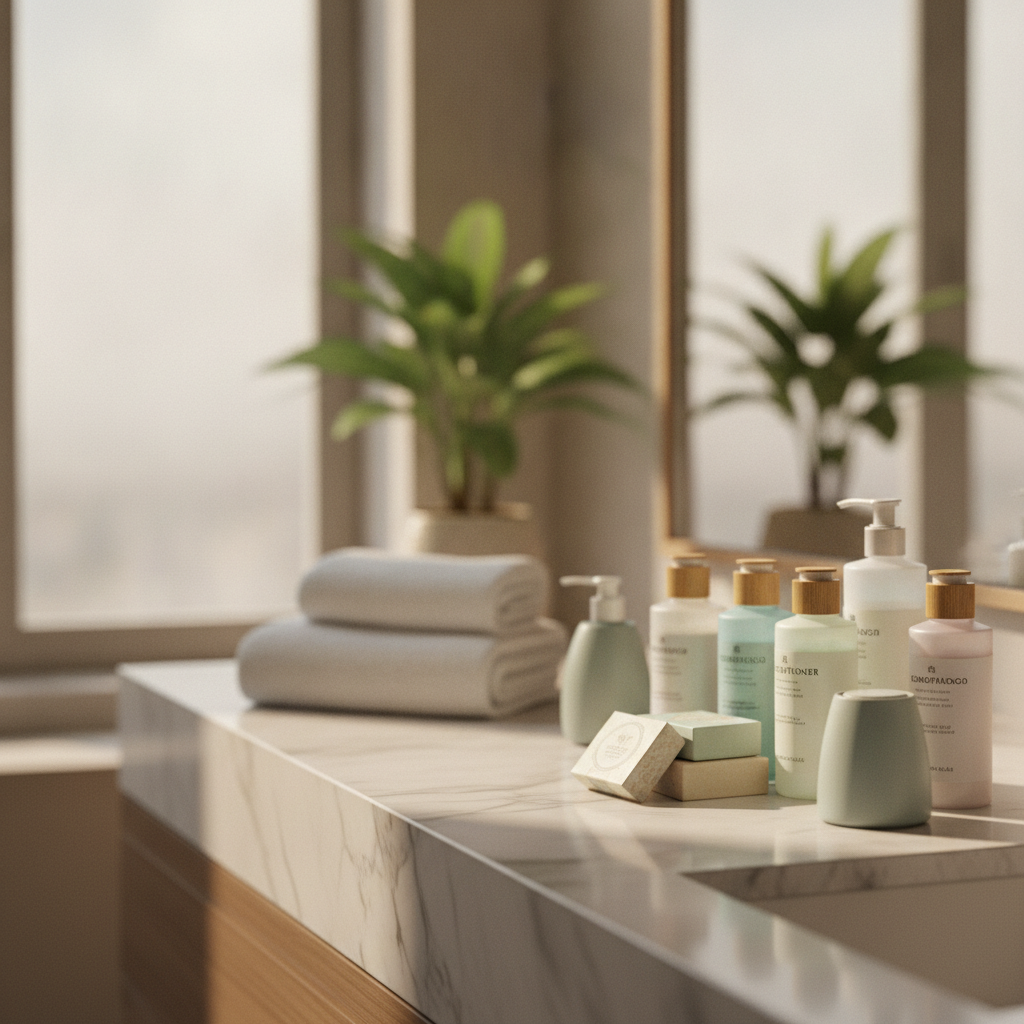
For decades, hotel toiletries were treated as a back-of-house line item — small bottles ordered in bulk, restocked without much thought, and rarely discussed above the housekeeping level. That has changed dramatically. Today, hotel toiletries sit at the intersection of sustainability regulation, guest experience design, and brand differentiation, making them a strategic decision for General Managers, Spa & Wellness Directors, and property owners alike.
TL;DR — The Bottom Line
Hotel toiletries have evolved from disposable minis into a multi-billion-dollar strategic category driven by refillable dispensers, sustainability regulation, and rising guest expectations. The global hotel toiletries market is projected to grow at roughly 10–12% annually through 2030, with the refillable hotel toiletries segment alone reaching an estimated $4.03 billion by 2033. Properties that upgrade to branded, refillable programs can cut consumable costs by 15–20% while improving guest satisfaction and ESG positioning.
Quick Facts
- Global market size: Estimated $28.4 billion in 2026, projected to reach $69.3 billion by 2034 (11.8% CAGR)
- U.S. market value: $6.14 billion in 2024, growing at a 14.7% CAGR through 2032
- Refillable segment: $1.62 billion in 2024, projected to hit $4.03 billion by 2033
- Refillable adoption: Jumped from 53% of surveyed hotels in 2022 to nearly 100% in 2024
- Cost savings: Refillable dispenser systems reduce consumable costs by 15–20%
- Guest influence: 68% of surveyed guests say they'd choose a brand offering biodegradable toiletries
What Are Hotel Toiletries, Exactly?
The term "hotel toiletries" covers every personal-care product a property provides for guest bathroom use — shampoo, conditioner, body wash, soap, and lotion, and increasingly items like mouthwash, cotton swabs, shower caps, and dental kits. But the definition has expanded beyond the products themselves to include the delivery system: single-use miniatures, bulk refillable dispensers, or branded countertop packaging.
For property owners, understanding this broader definition matters because procurement decisions now touch three departments at once: housekeeping (restocking and labor), sustainability and ESG reporting, and guest experience or spa teams responsible for brand-aligned amenity programs.
How Big Is the Hotel Toiletries Market in 2026?
The hotel toiletries category is no longer a rounding error in the procurement budget — it is a fast-growing global market. Industry estimates place the global hotel toiletries market at roughly $28.4 billion in 2026, with projections reaching $69.3 billion by 2034, an 11.8% compound annual growth rate (Source: Precedence Research, 2025). Other forecasts put the broader market at $45–46 billion by 2030 at a 10–11% CAGR from 2024 (Source: Grand View Research, 2024).
Regionally, North America is outpacing the global average. The U.S. hotel toiletries market alone was valued at $6.14 billion in 2024 and is forecast to grow at a 14.7% CAGR through 2032 (Source: Fortune Business Insights, 2024) — a sign that American hotel operators are investing more heavily in premium, sustainable amenities than the global average suggests.
Within this larger category, the refillable hotel toiletries segment is the standout performer. A dedicated market study estimates refillable hotel toiletries programs at $1.62 billion in 2024, projected to reach $4.03 billion by 2033 at a 10.7% CAGR (Source: DataM Intelligence, 2024). That growth rate outpaces the broader toiletries market, confirming that refillable systems are where the real momentum lies.

A: U.S. properties are adopting premium and eco-friendly amenities faster than the global average, partly due to state-level plastic bans and guest demand for sustainable, spa-quality bathroom experiences.
Why Refillable Hotel Toiletries Are Becoming the Industry Standard
If there is one trend defining the hotel toiletries category right now, it is the wholesale shift away from single-use miniature bottles toward wall-mounted or countertop refillable dispensers. This is not a marginal shift — it is close to universal among surveyed properties.
According to the 2024 Green Lodging Trends Report, the share of hotels using refillable amenity dispensers jumped from 53% in 2022 to nearly 100% in 2024 (Source: Green Lodging News, 2024). A separate bath-amenity study found that by 2023, 38% of luxury properties and 27% of mid-scale hotels had already replaced single-use plastic bottles with recyclable or refillable systems, with adoption accelerating each year since (Source: Hospitality Technology, 2023).
The business case is straightforward. Refillable hotel toiletries dispensers typically reduce consumable costs by 15–20% compared to individually packaged minis, because bulk product costs less per ounce and housekeeping spends less time restocking dozens of tiny bottles per room turn (Source: Hotel Management, 2024). For a 200-room property replacing minis in every bathroom, that reduction can translate into tens of thousands of dollars in annual savings.
That said, refillable hotel toiletries systems introduce new operational considerations: dispenser hygiene, tamper resistance, accurate product-level tracking, and consistent refill scheduling. Properties that skip these steps risk empty dispensers during peak occupancy — arguably worse for guest perception than the minis they replaced.
What Do Guests Really Want From Hotel Toiletries?
Guest expectations around hotel toiletries have shifted from "clean and available" to "aligned with my values and my routine." Three forces are driving this: sustainability awareness, ingredient consciousness, and the broader wellness travel movement.
A hospitality survey of 3,200 guests found that 68% would choose a hotel brand specifically because it offers biodegradable toiletries over one that does not (Source: Hospitality Net, 2023). This is no longer a niche preference among eco-conscious travelers — it is approaching a majority expectation, particularly among guests under 45 and those booking through wellness-focused travel platforms.
Beyond sustainability, guests increasingly evaluate hotel toiletries the way they evaluate their own bathroom-cabinet products: clean ingredient lists, recognizable or locally sourced brands, and multi-sensory experiences that feel elevated rather than generic. Properties in the upper-midscale and luxury tiers are responding by partnering with recognizable spa or wellness brands rather than commodity suppliers.
A: Yes. Bathroom amenities are frequently mentioned in online reviews, and guests often associate the quality of hotel toiletries with the overall cleanliness and value perception of a stay — meaning underinvesting in this category carries reputational as well as operational risk.
Sustainability Regulations Shaping Hotel Toiletries Procurement
Regulation is now a primary driver of hotel toiletries decisions, not just a talking point. Several U.S. states have passed or are phasing in bans on small single-use plastic bottles in hotel rooms, typically applying to properties above a certain room count. Similar restrictions exist across parts of the EU and Asia-Pacific, where extended producer responsibility rules increasingly apply to hospitality packaging waste.
For General Managers and property owners, this means hotel toiletries procurement is no longer purely a cost or brand decision — it is a compliance function. Properties that delay the switch to refillable or bulk formats risk fines, brand-standard non-compliance flags from franchisors, and negative press, particularly as major chains publicly commit to eliminating single-use plastic minis system-wide.
Spa & Wellness Directors should also note that many corporate ESG scorecards used by travel management companies now factor amenity sustainability into preferred hotel partner selection for corporate travel programs — turning hotel toiletries policy into a factor in B2B revenue, not just leisure guest satisfaction.
Choosing a Hotel Toiletries Program: Cost, Branding & Operations
Selecting the right hotel toiletries program requires balancing four variables: unit cost, guest-facing brand impact, housekeeping labor, and compliance risk. The table below summarizes how the three dominant formats compare.
| Format | Typical Cost Impact | Guest Perception | Compliance Fit |
|---|---|---|---|
| Single-use mini bottles | Highest per-guest cost; high plastic waste | Increasingly viewed as dated or wasteful | Non-compliant in a growing number of jurisdictions |
| Bulk refillable dispensers | 15–20% lower consumable cost | Neutral to positive if well-designed and branded | Compliant with most current and pending regulations |
| Premium/branded refill systems | Moderate cost, higher perceived value | Strongly positive; supports luxury and wellness positioning | Compliant, and often exceeds requirements |
Before signing a contract, GMs and owners should ask suppliers a short set of questions: What is the true cost per guest stay, including labor for refilling? Are dispensers tamper-evident and easy to sanitize between refills? Can packaging and scent be customized to match the property's brand voice? And critically — does the program meet not just today's regulations, but the ones scheduled to phase in over the next 24 months?
A Simple Evaluation Checklist
- Audit current spend: Calculate the true per-room, per-stay cost of existing hotel toiletries, including labor.
- Map regulatory exposure: Identify state, local, or brand-standard rules affecting your property's toiletries format.
- Survey guest sentiment: Review recent guest feedback for mentions of bathroom amenities.
- Pilot a refillable system: Test in one floor or wing before a full property rollout.
- Measure and adjust: Track refill frequency, guest complaints, and cost-per-stay after 90 days.
Hotel Toiletries as Part of a Broader Wellness Amenity Strategy
For properties investing in broader in-room wellness experiences, hotel toiletries should not be evaluated in isolation. Guests who book wellness-forward rooms — including those with enhanced recovery or spa-style amenities — tend to hold every bathroom detail to a higher standard. A property that offers elevated in-suite wellness equipment but stocks generic, single-use hotel toiletries sends a mismatched brand signal.
This is where forward-thinking Spa & Wellness Directors are rethinking the guest bathroom holistically: pairing premium, sustainably packaged hotel toiletries with other wellness-oriented in-room features to create a cohesive, spa-caliber experience from check-in to checkout. Companies like HotelPlunge work with hotels building out these integrated in-suite wellness environments, where thoughtful amenity choices — down to the shampoo dispenser — reinforce the same premium positioning as larger wellness investments.
The strategic lesson is simple: hotel toiletries are a visible, tactile touchpoint guests interact with multiple times per stay. Getting this detail right costs relatively little compared to major capital wellness investments, but it disproportionately shapes guest perception of overall property quality.
A: Increasingly, yes. Because toiletries now function as a wellness and brand touchpoint rather than a pure commodity, many properties involve spa and wellness leadership in scent, ingredient, and packaging decisions alongside procurement teams.
Frequently Asked Questions About Hotel Toiletries
What are hotel toiletries?
Hotel toiletries are the personal-care amenities hotels provide in guest bathrooms, typically including shampoo, conditioner, body wash, soap, and lotion, delivered either as single-use miniatures or through refillable dispenser systems.
Why are hotels switching from mini bottles to refillable hotel toiletries dispensers?
Hotels are switching primarily due to sustainability regulations banning small single-use plastic bottles, guest demand for eco-friendly amenities, and cost savings — refillable systems typically cut consumable costs by 15–20% compared to individually packaged minis.
How much do hotel toiletries cost per room?
Costs vary widely by format and brand tier, but refillable bulk systems generally cost 15–20% less per guest stay than single-use miniatures once labor and product waste are factored in, while premium branded refill programs sit between mini bottles and bulk generic dispensers.
Are hotels legally required to use refillable toiletries?
In a growing number of jurisdictions, yes. Several U.S. states and international markets have passed or are phasing in bans on small single-use plastic amenity bottles above a certain property size, making refillable or bulk hotel toiletries a compliance requirement rather than an optional upgrade.
Do better hotel toiletries improve guest reviews?
Yes. Bathroom amenities are frequently referenced in online guest reviews, and properties that upgrade to higher-quality, sustainably packaged hotel toiletries often see improved perception of overall cleanliness and value, even when other factors remain unchanged.
Final Thoughts: Treating Hotel Toiletries as a Strategic Asset
The days of ordering hotel toiletries purely on lowest unit cost are ending. Between accelerating sustainability regulation, near-universal refillable adoption, and guests who actively choose properties based on bathroom amenity quality, this category now sits squarely in the domain of General Managers, Spa & Wellness Directors, and ownership groups — not just procurement.
Properties that treat hotel toiletries as a branded, compliance-ready, guest-experience asset — rather than a disposable afterthought — are positioned to capture the cost savings, regulatory protection, and guest loyalty this shift makes possible.
If your property is evaluating how bathroom and in-suite wellness amenities fit together as part of a broader guest experience strategy, HotelPlunge can help you think through the full picture — from premium hotel toiletries programs to integrated in-room wellness equipment that keeps every guest touchpoint consistent with your brand promise.