Pros and Cons of Living in Tampa Bay: Full 2026 Guide
August 15, 2026 · 4 min read
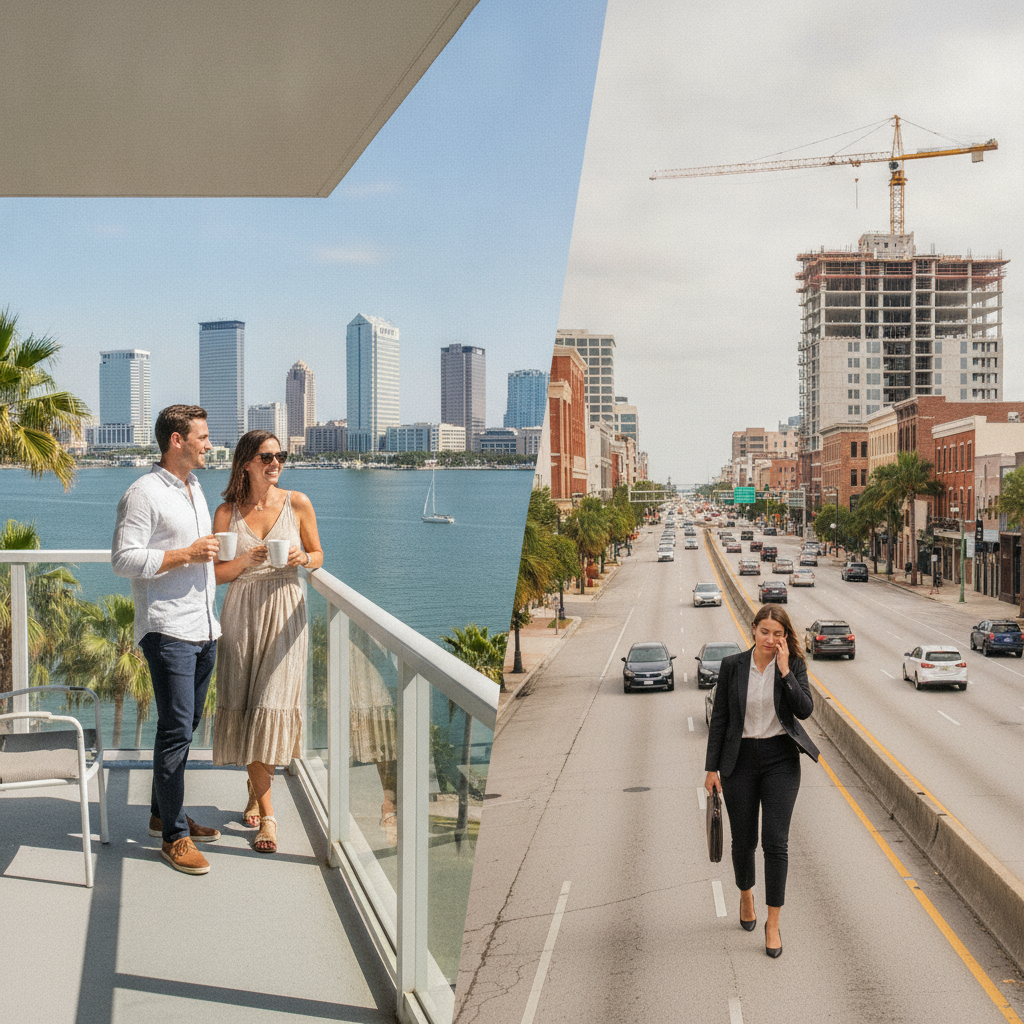
If you're weighing a move to Florida's Gulf Coast, understanding the pros and cons of living in Tampa Bay is the first step toward making a confident, well-informed decision. This region offers sunshine, no state income tax, and a booming job market — but it also comes with hurricane risk, rising insurance premiums, and a housing market that's shifting from boom to normal. This guide breaks down exactly what relocators, homebuyers, and sellers need to know before signing a contract.
TL;DR — The Bottom Line
The pros and cons of living in Tampa Bay come down to lifestyle versus cost. On the plus side: no state income tax, year-round warm weather, waterfront living, and a growing job market in a metro of over 3.4 million people. On the downside: hurricane season, climbing insurance premiums, traffic congestion, and home prices that run roughly 38% above the national average. Migration has cooled sharply since 2023, giving today's buyers more negotiating power than the frenzied pandemic-era market — but affordability remains the region's biggest open question.
Quick Facts
- Metro population: Over 3.4 million in Tampa–St. Petersburg–Clearwater
- Recent growth rate: ~0.4% year-over-year (2024–2025), down sharply from pandemic-era highs
- 2024 domestic migration: ~10,000 new residents, down from ~35,000 in 2023
- State income tax: $0 — Florida has no state income tax
- Median home price: Roughly $254,600, about 38% above the national average
- Average summer temperature: Around 85°F, with frequent afternoon thunderstorms
What Are the Pros and Cons of Living in Tampa Bay in 2026?
At the highest level, the pros and cons of living in Tampa Bay reflect a region in transition. The metro has grown from about 3.1 million residents five years ago to over 3.4 million today, a roughly 7–8% increase driven largely by out-of-state transplants chasing sunshine, jobs, and tax savings. But that growth engine has slowed dramatically. Year-over-year population growth sat at just 0.4% between 2024 and 2025, and domestic net migration collapsed from around 35,000 new residents in 2023 to roughly 10,000 in 2024 — a drop of more than 24,000 people in a single year, according to Census-based regional estimates.
Some analyses even suggest Tampa Bay briefly lost residents to domestic migration in 2025, with growth now propped up primarily by international migration and natural population change rather than the flood of Northeast and Midwest transplants that defined 2020–2022. For anyone evaluating the pros and cons of living in Tampa Bay today, this is the essential backdrop: you're not moving into a runaway seller's market anymore. You're moving into a maturing, more balanced metro where buyers finally have room to negotiate.
Yes, but modestly. The metro added residents at roughly 0.4% annually in the most recent measured period, a sharp slowdown from the double-digit-thousands annual gains seen during the pandemic-era migration boom.
The Pros of Living in Tampa Bay: Climate, Lifestyle & Taxes
Let's start with why so many people still choose Tampa Bay despite the cooling migration numbers. The pros of living in Tampa Bay are concentrated in three areas: climate and recreation, cost structure, and culture.
Warm Weather and Outdoor Living
Tampa Bay delivers genuinely enviable weather for most of the year. Locals and relocation guides frequently describe seven-plus months of near-perfect conditions — especially fall, winter, and early spring — bookended by a hot, humid summer averaging around 85°F with near-daily afternoon thunderstorms. For anyone tired of shoveling snow, this climate alone tips the pros and cons of living in Tampa Bay firmly toward the