Pros and Cons of Living in Tampa Bay vs St Petersburg
August 7, 2026 · 13 min read
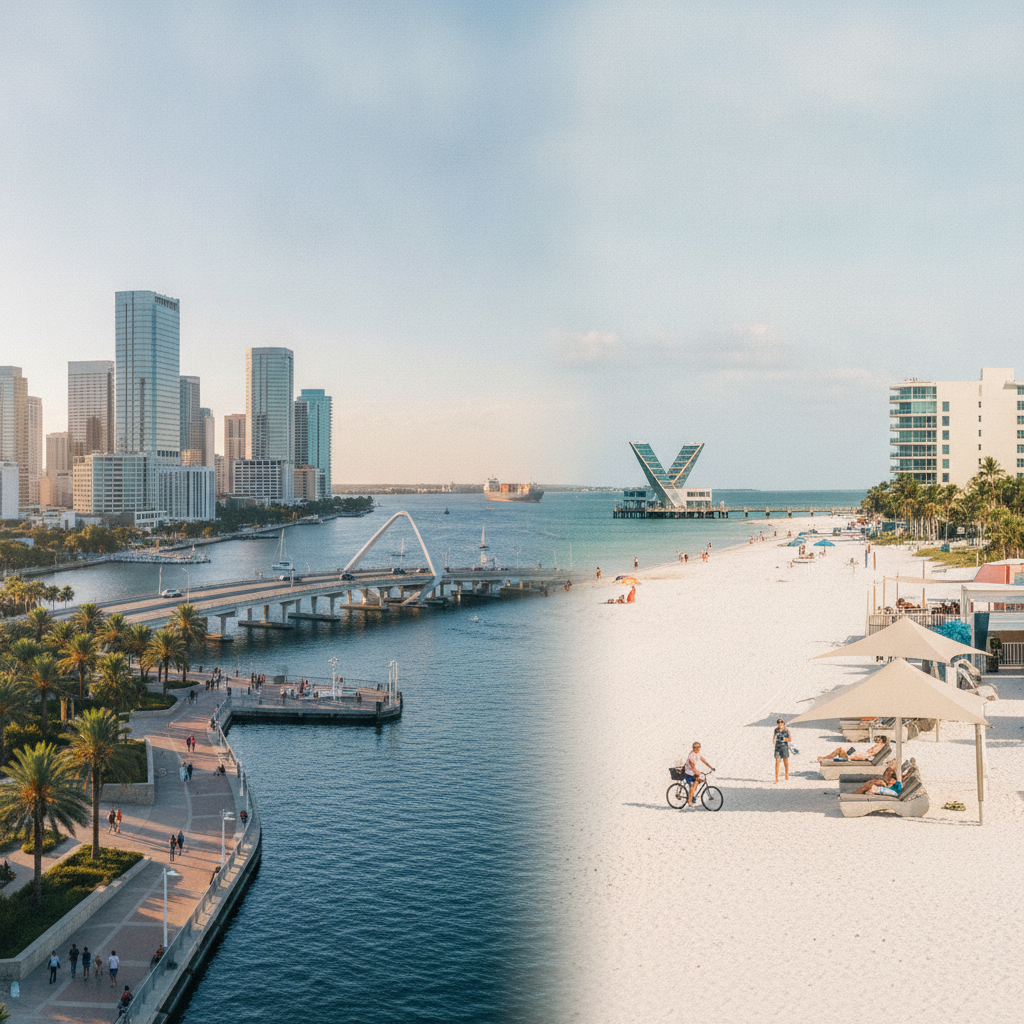
If you're weighing the pros and cons of living in Tampa Bay vs St Petersburg, you're facing one of the most common — and most important — decisions homebuyers make in this region. Both cities sit along the same stretch of Florida's Gulf Coast, share a bridge system, and even blend together in casual conversation as "Tampa Bay." But for homebuyers, the differences in lifestyle, cost per square foot, commute patterns, and flood exposure are significant enough to shape years of daily life and long-term equity. This guide breaks down the real trade-offs so you can make a confident, informed decision.
TL;DR — The Bottom Line
When comparing the pros and cons of living in Tampa Bay vs St Petersburg, Tampa generally offers more house for the money, broader job access, and newer suburban construction, while St. Petersburg delivers stronger walkability, closer beach access, and a denser arts-driven lifestyle — usually at a higher price per square foot. Neither city is objectively "better"; the right choice depends on whether you prioritize space and commute access or walkable, coastal lifestyle. Flood risk and insurance costs, especially in low-lying St. Pete neighborhoods, should factor heavily into your final decision.
Quick Facts
- Tampa median price per sq ft: approximately $303
- St. Petersburg median price per sq ft: approximately $325
- Tampa median home price (2026): roughly mid-$450Ks
- St. Petersburg median home price (2026): roughly mid-$460Ks
- Tampa neighborhood price range: $410K–$650K depending on area
- St. Petersburg neighborhood price range: $390K–$600K depending on area
Pros and Cons of Living in Tampa Bay vs St Petersburg: The Big Picture
The core tension in the pros and cons of living in Tampa Bay vs St Petersburg comes down to a simple trade-off: space and job access versus walkability and coastal charm. Tampa is the larger, faster-growing, more corporate market, with a wider mix of urban core neighborhoods, suburban subdivisions, and new-construction communities. St. Petersburg is smaller and denser, with a historic housing stock, a walkable downtown core, and a lifestyle identity built around beaches, galleries, and independent restaurants.
For homebuyers, this means the decision often isn't about which city is "cheaper" — the overall cost difference is modest — but about which daily lifestyle fits your priorities. Buyers who work in downtown Tampa, need larger homes for growing families, or want new construction with modern floor plans tend to lean Tampa. Buyers who want to walk to coffee shops, live minutes from the beach, or downsize into a charming bungalow tend to lean St. Petersburg.
What Makes Tampa Attractive to Homebuyers?
Tampa's appeal centers on scale. As the larger city in the bay area, Tampa offers broader employment access across finance, healthcare, logistics, and technology sectors, along with a much wider variety of housing stock. Neighborhoods range from dense urban districts near downtown to sprawling new-construction subdivisions in areas like New Tampa, Wesley Chapel-adjacent communities, and South Tampa's established streets.
Buyers comparing the pros and cons of living in Tampa Bay vs St Petersburg often find that Tampa simply gives more home for the same budget. A family that might get a smaller, older home in St. Petersburg could land a larger, newer property in a Tampa suburb with a similar monthly payment. This is one of the clearest financial advantages Tampa holds in the comparison.
- More new construction: Tampa's outer neighborhoods continue expanding with modern subdivisions and planned communities.
- Stronger job proximity: Downtown Tampa, Westshore, and the surrounding business districts offer shorter commutes for many professionals.
- Broader neighborhood variety: From urban lofts to suburban cul-de-sacs, Tampa spans a wider spectrum of housing types.
The trade-off is that Tampa is more car-dependent and can feel spread out, with traffic congestion increasing as the metro area continues to grow.
What Makes St. Petersburg Attractive to Homebuyers?
St. Petersburg's strength lies in lifestyle density. Its downtown core is one of the most walkable in the region, with waterfront parks, museums, and a thriving restaurant scene within easy walking or biking distance of many residential streets. For buyers who value car-free errands and a strong sense of neighborhood identity, St. Petersburg consistently wins this part of the comparison.
Beach proximity is another major differentiator. While Tampa has waterfront pockets, St. Petersburg sits closer to some of the area's most popular beach communities, making it a favorite among retirees, remote workers, and buyers who prioritize weekend beach access over commute times.
Yes. St. Petersburg's compact downtown and historic neighborhood grid make it significantly more walkable than most of Tampa, which is more spread out and car-dependent outside its urban core.
Cost Comparison: Price Per Square Foot and Median Home Prices
Price is often the first question buyers ask when weighing the pros and cons of living in Tampa Bay vs St Petersburg, and the answer is more nuanced than a simple "cheaper vs. pricier" comparison. On a price-per-square-foot basis, St. Petersburg tends to run higher — around $325 per square foot compared to Tampa's roughly $303 per square foot. That premium reflects smaller lot sizes, older bungalow-style housing stock, and the walkability factor buyers are willing to pay for.
| Metric | Tampa | St. Petersburg |
|---|---|---|
| Median price per sq ft | ~$303 | ~$325 |
| 2026 median home price | Mid-$450Ks | Mid-$460Ks |
| Neighborhood price range | $410K–$650K | $390K–$600K |
| Typical lot/home size | Larger, more suburban | Smaller, more compact |
Overall median home prices are close enough that citywide averages matter less than neighborhood selection. A buyer comparing a specific ZIP code in South Tampa to a comparable ZIP code in downtown St. Petersburg may find the price gap flips entirely depending on lot size, school zoning, and flood zone designation.
Lifestyle, Walkability, and Commute Considerations
Beyond price, lifestyle fit is often the deciding factor in the pros and cons of living in Tampa Bay vs St Petersburg. Tampa's larger footprint means longer commutes for many residents, particularly those living in outer suburbs and commuting downtown or to Westshore's business district. St. Petersburg's smaller geography keeps most daily trips shorter, and its walkable core reduces dependence on a car for errands, dining, and entertainment.
Remote workers and retirees frequently gravitate toward St. Petersburg because daily life doesn't hinge on a commute at all — proximity to downtown amenities and beaches matters more than access to a specific employer. Families with school-age children, on the other hand, often prioritize Tampa's broader selection of suburban neighborhoods and larger homes with yard space.
Tampa generally offers more family-friendly suburban neighborhoods with larger homes, more new construction, and broader school options, while St. Petersburg appeals more to buyers without school-age children who prioritize walkability and lifestyle.
Flood Risk and Insurance: A Critical Factor in Your Decision
No comparison of Tampa Bay vs St Petersburg homebuying is complete without addressing flood risk, since both cities sit along the coast and carry meaningful exposure. St. Petersburg's waterfront and low-lying neighborhoods, in particular, can carry higher flood-insurance premiums, which materially affects total ownership cost even when the purchase price looks comparable to a similar Tampa property.
Tampa also has flood-prone pockets, especially near Hillsborough Bay and low-elevation areas close to downtown, so buyers shouldn't assume Tampa is automatically safer. The key takeaway is that flood zone designation matters more than which city you choose — a FEMA flood map check and insurance quote should be part of due diligence for any waterfront-adjacent property in either market.
- Get an elevation certificate before making an offer on any home near water in either city.
- Request flood insurance quotes early in your search, not after you're under contract.
- Compare flood zone maps for specific addresses rather than relying on neighborhood reputation alone.
Which City Fits Your Homebuying Priorities?
Ultimately, resolving the pros and cons of living in Tampa Bay vs St Petersburg comes down to ranking your own priorities. Consider the following quick-reference breakdown:
- Choose Tampa if: you want more square footage for your budget, newer construction, broader job access, and a wider range of suburban school-zoned neighborhoods.
- Choose St. Petersburg if: you want walkability, closer beach access, historic character, and a denser, arts-driven lifestyle — and you're comfortable paying more per square foot for it.
- Weigh both if: your budget and job flexibility allow you to consider the entire Tampa Bay region rather than committing to one city upfront.
As one regional market analysis put it, the decision has shifted from "which city is cheaper" to "which lifestyle fits better," since overall price gaps between the two markets have narrowed enough that neighborhood-level factors now matter more than citywide averages.
Working with an agent who knows both markets intimately — not just one side of the bay — is one of the most effective ways to avoid overpaying for the wrong fit. Kyle Hollister helps buyers compare specific neighborhoods across Tampa and St. Petersburg side by side, rather than relying on generic citywide statistics.
Frequently Asked Questions
Is it cheaper to live in Tampa or St. Petersburg?
Citywide, the difference is modest — Tampa's median home price runs slightly lower and its price per square foot (~$303) is generally less than St. Petersburg's (~$325). However, the cheaper option depends heavily on the specific neighborhood and home size you're comparing.
What are the biggest pros and cons of living in Tampa Bay vs St Petersburg?
Tampa's pros include more space, more new construction, and better job access, with the con of more traffic and car dependence. St. Petersburg's pros include walkability, beach proximity, and lifestyle charm, with the con of higher price per square foot and greater flood-insurance considerations in low-lying areas.
Is St. Petersburg more walkable than Tampa?
Yes, St. Petersburg's compact downtown grid and historic neighborhoods make it noticeably more walkable than most of Tampa, which is larger, more spread out, and generally more car-dependent outside its urban core.
Which city is better for retirees, Tampa or St. Petersburg?
St. Petersburg is often preferred by retirees for its walkable downtown, beach access, and slower-paced lifestyle, though Tampa's healthcare access and broader housing options also appeal to retirees who want more space or a suburban setting.
Does flood insurance cost more in St. Petersburg than Tampa?
It can, particularly in St. Petersburg's waterfront and low-lying neighborhoods, but flood insurance costs ultimately depend on a property's specific flood zone designation rather than which city it's located in.
Conclusion: Making the Right Choice for Your Situation
There's no universal winner in the pros and cons of living in Tampa Bay vs St Petersburg — only the option that best matches your budget, commute needs, and lifestyle priorities. Tampa offers more space and value for buyers who want room to grow and easier access to a broader job market, while St. Petersburg rewards buyers who want a walkable, coastal, culture-forward daily life. Both markets remain strong long-term investments within the greater Tampa Bay region.
If you're ready to compare specific neighborhoods, price points, and flood risk profiles across both cities, reach out to Kyle Hollister for a personalized, side-by-side buyer consultation tailored to your priorities.