Tampa Bay Single Family Homes vs Townhomes Pros Cons
July 15, 2026 · 13 min read
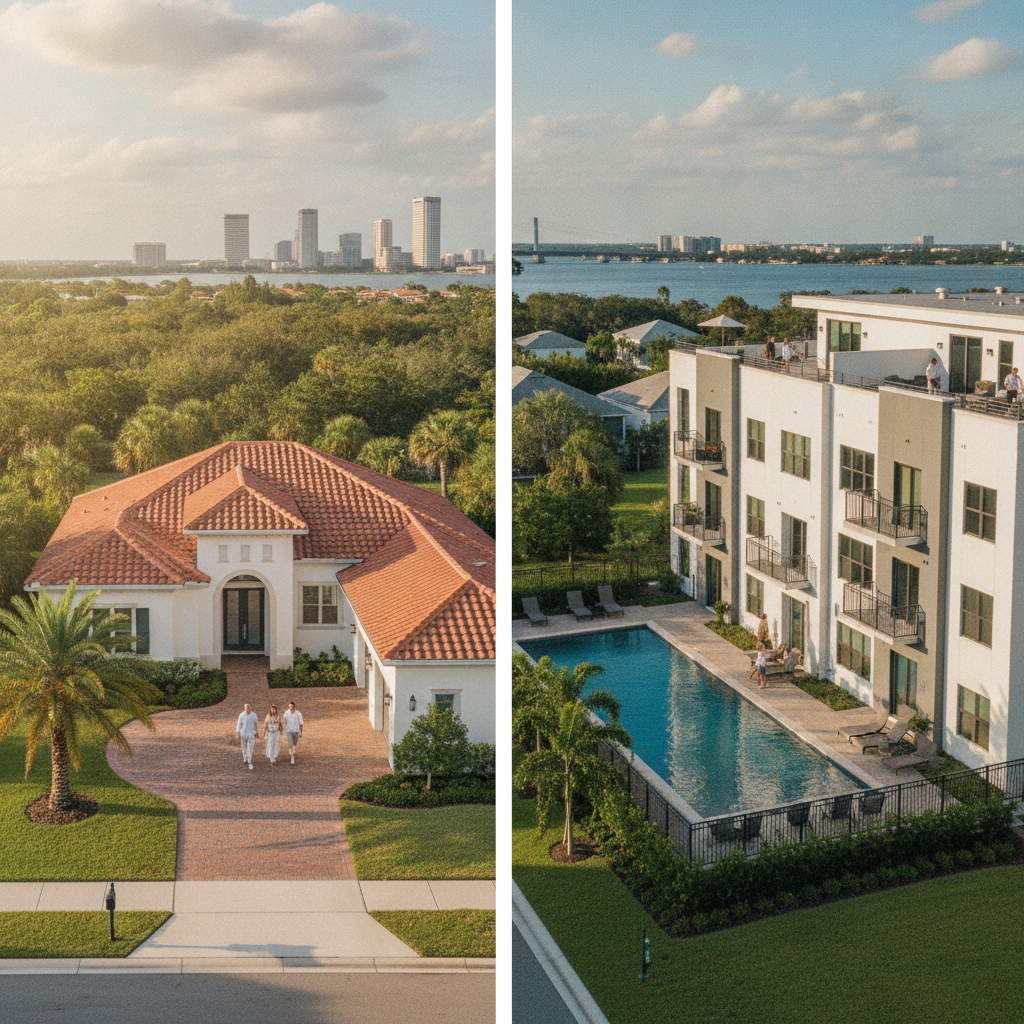
TL;DR — The Bottom Line
The tampa bay single family homes vs townhomes pros and cons debate in 2026 comes down to lifestyle and math. Single-family homes offer more privacy, yard space, control, and long-term resale strength, while townhomes deliver a lower entry price, less exterior maintenance, and better access to central Tampa Bay locations. In January 2026, South Tampa's 33611 ZIP saw a $470,000 median for single-family homes versus $447,000 for townhouses/condos — a narrower gap than many buyers expect once HOA dues, insurance, and taxes are factored in.
If you're shopping the Tampa Bay market in 2026, one of the first strategic decisions you'll face is choosing between a detached house and an attached townhome. Understanding the tampa bay single family homes vs townhomes pros and cons is the difference between buying a home that appreciates and fits your life — or buying a home that quietly drains your budget through HOA dues, insurance, and maintenance you didn't plan for. This guide breaks down pricing, lifestyle trade-offs, HOA realities, resale outlook, and the specific Tampa Bay submarkets where each product type shines.
Quick Facts
- South Tampa 33611 median (single-family, Jan 2026): $470,000
- South Tampa 33611 median (townhouse/condo, Jan 2026): $447,000
- All-home-type median (33611, Jan 2026): $455,000
- Tampa Bay new townhome starts: Up 54% year-over-year
- Average new townhome closing price (Tampa Bay report): ~$224,000
- Average new single-family closing price (same report): $320,000+
- Build pace: New townhomes constructed at roughly 2x the rate of new single-family homes in several submarkets
Tampa Bay Single Family Homes vs Townhomes Pros and Cons: The 2026 Snapshot
The Tampa Bay housing landscape has shifted meaningfully over the past 24 months. Rising insurance costs, elevated mortgage rates, and a wave of new construction have reshaped how buyers weigh the tampa bay single family homes vs townhomes pros and cons. Builders in Wesley Chapel, Riverview, Plant City, and along the I-75 corridor are aggressively delivering townhome inventory as an affordability bridge, while resale single-family homes are competing with rate buydowns and closing-cost credits from new construction.
Here's the core tension every Tampa Bay buyer faces in 2026: single-family homes still dominate long-term flexibility and resale appeal, but townhomes are gaining share because they solve the immediate affordability problem — especially for first-time buyers, downsizers, and relocators who want a Tampa address without the full weight of exterior upkeep.
"In 2026 Tampa Bay, the smartest buyers aren't asking which product type is better — they're asking which product type is better for their five-year plan."
Single-Family Homes in Tampa Bay: Pros and Cons
Detached homes remain the aspirational product across Tampa Bay, from South Tampa bungalows to Westchase family homes to newer Wesley Chapel construction. When we evaluate the tampa bay single family homes vs townhomes pros and cons from the detached-home side, four advantages stand out.
Pros of Single-Family Homes
- More privacy: No shared walls, no shared ceilings, and typically more distance from neighbors.
- Control over the property: You decide on paint colors, landscaping, fencing, additions, pools, and exterior upgrades — subject only to local code and, in some communities, a lighter HOA.
- Yard and outdoor space: Meaningful in Florida, where outdoor living, pools, and lanais drive lifestyle value.
- Stronger appreciation and resale appeal: Detached homes attract the broadest buyer pool and historically hold value better in downturns.
Cons of Single-Family Homes
- Higher purchase price: In most Tampa Bay submarkets, detached homes command a premium of $50,000 to well over $100,000 versus comparable townhomes.
- Full maintenance responsibility: Roof, exterior, lawn, irrigation, pool, HVAC — every repair lands on you.
- Higher insurance and upkeep exposure: Florida insurance costs have climbed sharply, and single-family owners absorb the entire structure-related premium themselves.
Not always. Historically, detached homes appreciate more consistently and appeal to a wider resale audience, but the right townhome in a supply-constrained infill location (like parts of South Tampa or downtown-adjacent submarkets) can outperform a poorly located single-family home. Location and price-per-square-foot still rule.
Townhomes in Tampa Bay: Pros and Cons
Townhomes are the fastest-growing segment of Tampa Bay's new construction pipeline. Understanding the tampa bay single family homes vs townhomes pros and cons from the townhome side means looking honestly at both the lifestyle wins and the ongoing costs.
Pros of Townhomes
- Lower entry price: One Tampa Bay report cited an average new townhome closing price near $224,000 versus $320,000+ for new single-family — nearly a $100,000 gap.
- Less maintenance: HOAs typically handle exterior paint, roofs (in many communities), landscaping, and common areas.
- Great fit for first-time buyers, small households, and relocators: Lock-and-leave lifestyle, especially attractive to professionals and part-time Florida residents.
- Often newer and more centrally located: Infill townhome projects in South Tampa, Seminole Heights, and near downtown put buyers closer to jobs, restaurants, and amenities.
Cons of Townhomes
- Monthly HOA fees: Can range from $150 to $500+ per month in Tampa Bay, materially changing the true monthly cost.
- Less privacy: Shared walls mean you hear (and are heard by) neighbors.
- Less outdoor space and storage: Small patios, narrow yards, and limited garage/storage capacity.
- HOA restrictions: Limits on renovations, exterior paint, parking, rentals, and pets are common.
- Special assessments risk: Roof replacement, building repairs, or reserve shortfalls can trigger surprise bills.
True Monthly Cost: The Numbers That Actually Matter
The most overlooked part of the tampa bay single family homes vs townhomes pros and cons discussion is the difference between purchase price and true monthly cost. Two homes with identical list prices can have wildly different monthly obligations once HOA, insurance, and taxes are layered in.
Sample Monthly Cost Comparison (South Tampa, 2026)
| Cost Component | Single-Family ($470K) | Townhome ($447K) |
|---|---|---|
| Principal & Interest (7% / 30-yr, 20% down) | ~$2,500 | ~$2,380 |
| Property Taxes (est.) | ~$490 | ~$465 |
| Homeowners Insurance | ~$350 | ~$150 |
| HOA Dues | $0–$50 | $300 |
| Estimated Maintenance Reserve | ~$300 | ~$100 |
| Total Monthly (est.) | ~$3,640 | ~$3,395 |
The gap in this example is roughly $245/month — meaningful, but far smaller than the $23,000 price difference suggests. And in communities with higher HOA dues or special assessments, that gap can collapse entirely.
Request the HOA's most recent budget, reserve study, and meeting minutes. Look for reserves funded above 70%, no recent special assessments, and stable dues history. A weak reserve fund is one of the biggest hidden risks in the tampa bay single family homes vs townhomes pros and cons conversation.
Which Tampa Bay Submarkets Favor Each Product Type?
Not every neighborhood offers a real choice. Some Tampa Bay submarkets are dominated by one product type, which shifts the tampa bay single family homes vs townhomes pros and cons analysis based on where you actually want to live.
Best for Single-Family Homes
- South Tampa (33611, 33629): Bungalows, ranches, and newer custom builds — strong land value and resale.
- Westchase and Carrollwood: Established family neighborhoods with mature landscaping and strong schools.
- Lutz, Odessa, and outer Wesley Chapel: Larger lots, newer construction, and family-focused amenities.
Best for Townhomes
- Central Wesley Chapel and Riverview: Aggressive new townhome pipelines with builder incentives.
- South Tampa infill projects: Newer townhomes near Bayshore, MacDill, and downtown-adjacent corridors.
- Seminole Heights and Ybor-adjacent areas: Walkable, urban-feel townhomes appealing to young professionals.
- Plant City and I-75 corridor: Entry-level pricing for commuters.
Resale Outlook: What the 2026 Data Suggests
Resale strength is where the tampa bay single family homes vs townhomes pros and cons debate gets most interesting for buyers thinking three to seven years ahead. Single-family homes historically appreciate more steadily and appeal to a wider buyer pool. Townhomes can appreciate strongly in supply-constrained infill locations, but they can also underperform when a submarket sees a wave of new townhome construction — because your resale competes directly with the builder next door offering incentives.
With Tampa Bay new townhome starts up 54% year-over-year, buyers in townhome-heavy submarkets should assume they'll compete with builder inventory on resale. Single-family homes in established, land-constrained neighborhoods face far less of this pressure.
"In markets with a fast-growing townhome pipeline, your future resale isn't just competing with other resales — it's competing with the builder next door and their 5.99% rate buydown."
How to Decide: A 6-Step Framework
Use this framework to work through the tampa bay single family homes vs townhomes pros and cons in a way that's specific to your life, not generic advice.
- Define your 5-year plan. Staying under 3 years? Townhome liquidity risk matters more. Staying 5+ years? Single-family flexibility usually wins.
- Set your true monthly budget. Include HOA, insurance, taxes, and a maintenance reserve — not just principal and interest.
- Rank your lifestyle priorities. Yard, privacy, and control vs. location, low maintenance, and lock-and-leave.
- Map your target submarkets. Some Tampa Bay areas realistically only offer one product type at your price point.
- Vet the HOA (if townhome). Review budget, reserves, and meeting minutes before you write an offer.
- Run resale scenarios. Ask your agent for 3-year and 5-year comparable appreciation data for both product types in your target submarket.
Working With a Tampa Bay Agent Who Handles Both
The biggest risk in navigating the tampa bay single family homes vs townhomes pros and cons is working with an agent who only specializes in one. Townhome-focused agents may downplay HOA risk. Single-family specialists may steer you away from a townhome that's actually the smarter buy for your situation.
At Hollister Real Estate, the approach is product-neutral: we evaluate both single-family homes and townhomes against your budget, timeline, and lifestyle — then run the true-monthly-cost math so you're not surprised at closing or when your HOA dues jump. Whether you're a first-time buyer weighing a Wesley Chapel townhome or a move-up buyer targeting a South Tampa detached home, the goal is the same: buy the property that fits your five-year plan, not just today's monthly payment.
Frequently Asked Questions
What is the biggest difference between single-family homes and townhomes in Tampa Bay?
The biggest difference is control and ongoing cost structure. Single-family homes give you full control over the property but require you to absorb all maintenance and insurance costs directly. Townhomes reduce your maintenance burden through the HOA but add mandatory monthly dues and restrictions on what you can change.
Are townhomes a good investment in Tampa Bay in 2026?
Townhomes can be a strong investment in supply-constrained, walkable infill locations like South Tampa and Seminole Heights. However, in submarkets with a heavy new-construction pipeline — where townhome starts are up 54% year-over-year — resale competition from builders can suppress appreciation. Location and HOA health matter more than product type.
How much are HOA fees for townhomes in Tampa Bay?
Tampa Bay townhome HOA fees typically range from $150 to $500+ per month. Newer luxury or amenity-rich communities can exceed that range. Always factor HOA dues into your true monthly cost when comparing a townhome to a single-family home at the same list price.
Which is easier to sell in Tampa Bay — a single-family home or a townhome?
Single-family homes generally appeal to a broader buyer pool and sell more consistently across market cycles. Townhomes in strong locations sell well but can face longer days on market when nearby builders are actively delivering new inventory with rate buydowns and closing-cost credits.
Should first-time buyers in Tampa Bay choose a townhome or a single-family home?
Many first-time buyers benefit from starting with a townhome because of the lower entry price, reduced maintenance, and often more central location. However, if you plan to stay 5+ years, have a growing household, or prioritize yard space, a modestly priced single-family home in an outer submarket may offer better long-term value.
Ready to Decide? Let's Run the Numbers Together
The tampa bay single family homes vs townhomes pros and cons come down to your budget, your timeline, and your lifestyle — not a one-size-fits-all answer. If you're weighing both options in the 2026 Tampa Bay market, the smartest next step is a side-by-side analysis of true monthly cost, submarket resale trends, and inventory competition for the specific neighborhoods you're targeting.
Contact Kyle Hollister at Hollister Real Estate to schedule a buyer strategy consultation. We'll build a personalized comparison of single-family and townhome options that fit your goals — and make sure you're buying the right property for the next five years, not just the next five months.