Enhancing guest experience with cold plunge: A GM's Playbook
August 10, 2026 · 13 min read
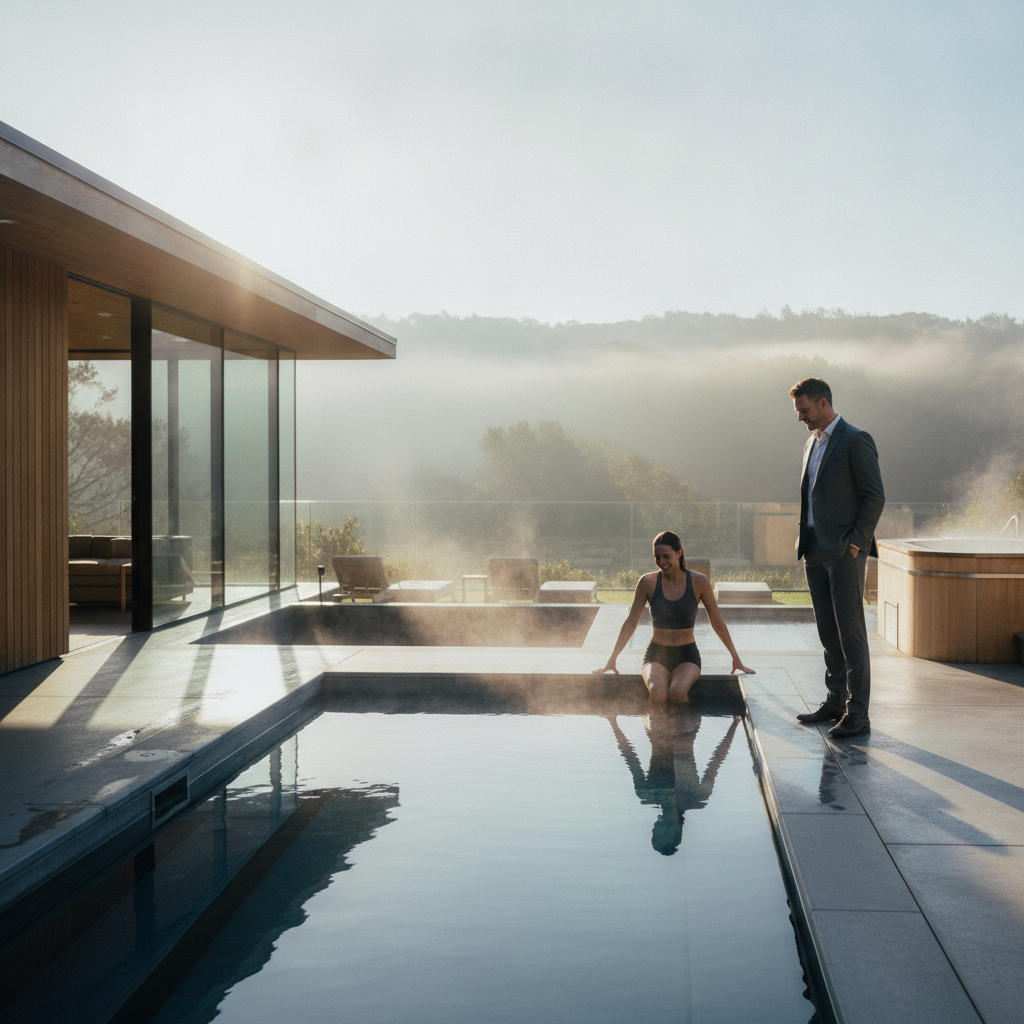
Enhancing guest experience with cold plunge has moved well beyond a novelty spa feature — it's becoming a defining service standard for hotels that want to compete on wellness. But installing a plunge tub is only step one. The properties seeing the strongest guest satisfaction scores and repeat bookings are the ones that design the entire experience around the plunge, not just the equipment itself. This guide focuses on the service, staff, and sensory decisions that separate a forgettable cold tub from a signature guest experience.
TL;DR — The Bottom Line
Enhancing guest experience with cold plunge is about the full journey — pre-arrival communication, staff guidance, sensory comfort, and personalization — not just the tub itself. Hotels that train staff, map guest touchpoints, and pair cold plunge with a broader recovery ritual see higher utilization, stronger reviews, and better upsell rates than those treating it as a standalone fixture.
Quick Facts
- Installation growth: 15% rise in cold plunge installations in luxury hotels and spas between 2021–2023 (Renu Therapy)
- Market size: Global cold plunge tub market valued at $354.6 million in 2025, projected to reach $659.9 million by 2033 (Himalaya IceTech)
- Willingness to pay: 42% of UK gym-goers say they'd pay extra for recovery amenities like ice baths (industry-reported)
- Membership lift: 30% increase in premium memberships reported after adding contrast therapy zones at one major wellness operator (vendor-reported)
- Utilization: Recovery-focused wellness amenities reportedly see higher guest usage than traditional amenities like tennis courts or business centers
What Does Enhancing Guest Experience with Cold Plunge Really Mean?
For most hotel teams, the phrase "cold plunge amenity" conjures an image of equipment: a tub, a chiller, maybe a filtration system. But enhancing guest experience with cold plunge is a service design problem first and an equipment problem second. The tub creates the possibility of a great experience; everything else — how a guest learns about it, how comfortable they feel using it, and how it's woven into their stay — determines whether that possibility becomes a highlight worth mentioning in a review.
Hospitality wellness commentary consistently frames cold plunge as most effective when it's part of a broader thermal or contrast-therapy circuit rather than an isolated feature. That distinction matters enormously for guest experience: a plunge tub sitting alone in a corner of the gym invites hesitation, while a plunge positioned as the final step of a guided sauna-to-cold sequence invites participation.
Answer: Guidance. Guests who receive clear, low-pressure instructions on timing, breathing, and safety are far more likely to try the plunge and rate it positively than guests who encounter an unattended tub with no context.
Why Guest Experience — Not Just the Amenity — Drives Wellness ROI
It's tempting to treat cold plunge as a checkbox amenity: install it, list it on the spa menu, done. But the properties actually enhancing guest experience with cold plunge are treating it as a service moment that touches marketing, front desk, spa staff, and housekeeping. This matters because guest experience is what gets photographed, reviewed, and repeated on the next stay — not the tub's temperature-control specs.
Renu Therapy's research pointing to a 15% rise in cold plunge installations across luxury hotels and spas between 2021 and 2023 tells only half the story. The more important trend, echoed across hospitality wellness commentary, is that guests increasingly expect a curated recovery experience, not just recovery equipment sitting in a room.
Mapping the Guest Journey: Cold Plunge Touchpoints from Booking to Checkout
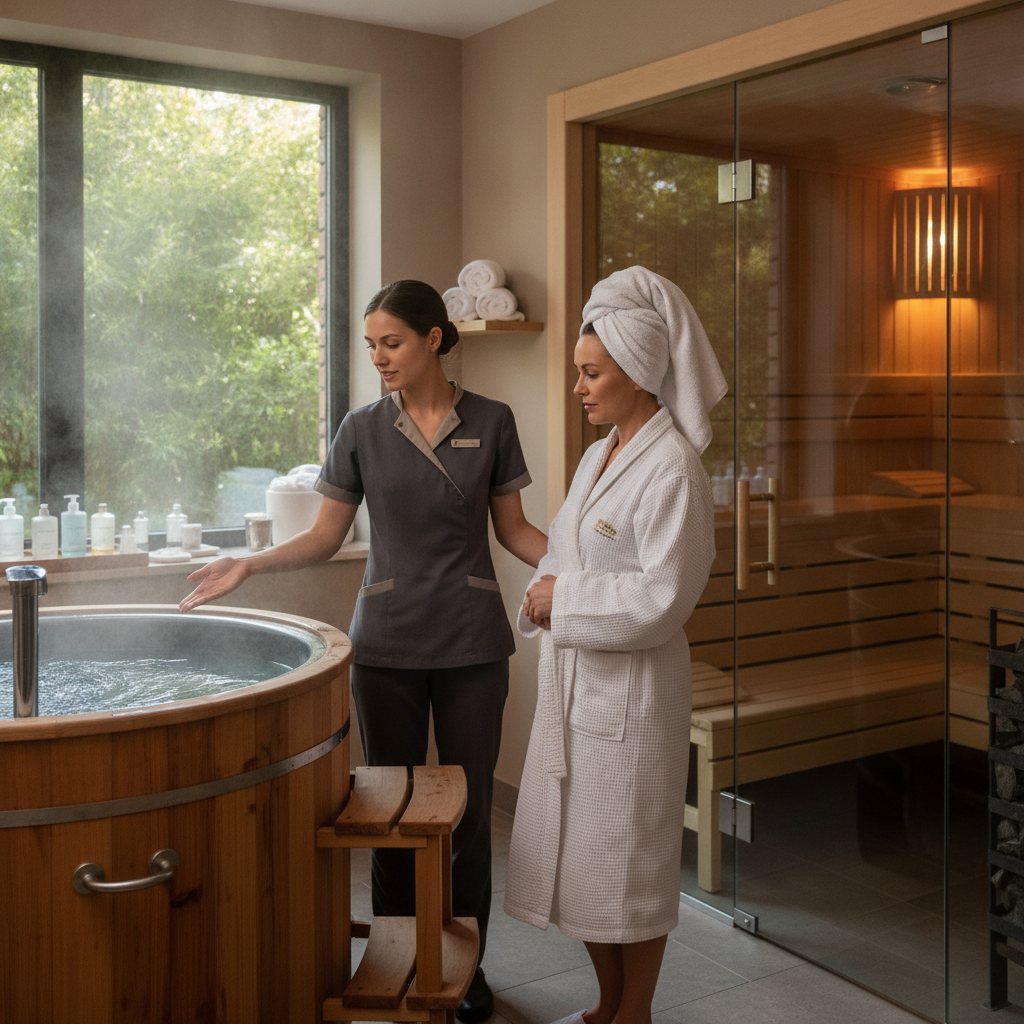
One of the most overlooked levers in enhancing guest experience with cold plunge is journey mapping — identifying every point where a guest interacts with the amenity, from the moment they book a room to the moment they check out. Properties that map this journey consistently outperform those that only think about the amenity once the guest is standing in front of it.
- Pre-arrival awareness: Mention the cold plunge amenity in confirmation emails or app messaging so guests arrive knowing it exists and understanding basic guidelines.
- Check-in reinforcement: Train front desk staff to mention the amenity briefly, especially for wellness-package bookings, rather than leaving discovery entirely to signage.
- On-site orientation: Provide a short, visible protocol near the plunge — recommended duration, breathing cues, and contraindications — so first-time guests don't need to ask staff to feel safe.
- In-the-moment support: Position a trained attendant or on-call spa staff member nearby during peak hours to answer questions and encourage hesitant guests.
- Post-stay follow-up: Reference the cold plunge experience in post-stay surveys or review requests to capture specific feedback that can refine the experience further.
This kind of structured mapping is what separates hotels that treat cold plunge as a checkbox from those genuinely enhancing guest experience with cold plunge at every stage of the stay.
Staff Training and Guidance: The Human Side of the Experience
No design element does more for enhancing guest experience with cold plunge than a knowledgeable, approachable staff member. Guests — especially first-timers — often hesitate not because of the cold itself, but because they're unsure of etiquette: how long to stay in, whether to submerge fully, what to do if they feel lightheaded, and whether the amenity is even meant for them.
Spa and wellness teams should be trained to answer these questions confidently and briefly, without turning a two-minute interaction into a clinical consultation. A simple script — covering recommended duration (often 1–3 minutes for beginners), breathing technique, and when to exit — removes hesitation and builds trust quickly.
Answer: Not continuously, but visible availability of a trained staff member — even if just nearby rather than hovering — measurably increases guest confidence and first-time usage rates, particularly during peak spa hours.
Personalizing Cold Plunge for Different Guest Segments
Not every guest wants the same cold plunge experience, and enhancing guest experience with cold plunge often means recognizing distinct guest types and adjusting messaging accordingly.
| Guest Segment | Primary Motivation | Experience Adjustment |
|---|---|---|
| Wellness enthusiasts / biohackers | Performance recovery, longevity | Offer temperature and duration data, contrast-therapy pairing with sauna |
| Athletes and active travelers | Muscle recovery post-workout | Position plunge near gym, promote post-workout timing |
| Leisure and spa-package guests | Relaxation, novelty, social sharing | Emphasize ambiance, photo-worthy design, gentle introduction |
| First-time or hesitant guests | Curiosity without confidence | Provide clear signage, optional shorter exposure, staff reassurance |
Segment-aware messaging is a low-cost, high-impact way of enhancing guest experience with cold plunge because it prevents a one-size-fits-all pitch that alienates either the hesitant traveler or the seasoned enthusiast.
Sensory Design and Comfort Details That Elevate Guest Experience
Beyond staffing and communication, small sensory details play an outsized role in enhancing guest experience with cold plunge. Water clarity, ambient lighting, quiet operation of chillers, and comfortable transition spaces (warm robes, non-slip flooring, easy-access steps) all shape whether a guest feels the plunge is a premium ritual or an afterthought bolted onto the gym.
- Quiet mechanicals: A loud chiller or pump undermines the sense of calm the amenity is supposed to deliver.
- Visible water clarity: Guests associate clean, visibly filtered water with trust in the amenity's upkeep.
- Transition comfort: Warm towels, robes, or a heated bench nearby make the post-plunge moment feel intentional rather than abrupt.
- Ambient cues: Subtle lighting and minimal signage clutter reinforce a spa-grade feel rather than a utilitarian one.
These details cost relatively little compared to construction, yet they're consistently what guests mention in reviews when describing whether a wellness amenity felt "luxurious" or merely functional.
Measuring and Improving Guest Experience Over Time
Enhancing guest experience with cold plunge is not a one-time project — it requires ongoing measurement. Hotels that treat the amenity as a living part of their service model typically track a few simple indicators: usage rates by time of day, guest feedback mentions in post-stay surveys, spa package attach rates, and direct comments left in review platforms.
Given that recovery-focused wellness amenities are reported to see higher guest utilization than amenities like tennis courts or business centers, general managers should expect cold plunge usage data to be a genuinely useful signal — not just a vanity metric. Low usage often points to a guidance or awareness gap rather than a lack of guest interest.
Answer: Watch for low repeat usage among on-site guests, minimal spa package attach rates tied to the amenity, or review mentions that focus on confusion rather than enjoyment — all signs that the experience layer, not the equipment, needs attention.
Common Mistakes That Undermine Cold Plunge Guest Experience
Even well-designed cold plunge installations can underperform if a few common mistakes go unaddressed. Avoiding these is one of the fastest ways to start enhancing guest experience with cold plunge without any additional capital investment.
- Zero staff involvement: Leaving the amenity completely unattended and unexplained discourages first-time use.
- Inconsistent maintenance visibility: Cloudy water or visible grime erodes trust instantly, regardless of actual water safety.
- No connection to broader wellness offerings: Treating the plunge as a standalone fixture rather than pairing it with sauna, steam, or recovery treatments limits perceived value.
- Overly clinical messaging: Signage that reads like a liability waiver rather than an invitation can make guests feel like they're taking a risk rather than enjoying an amenity.
- Ignoring feedback loops: Not asking guests about the experience means missing the specific friction points that are easiest to fix.
"The properties that succeed at enhancing guest experience with cold plunge treat it as a hospitality ritual, not a gym fixture." This distinction is echoed across hospitality wellness commentary and is increasingly the dividing line between amenities that drive loyalty and those that sit unused.
Frequently Asked Questions
What does enhancing guest experience with cold plunge actually involve?
It involves the full set of touchpoints around the amenity — pre-arrival communication, staff guidance, signage, sensory design, and post-stay feedback — not just the physical cold plunge tub itself.
Do guests need instructions before using a hotel cold plunge?
Yes. First-time guests generally benefit from brief, clear guidance on recommended duration, breathing technique, and basic safety notes, which meaningfully increases willingness to try the amenity.
Should cold plunge be paired with a sauna or steam room?
Hospitality wellness guidance widely recommends pairing cold plunge with heat-based amenities to create a contrast-therapy circuit, which tends to increase perceived value and repeat usage compared to a standalone plunge.
How do hotels measure whether their cold plunge amenity is succeeding?
Common indicators include usage frequency by time of day, spa package attach rates, guest survey mentions, and review sentiment specifically referencing the cold plunge experience.
Is cold plunge only relevant for luxury hotels?
No. While luxury and upper-upscale properties have led adoption, mid-scale and boutique hotels are increasingly enhancing guest experience with cold plunge as a differentiator, particularly in wellness-forward or urban markets where space-efficient amenities matter.
Bringing It All Together
Enhancing guest experience with cold plunge is ultimately a hospitality discipline, not a construction project. The tub, chiller, and filtration system make the amenity possible; staff training, journey mapping, sensory design, and ongoing measurement make it memorable. Hotels that focus only on the equipment risk an underused amenity, while those that invest in the surrounding experience consistently report stronger guest engagement and more favorable reviews.
If your property is evaluating how to elevate its wellness offering, start by auditing the guest journey around your existing or planned cold plunge amenity — not just the specifications of the tub. HotelPlunge works with hotel teams to think through both the equipment and the experience layer that makes cold plunge amenities genuinely resonate with guests. Explore HotelPlunge to see how a thoughtfully designed cold plunge program can become one of your property's most talked-about wellness features.