Cold Plunge Amenity for Hotel Rooms: Guest Demand Guide
July 24, 2026 · 13 min read
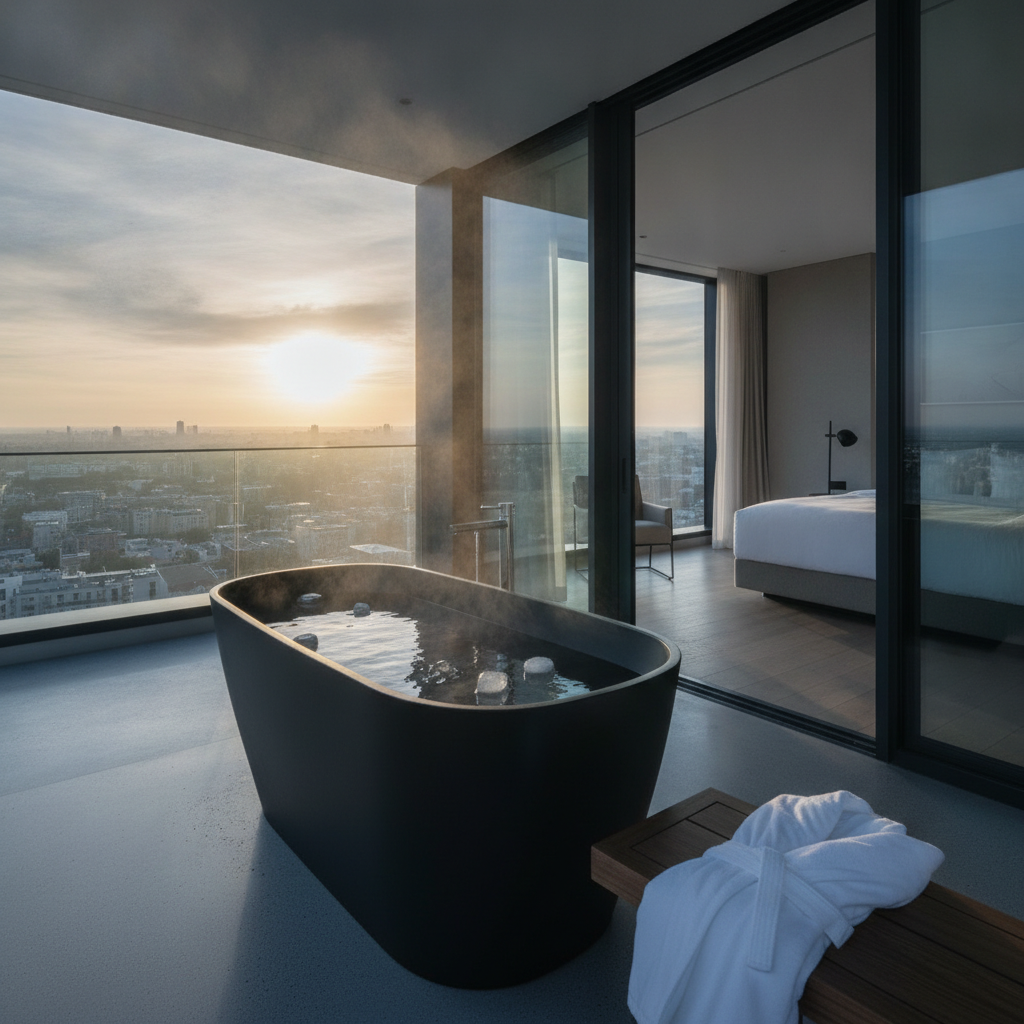
The cold plunge amenity for hotel rooms has moved from a niche spa curiosity to one of the most requested wellness features in modern hospitality. As wellness tourism accelerates past the $1 trillion mark, hotel general managers, spa directors, and property owners are asking the same question: how do we turn cold plunge into a sellable, profitable, guest-facing amenity rather than a one-off spa perk? This guide answers that question by focusing squarely on the amenity itself — how it's defined, packaged, priced, and marketed — so your property can meet rising guest demand without reinventing your entire wellness program.
TL;DR — The Bottom Line
The cold plunge amenity for hotel rooms is a private, in-room (or in-suite-adjacent) recovery experience that guests can book as an add-on, package inclusion, or standing room feature. Hotels offering this amenity are seeing higher guest satisfaction scores, stronger direct-booking conversion, and premium upsell revenue, driven by a wellness tourism market projected above $1 trillion in 2024. Success depends less on which equipment you buy and more on how you package, price, and position the amenity to guests.
Quick Facts
- Wellness tourism market size: Surpassing $1 trillion in 2024, per the Global Wellness Institute
- Cold plunge installation growth: Roughly 15% increase across luxury hotels and spas from 2021–2023
- Portable unit cost vs. built-in: Around $2,999 per portable unit versus roughly $35,000 for a built-in system
- Reported guest satisfaction: 8.9 out of 10 in early portable-amenity rollouts
- Primary guest segments: Athletes, fitness travelers, business travelers, and wellness-focused leisure guests
What Is a Cold Plunge Amenity for Hotel Rooms?
A cold plunge amenity for hotel rooms refers to any offering that lets guests access cold-water immersion — typically 39–55°F (4–13°C) — as part of their stay, without leaving their room or a private adjacent space. Unlike a communal spa cold plunge, this amenity is designed around privacy, convenience, and guest scheduling. It can be delivered several ways: a permanently plumbed in-room unit, a portable tub wheeled in on request, or a bookable add-on tied to a specific room category.
What distinguishes an amenity from a simple piece of equipment is the guest-facing experience layer: how it's named on the amenity menu, how it's priced, who delivers it, and how it's marketed. Properties that treat cold plunge purely as hardware tend to underperform those that treat it as a curated experience with clear guest value.
Not exactly. An installation refers to the physical equipment and plumbing decision. The amenity is the guest-facing product built around that equipment — including how it's booked, priced, staffed, and promoted. A property can have the same tub but two very different amenities depending on packaging.
Why Guests Are Booking the Cold Plunge Amenity for Hotel Rooms
Guest demand for the cold plunge amenity for hotel rooms is being driven by a convergence of health trends and travel behavior. Cold-water immersion is widely associated with reduced inflammation, improved circulation, and faster post-exercise recovery, which resonates strongly with athletes, marathon runners, and fitness-focused travelers.[1] Beyond the physical benefits, guests report mental clarity, mood elevation, and stress reduction after a session — benefits hotels increasingly use in their marketing copy.[2]
There's also a scheduling and privacy dimension. Many travelers avoid shared spa facilities because of crowding, limited hours, or simple self-consciousness. A cold plunge amenity for hotel rooms removes that friction entirely — guests can use it at 6 a.m. before a run or at midnight after a red-eye flight, without coordinating with spa staff or other guests.
Social sharing is another underrated driver. Cold plunge sessions are visually distinctive and inherently "shareable," giving hotels earned media and organic reach every time a guest posts about their in-room recovery routine.[2]
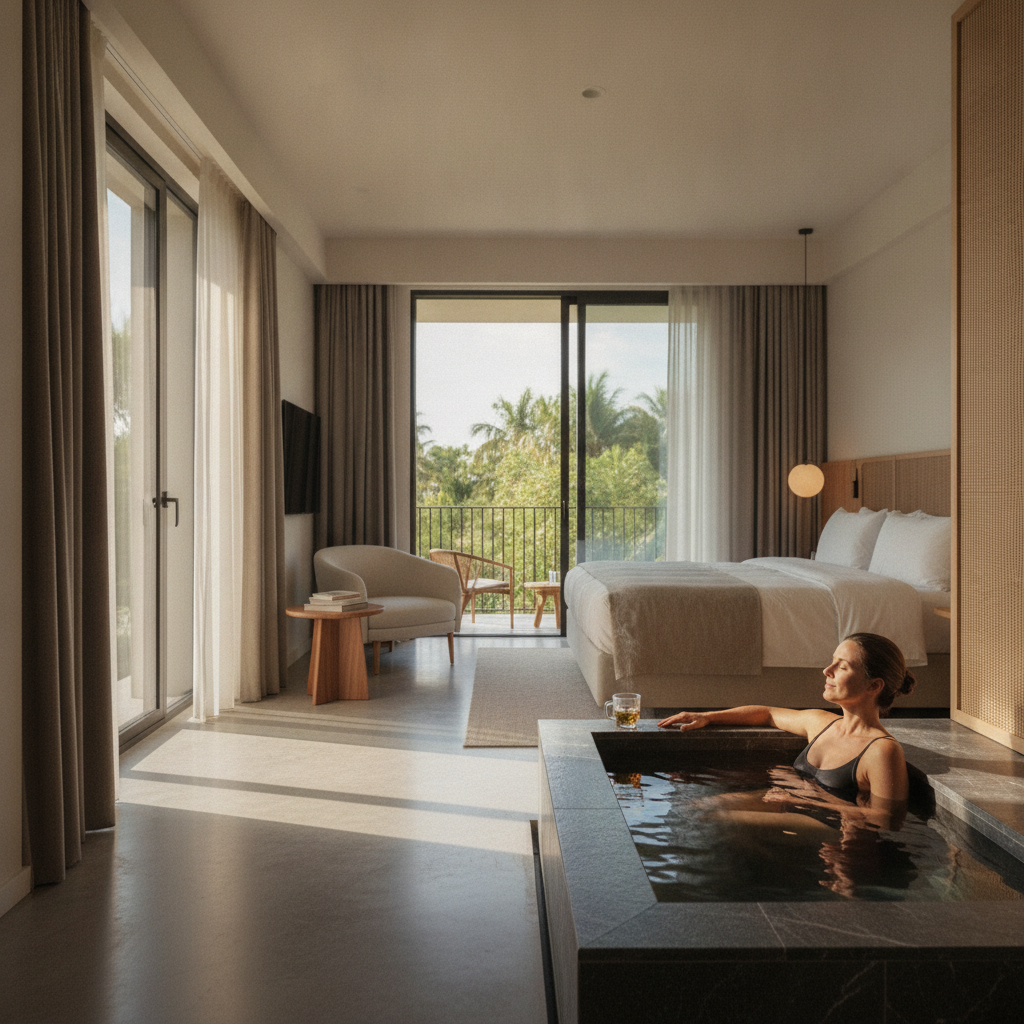
Fitness travelers, marathon and endurance athletes, business travelers managing jet lag, and wellness-focused leisure guests all show strong demand. Properties near race routes or fitness events often see spikes in bookings tied to the amenity.
Types of Cold Plunge Amenity for Hotel Rooms: Built-In vs. Portable vs. On-Demand
Not every property needs — or can afford — a permanent, plumbed-in cold plunge installation. The market has matured to offer three distinct amenity models, each with different cost structures and guest experiences.
| Amenity Model | Typical Cost | Guest Experience | Best Fit |
|---|---|---|---|
| Built-in / plumbed suite feature | ~$35,000+ per unit | Always-available, part of the room design | Flagship wellness suites, new construction |
| Portable in-room unit | ~$2,999 per unit | Wheeled in on request; flexible placement | Existing properties avoiding renovation |
| On-demand recovery service | Variable, often per-session or subscription | Delivered by a third-party wellness partner | Boutique hotels testing demand before investing |
Boston's Hotel Commonwealth, for example, partners with a recovery service provider to offer in-room cold plunging and red-light therapy on request, letting guests book the amenity pre-arrival or during their stay without the hotel owning or maintaining the equipment itself.[3] This model is particularly attractive for properties that want to test the cold plunge amenity for hotel rooms before committing capital to built-in installations.
How to Price and Package a Cold Plunge Amenity for Hotel Rooms
Pricing is where many properties leave revenue on the table. Rather than treating cold plunge as a flat spa charge, high-performing hotels package the cold plunge amenity for hotel rooms in three distinct ways:
- Room category premium: Suites that include a private cold plunge are priced as an entirely new category, not a standard room plus surcharge. Some operators project ADR effectively doubling for these suites, alongside stronger year-round occupancy.
- Package add-on: The amenity is bundled into a "recovery package" alongside sauna access, compression boots, or a wellness consultation, priced as a single upsell at booking or check-in.
- À la carte session booking: Guests reserve a set time block (typically 20–45 minutes) for a flat per-session fee, ideal for portable or on-demand models.
A quotable takeaway for owners evaluating the investment: "The cold plunge amenity for hotel rooms is increasingly priced as a new class of suite experience, not a surcharge on an existing room." This reframing matters because it shifts guest expectations from "extra fee" to "premium product," which supports higher price points and reduces price sensitivity at booking.
Guest Experience and Safety Considerations
Because the cold plunge amenity for hotel rooms involves a physiological stress response, guest safety protocols matter as much as the equipment itself. Properties offering this amenity should build in a few operational safeguards:
- Pre-use screening: A simple digital waiver or verbal check covering cardiovascular conditions, pregnancy, and recent surgery.
- Session time guidance: Most guest-facing materials recommend 2–5 minute sessions for beginners, with clear signage or in-room cards.
- Water quality and hygiene: Filtration and sanitation protocols, especially for portable units used across multiple rooms.
- Emergency response: Staff trained to recognize cold shock symptoms, even when the amenity is self-service.
Guests generally respond well to properties that visibly prioritize safety — it reinforces the premium, professional positioning of the amenity rather than treating it as a gimmick.
Any wellness amenity carries some liability considerations, but clear waivers, session guidance, and basic staff training substantially reduce risk. Many properties treat it similarly to fitness center or pool liability protocols already in place.
Marketing and Positioning the Cold Plunge Amenity for Hotel Rooms
How you talk about the amenity matters as much as how you deliver it. The strongest-performing hotels avoid generic "spa feature" language and instead position the cold plunge amenity for hotel rooms around a specific guest outcome: recovery, energy, sleep quality, or stress relief.
Effective positioning tactics include:
- Name it distinctly: Give the amenity a branded name on your room and package menus rather than listing it as generic "cold plunge access."
- Tie it to a routine: Frame the amenity as part of a "stay routine" — morning plunge, midday sauna, evening recovery — rather than a single treatment.
- Leverage event timing: Properties near marathons, triathlons, or major fitness events see strong demand spikes when the amenity is promoted ahead of race weekends.
- Encourage sharing: Visually distinctive setups (glass-walled plunge nooks, outdoor terrace placement) naturally generate guest social content, extending reach beyond paid marketing.
HotelPlunge works with properties to design amenity language and packaging that matches guest expectations at each price tier — from portable in-room offerings to full suite-level installations. You can explore current equipment and amenity models at HotelPlunge.
Measuring ROI on the Cold Plunge Amenity for Hotel Rooms
Owners evaluating whether to add a cold plunge amenity for hotel rooms should track a small set of metrics rather than relying on anecdotal guest feedback alone:
- Attach rate: Percentage of eligible bookings that add the amenity as a package or upsell.
- Incremental ADR: Rate difference between rooms with and without the amenity, tracked over at least one full season.
- Repeat booking correlation: Whether guests who use the amenity return at a higher rate than those who don't.
- Review sentiment: Mentions of "cold plunge," "recovery," or "wellness suite" in guest reviews, which also feed indirect SEO and reputation value.
Even properties using lower-cost portable models have reported measurable guest satisfaction gains within the first 90 days of rollout, suggesting the amenity can pay back its investment relatively quickly when packaged and marketed deliberately rather than left as an unadvertised option.[4]
Getting Started: A Simple Rollout Framework
For properties considering their first cold plunge amenity for hotel rooms, a phased approach reduces risk and clarifies guest demand before larger capital commitments.
- Pilot with portable equipment: Test guest interest in a handful of premium rooms before committing to built-in installations.
- Set clear guest protocols: Draft waivers, session guidelines, and staff talking points before launch.
- Package before you price: Decide whether the amenity will be a standalone add-on, a bundled package, or a suite-category feature.
- Train front desk and concierge: Staff should be able to describe the benefits and booking process confidently, since much of the upsell happens at check-in or pre-arrival communication.
- Review and expand: Use early attach-rate and satisfaction data to decide whether to scale toward built-in suites.
This framework mirrors how several early adopters approached rollout — starting small, measuring guest response, then expanding to dedicated suite categories once demand was proven.
Frequently Asked Questions
What is a cold plunge amenity for hotel rooms?
It's a guest-facing offering that provides private access to cold-water immersion during a hotel stay, delivered through built-in fixtures, portable equipment, or an on-demand recovery service, rather than a shared spa-floor treatment.
How much does it cost to add a cold plunge amenity for hotel rooms?
Costs vary widely by model. Portable in-room units run around $2,999 per unit, while built-in, plumbed systems can cost roughly $35,000 or more per suite, not including design and staff training costs.
Do guests actually pay more for a cold plunge amenity?
Yes — properties offering the amenity as a dedicated suite category or premium package report the ability to charge significantly higher rates, since the amenity is positioned as a new class of experience rather than a minor add-on.
Is the cold plunge amenity for hotel rooms safe for all guests?
Most healthy adults can safely use short cold-water immersion sessions, but hotels should screen for cardiovascular conditions, pregnancy, and recent surgery, and provide clear session-length guidance to reduce risk.
Which guests are most likely to book this amenity?
Fitness travelers, endurance athletes, business travelers managing jet lag, and wellness-focused leisure guests show the strongest demand, particularly around fitness events and race weekends.
Final Thoughts on the Cold Plunge Amenity for Hotel Rooms
The cold plunge amenity for hotel rooms is no longer an experimental spa add-on — it's becoming a defined, revenue-generating category within hospitality, backed by a wellness tourism market moving past $1 trillion in annual spend. Whether your property starts with a single portable unit or builds a dedicated wellness suite, the amenity's success depends far more on thoughtful packaging, clear guest communication, and consistent safety protocols than on the equipment alone.
If you're evaluating how to bring a cold plunge amenity for hotel rooms to your property — from portable pilot programs to full suite-level installations — HotelPlunge can help you design an approach that fits your guest profile and budget. Visit HotelPlunge to explore equipment options and amenity packaging support tailored to hotels of every size.
Sources: [1] Global Wellness Institute, globalwellnessinstitute.org — Wellness Tourism Initiative research. [2] Industry wellness tourism reporting on cold plunge adoption trends, 2021–2023. [3] Hotel Commonwealth guest wellness partnership coverage. [4] Hospitality equipment provider guest satisfaction and rollout data, first 90 days.