No Renovation Cold Plunge Hotel: The GM's ROI Playbook
July 26, 2026 · 13 min read
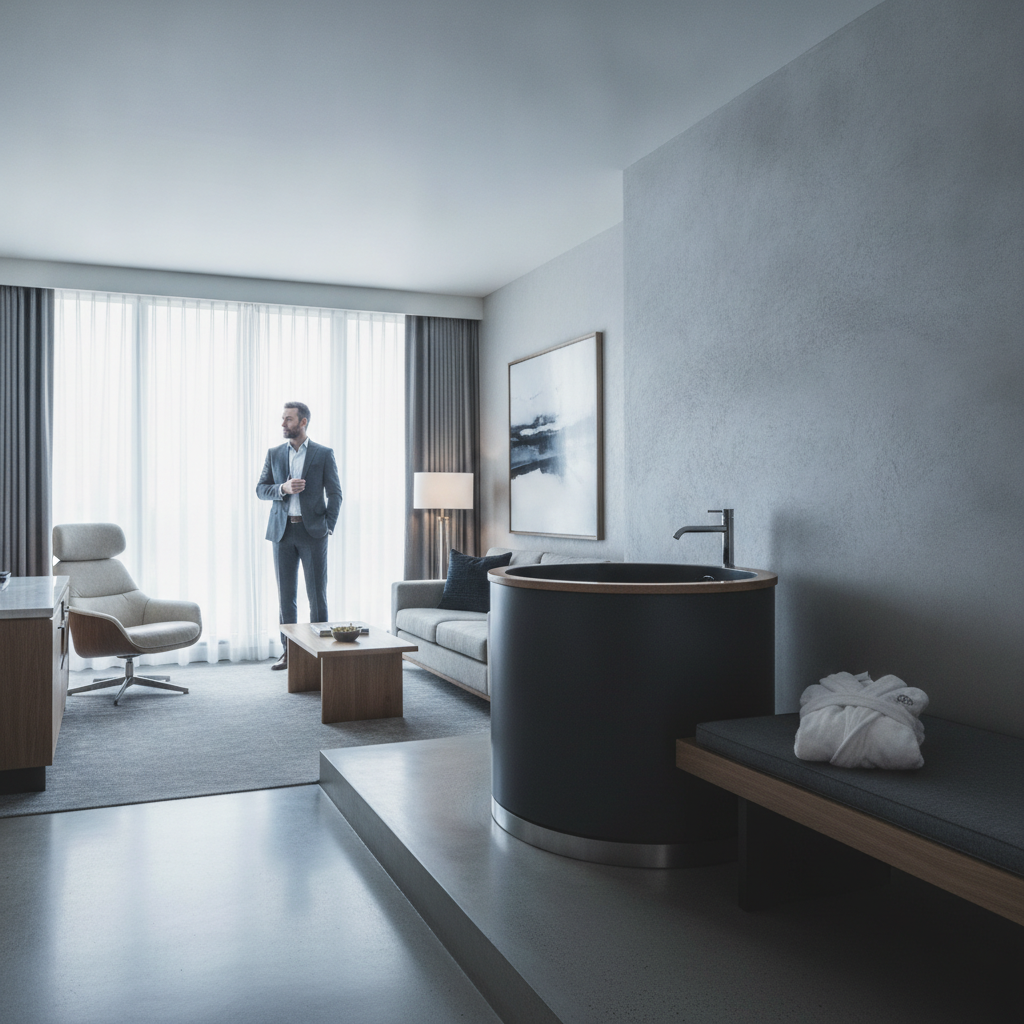
Guests are asking for cold plunge experiences faster than most capital budgets can move — which is exactly why the no renovation cold plunge hotel model has become the fastest path for General Managers, Spa Directors, and Owners to capture wellness revenue without waiting on architects, permits, or a shuttered wing. This guide breaks down what a no renovation cold plunge hotel program actually looks like across an entire property (not just a single guest bathtub), how the economics compare to traditional construction, and how to vet a vendor before you sign a purchase order.
TL;DR — The Bottom Line
A no renovation cold plunge hotel program uses plug-and-play, self-contained chilling and filtration units to add cold immersion to guest rooms, spas, gyms, pool decks, or rooftops without construction, permits, or plumbing changes. Compared to a traditional built-in plunge pool, no renovation systems typically install in days instead of months, require zero structural capex, and still support the same premium pricing and occupancy lift hotels are seeing from cold plunge amenities industry-wide.
What Is a No Renovation Cold Plunge Hotel?
A no renovation cold plunge hotel is a property that offers guests controlled cold water immersion using equipment designed to bypass construction entirely. Instead of excavating a spa floor or re-plumbing a guest bathroom, the hotel deploys a self-contained unit that chills, filters, and circulates water on its own closed loop. Some systems retrofit an existing bathtub; others are freestanding plunge vessels that simply need a standard power outlet and a water source.
The distinction matters because "cold plunge" has become a catch-all term covering everything from a $400 residential ice bath to a $150,000 built-in hydrotherapy pool with dedicated mechanical rooms. A true no renovation cold plunge hotel solution sits in the middle: commercial-grade performance without the commercial-grade construction timeline. That's the core value proposition HotelPlunge and similar equipment providers bring to hospitality buyers who need results this quarter, not next fiscal year.
Generally no. Because the units are self-contained, plug-and-play appliances rather than fixed plumbing installations, most jurisdictions treat them like a large appliance rather than a construction project — though GMs should always confirm with local building and health codes before installation.
Why Hotels Are Moving Fast on No Renovation Cold Plunge Solutions
Wellness travel is no longer a niche line item — it's a structural shift in how guests choose where to stay. The Global Wellness Institute projects the global wellness tourism market surpassed $1 trillion in 2024, and industry analysis circulated on LinkedIn puts wellness tourism at $814.6 billion in 2024, climbing to an estimated $1.66 trillion by 2034 at roughly a 7.3% compound annual growth rate (Source: Global Wellness Institute; LinkedIn industry briefing, 2024).
Within that broader wellness curve, cold plunge has emerged as one of the fastest-rising specific amenities. Equinox has reported that cold plunges are now among the fastest-growing spa features in hospitality over the past three to five years, actively influencing where guests choose to book (Source: Equinox, equinox.com). Travel planning firm Indagare goes further, describing cold plunges as "must-dos" at wellness properties that increasingly shape destination selection, not just in-stay satisfaction (Source: Indagare, indagare.com). Trade coverage from APN News frames cold immersion as central to a broader "wellness revolution" reshaping luxury hospitality programming worldwide (Source: APN News, apnnews.com).
For operators without capital budget cycles that match this demand curve, a no renovation cold plunge hotel strategy is the only realistic way to move at the speed guests expect.
Where a No Renovation Cold Plunge Hotel Program Can Live on Your Property
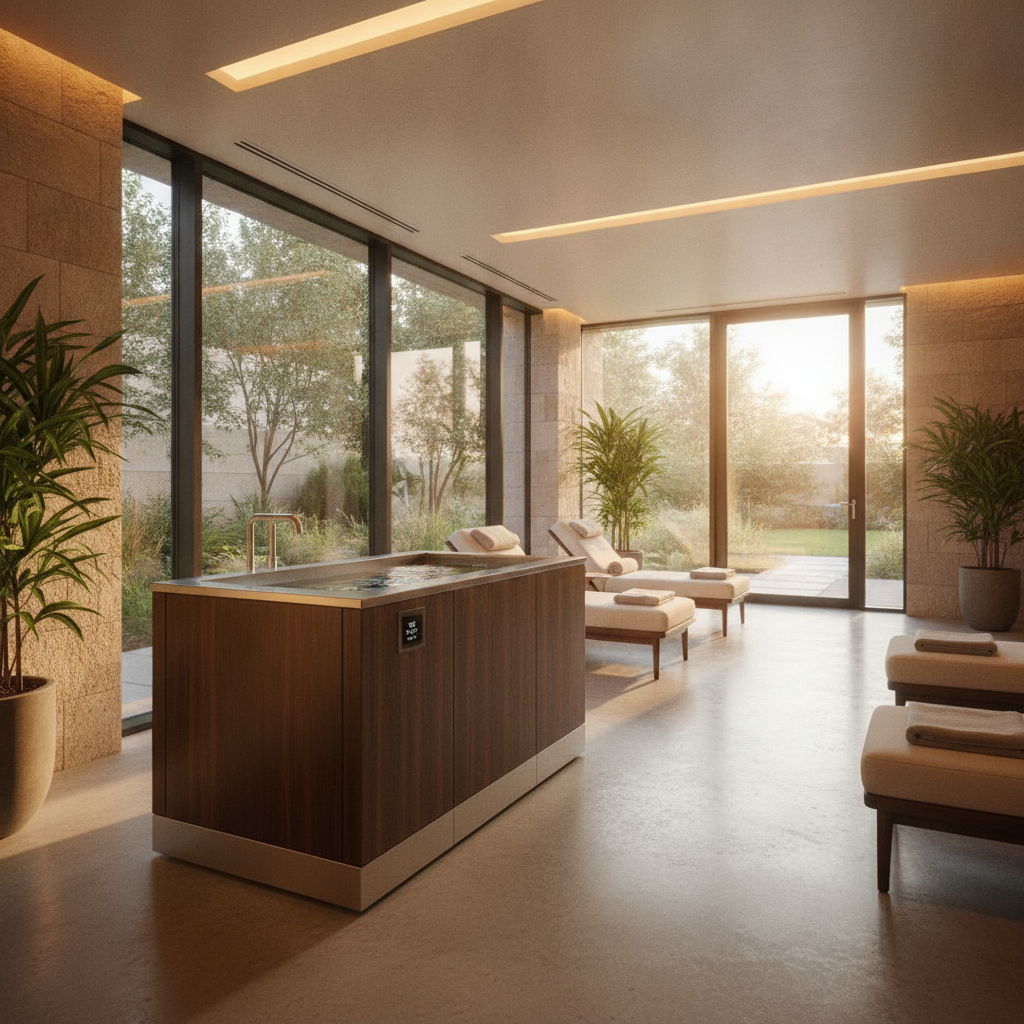
One misconception limits GMs to thinking of no renovation cold plunge only as a bathroom retrofit. In practice, a no renovation cold plunge hotel program can be deployed across multiple zones of a property simultaneously, each with different guest-facing logic:
- Spa treatment circuits: Freestanding plunge units placed alongside saunas or steam rooms as part of a contrast therapy journey.
- Fitness centers: Post-workout recovery stations that require zero plumbing beyond a standard outlet and drain access.
- Pool decks and terraces: Weatherized units that add a cold-water contrast experience without expanding the pool footprint.
- Rooftop wellness lounges: Compact plunge vessels that fit load limits unsuitable for a built-in pool.
- Premium guest suites: In-room units or tub-conversion devices for a private, upsellable cold plunge experience.
Fluidra's hospitality research notes that plunge pools succeed in hotels precisely because they are compact features that elevate guest experience without demanding large spaces or complex renovation (Source: Fluidra, fluidra.com). A no renovation cold plunge hotel approach takes that same compactness principle and removes the remaining construction dependency, letting operators place cold immersion virtually anywhere with power and drainage access.
Quick Facts
- Global wellness tourism market: $1 trillion+ in 2024 (Global Wellness Institute)
- Projected wellness tourism value by 2034: $1.66 trillion at ~7.3% CAGR (LinkedIn industry briefing)
- ADR impact of cold plunge suites: Up to 2x standard room rate in early operator reporting (Glenapp Castle case data)
- Reported occupancy for cold plunge suites: ~65% year-round
- Typical no renovation install timeline: Days, versus months for construction-based plunge pools
- Staffing impact: Most no renovation systems require no additional dedicated staff
No Renovation vs. Traditional Build-Out: Cost, Timeline, and Risk Comparison
The clearest way to evaluate a no renovation cold plunge hotel investment is side-by-side against a traditional construction-based plunge pool or hydrotherapy build. The gap in capital exposure and speed to revenue is significant.
| Factor | No Renovation Cold Plunge Hotel | Traditional Built Plunge Pool |
|---|---|---|
| Permits required | Typically none | Building, plumbing, and health permits |
| Installation timeline | Days to a few weeks | 3–12+ months |
| Construction downtime | Minimal to none | Room or spa closures during build |
| Capital exposure | Equipment cost only | Equipment + labor + structural work |
| Mobility/flexibility | Can be relocated or redeployed | Fixed, permanent installation |
| Staffing needs | Minimal; largely self-managed | May require dedicated maintenance staff |
This comparison is why owners and asset managers increasingly treat a no renovation cold plunge hotel program as a low-risk pilot before ever considering a permanent spa expansion. It lets a property test guest demand, pricing elasticity, and operational fit before committing seven figures to construction.
The ROI Case: Revenue Impact of No Renovation Cold Plunge Hotel Programs
Early operator data suggests cold plunge access is not just a nice-to-have amenity line — it's becoming a rate driver. At Glenapp Castle, wellness consultant David Szkiler has projected that a dedicated cold-plunge-enabled room category can roughly double average daily rate compared to standard rooms, while sustaining around 65% occupancy year-round and extending average length of stay (Source: reporting on Glenapp Castle wellness programming, icebaths.com industry coverage, 2024). Notably, this uplift is described as largely staff-light — the amenity does not require the incremental labor cost of a full-service spa treatment.
For a no renovation cold plunge hotel program specifically, the ROI case is even stronger because the denominator — capital invested — is dramatically smaller than a construction-based alternative. A property that spends a fraction of a full spa build-out on equipment can realistically achieve payback within a single high season, particularly when the amenity is bundled into a premium suite category or sold as a spa add-on experience.
Because installation avoids construction and permitting delays, many properties move from purchase decision to guest-facing launch within a few weeks — often in time for a single peak season, rather than missing it during a multi-month renovation.
How to Launch a No Renovation Cold Plunge Hotel Program in 5 Steps
Operators evaluating this category typically move through a predictable rollout sequence. Here is the practical playbook for launching a no renovation cold plunge hotel program without disrupting existing operations:
- Audit available space and utilities. Identify locations with access to a standard power outlet, water source, and drainage — spa rooms, fitness centers, terraces, or premium suites are common starting points.
- Define the guest-facing concept. Decide whether cold plunge will be a spa circuit addition, a bookable recovery station, or a premium in-room upsell tied to a specific suite category.
- Vet no renovation cold plunge equipment vendors. Compare chilling capacity, filtration quality, footprint, noise levels, and commercial-grade durability against your expected guest volume.
- Pilot in one zone before scaling. Launch in a single spa area or suite tier, gather guest feedback and usage data, then expand based on real demand rather than assumption.
- Train front-of-house and spa staff on guest education. Even with minimal operational burden, staff should be able to explain contraindications, session length, and expected benefits confidently.
Choosing a No Renovation Cold Plunge Vendor: What GMs Should Vet
Not every plug-and-play plunge unit is built for commercial hospitality use. Before selecting a partner for a no renovation cold plunge hotel program, GMs and Spa Directors should evaluate:
- Commercial-grade duty cycle: Can the chiller and filtration system handle multiple guest sessions per day without performance drop-off?
- Water hygiene compliance: Does the system meet filtration and sanitation standards appropriate for shared or rotating guest use, not just single-household use?
- Warranty and service response: What is the vendor's turnaround time for parts and repairs at a commercial property versus a residential customer?
- Footprint and aesthetics: Does the unit fit your brand standard for spa or suite design, or will it look like imported home equipment?
- Installation support: Does the vendor provide guidance for utility hookups, staff training, and guest signage?
HotelPlunge works specifically within this commercial hospitality lens, which is worth exploring directly at HotelPlunge when comparing vendors for a no renovation cold plunge hotel rollout.
Operational, Safety, and Liability Considerations
Even without construction, a no renovation cold plunge hotel program still requires an operational framework. Key considerations include:
- Signage and contraindication disclosure: Guests with cardiovascular conditions, pregnancy, or certain medications should be advised to consult a physician before use.
- Session time guidance: Most cold immersion protocols recommend short sessions (typically 2–5 minutes), which should be clearly posted.
- Water quality maintenance: Even self-contained units require a maintenance schedule for filtration and sanitation checks.
- Insurance review: Confirm with your property's insurance carrier how a no renovation cold plunge hotel amenity is classified under existing liability coverage.
These are manageable, low-lift responsibilities compared to running a full hydrotherapy circuit, but they should not be skipped simply because there was no construction phase to trigger a formal safety review.
No single wellness amenity is universally safe for every guest. Properties should post clear contraindication guidance and encourage guests with cardiovascular conditions or other health concerns to consult a physician before use, consistent with general cold immersion safety guidance referenced in industry coverage from APN News (Source: APN News, apnnews.com).
Frequently Asked Questions
What is a no renovation cold plunge hotel program?
It's a hospitality wellness offering built on self-contained, plug-and-play cold immersion equipment that installs in existing rooms, spas, or outdoor spaces without construction, permits, or plumbing changes.
How much does a no renovation cold plunge hotel setup cost compared to a built-in pool?
Costs vary by unit and scale, but a no renovation cold plunge hotel setup avoids the labor, permitting, and structural expenses of a traditional build, typically limiting the investment to equipment cost alone.
Can a no renovation cold plunge hotel program increase room rates?
Early operator data, including projections from Glenapp Castle's wellness programming, suggests dedicated cold plunge suite categories can command significantly higher average daily rates than standard rooms while maintaining strong year-round occupancy.
Do no renovation cold plunge hotel units require dedicated staff?
Most no renovation systems are designed to be low-maintenance and largely self-managed, meaning properties typically do not need to add dedicated full-time staff to operate them.
Where can a no renovation cold plunge hotel unit be installed on a property?
Common locations include spa treatment circuits, fitness centers, pool decks, rooftop lounges, and premium guest suites — anywhere with access to standard power and water/drainage connections.
Conclusion: Moving Fast Without Moving Walls
The hospitality industry's wellness shift is not waiting for construction schedules, and neither should your property. A no renovation cold plunge hotel program gives General Managers, Spa Directors, and Owners a way to meet fast-growing guest demand for cold immersion with equipment-only capital investment, days-not-months installation, and revenue upside that early operator data shows can meaningfully move ADR and occupancy. Whether it lives in your spa, your fitness center, your rooftop lounge, or a premium suite tier, the no renovation cold plunge hotel model removes the traditional barriers — permits, plumbing, and prolonged downtime — that have kept smaller and mid-sized properties out of the cold plunge conversation until now.
If you're ready to evaluate commercial-grade, no renovation cold plunge hotel equipment built specifically for hospitality use, visit HotelPlunge to start planning your rollout.