Best Cooling Sheet Sets for Hot Sleepers: 2026 Guide
August 4, 2026 · 13 min read
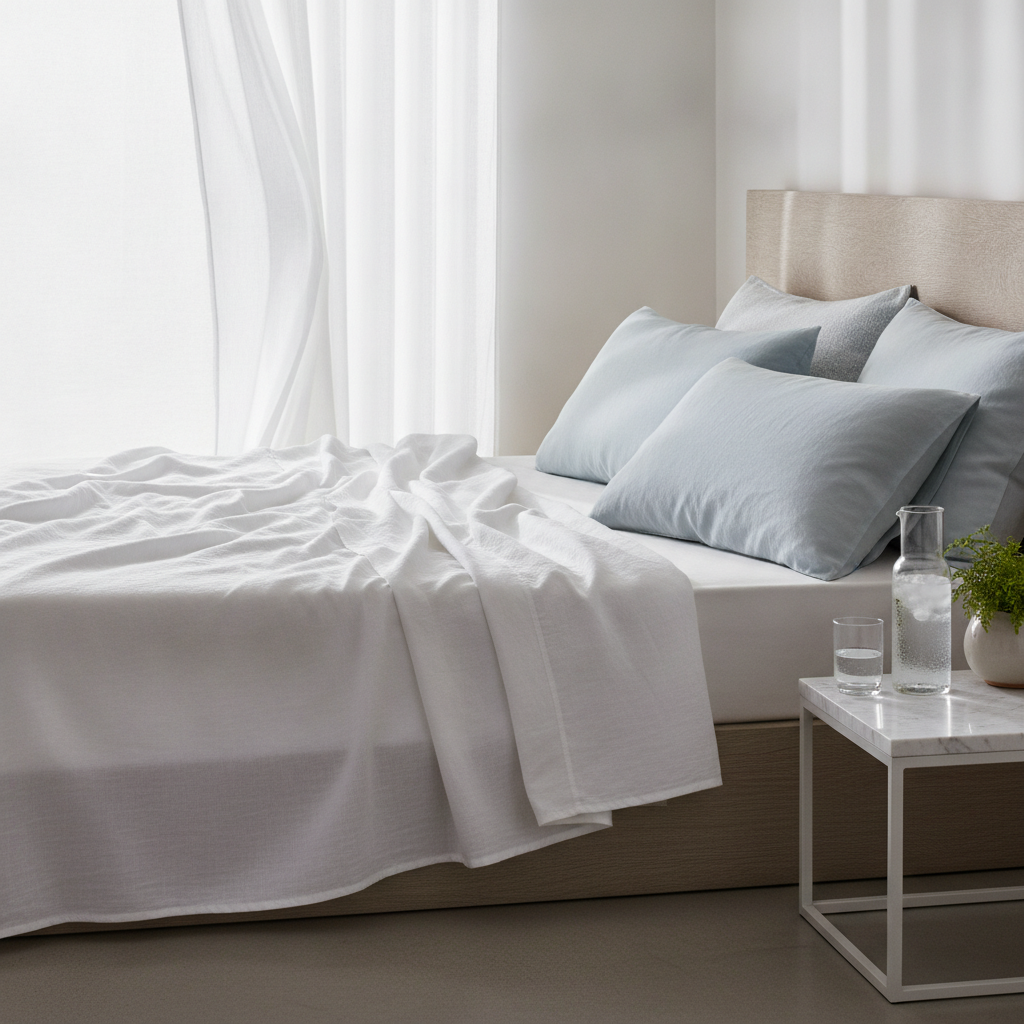
If you wake up tangled in damp sheets, kicking off the covers, or flipping your pillow to the “cool side” at 2 a.m., you already know the frustration of sleeping hot. Finding the best cooling sheet sets for hot sleepers isn't just about comfort — it's about getting deeper, uninterrupted sleep. The right combination of breathable fiber, weave, and fit can mean the difference between a restless night and genuinely restorative rest. In this guide, we break down the fabrics, constructions, and fit features that separate the best cooling sheet sets for hot sleepers from sheets that merely claim to be cooling.
TL;DR — The Bottom Line
The best cooling sheet sets for hot sleepers combine breathable natural fibers (bamboo lyocell or 100% cotton percale) or engineered moisture-wicking microfiber with a 200–400 thread count and a secure, non-shifting fit. Avoid high thread counts above 400, which trap heat, and prioritize OEKO-TEX-certified, non-toxic materials plus deep, snug-fitting pockets that prevent bunching — since a sheet that rides up mid-sleep undoes any cooling benefit.
Quick Facts
- Ideal thread count range: 200–400 TC for maximum airflow
- Top cooling fiber: Bamboo lyocell, scoring as high as 9.8/10 in cooling comparisons
- Best natural weave: 100% cotton percale for a crisp, breathable, matte feel
- Safety benchmark: OEKO-TEX certification confirms no harmful chemical residues
- Common failure point: Poor-fitting sheets that shift and bunch, trapping body heat overnight
Sierra Dreams sees this frustration every day among homeowners who've bought "cooling" sheets that still leave them sweating by midnight, or that bunch up around the mattress corners within a week. The truth is that cooling performance and fit are inseparable. A sheet can be made from the most technically advanced moisture-wicking fiber on the market, but if it slides, rides up, or bunches under a fitted mattress topper, it stops doing its job. That's why the best cooling sheet sets for hot sleepers are judged not just on fabric science, but on how well they stay put through a full night of movement.
What Actually Makes a Sheet Set "Cooling"?
Not every sheet marketed as "cooling" delivers on that promise. True cooling performance comes down to three measurable properties: breathability, moisture-wicking capacity, and surface friction. According to sleep and textile researchers, breathable natural fibers allow air to circulate through the weave, helping dissipate the heat your body generates overnight.[1] Moisture-wicking fibers, meanwhile, pull perspiration away from the skin and allow it to evaporate quickly rather than pooling against your body.
Low-friction, smooth-handed fabrics matter too. Rougher, heavier textiles can trap a thin layer of warm air against the skin, while a smooth, lightweight weave lets that layer disperse. When shopping for the best cooling sheet sets for hot sleepers, look for language around "breathable weave," "moisture-wicking," and "lightweight hand-feel" rather than thread count alone, which is often used as a marketing shorthand that doesn't tell the whole story.
Not necessarily. Some sheets labeled "cooling" rely on marketing rather than fiber science. The best cooling sheet sets for hot sleepers use fibers and weaves — like bamboo lyocell or cotton percale — that are independently known for breathability and moisture-wicking, not just a cool-to-the-touch marketing claim at first contact.
Best Fabrics for Cooling Sheet Sets: Bamboo Lyocell vs. Cotton Percale vs. Microfiber
Three fabric categories consistently dominate discussions of the best cooling sheet sets for hot sleepers, each with distinct strengths.
Bamboo Lyocell (Bamboo-Derived Tencel)
Bamboo lyocell is frequently ranked at the top of cooling comparisons, with one industry analysis giving 100% bamboo lyocell sheets at a 300 thread count a cooling score of 9.8 out of 10 for hot sleepers with eco-conscious preferences.[2] It offers a silky, drapey feel, strong moisture absorption, and a naturally cool touch, though it typically costs more than cotton and needs gentler laundering.
Cotton Percale
Percale is a simple, tight, one-over-one-under weave that produces a crisp, matte, airy fabric — the opposite of the slick, heavier sateen weave. Because of its open structure, 100% cotton percale is repeatedly recommended for summer sleeping and night sweats, offering excellent sweat absorption at an accessible price point.[3] Experts recommend sticking to true 100% cotton rather than cotton blends for maximum breathability.
Cooling Microfiber (Engineered Performance Fabrics)
Engineered fabrics like Coolmax-style polyester microfiber are built specifically to wick moisture, similar to athletic apparel, and are often budget-friendly and highly durable.[4] The tradeoff: synthetic fibers can retain heat if the weave isn't engineered with enough airflow, and some hot sleepers find them less breathable over a full night compared with natural fibers.[5]
| Fabric | Cooling Performance | Feel | Best For |
|---|---|---|---|
| Bamboo Lyocell | Excellent (9.8/10 in cooling comparisons) | Silky, drapey | Hot sleepers, night sweats, eco-conscious buyers |
| Cotton Percale | Very Good | Crisp, matte, airy | Warm climates, budget-conscious luxury seekers |
| Cooling Microfiber | Good, variable by engineering | Smooth, slightly synthetic | Athletic sleepers, easy-care households |
Thread Count Myths: Why Higher Isn't Always Cooler
Thread count has become shorthand for "quality" in bedding marketing, but for hot sleepers, it's a misleading metric. A very high thread count means more fibers are woven into each square inch — which can actually reduce the tiny air pockets that let heat and moisture escape. That's why the best cooling sheet sets for hot sleepers rarely exceed 400 thread count, regardless of fiber type.
Instead of chasing a number, look at weave type (percale over sateen for cooling), fiber origin (natural or lyocell over standard polyester), and finishing treatments. A sheet described as "300 TC 100% cotton percale" will typically outperform an "800 TC cotton-polyester sateen" for a hot sleeper, even though the second number sounds more impressive on a packaging label.
How Fit and Construction Prevent Overheating (Not Just Fabric)
This is where most "best cooling sheets" roundups fall short — they focus entirely on fiber and ignore fit. A sheet that shifts, bunches, or rides up mid-sleep bundles fabric layers together, trapping the exact heat and moisture the fiber was supposed to dissipate. Deep, elasticized pockets and secure corner construction are essential, especially with today's thicker mattresses and mattress toppers.[7]
Sierra Dreams was built around solving precisely this problem: pairing breathable, cooling-grade fabrics with a construction designed to stay smooth and taut through a full night of movement. Homeowners frequently tell us that even a technically "cooling" sheet feels hot once it's balled up at the foot of the bed by 3 a.m. — which is why fit engineering matters just as much as fiber selection when identifying the best cooling sheet sets for hot sleepers.
Yes. A snug, non-shifting fit keeps the breathable fabric surface flat against the mattress and evenly exposed to airflow. When sheets bunch, layers of fabric stack on top of each other, insulating heat instead of releasing it — undermining even the most advanced cooling fiber.
Best Cooling Sheet Sets for Hot Sleepers by Sleep Style
Not every hot sleeper has the same needs. Here's how to match fabric and construction to your specific sleep pattern.
Night Sweats or Hormonal Hot Flashes
Prioritize bamboo lyocell or Tencel blends for their rapid moisture absorption and evaporation — they're specifically highlighted for reducing clamminess associated with night sweats and hot flashes.[8]
Restless, Active Sleepers
If you move around a lot, fit matters more than fiber. Choose a set with deep, secure pockets and a smooth percale weave that resists bunching and friction against skin.
Budget-Conscious Hot Sleepers
Cotton percale at a 200–300 thread count delivers strong cooling performance without the premium price tag of bamboo lyocell, making it one of the most accessible entries among the best cooling sheet sets for hot sleepers.
Sensitive Skin or Allergy-Prone Sleepers
Look for OEKO-TEX-certified natural fibers, which are tested for harmful substances and tend to be gentler against sensitive or reactive skin than untested synthetic blends.[9]
| Sleeper Type | Recommended Fabric | Recommended Thread Count |
|---|---|---|
| Night sweats / hot flashes | Bamboo lyocell | 250–350 TC |
| Restless / active sleepers | Cotton percale, deep-pocket fit | 200–300 TC |
| Budget-conscious | Cotton percale | 200–300 TC |
| Sensitive skin | OEKO-TEX certified natural fiber | 250–400 TC |
Certifications and Safety: What to Look for Beyond Cooling Claims
Cooling performance shouldn't come at the cost of chemical exposure. As demand for the best cooling sheet sets for hot sleepers has grown, so has the number of products treated with synthetic cooling finishes or dyes. Look for OEKO-TEX Standard 100 certification, which confirms textiles have been independently tested for harmful substances across the entire product, not just the finished surface.[10]
Discerning homeowners increasingly want bedding that is both high-performing and clean-label — free from formaldehyde-based finishes, heavy metal dyes, and unnecessary synthetic coatings. This is a core reason Sierra Dreams pairs cooling fiber science with non-toxic material sourcing rather than treating the two as separate priorities. If you're evaluating options, visit Sierra Dreams to see how certified, breathable materials are combined with a fit-focused construction designed specifically for hot sleepers.
Certification itself doesn't guarantee cooling performance, but organic and OEKO-TEX-certified natural fibers are typically processed with fewer synthetic coatings and finishes that can reduce breathability — making certified natural sheets a reasonably safe bet for both cleaner materials and cooling comfort.
How to Choose and Care for Cooling Sheet Sets
Selecting and maintaining the best cooling sheet sets for hot sleepers is a straightforward process once you know what to prioritize.
- Step 1 — Identify your primary heat trigger. Night sweats call for bamboo lyocell; general overheating responds well to cotton percale.
- Step 2 — Check the thread count range. Stay within 200–400 TC; avoid marketing claims built around inflated numbers.
- Step 3 — Confirm deep-pocket, secure-fit construction. Measure your mattress depth (including toppers) and match pocket depth accordingly.
- Step 4 — Verify certifications. Look for OEKO-TEX or equivalent testing to confirm the fabric is free of harmful substances.
- Step 5 — Wash in cool or warm water, low heat drying. High heat degrades natural fiber breathability over time and shortens the lifespan of moisture-wicking finishes.
- Step 6 — Skip fabric softener. Softener residue coats fibers and can reduce the breathability that makes cooling sheets effective.
Following this simple process consistently improves the real-world performance of any cooling sheet set — often more than upgrading fabric alone would.
Frequently Asked Questions
What is the best fabric for hot sleepers?
Bamboo lyocell and 100% cotton percale are widely considered the best fabrics for hot sleepers due to their breathability and moisture-wicking properties, with bamboo lyocell scoring especially high in cooling comparisons among the best cooling sheet sets for hot sleepers.
What thread count is best for cooling sheets?
A thread count between 200 and 400 is generally ideal. Higher counts can pack fibers too densely, reducing the airflow that makes cooling sheets effective.
Why do my sheets get hot even though they're labeled "cooling"?
Often it's a fit issue rather than a fabric issue. Sheets that shift or bunch overnight stack fabric layers together, trapping heat regardless of how breathable the underlying material is.
Are bamboo sheets actually cooler than cotton sheets?
Bamboo lyocell generally scores higher than standard cotton in cooling and moisture-wicking comparisons, but 100% cotton percale remains a close, more budget-friendly alternative among the best cooling sheet sets for hot sleepers.
Do cooling sheets need special care?
Yes — wash in cool or warm water, dry on low heat, and avoid fabric softener, which coats fibers and reduces breathability and moisture-wicking performance over time.
Is a higher price always a sign of better cooling performance?
Not necessarily. Price often reflects brand, fiber sourcing, and certifications rather than cooling performance alone. A well-constructed 250 TC cotton percale set can outperform a poorly fitted, expensive high-thread-count sheet for hot sleepers.
Conclusion: Choosing the Best Cooling Sheet Sets for Hot Sleepers
The best cooling sheet sets for hot sleepers aren't defined by a single flashy number on the packaging — they're the result of breathable fiber, sensible thread count, verified safety certifications, and a construction that stays put through a full night's movement. Whether you gravitate toward the silky drape of bamboo lyocell, the crisp airiness of cotton percale, or an engineered moisture-wicking microfiber, matching the fabric to your specific sleep pattern — and pairing it with a secure, anti-bunching fit — is the real formula for staying cool through the night.
Sierra Dreams was built for exactly this kind of discerning homeowner: someone who wants cooling comfort without compromising on non-toxic materials or dealing with sheets that shift and bunch by morning. Explore Sierra Dreams' cooling bedding collection to find a set engineered to stay breathable, secure, and comfortable all night long.
Sources: [1][3][7] Sleep Foundation, https://www.sleepfoundation.org — sleep science research team; [2][9] Industry cooling-fabric comparison analyses; [4][5] Consumer textile performance reviews; [6] Bedding industry thread-count guidance; [8] Moisture-wicking fiber research; [10] OEKO-TEX Standard 100, https://www.oeko-tex.com.