What Are Deep Pocket Sheets? Depth, Fit and Staying On
July 24, 2026 · 13 min read
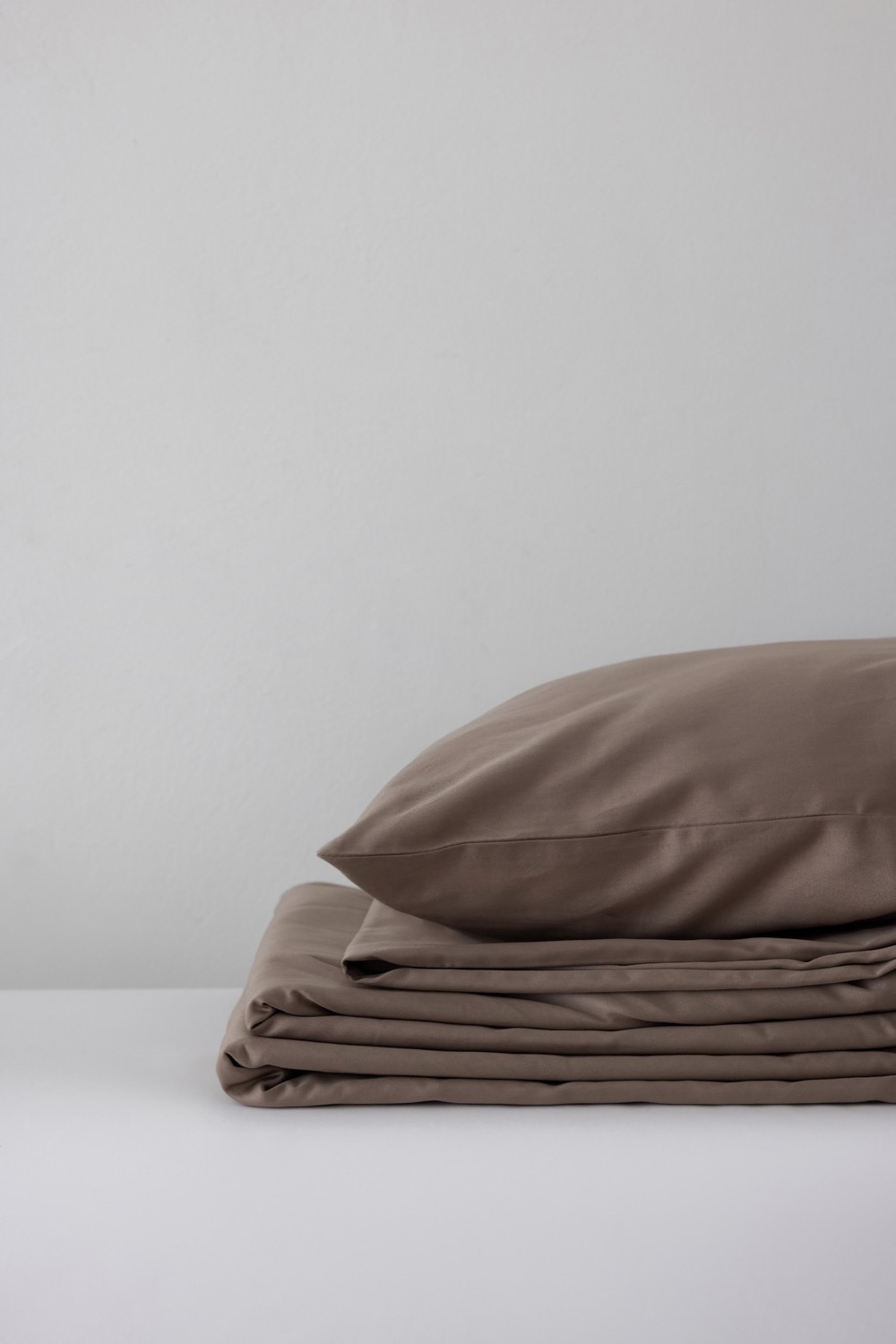
If you've ever woken up to a bunched, twisted fitted sheet or watched a corner pop off the mattress in the middle of the night, you already understand why deep pocket fitted sheets that stay on have become one of the most searched-for solutions in home goods today. As mattresses get thicker, often stacked with plush toppers, cooling pads, and pillow-top layers, standard sheets simply can't keep up. This guide breaks down exactly what makes deep pocket fitted sheets that stay on different from ordinary bedding, the engineering behind a secure fit, and how Sierra Dreams approaches this common sleep frustration.
TL;DR, The Bottom Line
Deep pocket fitted sheets that stay on rely on three things working together: correctly matched pocket depth (usually 15–18 inches for deep pocket, 18–24+ inches for extra-deep), high-tension 360° elastic sewn around the entire perimeter, and reinforced corners with non-slip traction. Get any one of these wrong and sheets will bunch, slip, or pop off, regardless of thread count or fabric quality.
Quick Facts
- Standard fitted sheet depth: fits mattresses up to about 14 inches thick
- Deep pocket depth: typically 15–18 inches
- Extra-deep pocket depth: commonly 18–24 inches, with niche products up to 26–30 inches
- Elastic coverage that resists slipping: 360° perimeter elastic, not just corner elastic
- Recommended sizing buffer: add 1–2 inches beyond actual mattress height for shrinkage and easier tucking
What Deep Pocket Fitted Sheets That Stay On Actually Means
The term "deep pocket" gets used loosely across the bedding industry, and that inconsistency is exactly why so many homeowners end up disappointed. There is no single regulated definition, but industry data points to fairly consistent ranges. Standard fitted sheets are built for mattresses up to about 14 inches thick. Deep pocket sheets generally accommodate 15 to 18 inches, while extra-deep pocket sheets stretch from 18 up to 24 inches or more, with a handful of specialty products reaching 26 to 30 inches for oversized mattress-and-topper combinations.
What separates true deep pocket fitted sheets that stay on from sheets that merely claim deep pocket sizing is the combination of accurate depth measurement with the elastic and corner construction needed to maintain that fit through a full night of movement. A sheet can technically have a 16-inch pocket and still slip off if the elastic is weak or unevenly distributed. Depth alone is not the whole story, it's the starting point.
For Sierra Dreams customers shopping for deep pocket fitted sheets that stay on, the practical takeaway is simple: measure your mattress, including any topper, from the top surface straight down to the floor of the frame or box spring. That total is your target depth, and your sheet's listed pocket depth should equal or exceed it by 1 to 2 inches.
Why Fitted Sheets Slip, Bunch, and Pop Off
Before solving the problem, it helps to understand its mechanics. Four issues account for nearly every case of a fitted sheet failing to stay put:
- Insufficient pocket depth for a high-profile mattress or thick topper, which leaves too little fabric to anchor around the corners.
- Weak or partial elastic, often sewn only at the four corners rather than around the entire perimeter, meaning the middle of each side has nothing holding it down.
- Poor corner construction, which concentrates all the stress of movement at four small stitched points instead of distributing it evenly.
- Fabric shrinkage and elastic fatigue over time, which gradually reduce how snugly even a well-fitted sheet grips the mattress after repeated washing.
Active sleepers, shared beds, and pets on the mattress all accelerate these problems. A sheet that fits perfectly on day one can start slipping within a few months if the elastic isn't built to hold tension long-term. This is precisely the gap that deep pocket fitted sheets that stay on are designed to close, not just fitting on day one, but continuing to hold through months of nightly use and regular washing.

The Engineering Behind Deep Pocket Fitted Sheets That Stay On
Once pocket depth is correct, the real differentiator becomes construction. The most effective deep pocket fitted sheets that stay on share two engineering traits that mass-market sheets frequently skip.
360° High-Tension Elastic
Rather than sewing elastic only at the corners, better-engineered fitted sheets run elastic completely around the perimeter. This distributes tension evenly across every side of the mattress rather than concentrating stress at four points. Bedding communities and independent testers consistently report that elastic quality matters more than fabric type when it comes to staying power, a sheet with thick, tightly wound elastic will out-perform a higher thread count sheet with thin or loosely stitched elastic, even at similar pocket depths.
Reinforced, Non-Slip Corners
The second major advancement is corner-specific reinforcement. Some premium designs add friction-enhancing bands, sometimes infused with silicone micro-traction, directly at the corners and along the side seams, exactly where mattresses and sheets are most likely to separate. This creates a physical grip between fabric and mattress surface that plain elastic alone cannot achieve, which is why corner reinforcement has become a defining feature of modern deep pocket fitted sheets that stay on.
Not directly. Thread count relates to fabric softness and durability, not fit. Staying power comes almost entirely from pocket depth accuracy, elastic quality and coverage, and corner construction, a 1000-thread-count sheet with weak elastic will still slip on a thick mattress.

Deep Pocket vs. Extra-Deep Pocket: Which One Stays On Better?
Choosing between deep and extra-deep pocket sizing isn't about which is inherently "better", it's about matching the sheet to your exact mattress height. Below is a quick comparison to help homeowners decide which category their bed falls into.
| Pocket Type | Typical Depth Range | Best For |
|---|---|---|
| Standard | Up to 14 inches | Basic mattresses without toppers |
| Deep Pocket | 15–18 inches | Pillow-top mattresses, thin toppers |
| Extra-Deep Pocket | 18–24 inches | Thick memory foam beds, mattress + topper combos |
| Specialty / Oversized | 26–30 inches | Adjustable beds, extra-thick luxury mattresses |
If your mattress plus topper measures 17 inches, for example, a standard 14-inch pocket sheet will visibly strain at the corners within the first night, even with strong elastic, there simply isn't enough fabric. That's why sizing correctly is the first non-negotiable step toward deep pocket fitted sheets that stay on, before elastic or corner design ever comes into play.
How to Choose Deep Pocket Fitted Sheets That Stay On for Your Mattress
Selecting the right sheet involves more than picking a size off a label. Follow these steps to land on deep pocket fitted sheets that stay on for your specific setup:

- Measure your mattress height from the top surface down to the base, including any topper, with a tape measure at one corner.
- Add a 1–2 inch buffer to that measurement to account for fabric shrinkage after washing and to allow easier tucking.
- Check elastic coverage in product descriptions, look specifically for "360°," "all-around," or "full perimeter" elastic rather than "corner elastic" only.
- Look for corner reinforcement details, such as reinforced stitching, gripper bands, or anti-slip material at the corners.
- Read fit-specific reviews rather than general star ratings, searching for mentions of mattress thickness and how the sheet performed after multiple wash cycles.
You'd want a total pocket depth of at least 18 inches. Measure mattress plus topper together, then choose a sheet rated at or slightly above that combined height, in this case, an 18-inch deep pocket or low-end extra-deep pocket sheet.
How to Install Fitted Sheets So They Actually Stay Put
Even the best-engineered deep pocket fitted sheets that stay on can be installed incorrectly, undermining their design. Use this method for the most secure fit:
- Find the tag or seam markers, most fitted sheets have a slightly different stitch or tag indicating the intended "head" corner.
- Start with one corner fully seated over the mattress edge before moving to the diagonal corner, pulling the fabric taut as you go.
- Work the remaining two corners, pulling the elastic band underneath the mattress rather than just over the top edge.
- Smooth the sides by running your hand along each edge to distribute any bunched elastic evenly.
- Check corner tension by gently lifting each corner, a properly fitted sheet should resist pulling away easily.
This installation approach, paired with genuinely deep pocket fitted sheets that stay on, minimizes the nightly resettling that leads to a popped corner by 3 a.m.
Common Myths About Deep Pocket Fitted Sheets That Stay On
Sierra Dreams designs its bedding collections with these mechanics in mind, aiming to eliminate the guesswork that leads so many homeowners to buy multiple sheet sets before finding one that actually fits. You can browse the full range of options at Sierra Dreams to compare pocket depths and construction details side by side.
Frequently Asked Questions
What is considered a deep pocket fitted sheet?
A deep pocket fitted sheet typically has a corner-to-corner pocket depth of 15 to 18 inches, designed for mattresses with pillow tops or thin toppers that exceed the 14-inch depth standard sheets are built for.
How do I stop fitted sheet corners from popping off the mattress?
Choose deep pocket fitted sheets that stay on by matching the sheet's pocket depth to your actual mattress height (including toppers), prioritizing 360° elastic over corner-only elastic, and looking for reinforced or non-slip corner construction.
Do deep pocket sheets fit a regular mattress that's not extra thick?
Yes. Deep pocket sheets generally fit standard mattresses fine, since the extra fabric simply tucks further under the mattress. The reverse isn't true, standard sheets typically will not stretch to fit deep mattresses.
Why do my sheets still slip even though they're labeled deep pocket?
This usually points to weak or corner-only elastic rather than a depth problem. Even sheets with correct pocket depth will bunch or slip if the elastic isn't sewn around the full perimeter or has weakened from repeated washing.
How much bigger should the sheet pocket be than my mattress height?
Add 1 to 2 inches beyond your measured mattress height (including any topper) to account for fabric shrinkage over time and to make the sheet easier to tuck without over-stretching the elastic.
Choosing deep pocket fitted sheets that stay on doesn't have to be a trial-and-error process. By understanding pocket depth ranges, prioritizing 360° elastic, and checking for reinforced corners, you can confidently select bedding that holds its fit night after night, no more 3 a.m. sheet wrestling matches. Sierra Dreams is built around solving exactly this frustration with thoughtfully engineered fitted sheets designed to stay put on today's thicker mattresses. Explore the collection at Sierra Dreams and find the fit that finally stays where it belongs.