Hotel Room Recovery Amenities: A Complete GM Guide
August 15, 2026 · 13 min read
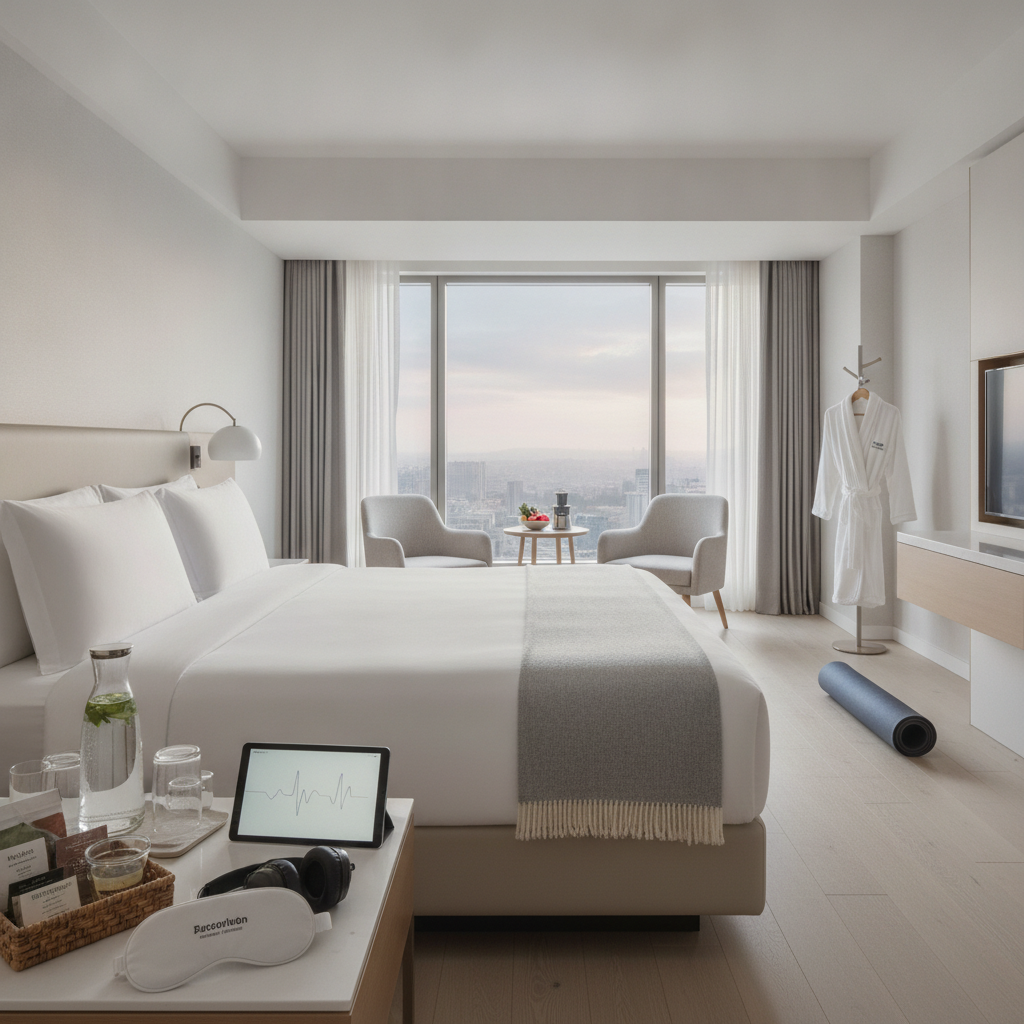
Guests no longer view a gym and a massage menu as sufficient wellness offerings. Across the industry, hotel room recovery amenities — the cold plunges, compression systems, red light panels, and contrast therapy tools that guests can use privately, on their own schedule — have become one of the fastest-growing differentiators in hospitality. For general managers, spa directors, and owners trying to make sense of a crowded and rapidly changing category, this guide breaks down what recovery amenities actually are, how leading properties are deploying them, and how to build a program that fits your property's budget, layout, and guest profile.
TL;DR — The Bottom Line
Hotel room recovery amenities — cold plunge, contrast therapy, compression boots, red light therapy, and recovery-focused sleep tech — are shifting from spa-floor extras to in-room or in-suite features guests expect at wellness-forward properties. The winning approach isn't picking one modality; it's matching a mix of built-in, portable, and bookable recovery amenities to your guest segments, staffing model, and property layout, with clear protocols for safety and hygiene.
Quick Facts
- Typical cold plunge temperature range in hotel recovery amenities: 39–55°F (4–13°C)
- Most common non-plunge recovery tools in hotel rooms: compression boots, percussion guns, red light panels
- Primary delivery models: built-in suite feature, portable in-room system, bookable recovery room, transformative add-on
- Typical bookable session length for hotel recovery rooms: 15–60 minutes
- Fastest-growing guest motivation cited by hotels: jet-lag recovery and sleep improvement, not just athletic recovery
What Are Hotel Room Recovery Amenities, Exactly?
The phrase hotel room recovery amenities covers a broader category than most people assume. It's not just cold plunge tubs — although cold water immersion is often the anchor feature. It includes any tool or system designed to help a guest recover from travel fatigue, workouts, poor sleep, or everyday stress, positioned so it can be used privately and quickly, without a spa appointment.
In practice, the category now spans five overlapping tool sets:
- Cold water immersion — cold plunge tubs or converted bathtubs set to precise temperatures, typically 39–55°F.
- Contrast therapy — pairing cold plunge with a sauna, steam, or hot soak to cycle the body between temperature extremes.
- Compression and percussion tools — pneumatic compression boots and percussion massage guns for muscular recovery.
- Red light and infrared therapy — panels or towers used for skin recovery, circulation, and perceived muscle recovery.
- Recovery-adjacent sleep tech — cooling mattresses, circadian lighting, and air purification systems bundled into "wellness rooms."
What ties these together isn't the hardware — it's the delivery philosophy. A true hotel room recovery amenity is accessible on the guest's schedule, not gated behind spa hours or a therapist's calendar. That single distinction is what separates a recovery amenity from a traditional spa service, and it's the reason the category is growing so quickly among wellness-focused operators.
No. While flagship wellness suites at luxury brands get the most press, mid-scale and boutique properties are adopting scaled-down versions — a single portable compression kit, a red light panel, or a bathtub-based cold plunge conversion — to compete on wellness positioning without the capital outlay of a full spa build-out.
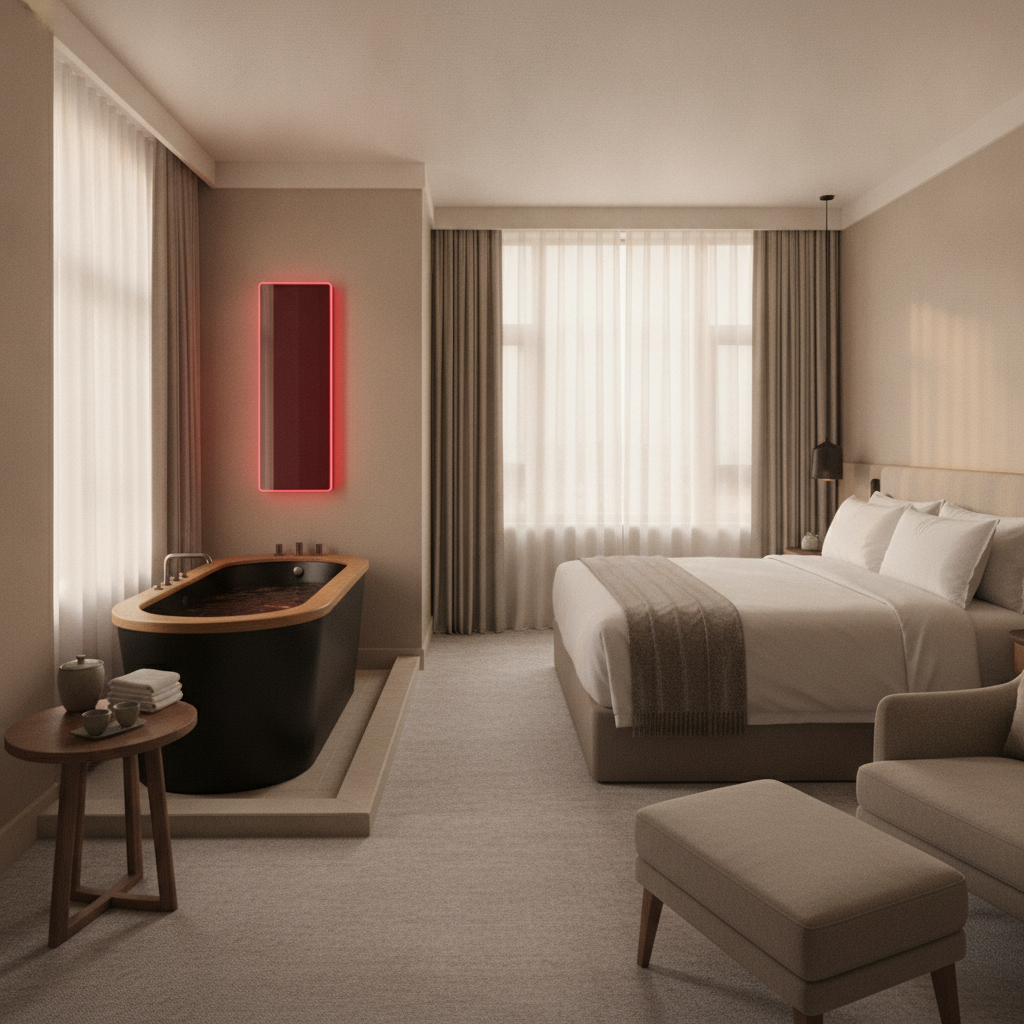
The Four Delivery Models for Hotel Room Recovery Amenities
Hotels are experimenting with four distinct operational models for delivering recovery amenities, and each has different cost, staffing, and guest-experience implications.
1. Built-in suite features
Cold plunge or contrast tubs are plumbed permanently into a bathroom or dedicated recovery nook. This model is common in new-build wellness suites and flagship rooms, where the amenity is always available and photographs beautifully for marketing. It's also the most capital-intensive route, requiring construction, plumbing, and often structural review.
2. Portable in-room systems
Commercial-grade cold plunge tubs, compression boots, or red light towers are delivered to a guest's room on request, then removed by staff afterward. This model lets a property offer hotel room recovery amenities without dedicating permanent square footage to any one guest room, and it scales more easily across a broader inventory of rooms.
3. Bookable recovery rooms
A private room adjacent to the spa or fitness center houses cold plunge, infrared sauna, red light, and compression tools together, bookable in 15–60 minute increments. This model keeps the amenity centralized (easier for staffing, hygiene, and maintenance) while still giving guests a private, on-demand experience distinct from a communal spa floor.
4. Transformative add-ons
Rather than building new infrastructure, some properties convert existing fixtures — most notably bathtubs — into precise recovery tools using add-on systems. This is the category HotelPlunge specializes in: giving properties a path to in-suite cold water immersion without construction, plumbing changes, or the multi-week downtime that renovation projects require.
Each model answers a different question. Built-in suites answer "how do we create a flagship wellness experience?" Portable systems answer "how do we scale recovery amenities across more rooms?" Bookable rooms answer "how do we centralize equipment and staffing?" And transformative add-ons answer "how do we add hotel room recovery amenities without a renovation project?"
Real-World Examples: How Hotels Are Deploying Recovery Amenities
Several properties have publicly detailed their approach to recovery amenities, and the differences between them illustrate how varied this category really is.
| Property | Recovery Amenities Offered | Delivery Model |
|---|---|---|
| Proper Hotels (Santa Monica & Austin) | Cold plunge, contrast therapy, red light therapy, infrared sauna | Bookable Recovery Suite, 15–60 minute sessions |
| Hotel Commonwealth, Boston | Cold plunge system, full-body red light tower, compression boots, percussion guns | Portable in-room delivery via a wellness partner |
| Conrad Orlando | Smart mattress, cooling sheets, red light lamp, percussion gun, compression leg system | Built-in Wellness Guest Rooms plus adjacent hydrotherapy garden |
According to reporting on Proper Hotels' wellbeing programming, the marketing language deliberately frames cold plunge and contrast therapy as everyday tools for jet-lag recovery, inflammation, sleep, and stress — not just athletic recovery (Proper Hotels wellness program coverage). That reframing matters: it signals that hotel room recovery amenities are being positioned as lifestyle amenities for a much broader guest base than the fitness-obsessed traveler alone.
Hotel Commonwealth's "Rekovery Session," delivered through a partnership model rather than permanent installation, shows how a historic property without room to renovate can still offer full-spectrum recovery amenities by leaning on portable, commercial-grade equipment delivered directly to select guestrooms.
Conrad Orlando takes a hybrid approach — building recovery-adjacent sleep tech directly into designated Wellness Guest Rooms, then connecting guests to a separate Water Garden with cold and hot plunge pools. This illustrates that hotel room recovery amenities don't have to live entirely inside the guestroom to feel integrated with the guest's overall stay.
Matching Recovery Amenities to Guest Segments
Not every property needs every modality. The right mix of hotel room recovery amenities depends heavily on who is actually staying at your hotel.
- Business and conference travelers: Prioritize fast, low-effort recovery — compression boots, red light panels, and short cold-immersion sessions that fit into a 20-minute window before a meeting.
- Wellness tourists and long-stay guests: Respond well to fuller contrast therapy setups and built-in suite features, since they have time to build a daily ritual around the amenity.
- Athletic and endurance-event travelers: Look specifically for cold plunge and compression as post-competition recovery tools; marketing should speak directly to muscle recovery and inflammation.
- Leisure and destination guests: Often engage with recovery amenities as an "experience" rather than a clinical need — framing matters more here than clinical claims.
A common mistake is assuming that installing the most expensive or most technical recovery amenity automatically drives the highest guest satisfaction. In reality, the amenities that get used most consistently are the ones that match the guest's actual time constraints and mental model of "recovery" during their specific type of stay.
No. Many successful programs start with a handful of designated wellness rooms or a bookable recovery room, then expand once demand and operational kinks are worked out. Starting small reduces both capital risk and staffing complexity.
Staffing, Training, and Operational Considerations
Hotel room recovery amenities introduce operational questions that don't exist with a standard minibar or in-room coffee maker. Before adding any modality, GMs and spa directors should map out:
- Water quality and sanitation protocols for any cold plunge or hydrotherapy element, including filtration checks and turnover cleaning between guests.
- Equipment delivery and setup logistics for portable systems — who transports, sets up, and removes compression boots or plunge tubs, and how quickly can it be turned around for the next reservation?
- Guest screening and waivers, particularly for cold immersion, since certain cardiovascular conditions warrant caution.
- Staff training on both the equipment itself and how to communicate basic usage guidance (recommended immersion time, contraindications, etc.) without overstepping into medical advice.
- Maintenance scheduling for chillers, filtration systems, and electronics so that recovery amenities don't become a source of guest complaints when equipment fails.
Properties that treat hotel room recovery amenities as "set it and forget it" hardware tend to see engagement drop off after the initial launch buzz. The properties that sustain strong guest satisfaction scores build recovery amenities into their daily housekeeping and engineering checklists from day one.
Vendor Selection Criteria Across Recovery Modalities
Because this category spans hardware brands, spa-tech providers, and hospitality integrators, vendor evaluation should go well beyond price. Key criteria include:
- Commercial-grade durability: Consumer-grade cold plunge tubs and compression devices are not built for the multi-guest-per-day cycle a hotel requires.
- Footprint and installation requirements: Does the system need dedicated plumbing, electrical upgrades, or structural review, or can it integrate with existing fixtures?
- Turnaround time between guests: How quickly can the system be cleaned, refilled, or reset for the next occupant or booking slot?
- Support and maintenance response: What's the vendor's service-level agreement for equipment repairs, especially for properties without in-house engineering staff experienced with hydrotherapy or electronics?
- Scalability across your room inventory: Can the same solution be deployed in 5 rooms, 50 rooms, or is it a one-off installation for a single flagship suite?
For properties specifically interested in cold water immersion without a renovation project, solutions that convert an existing bathtub into a precise, temperature-controlled cold plunge tend to score well on installation speed and scalability, since they avoid the plumbing and structural review that built-in systems require. HotelPlunge was built around exactly this gap in the market — helping properties add credible, in-suite cold water immersion to their hotel room recovery amenities lineup without construction downtime.
Positioning and Marketing Hotel Room Recovery Amenities
How a property talks about its recovery amenities matters almost as much as the equipment itself. Three positioning approaches dominate the current market:
Performance-first framing
Speaks directly to athletes, endurance travelers, and fitness-focused guests. Emphasizes muscle recovery, inflammation reduction, and post-workout protocols. Works well for properties near marathon routes, ski resorts, or convention centers hosting athletic events.
Lifestyle and ritual framing
Positions recovery amenities as part of an everyday wellness ritual — cold plunge as a morning reset, red light as an evening wind-down. This is the approach Proper Hotels has taken with its Recovery Suite marketing, and it broadens appeal beyond the athletic guest segment.
Sleep and jet-lag framing
Targets the traveler segment most hotels already serve heavily — business travelers and long-haul leisure guests — by tying recovery amenities directly to combating jet lag and improving sleep quality during the stay.
Whichever framing a property chooses, the description of hotel room recovery amenities on the booking page and in pre-arrival communications should be specific: exact temperatures, session lengths, and what's included. Vague wellness language underperforms compared to concrete, sensory detail.
Reliability. Guests forgive a modest amenity that works exactly as described far more readily than an impressive one that's broken, poorly explained, or inconsistently available.
Building a Recovery Amenities Roadmap for Your Property
For GMs and owners evaluating where to start, a phased approach reduces risk while still building toward a competitive offering:
- Audit your current guest mix to determine which recovery modalities align with actual demand rather than industry hype.
- Pilot one modality in a small set of rooms — often cold water immersion or compression, since both have relatively low footprint requirements.
- Establish operational protocols before launch, covering cleaning, guest screening, and staff training.
- Measure engagement through booking data, in-room usage logs (for portable systems), and post-stay guest feedback.
- Expand based on data, adding modalities or rooms where demand is proven rather than guessing at a full build-out from day one.
This staged approach lets properties test hotel room recovery amenities without overcommitting capital to a modality that may not resonate with their specific guest base.
Frequently Asked Questions
What are hotel room recovery amenities?
Hotel room recovery amenities are private, on-demand wellness tools — such as cold plunge tubs, compression devices, red light panels, and contrast therapy setups — that guests can access inside or near their room, rather than through a shared spa floor.
Which recovery amenities do guests request most often?
Cold water immersion and compression tools are currently the most requested hotel room recovery amenities, largely because both address common traveler complaints — muscle fatigue, jet lag, and poor sleep — in short sessions guests can complete independently.
Do hotel room recovery amenities require major renovation?
Not necessarily. While built-in suite features do require plumbing and construction, portable systems and tub-conversion solutions allow properties to add recovery amenities like cold plunge without renovation or extended room downtime.
How much staff training is needed to support recovery amenities?
At minimum, staff need training on setup and cleaning procedures, basic usage guidelines for guests, and awareness of contraindications for cold immersion. Properties using bookable recovery rooms also need front-desk or spa staff trained on scheduling and turnover logistics.
Are hotel room recovery amenities only relevant to luxury hotels?
No. While luxury flagship properties get the most press coverage, boutique and mid-scale hotels are increasingly adding scaled-down recovery amenities, such as a single portable compression kit or a converted-bathtub cold plunge, to compete on wellness positioning without large capital investment.
Conclusion: Making Recovery Amenities Work for Your Property
The category of hotel room recovery amenities is still young enough that there's no single "correct" way to build a program — but the properties seeing the strongest guest response share a few traits: they match their modality mix to their actual guest base, they treat operational reliability as seriously as the hardware itself, and they describe their offering with specific, sensory detail rather than vague wellness language. Whether your property is ready for a full built-in wellness suite or simply wants to test the waters with a single, renovation-free cold plunge conversion, the goal is the same — giving guests a private, dependable way to recover on their own schedule.
If your property is exploring how to add credible, in-suite cold water immersion to your hotel room recovery amenities lineup without construction or plumbing changes, HotelPlunge can help you evaluate the right fit for your rooms and guest profile.