Austin Home Inspection Checklist: What Buyers Expect
June 23, 2026 · 13 min read

TL;DR — The Bottom Line
A thorough Austin home inspection checklist goes beyond TREC's standard Form REI 7-6 to account for Central Texas-specific risks: expansive clay soils, foundation movement, drainage failures, and HVAC strain from extreme heat. Buyers, sellers, and investors should expect a 3-4 hour inspection covering structure, roof, electrical, plumbing, HVAC, and appliances — with extra scrutiny on foundation, grading, and attic ventilation. Use the inspection report as both a risk assessment and a negotiation tool.
Whether you're purchasing your first home in South Austin, evaluating an investment duplex in East Austin, or selling a long-held property in Westlake, your austin home inspection checklist is one of the most important documents in the transaction. In a market shaped by expansive soils, intense heat, and rapid development, knowing what an inspector will check — and what those findings mean for your wallet — can save you tens of thousands of dollars and weeks of negotiation headaches.
At Zell Team, we've guided clients through more than 800 Austin-area transactions, and we've learned that the difference between a smooth close and a deal that falls apart often comes down to how well buyers and sellers understand the inspection process. This comprehensive austin home inspection checklist will walk you through everything inspectors examine, the Austin-specific issues to watch for, and how to turn findings into leverage.
Quick Facts
- Standard Form: TREC Property Inspection Report (REI 7-6, effective 2022)
- Typical Cost in Austin: $400–$650 for a single-family home under 2,500 sq ft
- Inspection Duration: 2.5–4 hours on-site, plus report delivery within 24–48 hours
- Option Period in Texas: Typically 5–10 days, during which inspections occur
- Top Austin Risk: Foundation movement due to expansive clay soils
- Zell Team Experience: 50+ years combined Austin tenure, 800+ closed transactions
Why an Austin Home Inspection Checklist Matters More Here
Austin isn't a generic real estate market, and a generic inspection mindset won't protect you here. Three environmental realities make a tailored austin home inspection checklist essential:
- Expansive clay soils: Central Texas sits on Houston Black clay and similar soils that swell when wet and shrink when dry. This causes foundation movement, cracked drywall, and sticking doors — especially after the drought-to-deluge cycles we've seen since 2022.
- Extreme heat and humidity: Triple-digit summers strain HVAC systems, degrade roof shingles, and create conditions for attic moisture and mold if ventilation is inadequate.
- Severe weather events: Hail, ice storms (remember February 2021), and flash flooding place ongoing stress on roofing, drainage, and exterior cladding.
The Texas Real Estate Commission (TREC) standardizes how inspectors report on these systems through Form REI 7-6, but the standard form alone doesn't tell you which findings are routine for Austin and which are deal-breakers. That interpretive layer is where a seasoned local team adds the most value.
"In Austin, a hairline foundation crack isn't automatically a crisis — but standing water against the slab after a rain absolutely is. Knowing the difference is what separates a good inspection from a great one."
The TREC Inspection: What's Legally Required vs. What's Recommended
Every licensed Texas inspector must follow the TREC Standards of Practice and deliver findings on Form REI 7-6. The form covers six major categories: structural systems, electrical systems, HVAC, plumbing, appliances, and optional systems (like pools, septic, or sprinklers).
However, the TREC standard is a minimum. A strong austin home inspection checklist often includes optional add-ons that are particularly valuable in our market:
- WDI (Wood Destroying Insect) inspection — termites are active year-round in Central Texas
- Sewer scope — older Austin neighborhoods (Hyde Park, Travis Heights, Clarksville) often have cast iron or clay sewer lines nearing end of life
- HVAC deep-dive with refrigerant testing
- Pool and spa inspection by a specialist
- Foundation elevation survey when movement is suspected
No. You can hire any TREC-licensed inspector. That said, an agent who has worked with an inspector across dozens of transactions can vouch for their thoroughness, report clarity, and responsiveness — which matters when you're working against a 7-day option period.
The Complete Austin Home Inspection Checklist by System
Here's the comprehensive, Austin-tuned austin home inspection checklist our clients use during the option period. Print it, share it with your inspector, and use it as a discussion guide before you sign off.
1. Site, Drainage & Foundation
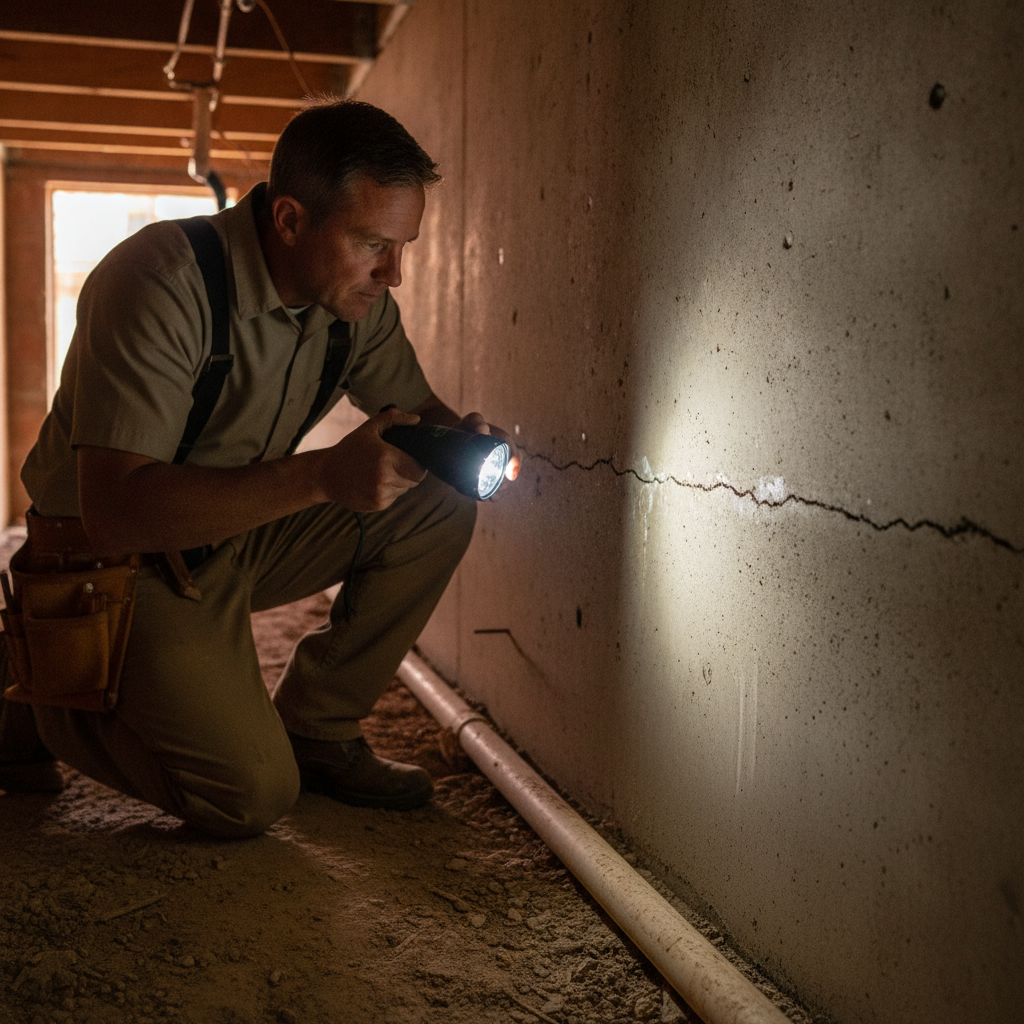
This is the single most important section of any austin home inspection checklist. Foundation repair on Central Texas homes commonly ranges from $4,500 for minor pier work to $25,000+ for a full perimeter lift.
- Ground slopes away from the house on all sides (minimum 6 inches of fall in the first 10 feet)
- No standing water, soggy soil, or erosion near the foundation perimeter
- Gutters present, clean, and discharging at least 4 feet from the slab
- No major cracks, stains, flaking, or efflorescence (white mineral deposits) on visible foundation
- No separation at expansion joints, brick veneer, or trim
- Interior signs of movement: new drywall cracks, sticking doors, sloping floors, misaligned windows
- Trees and large shrubs are not pulling moisture from soil immediately adjacent to the foundation
2. Roof, Attic & Exterior Envelope
- No missing, curled, or hail-damaged shingles
- Flashing intact at chimneys, vent stacks, and roof-to-wall junctions
- Fascia and soffits free of rot
- Attic insulation meets or exceeds R-38 (Austin's climate zone recommendation)
- Adequate attic ventilation — soffit intakes and ridge/gable exhausts working together
- No daylight visible through sheathing, no water staining on rafters
- Bath and kitchen exhaust vents terminate outside, not in the attic
- No evidence of rodents, raccoons, or wasp activity
3. Exterior Walls, Windows & Doors
- Siding (Hardie, wood, stucco, or masonry) free of cracking, rot, or open separations
- Stucco free of stair-step cracks indicating structural movement
- Windows operate smoothly, locks function, weather seals intact
- No fogging between double-pane glass (indicates failed seal)
- Exterior doors seal tightly with functional weatherstripping
- Caulking around penetrations (hose bibs, dryer vents, electrical) is intact
4. Electrical System
- Main panel properly labeled, no double-tapped breakers, no signs of arcing or corrosion
- No Federal Pacific or Zinsco panels (a known fire risk; insurers often require replacement)
- GFCI outlets in kitchens, bathrooms, garages, exterior, and within 6 feet of water
- AFCI protection in bedrooms (required by current code)
- Smoke detectors in every bedroom, hallway, and on every floor
- Carbon monoxide detectors near sleeping areas if gas appliances are present
- No exposed wiring, improper splices, or aluminum branch wiring without remediation
5. Plumbing
- Water pressure between 40–80 PSI
- No leaks under sinks, around toilets, or at water heater connections
- Water heater: TPR valve with proper discharge tube, expansion tank present, sediment drain accessible
- Gas water heaters properly vented; no soot or backdraft evidence
- Drains flow freely; no gurgling that suggests venting issues
- Hose bibs equipped with vacuum breakers and don't leak
- For older homes (pre-1990): inspect for galvanized supply lines or cast iron drains nearing failure
6. HVAC
- System age and capacity match the home's square footage
- Temperature differential at supply vs. return registers is 14–22°F when cooling
- Condensate drain line clear; secondary pan and float switch installed
- Refrigerant lines properly insulated, no oil stains at fittings
- Ductwork sealed at boots and plenums, no visible disconnections in attic
- Filter accessible, correctly sized, and recently changed
- For homes 12+ years old, plan for replacement budgeting ($8,000–$15,000 in Austin)
7. Interior, Appliances & Safety
- All built-in appliances operate (dishwasher, oven, range, microwave, disposal)
- Garage door auto-reverse safety functions properly
- Stair railings and balusters meet 4-inch spacing rule
- No active leaks under sinks; cabinet bases free of swelling or staining
- Tile and grout in wet areas intact; no soft spots in subfloor
- Fireplace damper operates; no creosote buildup or cracked firebrick
Foundation movement is the most expensive recurring finding, followed by full HVAC replacement and major roof repair after hail events. A single foundation lift can range from $8,000 to $25,000, which is why it's the top focus of any serious austin home inspection checklist.
How to Use the Inspection Report for Negotiation
An inspection report isn't just a list of defects — it's leverage. Here's how seasoned buyers and their agents use the findings strategically:
- Categorize every finding as either safety/structural, major mechanical, or cosmetic/maintenance.
- Get repair bids for the top 3–5 items during your option period. Vague concerns rarely move sellers; documented estimates do.
- Choose your ask: repair completion before close, a price reduction, or seller-paid closing cost credits. Credits are often cleanest because buyers control the work after closing.
- Prioritize health, safety, and structural items in your request. Asking for cosmetic fixes weakens your position on the items that actually matter.
- Know your walk-away threshold before you start negotiating. In the option period, you can terminate for any reason.
Our team at Zell Team's buyer advisory typically maps inspection findings to current Austin repair costs so clients see a clear dollar number before responding to the seller.
Special Considerations for Austin Investors and Developers
If you're acquiring a rental property, a fix-and-flip, or a tear-down lot, your austin home inspection checklist serves a different purpose. You're not just identifying defects — you're underwriting the deal.
- Cap-ex modeling: Use the inspection to forecast 5- and 10-year capital expenditures. Roof, HVAC, water heater, and foundation are the four budget killers.
- Sewer scopes are non-negotiable on properties built before 1985. A failed sewer line in central Austin can cost $8,000–$20,000 to replace, especially under mature trees or driveways.
- Permit history check: Cross-reference inspection findings with City of Austin permit records to spot unpermitted additions — a major issue for resale and insurance.
- For tear-downs: Inspections matter less for the structure, more for site conditions, easements, heritage trees, and drainage.
For investor-specific guidance, our team at Zell Team's investor services integrates inspection findings into deal analysis so you understand your true all-in cost before option period expires.
Sellers: How to Prepare for the Buyer's Austin Home Inspection Checklist
Sellers benefit enormously from a pre-listing inspection. Knowing what a buyer's inspector will flag lets you fix issues on your timeline, with your vendors, at your prices — rather than under the pressure of a negotiation.
Common pre-listing fixes that pay back multiples in negotiation strength:
- Service the HVAC, document it, and leave the receipt
- Replace any GFCI/AFCI outlets that don't trip properly
- Re-caulk exterior penetrations and tubs/showers
- Clear gutters and extend downspouts
- Address any visible foundation cracks with documented engineer's letter if structural movement is minimal
- Replace the water heater TPR discharge tube if missing or improper
"A $1,500 weekend of pre-listing repairs routinely saves Austin sellers $5,000–$10,000 in buyer credits at the negotiating table."
Frequently Asked Questions
How much does a home inspection cost in Austin?
Most single-family home inspections in Austin range from $400 to $650, depending on square footage, age, and add-ons like WDI (termite), pool, or sewer scope inspections. Larger or older homes can run $700–$900. Pricing reflects the inspector's time on-site (typically 3 hours) and the detail of the written report.
How long does a home inspection take in Austin?
Plan for 2.5 to 4 hours on-site for a typical 2,000–3,000 sq ft home. Buyers are encouraged to attend the final 30–60 minutes for a walkthrough summary. The written report is usually delivered within 24–48 hours so you can act inside your option period.
What's the difference between a TREC inspection and a specialized inspection?
A TREC inspection follows Form REI 7-6 and is a generalist examination covering structure, electrical, plumbing, HVAC, and appliances. Specialized inspections — foundation engineering reports, sewer scopes, pool inspections, WDI reports — go deeper into specific systems and are often recommended based on findings or property type.
Should I get a pre-listing inspection before selling my Austin home?
Yes, in most cases. A pre-listing inspection lets you identify and address issues on your timeline, with vendors you trust, at competitive prices. It reduces the likelihood of buyers using surprise findings to extract large credits or terminate during the option period. The $500 investment routinely returns $5,000+ in preserved negotiation strength.
Can I waive the inspection to make my offer more competitive?
Technically yes, but it's rarely advisable — even in a competitive Austin market. A safer alternative is to shorten the option period (3–5 days instead of 7–10), commit to not requesting repairs under a dollar threshold, or use an information-only inspection. Talk through these strategies with your agent before waiving inspection rights entirely.
Final Thoughts and Next Steps
A great austin home inspection checklist does three things: it tells you what's wrong with the property, it tells you what those problems cost to fix, and it gives you the leverage to negotiate accordingly. In a market shaped by clay soils, summer heat, and unpredictable weather, the cost of an uninformed transaction can dwarf the cost of the inspection itself by tens of thousands of dollars.
Whether you're buying your first home, selling a property you've owned for decades, or expanding an investment portfolio, your inspection should be treated as a strategic asset — not a box to check. Working with an experienced local team ensures the findings get translated into the right negotiation moves at the right moment.
Ready to put this austin home inspection checklist to work on your next transaction? Contact Zell Team for a consultation. With 50+ years of combined Austin experience and 800+ closed transactions, our team brings the pattern recognition and negotiation expertise that turns inspection insights into real dollar savings at closing.