Austin Farm and Ranch Properties for Sale: 2026 Guide
June 5, 2026 · 13 min read
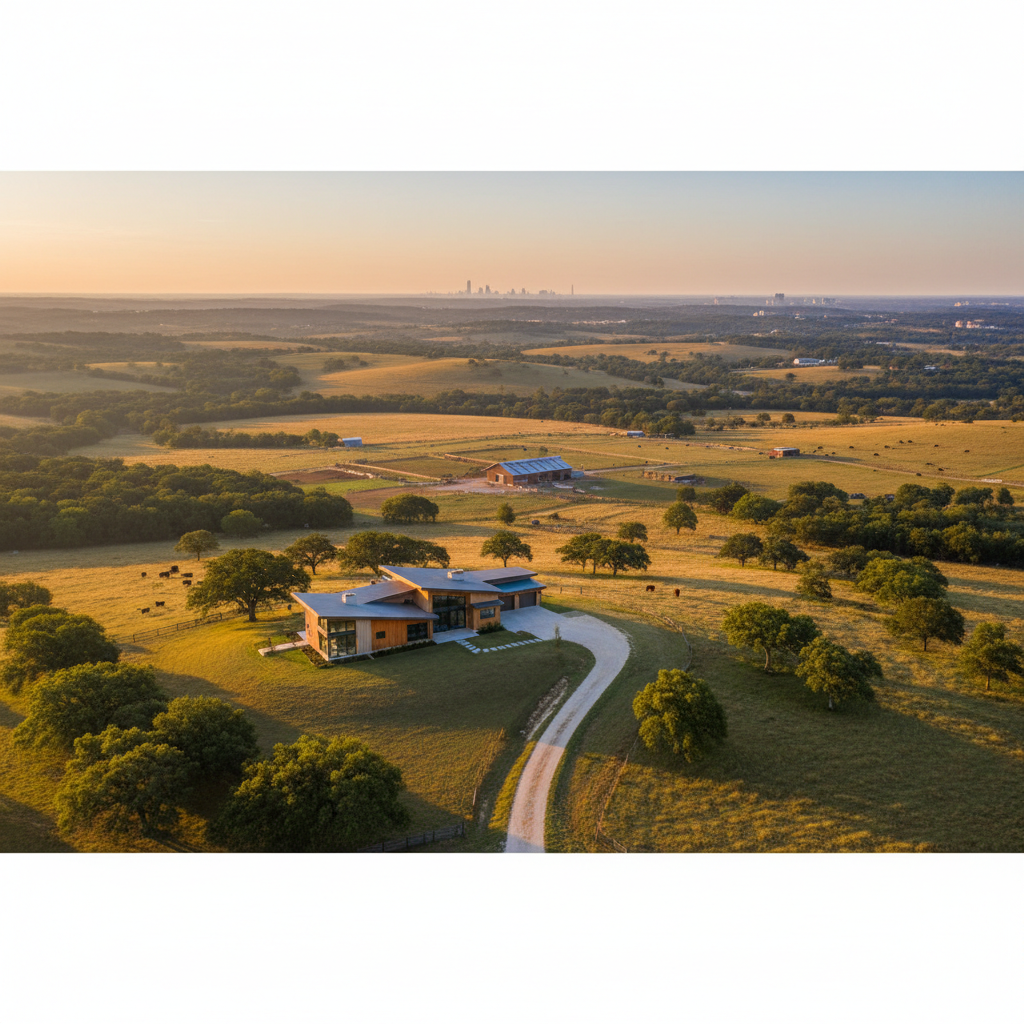
TL;DR — The Bottom Line
Austin farm and ranch properties for sale represent a specialty asset class defined by tight inventory, premium per-acre pricing, and strong long-term demand within 30–60 minutes of downtown. Median rural land in the Austin–Hill Country region trades in the low $7,000s per acre, but high-quality ranches with water frontage, luxury improvements, or development upside routinely sell from $1.5M to $5M+. Whether you're a lifestyle buyer, investor, or developer, success requires expertise in water rights, ag exemptions, and corridor growth patterns.
The market for Austin farm and ranch properties for sale looks nothing like the typical residential market. With limited supply, aggressive long-term demand, and pricing tied to acreage, water access, and proximity to Austin's expanding corridors, these properties function more like a specialty asset class than ordinary homes. At the Zell Team, we help homeowners, investors, and developers navigate this unique landscape across Travis, Williamson, Hays, Burnet, and surrounding counties.
This comprehensive guide breaks down the current state of Austin farm and ranch properties for sale, including pricing data, buyer profiles, key considerations, and how to position yourself for a smart acquisition in one of Texas's most competitive land markets.
Quick Facts
- Inventory near Austin: Typically dozens, not hundreds, of active farm and ranch listings
- Median per-acre price: Low $7,000s in the Austin–Hill Country region
- Typical lifestyle ranch size: 10–40 acres within 30–60 minutes of downtown
- Luxury ranch range: $1.5M–$5M+ depending on improvements and water
- Austin-area ag economy: Generates more than $80M annually
- Common property types: Working ranches, equestrian estates, gentleman's ranches, raw land
Why Austin Farm and Ranch Properties for Sale Are in High Demand
Austin's explosive population growth, tech-sector wealth, and lifestyle appeal have created a perfect storm for the rural land market. Buyers are increasingly seeking acreage that delivers privacy, recreation, and long-term value—without sacrificing access to Austin's amenities. The result: Austin farm and ranch properties for sale move quickly when priced correctly, and premium tracts often generate multiple offers.
Several structural forces drive this demand:
- Migration patterns: Continued in-migration from California, the Northeast, and other metros has expanded the buyer pool for rural estates.
- Wealth concentration: Tech IPOs, equity events, and corporate relocations have created a sustained pipeline of high-net-worth buyers seeking land as both lifestyle and legacy assets.
- Development pressure: Corridors like SH-130, US-183, and US-290 are pushing development outward, creating land-banking opportunities for investors.
- Agricultural identity: Texas culture still values land ownership, and ag tax valuations make ownership economically efficient.
According to Spyglass Realty's market commentary, within 30–60 minutes of downtown Austin, buyers can access a broad mix of working ranches, equestrian setups, and rural estates suitable for livestock, crops, or weekend retreats. That accessibility—combined with the Hill Country's iconic landscape—keeps demand structurally tight.
Current Market Snapshot for Austin Farm and Ranch Properties for Sale
Inventory is the single biggest constraint. Realtor.com data shows that the number of properties classified as farms and ranches within Austin's residential boundaries is in the low dozens at any given time. Step outside the city limits into the surrounding counties and supply broadens, but quality tracts—especially those with water, road frontage, or development potential—remain scarce.
The current inventory of Austin farm and ranch properties for sale typically falls into four categories:
1. Working Ranches
Operating cattle, sheep, or goat ranches, often 50+ acres with infrastructure like barns, working pens, fencing, and water systems. These appeal to traditional ranchers and investors looking for income-producing land with ag tax benefits.
2. Equestrian Properties
Purpose-built for horses, with arenas, stables, paddocks, and trails. Common in Dripping Springs, Liberty Hill, and Spicewood. Buyers often pay a premium for turnkey equestrian infrastructure.
3. Gentleman's Ranches & Rural Estates
The fastest-growing segment: 10–100 acres with a luxury main residence, often guest houses, pools, and recreational features. These properties prioritize lifestyle over agricultural income.
4. Raw Land & Transitional Tracts
Undeveloped acreage positioned for future development—often near growth corridors, with utility access or annexation potential. These attract developers and long-term investors.
Pricing Breakdown: What You'll Pay for Austin Farm and Ranch Properties for Sale
Pricing for Austin farm and ranch properties for sale varies dramatically based on a handful of value drivers. Understanding these can help you benchmark listings and identify mispriced opportunities.
Per-Acre Pricing Benchmarks
Recent land market reports for the greater Austin–Hill Country region show median rural land prices in the low $7,000s per acre. However, that figure masks enormous variation. Tracts with the following features routinely trade well above the median:
- River or creek frontage (San Gabriel, Pedernales, Blanco, Colorado tributaries)
- Development corridor proximity (SH-130, US-290, US-183)
- Existing utility infrastructure (water, electric, fiber)
- High-end improvements (luxury homes, event venues, equestrian facilities)
- Established ag exemption status
Real Listing Examples
| Property Type | Acreage | Key Features | Price Range |
|---|---|---|---|
| Large luxury ranch near Hutto | ~78 acres | 600 ft San Gabriel River frontage, ~10,948 sq ft home | ~$5M |
| Reduced-acreage estate, Hutto | 20 acres | Same main structure, no river frontage | ~$2.25M |
| Gentleman's ranch near Bertram | ~26 acres | 5,331 sq ft home + guest house | ~$2.1M |
| Small Austin-area ranchettes | 10–40 acres | Custom homes, some with ag exemption | $1.5M–$4M |
Three factors dominate: water (river or creek frontage can double per-acre value), development potential (proximity to growth corridors or utility access), and improvements (luxury homes, equestrian facilities, or event venue infrastructure). Two 25-acre tracts can easily price $1M apart based on these features.
The Economic and Agricultural Context
Despite Austin's reputation as a tech hub, agriculture remains a meaningful contributor to the regional economy—generating more than $80 million annually. The region's mild climate and extended growing season support a diverse mix of operations:
- Small-scale and specialty crops: lavender, olives, hemp, heirloom produce
- Vineyards and orchards: the Texas Hill Country is the second-largest wine region in the U.S.
- Cattle, goats, and sheep: traditional operations that also qualify for ag tax valuations
- Hobby farms: small-scale food production tied to a primary residence
This blend of lifestyle appeal and productive capacity is what makes Austin farm and ranch properties for sale attractive to such a diverse buyer pool. A single property might serve as a weekend retreat, an income-producing vineyard, a land-banking play, and a future development site—all at once. To explore listings across these categories, visit our farm and ranch listings page.
Who Is Buying Austin Farm and Ranch Properties for Sale?
Understanding buyer profiles helps sellers price strategically and helps buyers position themselves competitively. Based on brokerage patterns across Central Texas, four distinct buyer segments dominate the market for Austin farm and ranch properties for sale.
Lifestyle Buyers and Second-Home Owners
Typically seeking 10–40 acres within a 30–60 minute drive of downtown. They prioritize privacy, views, light livestock potential, and recreation. Many are tech executives, business owners, or recent transplants who want a Hill Country retreat.
Investors and Land Bankers
Acquire larger tracts (50–500+ acres) along growth corridors with the expectation of appreciation and eventual subdivision or sale to developers. They focus on entitlement paths, utility access, and long-hold economics.
Developers
Assemble tracts on the metro edge for residential subdivisions, mixed-use projects, or commercial corridors. They pay premium per-acre prices when zoning, water, and access align.
Multi-Generational Ranching Families
Long-time Texas landowners expanding or consolidating holdings, often with deep familiarity with ag valuations, water rights, and rural infrastructure.
Key Factors That Drive Value in Austin Farm and Ranch Properties for Sale
Whether you're buying, selling, or evaluating an investment, these are the seven value drivers that consistently move the needle on Austin farm and ranch properties for sale.
1. Water Rights and Water Features
In Texas, water is wealth. Properties with reliable wells, surface water (creeks, ponds, rivers), or strong groundwater districts command meaningful premiums. River frontage in particular can double or triple per-acre values.
2. Proximity to Austin and Growth Corridors
Each mile closer to downtown—or to a major corridor like SH-130, US-290, or US-183—adds value. Properties within 30 minutes of downtown are increasingly scarce and bid aggressively.
3. Agricultural Tax Valuation
An active ag exemption can reduce annual property taxes by 70–90%. Properties with established ag status are more valuable and easier to underwrite than those requiring buyers to qualify from scratch.
4. Topography and Usable Acreage
Rolling hills with usable building sites, pasture, and view corridors outperform flat or heavily wooded tracts. Floodplain status also matters significantly.
5. Improvements and Infrastructure
Fencing, cross-fencing, working pens, barns, wells, septic, electric, and high-speed internet all contribute to value—particularly for buyers who don't want to build from scratch.
6. Access and Road Frontage
Paved road access, deeded easements, and frontage on county or state roads materially affect value, especially for development-oriented buyers.
7. Zoning, Entitlements, and Annexation Status
For investors and developers, the entitlement path is often more important than the current condition of the land. ETJ status, MUD potential, and utility extension feasibility drive long-term value.
Extremely. A property carrying an active ag valuation can reduce annual taxes by tens of thousands of dollars on larger tracts. Losing the exemption after closing can trigger rollback taxes covering the previous five years. Always verify ag status and continuation requirements before closing.
How to Buy Austin Farm and Ranch Properties for Sale: A Step-by-Step Process
Buying rural property is fundamentally different from buying a city home. Here's the process we walk clients through at the Zell Team.
- Clarify your use case. Lifestyle retreat, income-producing operation, land bank, or development play? Each profile drives different criteria.
- Define your geographic radius. 30, 60, or 90 minutes from downtown? Each ring has different pricing, inventory, and lifestyle implications.
- Get pre-qualified with a rural lender. Farm Credit lenders and ag-savvy banks underwrite differently than conventional mortgage lenders.
- Engage a specialized broker. Generalist agents miss critical issues around water, ag valuations, easements, and development potential.
- Tour intentionally. Visit during different conditions—wet weather reveals drainage issues; dry weather exposes water reliability concerns.
- Conduct rigorous due diligence. Survey, title commitment, water testing, septic inspection, fence-line walks, mineral rights review, and easement verification.
- Negotiate strategically. Beyond price, negotiate ag exemption continuation, mineral rights, lease assignments, and personal property inclusions.
- Close with the right team. Title companies, surveyors, and attorneys experienced in rural transactions prevent expensive surprises.
For a deeper walkthrough of our process, visit the Zell Team buyer resources.
Selling Austin Farm and Ranch Properties for Sale: Maximizing Value
For sellers, the difference between a fast, top-of-market sale and a stagnant listing usually comes down to preparation and positioning. The Austin farm and ranch properties for sale that move fastest share several characteristics:
- Professional aerial and drone media: Acreage doesn't translate in standard photography. Drone footage and 3D mapping are essential.
- Documented water history: Well logs, pump tests, and surface water history reassure buyers and lenders.
- Clear ag exemption documentation: Showing the path to continued ag valuation removes a major buyer concern.
- Survey-ready boundaries: A recent survey with marked corners accelerates closing.
- Strategic pricing analysis: Comparing to actual comparable sales—not aspirational list prices—is critical in a market where mispriced listings sit for months.
- Targeted marketing: Reaching out-of-state buyers, developers, and qualified investors—not just MLS browsers.
Our team at Zell brings a luxury-grade marketing approach to the farm and ranch segment, combining cinematic media, qualified investor outreach, and structured advisory. Learn more about our seller approach on the Zell Team sellers page.
Investment Outlook for Austin Farm and Ranch Properties for Sale
Looking ahead, the structural fundamentals supporting Austin farm and ranch properties for sale remain compelling:
- Continued population growth: The Austin MSA is projected to add hundreds of thousands of residents over the next decade.
- Corridor expansion: SH-130, US-290, and US-183 continue to push development outward, creating land-banking windows.
- Limited supply: Existing landowners are slow to sell, and new supply isn't created.
- Tax efficiency: Ag valuations, 1031 exchanges, and conservation easements offer powerful tools for long-term holders.
That said, no investment is without risk. Interest rate volatility, water availability concerns, and shifting regulatory environments around groundwater and development all warrant ongoing monitoring. The buyers who win are those who underwrite conservatively, partner with specialized advisors, and take a long-term view.
"In the Austin farm and ranch market, water rights, corridor proximity, and ag valuation aren't details—they're the three pillars that separate a smart acquisition from an expensive mistake."
Frequently Asked Questions
What is the average price of Austin farm and ranch properties for sale?
Median rural land in the Austin–Hill Country region trades in the low $7,000s per acre, but premium properties with water, improvements, or development potential routinely sell from $1.5M to $5M+. Total transaction prices vary widely based on acreage, location, and features.
How much acreage qualifies for a Texas ag exemption?
Minimums vary by county and use type. Most Central Texas counties require at least 10–20 acres of active agricultural use (cattle, hay production, beekeeping, wildlife management) maintained for five of the previous seven years. Always verify with the county appraisal district before assuming exemption status will continue.
How close to Austin can I realistically find farm and ranch properties?
True acreage tracts of 10+ acres become more common 20–30 minutes from downtown, with stronger inventory at the 30–60 minute ring. Areas like Dripping Springs, Liberty Hill, Spicewood, Bertram, and Manor offer the best combination of access and rural character.
Do I need a specialized lender for farm and ranch properties?
Often, yes. Properties over 10 acres, those with significant outbuildings, or those classified as agricultural may not qualify for conventional residential financing. Farm Credit lenders, community banks with rural lending desks, and portfolio lenders are typically better equipped to handle these transactions.
What due diligence is most important when buying Austin farm and ranch properties for sale?
Water (well capacity, surface water rights, groundwater district status), boundaries (current survey), easements (access, utility, pipeline), mineral rights, floodplain status, and ag exemption continuation are the six categories where missed due diligence creates the biggest financial damage.
Ready to Explore Austin Farm and Ranch Properties for Sale?
The Austin farm and ranch market rewards buyers and sellers who bring expertise, patience, and the right team to the table. Whether you're searching for a Hill Country lifestyle retreat, a working ranch, an equestrian estate, or a strategic development tract, the Zell Team combines luxury-grade marketing with deep advisory experience across Central Texas land transactions.
Our clients benefit from structured underwriting, professional media, qualified buyer networks, and decades of combined experience navigating the unique complexities of rural Texas real estate. We don't treat farm and ranch as a side category—we treat it as the specialty asset class it actually is.
Take the next step. Browse current listings, request a private market briefing, or schedule a consultation to discuss your goals. Visit zellteam.com/contact to connect with our team and start your search for the right Austin farm and ranch property today.
Sources
- Spyglass Realty's market commentary (spyglassrealty.com)