Sauna and Steam Room Maintenance Tips for 2026
May 16, 2026 · 13 min read

TL;DR — The Bottom Line
Consistent sauna and steam room maintenance tips can double the lifespan of your equipment, prevent mould and microbial growth, and protect your investment. Daily drying routines, weekly wipe-downs, monthly ventilation checks, and an annual deep-clean are the four pillars every homeowner and commercial facility operator in Australasia should follow. The difference between a wellness space that lasts a decade and one that needs costly repairs in three years comes down almost entirely to how consistently you maintain it.
Quick Facts
- Annual deep-clean frequency: At least once per year for home use; every 6 months for commercial facilities
- Bench sanding grit: ~120-grit sandpaper to remove perspiration stains and refresh timber
- Heater drying time after use: Run 10–15 minutes with door open to fully dry interior surfaces
- Wood treatment cycle: Apply sauna oil or protective treatment every 1–3 years depending on use intensity
- Steam room risk factor: Surfaces stay wet longer, making microbial load and mould growth significantly higher than in dry saunas
- Stone restacking: Inspect and restack sauna rocks at least annually to maintain heater efficiency
Whether you've invested in a traditional Finnish sauna, an infrared cabin, or a full steam room for your home or commercial wellness facility, one truth applies universally: these spaces reward careful, consistent care. Following proven sauna and steam room maintenance tips isn't just about keeping things looking clean — it's about protecting a significant financial investment, safeguarding the health of every user, and ensuring peak performance year after year. At Wellnesswares, we work with homeowners, architects, designers, and commercial wellness operators across Australasia, and we see the same pattern repeatedly: facilities that follow a structured maintenance routine avoid the costly surprises that catch neglected spaces off guard. This comprehensive guide consolidates current best practices into one actionable resource.
Why Sauna and Steam Room Maintenance Tips Matter
The consequences of neglecting your sauna or steam room go well beyond surface-level grime. Research suggests that poorly maintained thermal rooms carry significantly higher microbial loads — bacteria, fungi, and mould — particularly in steam environments where surfaces remain wet for extended periods. These conditions can cause respiratory irritation, skin complaints, and in severe cases, serious infections for vulnerable users.
From an asset-protection standpoint, the financial case is equally compelling. Mineral scale, accumulated dirt, and obstructed ventilation all reduce heater efficiency — meaning your equipment draws more power to deliver the same experience, driving up energy costs. Corrosion accelerates when moisture isn't properly managed. Sauna rocks that are never restacked or inspected can fracture and damage heating elements. Steam generators that aren't descaled regularly will fail prematurely.
For commercial wellness operators, the stakes are even higher. A visibly clean, fresh-smelling heat room is no longer a differentiator — it's a baseline expectation. Industry data indicates that many high-end facilities now factor bench refurbishment or replacement into annual operating budgets as a routine cost, rather than treating it as an unwelcome capital surprise. By contrast, facilities that apply disciplined sauna and steam room maintenance tips consistently report longer equipment lifecycles and fewer emergency service calls.
"A well-maintained sauna or steam room isn't just cleaner — it's measurably more efficient, safer, and more valuable as an asset." — Wellnesswares Technical Team
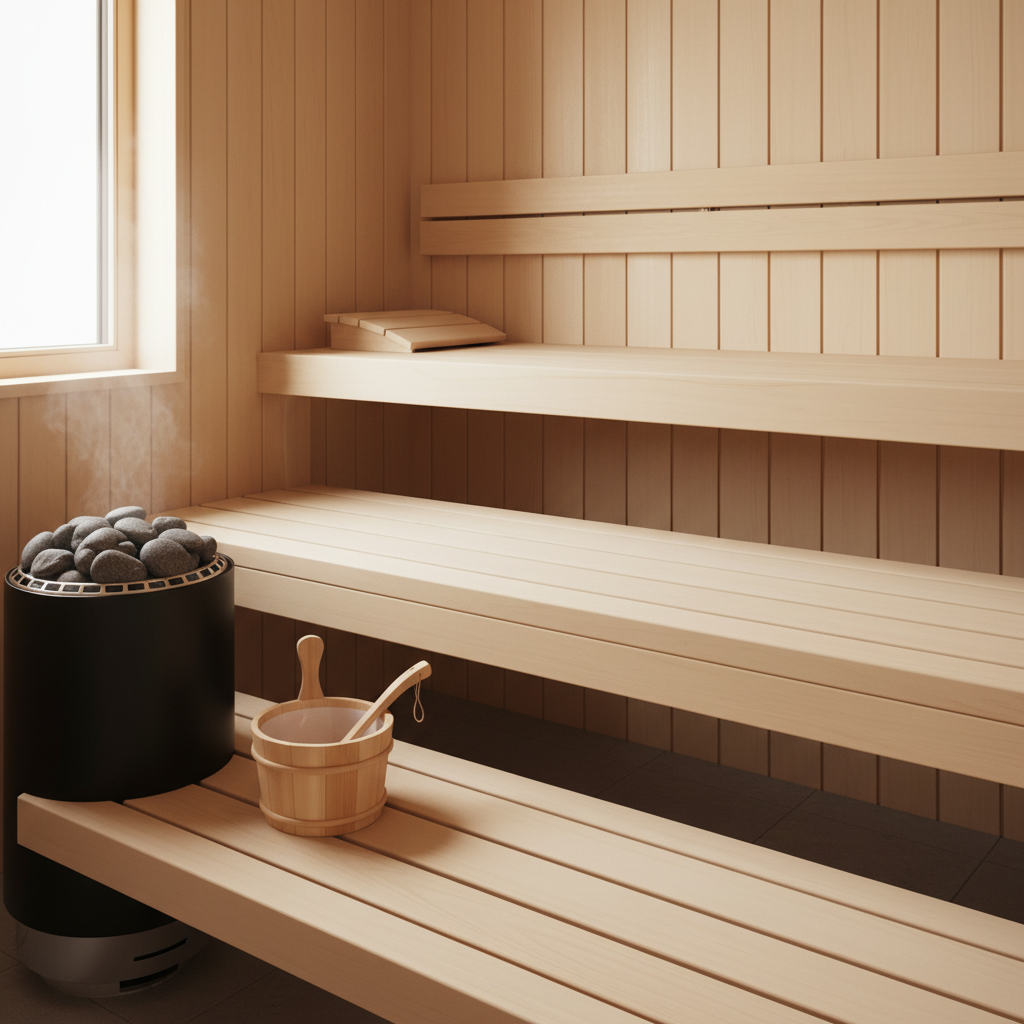
Daily and Weekly Sauna Maintenance Routines
The most effective sauna and steam room maintenance tips are the ones you do consistently, even when they seem minor. Daily habits compound into dramatically better long-term outcomes.
After Every Session (Daily in Commercial Settings)
- Dry the room thoroughly: Crack the sauna door open and run the heater for 10–15 minutes after your session. This drives residual moisture out of the timber, preventing warping, mould, and odour.
- Lift duckboards and floor mats: Moisture accumulates beneath floor coverings. Lifting and propping them after every use allows air to circulate underneath and prevents rot.
- Wipe benches where people sat: Use plain water or a mild sauna-safe cleaner with a soft cloth. This removes sweat salts before they have a chance to penetrate the grain and stain the timber.
- Enforce towel use: Requiring users to sit on a towel is one of the simplest and most effective protective measures available. It dramatically reduces sweat absorption into bench timber and cuts down cleaning time.
Weekly Maintenance Tasks
- Wipe benches, backrests, and side walls with a damp cloth and a mild, non-abrasive cleaner. Avoid anything with strong chemicals — these can off-gas when heated and create unpleasant or hazardous fumes.
- Sweep or vacuum the floor, paying particular attention to areas under benches and around the heater base where dust, hair, and debris accumulate.
- Spot-mop any sweat or dirt on tiled or sealed floor surfaces.
- Check the door seal for visible wear or gaps — a poorly sealing door undermines both energy efficiency and humidity control.
You should wipe down sauna benches after every session to remove sweat residue, and perform a more thorough clean with a mild sauna-safe cleaner at least once per week. In high-use commercial environments, bench cleaning should be treated as a daily task. Regular cleaning prevents perspiration from staining and degrading the timber over time.
Monthly and Seasonal Steam Room and Sauna Care
Beyond the weekly routine, a monthly inspection and cleaning cycle addresses the issues that build up gradually and are easy to miss during day-to-day use. These sauna and steam room maintenance tips apply to both residential and commercial environments, though commercial operators should compress timelines for higher-frequency checks.
Monthly Checklist
- Mop floors with warm water and a pH-neutral cleaner suitable for tiled or stone surfaces. Avoid acidic or bleach-based products on grout, which can accelerate deterioration.
- Inspect ventilation inlets and outlets to confirm they are unobstructed. Blocked vents trap moisture, raise humidity beyond safe levels, and create ideal conditions for mould growth behind wall cladding.
- Check for early mould or dark staining in corners, beneath bench supports, and around the heater. Spot-treat with a sauna-safe antimicrobial solution before infestations take hold.
- Inspect timber for warping or cracking. Early identification of a warped plank allows for a straightforward repair; ignored warping can compromise the structural integrity of an entire bench assembly.
- Descale steam generators (steam rooms): In Australasia's varying water hardness zones, mineral scale can build up quickly inside steam generators. Monthly descaling — or at intervals recommended by your manufacturer — is essential to maintaining output and protecting the unit.
If you're designing a new wellness space and want to minimise your long-term maintenance burden, ventilation layout and material selection are critical decisions. The guide to wellness at home design ideas from Wellnesswares covers how to integrate maintenance-friendly features from the planning stage — a worthwhile read for architects and designers working on new builds or renovations.
Annual Deep-Clean: The Most Important Sauna and Steam Room Maintenance Tips
The annual deep-clean is the cornerstone of any long-term maintenance programme. Leading manufacturers including HUUM recommend systematic deep maintenance at least annually for home installations, and every six months for high-traffic commercial environments. Here is a step-by-step approach:
How to Perform an Annual Sauna Deep-Clean
- Empty the room completely: Remove all duckboards, floor mats, accessories, and any loose items.
- Clean all timber surfaces: Use a sauna-specific wood cleaner and a soft-bristled brush to scrub benches, backrests, walls, and ceiling boards along the grain. Work methodically from top to bottom.
- Rinse thoroughly: Wipe away all cleaner residue with clean, damp cloths. Do not leave soap or chemical residue on timber — it will off-gas during heating.
- Sand bench surfaces: Using approximately 120-grit sandpaper, lightly sand bench tops and backrests to remove perspiration stains and grey discolouration. This step alone dramatically refreshes the appearance and hygiene of timber benches.
- Heat the sauna to dry: Run the heater for approximately 30 minutes with the door slightly ajar to drive moisture from freshly cleaned and sanded surfaces before the room is next used.
- Inspect and restack sauna rocks (traditional saunas): Remove all rocks from the heater. Discard any that have cracked or crumbled. Inspect the heating elements beneath for scale, corrosion, or damage. Restack rocks in an arrangement that allows good airflow, placing larger rocks at the base and smaller ones toward the top.
- Inspect infrared panels (infrared saunas): Wipe heater panels with a soft, barely damp cloth. Inspect wiring and connections for looseness or signs of wear. Contact a qualified technician if any defect is visible.
- Have electrical components professionally inspected: This is non-negotiable. A qualified electrician should inspect heater wiring, controls, thermostats, and safety cut-outs annually. For wood-burning units, a chimney sweep should inspect and clean flues at the same interval.
- Apply wood treatment if due: If your timber surfaces are due for protective treatment (every 1–3 years depending on use), now is the ideal time to apply a food-safe sauna oil or approved wax. Never apply paint or varnish to sauna interior surfaces — coatings trap heat, prevent timber from breathing, and can emit harmful vapours at operating temperatures.
Steam Room-Specific Maintenance: A Higher Bar
Steam rooms operate in a fundamentally different environment from dry saunas — surfaces remain saturated with moisture for extended periods, creating conditions that are significantly more demanding from a hygiene and materials perspective. Effective sauna and steam room maintenance tips for steam rooms require additional attention to several key areas.
Steam Generator Care
The steam generator is the heart of any steam room, and it demands dedicated maintenance. Key tasks include:
- Flush and descale on schedule: Mineral scale (limescale) is the most common cause of steam generator failure. Depending on your local water hardness — which varies considerably across Australasia — you may need to descale as frequently as monthly. Always follow the manufacturer's specific descaling protocol, as incorrect chemicals can damage internal components.
- Check the steam head and nozzle: Scale and sediment frequently block steam outlets. Inspect and clean nozzles monthly to ensure even steam distribution.
- Inspect water supply lines and drain connections: Look for signs of mineral build-up, leaks, or corrosion at fittings. Address any issues promptly to avoid water damage to surrounding structures.
- Verify the automatic drain function: Many modern generators have an auto-drain feature that empties residual water after use to reduce scale accumulation. Confirm this function is working correctly during each maintenance check.
Tile and Grout Management
- Inspect grout lines monthly for cracking, staining, or mould infiltration. Steam rooms operate under constant thermal cycling, which can cause grout to crack over time and allow moisture to penetrate wall structures.
- Re-grout compromised sections promptly using products rated for high-humidity environments. Do not delay — water ingress behind tiles is one of the most expensive repairs a steam room owner can face.
- Clean tile surfaces with pH-neutral cleaners. Avoid acidic cleaners on natural stone tiles, which can etch and dull the surface permanently.
For those setting up a home steam shower rather than a dedicated steam room, the principles are the same, though the scale of equipment differs. Wellnesswares has produced a detailed guide on steam generator for home shower installations that covers equipment sizing, installation considerations, and the maintenance implications of different unit configurations.
Preventing mould in a steam room requires a combination of strategies: ensure ventilation is fully functional and unobstructed; run the extractor fan for at least 20–30 minutes after every session to remove residual moisture; clean tile surfaces and grout weekly with an appropriate antimicrobial cleaner; inspect corners and seams monthly for early signs of growth; and re-grout any cracked lines promptly to prevent water infiltration behind the wall structure. In high-humidity climates common in parts of Australasia, the frequency of these checks should be increased.
Heater-Specific Maintenance for Saunas
The heater is the most mechanically complex and potentially hazardous component in any sauna. These sauna and steam room maintenance tips for heater care apply across all fuel types but with important variations.
Electric Sauna Heaters
- Periodically dust the exterior and visually inspect the unit for any signs of damage or corrosion.
- Confirm that no flammable items are stored in proximity to the heater.
- Check that thermostats and safety cut-outs are functioning correctly. If the sauna is overshooting its target temperature or failing to cut out, have a qualified electrician inspect the controls immediately.
- Never attempt to repair or rewire heater components without appropriate qualifications. Electrical work on sauna equipment must comply with Australian and New Zealand electrical standards.
Wood-Burning Sauna Heaters
- Empty the ash drawer before each firing session to maintain proper airflow and combustion efficiency.
- Inspect door gaskets and firebricks for wear. A compromised door seal allows smoke to enter the sauna cabin rather than exiting through the flue.
- Have the chimney and flue system professionally cleaned and inspected at least annually. Creosote accumulation in flues is a significant fire hazard.
Infrared Sauna Heater Panels
- Wipe panel surfaces with a soft, barely damp cloth only. Harsh chemicals or excessive moisture can damage the emitter elements and void manufacturer warranties.
- Inspect wiring connections and panel mounts for looseness. Infrared panels that vibrate or are improperly secured can develop wiring faults over time.
- Consult a qualified technician annually to verify that output levels and electrical connections are within specification.
Timber Care and Long-Term Wood Preservation
Timber is the defining material in most saunas, and its care is central to any set of sauna and steam room maintenance tips. The most commonly used species — including Nordic spruce, western red cedar, aspen, and thermally modified timber — all have different characteristics, but the principles of care are broadly consistent.
- Clean regularly with mild soap and water. Avoid strong detergents, bleach, or solvent-based products. These strip natural oils, raise the grain, and can leave chemical residues that become unpleasant at operating temperatures.
- Sand at least annually. Lightly sanding bench surfaces with 120-grit paper removes perspiration staining, grey oxidation, and surface roughness that can harbour bacteria. It is the single most effective timber refresh technique available.
- Oil or wax every 1–3 years. Apply a food-safe sauna oil — typically linseed or paraffin-based products formulated for high-temperature environments — to nourish and protect timber. This is especially important in benches that receive heavy use. Avoid conventional wood stains or sealers.
- Never paint or varnish interior surfaces. This cannot be overstated. Coatings that are safe at room temperature become hazardous at 80–100°C, the operating range of a traditional sauna. They also prevent moisture from escaping the timber, which accelerates internal rot.
Frequently Asked Questions
How often should I clean my home sauna?
At a minimum, wipe benches and lift floor mats after every session, perform a more thorough wipe-down weekly, mop floors and check ventilation monthly, and carry out a full deep-clean at least once per year. If your sauna receives daily use from multiple people, compress these timelines — treat weekly tasks as daily, and perform the annual deep-clean every six months.
What is the best cleaner for sauna wood?
The safest and most effective cleaner for sauna timber is a purpose-formulated sauna wood cleaner, used with a soft-bristled brush and warm water. For day-to-day wiping, plain water or a very mild, unscented soap is sufficient. Avoid bleach, strong disinfectants, ammonia-based cleaners, and any product with a strong fragrance — these can off-gas at sauna temperatures and irritate the respiratory system.
How do I remove stains from sauna benches?
Most perspiration stains on sauna timber can be removed by scrubbing with a sauna wood cleaner and a stiff brush, then rinsing with warm water. For deep or set-in staining, lightly sand the affected area with 120-grit sandpaper along the grain. This removes the stained surface layer and exposes fresh, clean timber beneath. Avoid bleach-based stain removers, as they can damage the wood fibre and leave residues that off-gas when heated.
How often should sauna rocks be replaced?
Sauna rocks should be inspected annually and replaced as needed. During your annual deep-clean, remove all rocks and check each one for cracking, crumbling, or significant fragmentation. Deteriorated rocks reduce heat efficiency, can block airflow around the heating elements, and may damage the heater if fragments fall onto elements. Research suggests that a full rock replacement every 3–5 years is reasonable for home use, with more frequent changes in commercial settings where the heater is used daily.
Can I use essential oils in my steam room or sauna for maintenance purposes?
Essential oils and sauna-specific aromatherapy products can enhance the user experience, but they should not be used as cleaning or maintenance agents. Some oils can leave residues on timber or generator components that attract bacteria or gum up steam nozzles. Always clean with appropriate products first, and use aromatherapy separately as a controlled, purposeful addition. For guidance on safe aromatherapy use in steam environments, the Wellnesswares guide on aromatherapy for home steam rooms provides detailed recommendations.
Building a Maintenance Schedule That Sticks
The most sophisticated sauna and steam room maintenance tips are worthless if they never get implemented. The difference between facilities that maintain their equipment well and those that don't often comes down to whether maintenance is treated as a scheduled, documented activity or a reactive response to visible problems.
For homeowners, a simple approach is to tie maintenance tasks to existing habits: wipe benches as part of the cool-down routine after every session; calendar a monthly ventilation and mould check on the first weekend of each month; schedule the annual deep-clean around summer or the start of winter, when facilities typically see increased use.
For commercial operators and facility managers, a written maintenance log — recording dates, tasks performed, and any observations or repairs — is best practice. This documentation supports warranty claims, assists any service technicians who attend the site, and provides legal protection in the event of a hygiene-related complaint.
Architects and designers specifying new installations can also contribute to lower long-term maintenance burdens through smart material selection, appropriate ventilation design, and the choice of equipment brands with strong local service networks. If you're in the planning phase, the Wellnesswares guide to luxury spa at home in Australia is an excellent resource covering how thoughtful design decisions at the specification stage reduce ongoing maintenance complexity.
"Facilities that treat maintenance as a scheduled discipline — not a reactive chore — spend less on repairs, deliver better user experiences, and get more years from every piece of equipment they install."
Conclusion: Protect Your Investment with Consistent Care
Following proven sauna and steam room maintenance tips is the single most effective thing you can do to protect the value, performance, and safety of your wellness investment. From the simple daily habit of running your heater to dry the cabin after a session, to the annual ritual of deep-cleaning, sanding, and having electrical components professionally checked — every step compounds into a sauna or steam room that performs better, lasts longer, and delivers a genuinely premium experience to every user.
At Wellnesswares, we supply home and commercial wellness equipment across Australasia and are passionate about helping our customers get the most from their installations. Whether you're a homeowner setting up your first residential sauna, an architect designing a boutique wellness retreat, or a commercial facility manager overseeing a busy health club, the right products and the right knowledge make all the difference.
Ready to take the next step? Browse the Wellnesswares range of sauna cleaners, timber treatments, replacement stones, and maintenance accessories — or get in touch with our team for personalised advice on your specific installation. Your wellness space deserves the best care you can give it.