Guide to Residential Steam Bathing Systems for AU Homes
June 7, 2026 · 13 min read
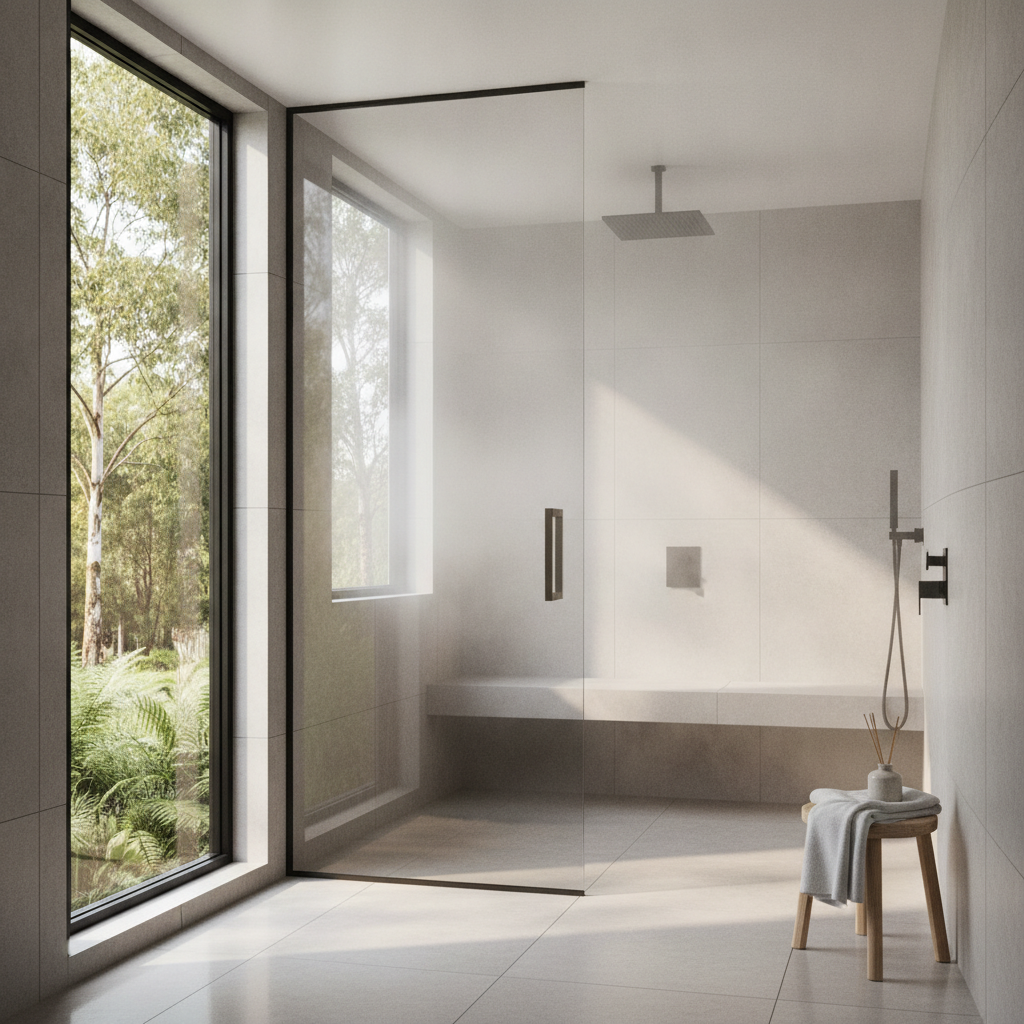
TL;DR — The Bottom Line
The Essential Guide to Residential Steam Bathing Systems for Australasian Homes explains how modern electric steam generators turn a standard shower into a spa-grade wellness space. Expect 40–45°C humid sessions, 2–3 minute heat-up times, compact footprints, and benefits spanning recovery, stress relief, skin health and respiratory comfort. Specify the right generator size, waterproofing, ventilation and controls — and partner with a specialist like Wellnesswares to ensure local-standard compliance and design integration.
Steam bathing is one of the fastest-growing categories in premium Australian and New Zealand bathrooms. As homeowners, architects and wellness operators look for ways to bring credible recovery and relaxation into everyday living, The Essential Guide to Residential Steam Bathing Systems for Australasian Homes has become a practical reference for choosing, specifying and installing the right system. This guide draws together engineering fundamentals, design considerations, wellness outcomes and local-market realities so you can plan confidently.
Whether you are renovating a single ensuite, designing a multi-residential tower with wellness amenities, or fitting out a boutique recovery studio, the principles below apply. We will also clarify where steam differs from sauna, what compliance looks like under Australasian conditions, and how to avoid common specification mistakes.
Quick Facts
- Operating temperature: 40–45°C at high humidity
- Generator size (residential): 2–9 kW electric
- Heat-up time: 2–3 minutes from activation
- Recommended session length: 10–30 minutes
- Minimum footprint: Similar to a standard shower enclosure
- Core components: Generator, steam head, control panel, sensor, drain
What Is a Residential Steam Bathing System?
At its simplest, a residential steam bathing system is an electric generator that boils water and pipes saturated steam into a sealed, waterproofed enclosure. Unlike a traditional Finnish sauna — which uses dry heat between 70–100°C — steam bathing operates at a far gentler 40–45°C with humidity close to 100%. This produces the wet, enveloping warmth associated with Turkish hammams and Roman thermae.
The Essential Guide to Residential Steam Bathing Systems for Australasian Homes positions this technology as a homeowner-friendly upgrade. Modern generators are compact (often the size of a small suitcase), can be installed in a vanity void, roof cavity or service cupboard, and connect to a sealed shower via a single low-pressure steam line. The result: spa-grade wellness without the spatial demands of a dedicated sauna room.
Core components
- Steam generator unit — typically 2–9 kW for homes
- Steam head — often with an aromatherapy reservoir
- Digital control panel with thermostat and timer
- Temperature sensor and safety cut-outs
- Auto-flush/drain to reduce limescale and maintenance
- Sealed enclosure with proper waterproofing and ventilation
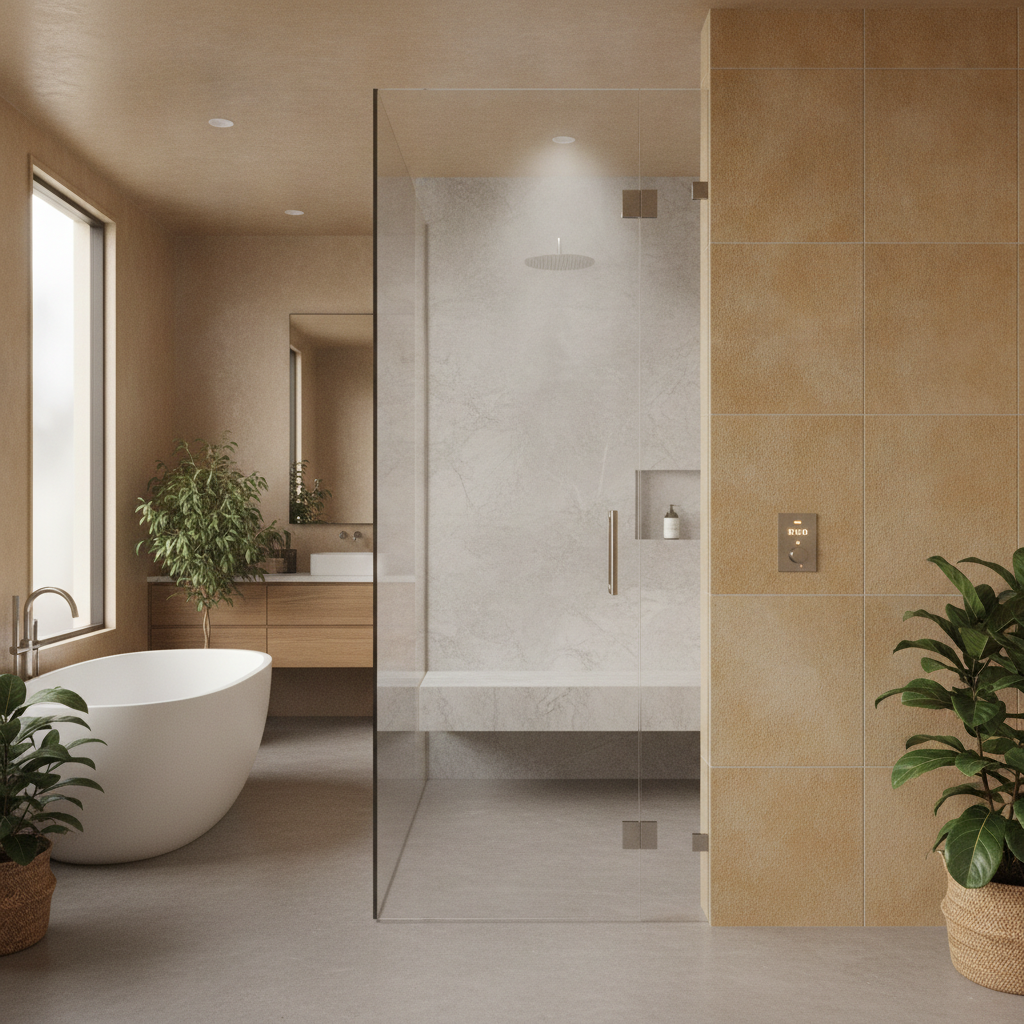
Why The Essential Guide to Residential Steam Bathing Systems for Australasian Homes Matters Now
Australasia has historically lagged Europe and North America in home steam adoption. The Australasian Sweat Bathing Association notes that the category is "very much in its infancy" locally, but demand is accelerating sharply as recovery, sleep and stress-management become mainstream priorities. Three forces are converging:
- Wellness-driven renovations — Buyers increasingly expect bathrooms to function as private spas.
- Compact urban living — Steam suits apartments and townhouses where saunas cannot fit.
- Design-led architecture — Frameless glass, tiled niches and concealed services allow steam systems to disappear into the architecture.
For architects and designers, The Essential Guide to Residential Steam Bathing Systems for Australasian Homes is therefore both a technical and commercial document: it informs material selection, services coordination and the wellness narrative buyers now expect. Explore curated residential systems at wellnesswares.com.au/steam.
Yes — provided the enclosure can be sealed (full-height door, sloped ceiling, waterproof membrane behind tiles) and a 15–32 amp circuit can be run to the generator location. Many Australasian renovations install a generator, steam head and control sensor without changing the shower footprint.
Health and Wellness Benefits Backed by Use and Research
The Essential Guide to Residential Steam Bathing Systems for Australasian Homes would be incomplete without an evidence-aligned look at outcomes. While sauna research is more extensive, steam bathing has a strong record across the following:
- Muscle recovery and pain relief — Humid heat eases rheumatic discomfort, reduces post-exercise soreness, and supports circulation to fatigued tissue.
- Respiratory comfort — Warm, moist air can provide short-term relief from congestion and dry airways.
- Stress reduction and better sleep — Evening steam sessions are widely reported to support parasympathetic recovery.
- Skin and circulation — Steam opens pores, softens skin, and promotes peripheral blood flow.
- Accessibility — Older users often tolerate moderate steam more comfortably than high-heat saunas.
"Steam bathing at 40–45°C delivers spa-grade wellness in the footprint of a standard shower — making it the most space-efficient recovery upgrade available to Australasian homes."
System Types and Configurations
The Essential Guide to Residential Steam Bathing Systems for Australasian Homes recognises three primary configurations homeowners typically choose between:
1. Integrated steam shower
A standard tiled shower upgraded with a generator, steam head, sealed door and control. Best for renovations and most apartments. Footprint can be as small as 900 × 900 mm.
2. Custom steam room
A dedicated tiled or stone room with bench seating, mood lighting, chromotherapy and aromatherapy. Best for larger homes, pool houses and wellness wings.
3. Prefabricated steam cabin
Self-contained acrylic or composite cabins. Fastest to install and useful where waterproofing existing structures is impractical.
Comparison table
| Configuration | Typical Cost | Install Time | Design Flexibility | Best For |
|---|---|---|---|---|
| Integrated steam shower | Mid | 1–2 weeks | High | Renovations, apartments |
| Custom steam room | High | 3–6 weeks | Very high | Luxury homes, wellness zones |
| Prefab cabin | Low–mid | 1–3 days | Low | Quick upgrades, rentals |
Sizing, Power and Specification Essentials
Correct generator sizing is the single most important technical decision in The Essential Guide to Residential Steam Bathing Systems for Australasian Homes. Undersized units fail to reach temperature; oversized units waste energy and trip circuits.
How-to: Specify the right generator
- Measure enclosure volume — Length × width × height in cubic metres.
- Apply a material multiplier — Add 25% for natural stone, 15% for outside walls, 10% for glass over 2 m².
- Select generator kW — As a rule of thumb: up to 3 m³ → 3 kW; 3–6 m³ → 6 kW; 6–9 m³ → 9 kW.
- Confirm electrical supply — 3 kW units run on 15A single-phase; larger units typically need 3-phase.
- Plan plumbing — Cold water inlet, steam line under 5 m, condensate-tolerant fall to drain.
- Locate the generator — Within 5 m of the steam head, ventilated, accessible for service.
Quality residential steam packages typically range from AUD $4,000 for a basic integrated shower upgrade to AUD $25,000+ for a custom designer steam room with chromotherapy, aromatherapy and stone finishes — excluding tiling and waterproofing.
Design, Waterproofing and Ventilation for Australasian Conditions
Australasian climates range from tropical Queensland to alpine New Zealand. The Essential Guide to Residential Steam Bathing Systems for Australasian Homes therefore emphasises robust waterproofing and ventilation suited to local humidity loads.
- Waterproofing — Full membrane to AS 3740 across walls, floor and ceiling; epoxy grout preferred.
- Ceiling — Slope of at least 2° to drain condensate away from bathers.
- Door — Full-height, sealed, swing-out.
- Ventilation — Post-session exhaust fan on a humidistat to dry the enclosure.
- Materials — Porcelain, natural stone, glass, marine-grade timber for benches.
- Lighting — IP65 minimum, low-voltage preferred.
For specification templates and architect-ready details, visit wellnesswares.com.au/design-resources.
Operation, Safety and Maintenance
Daily use of a well-specified system is straightforward. The Essential Guide to Residential Steam Bathing Systems for Australasian Homes recommends the following routine:
- Pre-session — Hydrate, set 42°C, 20-minute timer.
- During — Sit on a bench; exit if light-headed.
- Post-session — Cool rinse, re-hydrate, run exhaust fan.
- Weekly — Wipe down tiles, check drain.
- Quarterly — Confirm auto-flush is operating; descale if in hard-water areas.
- Annually — Service generator element and solenoid; check sensors.
Safety devices — over-temperature cut-out, door-open detection, and timed auto-shutoff — are standard on quality units. Children should always be supervised, and people with cardiovascular conditions should consult a doctor before regular use.
Choosing a Supplier: What Australasian Buyers Should Look For
The category is still maturing locally, so supplier choice matters. The Essential Guide to Residential Steam Bathing Systems for Australasian Homes recommends evaluating providers against five criteria:
- Local compliance — Generators certified to Australian electrical standards.
- Design integration — Ability to supply architect-ready CAD details.
- Performance specs — Heat-up time, kW efficiency, decibel rating.
- Aftercare — Spare parts held in Australia/NZ, technician network.
- Warranty — Minimum 2 years on generators; 5+ years on tanks.
Wellnesswares specialises in architecture-led specification for residential and boutique commercial projects. Browse case studies and request a project consultation at wellnesswares.com.au/contact.
Frequently Asked Questions
How long does a residential steam bathing session last?
Most users enjoy 10–30 minute sessions at 40–45°C. Begin with shorter 10-minute sessions, hydrate well, and increase duration as your body adapts.
Is a steam shower better than a sauna for Australian homes?
Steam is more space-efficient, integrates with standard shower footprints, and operates at gentler temperatures — making it well suited to apartments, ensuites and clients who find dry sauna heat uncomfortable.
What electrical supply does a residential steam generator need?
Small 3 kW units typically run on a dedicated 15A single-phase circuit. Larger 6–9 kW units usually require 3-phase power and should be specified by a licensed electrician.
How do I prevent mould and limescale in a home steam room?
Specify a sloped ceiling, full waterproof membrane, post-session exhaust ventilation and a generator with auto-flush. In hard-water areas, descale the tank quarterly.
Conclusion and Next Steps
The Essential Guide to Residential Steam Bathing Systems for Australasian Homes shows that what was once an exotic spa feature is now a practical, design-integrated upgrade for modern bathrooms. With the right generator sizing, waterproofing, ventilation and supplier partnership, steam bathing delivers measurable wellness outcomes — recovery, sleep, skin and stress benefits — in the footprint of an everyday shower.
If you are planning a renovation, new build or wellness fit-out, partner with a specialist who understands local conditions and architecture-led detailing. Talk to the Wellnesswares team today at wellnesswares.com.au/contact to scope your project, review CAD details, and specify a steam system that performs for decades.