Luxury Home Steam Room Installation in Australia Guide
June 4, 2026 · 13 min read
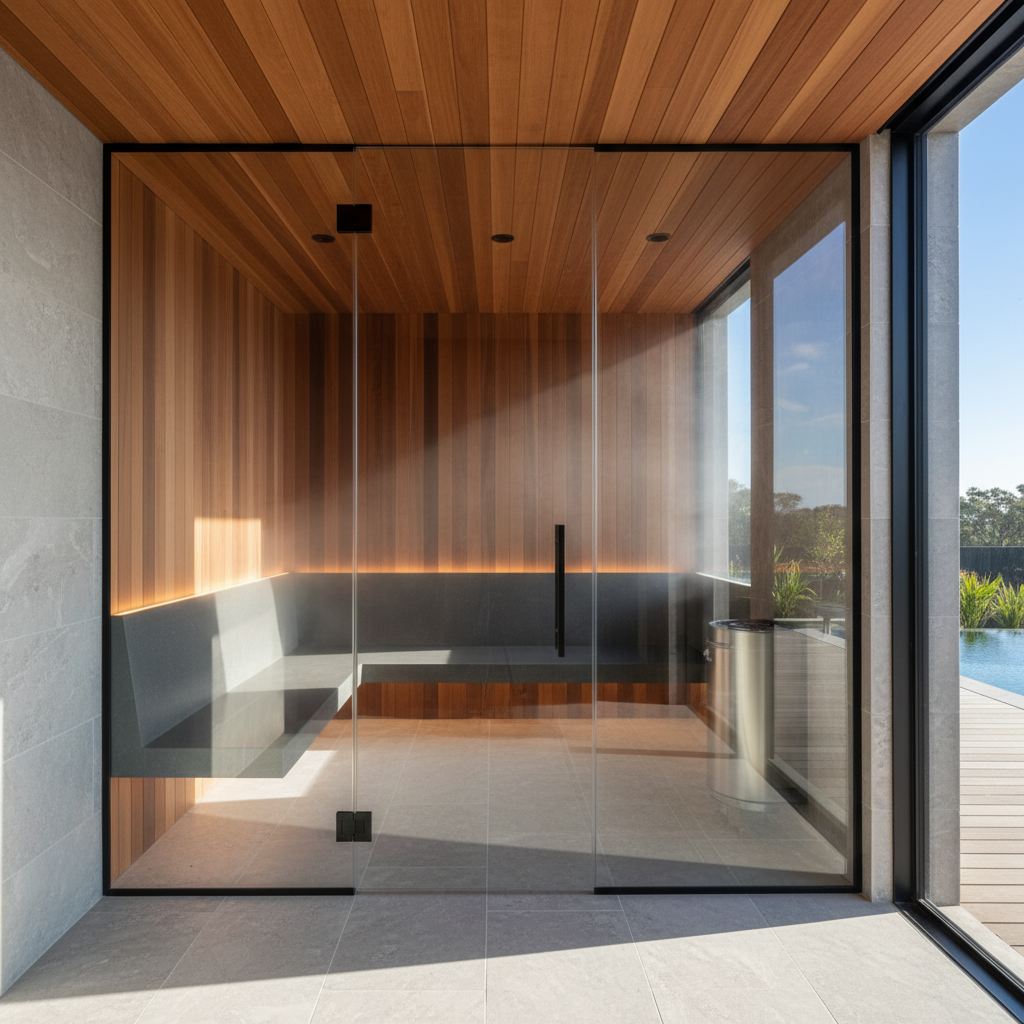
Australian homeowners are rewriting the rules of bathroom design, and at the centre of that transformation sits the steam room. Once reserved for five-star hotels and members-only spas, residential steam experiences are now a mainstream feature of premium renovations. If you are ready to Transform Your Bathroom: The Ultimate Guide to Luxury Home Steam Room Installation in Australia is your comprehensive roadmap — covering market trends, design fundamentals, costs, compliance, and the practical decisions that separate a wellness investment from an expensive regret.
TL;DR — The Bottom Line
Luxury home steam rooms are now a mainstream Australian renovation feature, with entry-level steam generators starting around AUD 4,500 + GST and complete builds typically running into the tens of thousands. Success depends on correct generator sizing (cubic volume + material adjustments), 2.13–2.44 m ceilings with a 2.5–5 cm slope, specialist waterproofing, and integrated controls. Wellnesswares specialises in education-led, design-integrated steam systems engineered for Australian homes, gyms and wellness facilities.
Quick Facts
- Entry-level generator cost: From ~AUD 4,500 + GST
- Full project budget: Typically tens of thousands AUD (waterproofing, tiling, glazing, electrical)
- Operating cost: From ~AUD 28/month depending on usage and tariff
- Ideal ceiling height: 2.13–2.44 m
- Ceiling slope: 2.5–5 cm per linear metre to prevent drip
- Typical session length: 15–20 minutes at 40–46°C with 100% humidity
Why Transform Your Bathroom: The Ultimate Guide to Luxury Home Steam Room Installation in Australia Matters Now
The Australian wellness market has shifted dramatically. Post-pandemic priorities, the rise of hotel-style bathrooms, and increasingly affordable generator technology have pushed steam rooms from luxury indulgence into mainstream renovation territory. Renovation specialists now report that home spa rooms — including steam — are a standard feature of premium bathroom makeovers rather than a niche request.
For homeowners, the appeal is twofold: a daily wellness ritual delivered without leaving home, and a meaningful uplift to property value. For architects and designers, steam rooms represent a high-margin specification opportunity that elevates the entire bathroom brief. And for commercial operators — boutique gyms, day spas, wellness clinics — steam is now a baseline expectation in any “thermal journey” offering alongside saunas and cold therapy.
This is why a structured guide to Transform Your Bathroom: The Ultimate Guide to Luxury Home Steam Room Installation in Australia is so valuable: the technical, regulatory and design decisions made before tile goes on the wall determine whether the finished room delivers a lifetime of luxury or a series of costly callbacks.
The Australian Market: Demand, Drivers and Where Steam Fits
Demand for residential steam installations is being driven by several converging trends:
- The home wellness boom: Australians are spending more on pleasure and wellbeing categories, with home spa features now a standard inclusion in premium renovations.
- Hotel-influenced design: Luxury hotel bathrooms have raised expectations around materials, lighting and integrated wellness features.
- Year-round usability: Unlike outdoor spas, indoor steam rooms deliver consistent experience regardless of weather — a real advantage across Australia's diverse climate zones.
- Commercial specification pressure: Boutique gyms and multi-residential developments increasingly require steam as part of amenity packages that justify premium pricing.
Wellnesswares operates at the design-led, premium end of this market, focusing on education-first selling and full-system integration. You can explore the broader category of residential wellness equipment at wellnesswares.com.au/steam-rooms.
Costs and Budgets: What Australian Homeowners Should Expect
Budget transparency is essential when planning to Transform Your Bathroom: The Ultimate Guide to Luxury Home Steam Room Installation in Australia. Costs fall into three buckets: equipment, build, and operating.
Equipment costs
- Entry-level steam generator (residential): From around AUD 4,500 + GST.
- Premium generators with smart controls, aromatherapy injection, chromotherapy lighting and Wi-Fi integration: Significantly higher, often AUD 8,000–15,000+ depending on specification.
- Accessories: Frameless glass doors, custom seating, drainage upgrades and bespoke tiling can add substantially to the final figure.
Whole-project build costs
Once you factor in specialist waterproofing, vapour-barrier membranes, tiling, frameless glazing, plumbing modifications and electrical upgrades (most generators require dedicated three-phase or high-amperage single-phase circuits), total project budgets typically reach the tens of thousands of dollars. The generator is rarely the largest line item.
Operating costs
For comparable steam and sauna configurations, Australian providers cite power costs starting around AUD 28 per month, depending on usage frequency, electricity tariffs and how well the room is sized and insulated. Correct generator sizing relative to room volume is the single biggest lever for ongoing energy efficiency.
Yes. Australian renovation experts consistently position spa and steam features as investments in property appeal that mirror high-end hotel and health club aesthetics. The uplift is most pronounced in the premium residential segment where buyers expect wellness amenities.
Design and Technical Fundamentals
The engineering behind a luxury steam room is unforgiving — get the fundamentals wrong and you will face uneven heat, condensation damage, mould, or generators that burn out prematurely. This section of Transform Your Bathroom: The Ultimate Guide to Luxury Home Steam Room Installation in Australia covers the non-negotiables.
Space planning and sizing
Steam generator output is matched to the room's cubic volume (length × width × height) with adjustments for dense materials. Stone, marble, glass and large-format porcelain all absorb significant heat and require generator upsizing — typically a 25–35% capacity uplift compared to ceramic-tiled walls.
- Ceiling height: 2.13–2.44 m is optimal. Above 2.44 m, steam stratifies at the top of the room, leaving bathers in cooler air and forcing the generator to work harder.
- Ceiling slope: 2.5–5 cm per linear metre. This prevents condensation from forming droplets and dripping onto occupants — a small detail with a huge comfort impact.
- Seating: Build benches at 450–500 mm height with adequate depth for reclined positions in larger rooms.
Waterproofing and materials
A steam room is the most aggressive moisture environment in any home. Standard bathroom waterproofing is insufficient. You need a full vapour-barrier system applied to ceiling and walls, with all penetrations (lights, speakers, controls) properly sealed. Grout must be epoxy-based; standard cement grout fails under sustained steam exposure.
Generator placement and plumbing
Generators are typically located within 7–8 metres of the steam head, in a ventilated, accessible space such as a vanity cabinet or services cupboard. They require a dedicated water supply, a drain line for the auto-flush cycle, and a properly rated electrical circuit. Explore integrated system options at wellnesswares.com.au/steam-generators.
Step-by-Step: How to Plan Your Luxury Steam Room Installation
A structured planning sequence dramatically reduces risk. Here is the workflow we recommend when you set out to Transform Your Bathroom: The Ultimate Guide to Luxury Home Steam Room Installation in Australia in your own project:
- Define the brief: Single user, couples, or family? Daily use or occasional? Standalone room or steam shower combination?
- Measure and calculate volume: Determine cubic metres and identify wall and ceiling materials so generator sizing can be done accurately.
- Engage a specialist early: Bring in a steam-room provider before architectural drawings are finalised — services routing, ceiling slope and door swing all affect floor plans.
- Confirm services capacity: Verify electrical capacity (often a switchboard upgrade is needed), water supply pressure, and drainage access.
- Specify the system: Select generator, controls, steam head, lighting, audio, aromatherapy and door package.
- Coordinate trades: Waterproofer, tiler, electrician, plumber and glazier must work to the steam specialist's drawings.
- Commission and test: A proper commissioning sequence verifies temperature ramp, drain function, and control integration before sign-off.
- Educate end users: Session duration, hydration, cleaning routines and de-scaling intervals all extend equipment life.
Often yes, but it depends on ceiling height, available electrical capacity, and whether the existing waterproofing can be upgraded to vapour-barrier standard. Retrofits typically cost more than new builds because of demolition and re-tiling requirements.
Compliance, Safety and Australian Standards
Steam rooms touch multiple regulatory areas: electrical (AS/NZS 3000), plumbing, waterproofing (AS 3740) and building code thermal/ventilation requirements. Working with licensed trades and a specialist provider ensures compliance and protects warranty cover.
Key safety considerations include:
- Door hardware: Steam room doors must open outward and never lock from the inside.
- Maximum session times: 15–20 minutes is the standard safe limit; controls should default to automatic shutoff.
- Temperature limits: Generators must include high-limit safety cutouts.
- Slip resistance: Floor tiles must meet appropriate R-rating for wet barefoot use.
Choosing Between Custom Build and Prefabricated Systems
One of the most consequential decisions in this guide to Transform Your Bathroom: The Ultimate Guide to Luxury Home Steam Room Installation in Australia is whether to commission a fully custom build or specify a prefabricated modular system.
| Feature | Custom Build | Prefabricated |
|---|---|---|
| Design flexibility | Unlimited — any shape, material, finish | Limited to manufacturer modules |
| Installation time | 3–6 weeks on site | 2–5 days |
| Cost | Higher (AUD 25,000–80,000+) | Lower (AUD 12,000–35,000) |
| Integration with bathroom | Seamless | Visible as a unit |
| Best for | New builds, premium renovations | Retrofits, faster timelines |
Custom builds dominate the luxury end of the market because they allow seamless integration with surrounding bathroom finishes — the steam room reads as part of the room, not as a bolted-on appliance.
Wellness, Recovery and the Lifestyle Case for Steam at Home
Steam is more than a luxury indulgence. Regular use is associated with improved circulation, skin cleansing, respiratory relief, and post-exercise recovery. For households juggling work, training and family demands, a 15-minute steam ritual delivers a measurable wind-down effect that supports sleep quality and stress management.
From an architectural perspective, steam rooms also expand the functional brief of the master bathroom. They convert a transactional space into a destination — the “hotel suite at home” effect that resonates strongly with premium buyers. This lifestyle case is central to how Wellnesswares positions steam: not as plumbing, but as recovery infrastructure. Learn more about the wellness rationale at wellnesswares.com.au/wellness-guide.
Maintenance, Longevity and Total Cost of Ownership
A well-specified luxury steam room should deliver 15–20 years of service with routine maintenance. The key tasks are:
- Descaling: Every 3–6 months depending on water hardness. Many premium generators have auto-flush features that extend descale intervals.
- Seal inspection: Annual inspection of grout, silicone, and door seals.
- Generator service: Annual service of element, probes, and solenoid valves.
- Tile and grout care: Periodic deep clean with steam-room-safe products; avoid acidic cleaners that attack epoxy grout.
The total cost of ownership over 15 years — including electricity, descaling consumables, and annual service — typically lands at a small fraction of the equivalent spend on commercial spa visits, while delivering frictionless daily access.
Working With a Specialist: What to Look For
Because steam rooms cross so many trade boundaries, the quality of your specialist provider determines outcomes more than any single product choice. When evaluating partners, look for:
- Documented experience with Australian conditions, electrical standards, and waterproofing codes.
- An education-first sales process that explains trade-offs rather than pushing a single product.
- End-to-end capability: design support, equipment supply, commissioning, and aftercare.
- Clear warranty terms covering both equipment and installation workmanship.
- Reference projects in residential and commercial settings.
Wellnesswares was built around precisely this brief — translating steam-room technology into Australian and New Zealand homes through simplification, education, and design-led integration.
“A steam room is not an appliance you install; it is an environment you engineer. Every millimetre of slope, every choice of grout, every cubic metre of volume changes the outcome.”
Frequently Asked Questions
How much does a luxury home steam room cost in Australia?
Entry-level steam generators start from around AUD 4,500 + GST, while complete custom builds — including specialist waterproofing, tiling, glazing, plumbing and electrical works — typically reach AUD 25,000–80,000 or more depending on size and finishes.
What is the ideal size for a home steam room?
Most residential steam rooms are sized for 1–4 users, with internal dimensions around 1.2 × 1.5 m to 1.8 × 2.4 m and ceiling heights of 2.13–2.44 m. Generator output is matched to cubic volume, with adjustments for stone and glass surfaces.
Can I install a steam generator in an existing shower?
Yes — a steam shower combination is one of the most popular configurations in Australian bathrooms. The shower enclosure must be fully sealed to vapour-barrier standard, the ceiling sloped, and a dedicated generator circuit installed. A specialist provider can advise on retrofit feasibility.
How long does a steam room installation take?
Prefabricated systems can be installed in 2–5 days. Fully custom builds typically take 3–6 weeks on site, plus a planning and procurement lead time of 4–8 weeks beforehand.
Are home steam rooms energy efficient?
When correctly sized, insulated, and used for typical 15–20 minute sessions, residential steam rooms are highly efficient. Australian providers cite operating costs starting from around AUD 28 per month, depending on usage frequency and electricity tariff.
Conclusion: Your Next Step Toward a Luxury Steam Sanctuary
The decision to Transform Your Bathroom: The Ultimate Guide to Luxury Home Steam Room Installation in Australia is ultimately about elevating how you live every day. Done well, a steam room becomes a daily wellness ritual, a property asset, and a statement of design intent. Done poorly, it becomes a costly callback waiting to happen.
The difference lies in early planning, correct sizing, specialist waterproofing, integrated controls, and a provider who treats the project as an engineered system rather than a parts list. Whether you are renovating a single ensuite, briefing a new architectural build, or specifying wellness amenities for a commercial development, the principles in this guide will protect your investment and unlock the full experience steam can deliver.
Ready to start your project? Talk to the Wellnesswares team about your space, your goals, and the system that will bring them together. Visit wellnesswares.com.au/contact for a tailored consultation and quote.