Transform Your Bathroom: Luxury Steam Room Guide AU
May 27, 2026 · 13 min read
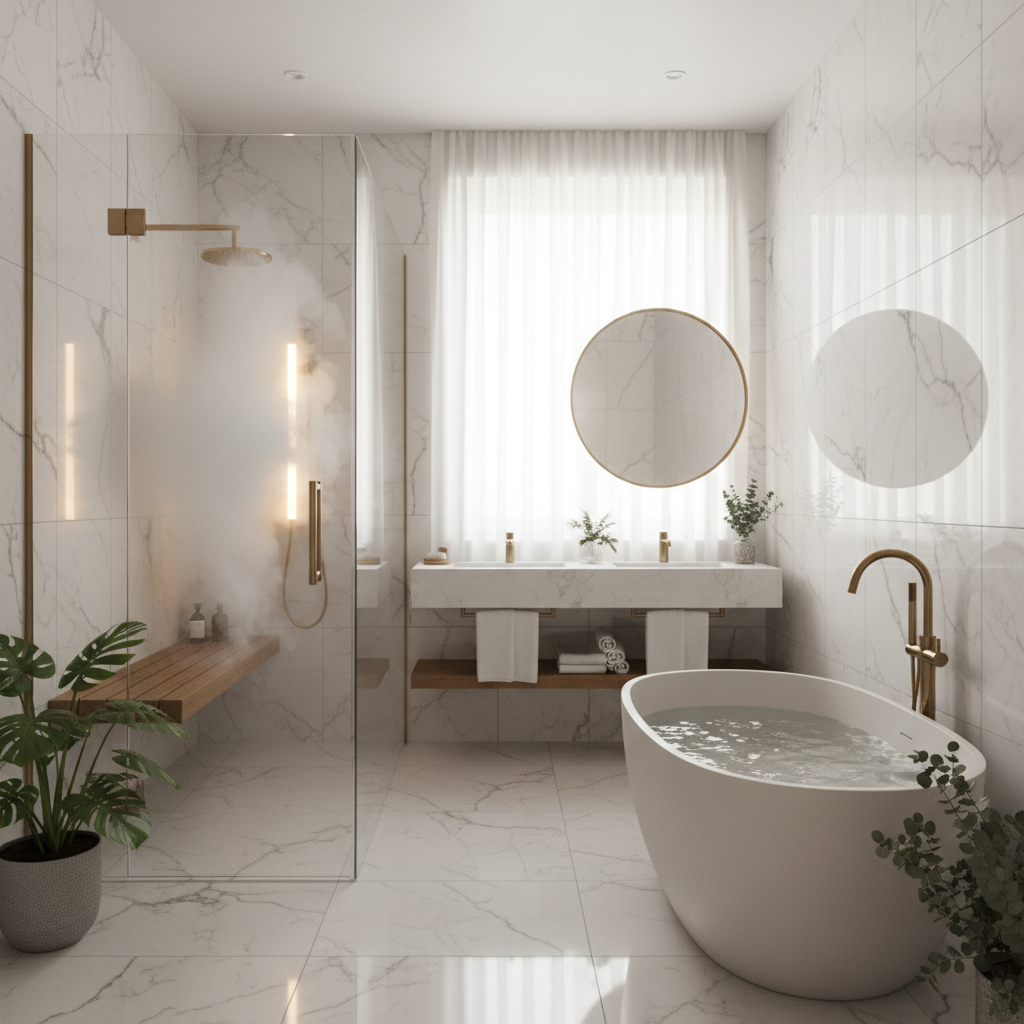
TL;DR — The Bottom Line
Transform Your Bathroom: The Ultimate Guide to Luxury Home Steam Room Installation in Australia distils what matters most — correct sizing (2.1–2.4 m ceilings), waterproof non-porous materials, a right-sized generator within 7.5 m of the enclosure, Australian-compliant electrical and plumbing work, and a clear wellness brief. Done well, a home steam room adds spa-level luxury, recovery benefits, and measurable property value.
Steam rooms have shifted from five-star hotel amenity to mainstream premium bathroom feature across Australasia. Transform Your Bathroom: The Ultimate Guide to Luxury Home Steam Room Installation in Australia is your comprehensive resource for understanding how compact generators, plug-and-play columns and design-led integration are reshaping how Australian homeowners, architects and commercial wellness operators specify steam. At Wellnesswares, we see steam projects increasingly briefed alongside freestanding baths, underfloor heating and ice baths as part of a complete home wellness ecosystem.
Quick Facts
- Ideal ceiling height: 2.1–2.4 m (84–96 in)
- Operating temperature: 40–50°C at ~100% humidity
- Ceiling slope: 2.5–5 cm per linear foot to walls
- Floor fall: ~2% slope to drain
- Generator distance: Within 7.5 m of enclosure
- Typical session length: 15–20 minutes
Why Luxury Home Steam Rooms Are Booming in Australia
Australian renovation firms report steam shower conversions are now one of the fastest-growing premium bathroom upgrades, driven by post-pandemic wellness spending and the rise of at-home recovery culture. Transform Your Bathroom: The Ultimate Guide to Luxury Home Steam Room Installation in Australia starts here because understanding the market context shapes every downstream design decision.
Three forces are converging. First, compact steam generators and plug-and-play columns have lowered the construction barrier — what once required a dedicated plant room can now fit into a standard 1200 × 1200 mm shower recess. Second, buyers increasingly value wellness outcomes (sleep, recovery, respiratory health) over pure aesthetics, making steam an easy sell against marble or premium tapware. Third, architects in Sydney, Melbourne, Auckland and Brisbane are specifying steam as a standard premium option in homes above $2M, particularly in primary ensuites and pool houses.
For commercial operators — boutique gyms, recovery studios, day spas and hotel groups — steam is a high-margin amenity that differentiates against infrared-only competitors. The capital cost is modest relative to a pool, but the perceived luxury is comparable.
"A correctly specified home steam room is no longer a luxury indulgence — it is one of the highest-ROI wellness upgrades available in Australian residential design."
Core Design Principles for a Luxury Steam Room
The gap between a functional steam enclosure and a true spa-grade room sits in the millimetres. Transform Your Bathroom: The Ultimate Guide to Luxury Home Steam Room Installation in Australia treats design as non-negotiable — get the envelope wrong and no generator will compensate.
Sizing and Ceiling Geometry
Aim for a ceiling height between 2.1 m and 2.4 m. Anything taller allows steam to stratify above the user's head, forcing you to upsize the generator and burn more energy for the same sensation. Never specify a flat ceiling — condensation will drip directly onto bathers. Instead, slope the ceiling 2.5–5 cm per linear foot (roughly a 1:12 to 1:24 fall) toward the walls so droplets run down the wall surface.
Materials and Finishes
Walls and ceilings must be fully non-porous: large-format porcelain, glazed ceramic, engineered stone or sealed natural stone. Avoid grout-heavy mosaic patterns in steam zones unless you accept a heavier maintenance regime. Floors require slip-resistant tiles (R10 minimum, R11 preferred) with a 2% fall to a linear drain. Doors and glazing must be tempered safety glass with full-perimeter gaskets and a bottom sweep — gaps as small as 5 mm can leak enough steam to defeat the generator.
Steam Generator Selection
Generator kW rating is calculated from cubic volume × a material density multiplier. Dense materials like stone and glass demand 20–30% more power than ceramic-tiled rooms of the same volume. Locate the generator in a dry, ventilated space — typically an adjacent vanity cupboard, ceiling void or laundry — within 7.5 m of the enclosure to minimise heat loss through the steam line. Always provide an access panel for descaling and service.
Ventilation, Waterproofing and Building Integrity
This is where most DIY and budget installations fail. Transform Your Bathroom: The Ultimate Guide to Luxury Home Steam Room Installation in Australia treats waterproofing as a system, not a product.
Waterproofing to AS 3740
Steam rooms must comply with AS 3740-2021 (Waterproofing of Domestic Wet Areas), but the standard is the minimum — for steam, you should extend the membrane to the full ceiling, not just walls. Use a Class III liquid-applied membrane behind tiles, lap onto the floor membrane, and pay particular attention to penetrations for the steam head, lighting and speakers.
Ventilation Strategy
The enclosure itself must be sealed during operation, but the surrounding bathroom needs a dedicated exhaust fan (minimum 25 L/s) on a humidistat or run-on timer to evacuate residual moisture after each session. Without this, you'll see mould on adjacent ceilings within months.
Yes, in many cases. The shower must have a ceiling no higher than 2.4 m, fully waterproofed walls and ceiling, a sealed glass enclosure, and proximity to a dry cavity for the generator. A site assessment by a steam specialist is essential before committing.
Electrical, Plumbing and Australian Compliance
Steam generators are high-draw appliances. A typical 7.5 kW residential unit requires a dedicated 32 A single-phase circuit; larger 12 kW+ generators move to three-phase. All work must be completed by a licensed electrician and connected via an RCD/RCBO per AS/NZS 3000.
Plumbing-side, the generator needs a cold-water feed (typically 15 mm), a tempered drain line capable of handling 90°C+ flush water, and a safe overflow path. In commercial installations, an automatic descaling/blow-down system is mandatory to manage Australia's variable water hardness — Adelaide and Perth water especially will scale a generator within 12 months without intervention.
For commercial wellness facilities, expect additional compliance touchpoints: BCA Class 9b provisions, accessible design considerations under AS 1428, and local council hydraulic approvals. Wellnesswares' commercial team typically engages directly with the hydraulic consultant and electrical engineer during design development to pre-empt these issues.
Comparing Steam Room Options: Custom Build vs Prefab vs Steam Column
Buyers typically choose between three formats. The right answer depends on budget, space and design ambition.
| Format | Indicative Cost (AUD) | Install Time | Best For |
|---|---|---|---|
| Custom-built steam room | $15,000–$45,000+ | 3–6 weeks | New builds, premium ensuites, commercial spas |
| Prefab steam cabin | $6,000–$15,000 | 2–5 days | Renovations, apartments, fast turnaround |
| Steam column (in existing shower) | $2,500–$6,000 | 1–2 days | Light-touch upgrades, rental properties |
Custom builds deliver the highest design impact and resale value but require coordinated trades. Prefab cabins offer predictable quality and warranty but limit material choice. Steam columns are the entry point — useful for testing the lifestyle before committing to a full conversion.
How to Plan Your Home Steam Room Installation: A Step-by-Step Guide
Transform Your Bathroom: The Ultimate Guide to Luxury Home Steam Room Installation in Australia would be incomplete without a clear process. Here is the sequence we recommend to clients and design partners.
- Define the wellness brief. Is this for daily recovery after training, romantic luxury, respiratory health, or commercial revenue? The brief drives sizing, controls and accessories.
- Conduct a site assessment. Measure existing ceiling height, identify a dry cavity for the generator within 7.5 m, and confirm switchboard capacity for a dedicated circuit.
- Select the format. Custom, prefab or column — match to budget and timeline.
- Engage your design team. The architect or designer should coordinate with the steam specialist before tile selection, not after.
- Specify the generator. Size based on cubic volume × material multiplier. Add aromatherapy, chromotherapy and audio if desired.
- Coordinate trades. Waterproofer, tiler, electrician, plumber and glazier all need the steam shop drawings in hand.
- Commission and train. A proper handover includes water quality testing, descaling schedule, and a user walkthrough of controls and safety.
For a prefab cabin, 4–6 weeks from order including delivery and install. For a custom-built steam room integrated into a renovation, plan 8–12 weeks from design sign-off, with steam trades on site for 5–10 working days within that program.
Wellness Programming: Getting More from Your Steam Room
A luxury steam room is only as good as the rituals built around it. Australian wellness consumers increasingly expect their steam sessions to be programmed — not just switched on. Modern generators support eucalyptus and aromatherapy injection, chromotherapy LED lighting with circadian-aligned presets, Bluetooth audio, and app-based scheduling so the room is ready when you walk in.
Pair steam with contrast therapy — a 15-minute steam followed by a 2-minute cold plunge or cold shower — and you replicate the recovery protocols used by elite Australian athletes. This is the rationale behind the growing trend of complete home wellness suites combining steam, sauna and cold immersion in a single dedicated zone.
"The home steam room is the anchor of a modern Australian wellness suite — pair it with cold immersion and you have a recovery protocol equal to any boutique studio."
Costs, ROI and Property Value Impact
Australian real estate agents in premium suburbs consistently report that a well-executed steam room or wellness suite adds disproportionate appeal to listings, particularly to international buyers and lifestyle-driven downsizers. While precise valuation uplift is property-specific, anecdotal data from Sydney's Eastern Suburbs and Melbourne's Bayside suggests a 2–4× return on the steam installation cost when integrated into a premium ensuite renovation.
Operating cost is modest. A 7.5 kW generator running a 20-minute session draws roughly 2.5 kWh — at average Australian electricity rates, that's around $0.75–$1.20 per session. Annual descaling and a generator service typically run $300–$600 depending on water quality.
Frequently Asked Questions
How much does a luxury home steam room cost to install in Australia?
Expect $15,000–$45,000+ for a fully custom-built steam room as part of a premium bathroom renovation, $6,000–$15,000 for a prefab steam cabin, and $2,500–$6,000 for a steam column added to an existing shower. Pricing varies with materials, generator size and trades required.
Do I need council approval to install a steam room at home?
For a residential retrofit within an existing bathroom, council approval is generally not required, but all electrical and plumbing work must comply with AS/NZS 3000 and AS 3740, and waterproofing must be certified. New builds and commercial installations may require hydraulic approval and building certifier sign-off.
Can a steam room damage my home or cause mould?
Not if it is correctly designed. Full-ceiling waterproofing, sealed glazing, a humidistat-controlled exhaust fan in the surrounding bathroom, and proper tile selection prevent moisture migration. Problems arise almost exclusively from cut corners on waterproofing or ventilation.
What's the difference between a steam room and a sauna for home use?
Steam rooms run at 40–50°C with ~100% humidity, delivering wet heat ideal for respiratory comfort and skin. Saunas (traditional or infrared) run at 60–90°C with low humidity, delivering dry heat preferred for deep sweating and cardiovascular conditioning. Many premium Australian homes now install both.
Next Steps with Wellnesswares
Transform Your Bathroom: The Ultimate Guide to Luxury Home Steam Room Installation in Australia is designed to give you the confidence to brief your architect, builder or designer with precision. The single biggest determinant of project success is engaging a steam specialist early — ideally at concept design, not after tiles are selected.
Wellnesswares partners with homeowners, architects, interior designers and commercial wellness operators across Australasia to specify, supply and commission steam rooms, saunas, ice baths and complete wellness suites. To discuss your project, request a sizing assessment or arrange a showroom visit, contact the Wellnesswares specialist team today and turn your bathroom into the spa it was meant to be.