Finnish Sauna vs. Infrared Sauna: Home Wellness Guide
June 10, 2026 · 13 min read
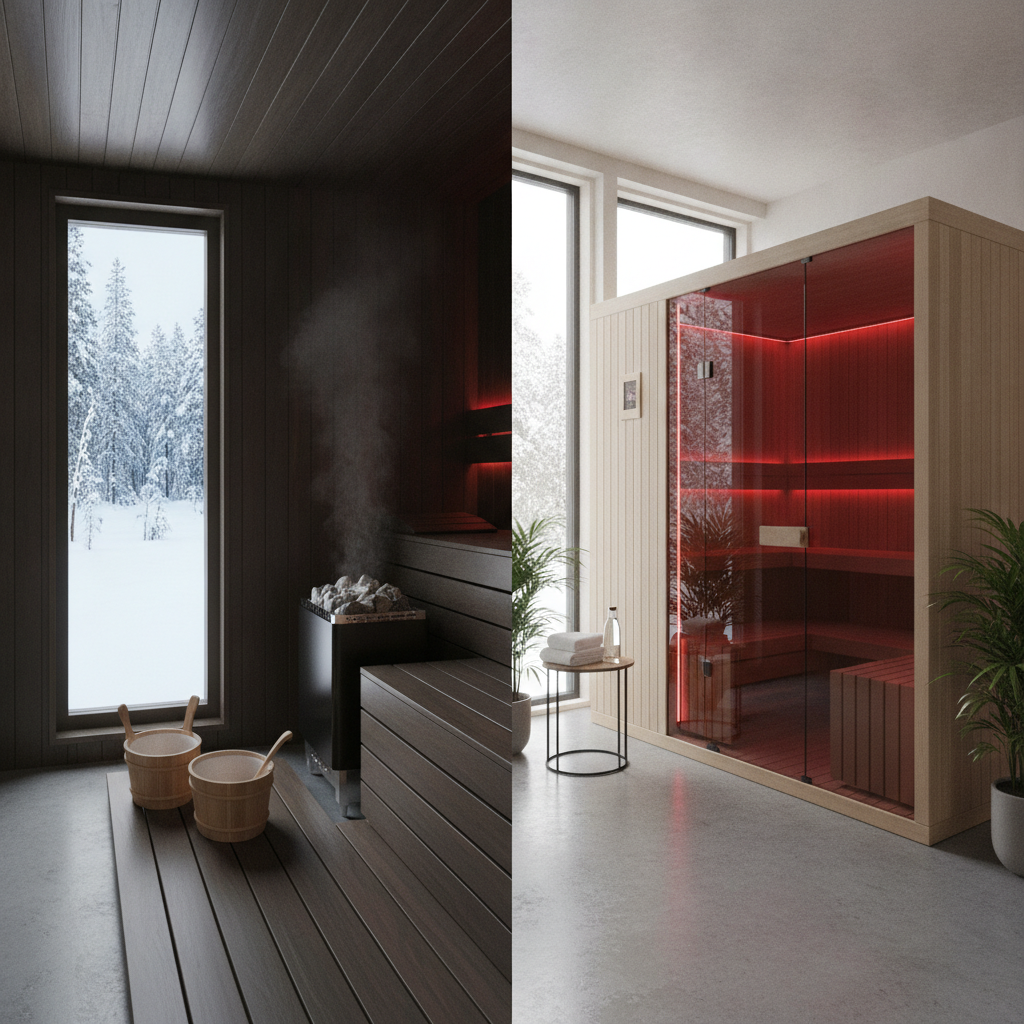
TL;DR — The Bottom Line
Finnish Sauna vs. Infrared Sauna: Which is Right for Your Home Wellness Journey? Traditional Finnish saunas (80–95°C) offer the strongest long-term cardiovascular and longevity evidence and an authentic löyly ritual. Infrared saunas (45–65°C) provide gentler, more accessible heat, smaller footprints, lower running costs, and faster warm-up — ideal for tighter Australasian homes and broader heat tolerance. Your decision depends on space, goals, users, and budget.
Choosing between a traditional Finnish sauna and a modern infrared cabin is one of the most consequential decisions in any home wellness project. For Australasian homeowners, architects, and commercial wellness operators evaluating Finnish Sauna vs. Infrared Sauna: Which is Right for Your Home Wellness Journey?, the answer hinges on more than personal preference. It involves space planning, energy costs, user demographics, evidence-based health outcomes, and the kind of ritual you want to build into daily life.
At Wellnesswares, we guide clients through this decision every week — and the right choice is rarely obvious at first glance. This comprehensive guide unpacks both technologies, the science behind them, and the practical considerations that should shape your investment.
Quick Facts
- Finnish Sauna Temp: 80–95°C / 175–200°F
- Infrared Sauna Temp: 45–65°C / 110–150°F
- Warm-up Time (Finnish): 30–40 minutes
- Warm-up Time (Infrared): 10–15 minutes
- Mortality Reduction (4–7 Finnish sessions/week): Up to 40% lower all-cause mortality
- Sudden Cardiac Death Risk Reduction: Up to 63% with frequent Finnish sauna use
Understanding the Core Technologies
Before comparing benefits, it's essential to understand how each system actually delivers heat — because the mechanism shapes everything from running costs to physiological response. When evaluating Finnish Sauna vs. Infrared Sauna: Which is Right for Your Home Wellness Journey?, the technology itself is the foundation of every other consideration.
How a Finnish Sauna Works
A traditional Finnish sauna uses an electric or wood-burning heater to bring a pile of stones to high temperatures. These stones radiate heat into the surrounding air, raising room temperature to 80–95°C. Pouring water over the rocks creates löyly — a burst of steam that briefly elevates humidity from a baseline 10–20% to a far more intense, skin-tingling experience. The body responds to hot air enveloping the skin, driving rapid sweating and a strong cardiovascular load.
How an Infrared Sauna Works
An infrared sauna uses carbon or ceramic emitters to produce infrared wavelengths (near, mid, or far infrared) that penetrate the skin and warm the body directly. Air temperature stays much cooler — typically 45–65°C — yet users still sweat profusely because their core temperature rises through radiant absorption rather than convective air heat. This makes the environment more tolerable for people who find traditional sauna heat overwhelming.
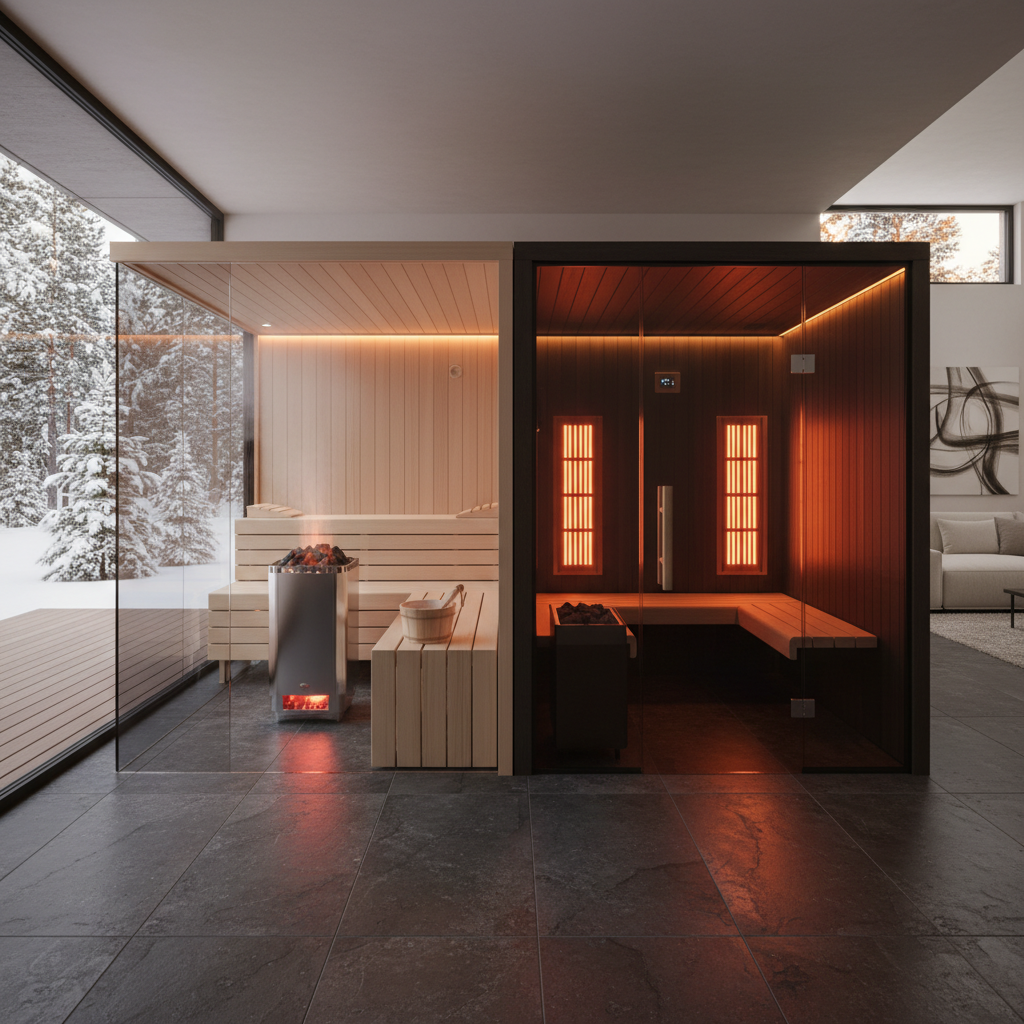
Health Evidence: What the Research Actually Shows
The honest answer to Finnish Sauna vs. Infrared Sauna: Which is Right for Your Home Wellness Journey? depends partly on which outcomes matter most to you — because the evidence base is uneven between the two formats.
Finnish Sauna: The Gold Standard for Long-Term Data
The bulk of high-quality, long-duration sauna research comes from Finland, where researchers have followed cohorts of regular sauna users for decades. A landmark study of more than 2,300 middle-aged Finnish men, published in JAMA Internal Medicine, found:
- 2–3 sessions per week: 24% lower all-cause mortality
- 4–7 sessions per week: Up to 63% lower risk of sudden cardiac death and approximately 40% lower all-cause mortality
- Frequent use: Reduced risk of dementia and Alzheimer's disease
Additional benefits documented in peer-reviewed reviews include improved endothelial function, lower blood pressure, enhanced post-exercise recovery, better sleep quality, improved lung function in asthma and chronic bronchitis, and symptom relief in rheumatic conditions. Mechanistically, heat exposure elevates heat shock proteins, nitric oxide production, and reduces inflammatory and oxidative markers.
Critically, most longevity data comes from dry/Finnish saunas operating at or above 80°C — temperatures generally not achievable in infrared cabins.
Infrared Sauna: Promising but Smaller Evidence Base
Infrared research is newer and trials are typically shorter, but findings are encouraging:
- Chronic pain: Reduced symptoms in fibromyalgia and rheumatoid arthritis
- Mental health: Improvements in mild depression and stress markers
- Cardiovascular: Improved endothelial function in patients with risk factors
- Recovery: Faster perceived recovery and reduced muscle soreness in athletes
The current evidence is promising but smaller in scale. Finnish sauna research includes 20+ year cohort data showing dramatic reductions in cardiac events; infrared trials are typically shorter and use fewer participants. Both formats elevate heart rate and induce sweating, but if cardiovascular longevity is your primary goal, traditional Finnish data is more robust.
Space, Footprint, and Architectural Integration
For architects and designers, the spatial demands of each system materially affect feasibility — particularly in Australasian apartments, renovations, and bespoke wellness rooms where every square metre is contested.
Finnish Sauna Spatial Requirements
A traditional sauna typically requires a larger footprint to accommodate the heater, guard rails, tiered benches for proper heat stratification, and adequate clearance from combustible materials. Minimum practical sizes start around 1.5m × 1.5m for a two-person cabin, scaling upward. Ventilation is non-negotiable: an intake near the heater and an exhaust placed strategically ensures even heat and air quality. Wall and ceiling cladding (typically Nordic spruce, thermo-aspen, or western red cedar) must withstand high heat and humidity cycles.
Infrared Sauna Spatial Requirements
Infrared cabins are smaller, lighter, and more flexible. Many one- and two-person models fit comfortably into spare bedrooms, garages, ensuites, or covered outdoor areas. Because they don't generate the same humidity or peak temperatures, ventilation requirements are less demanding, and they can sit on standard flooring with minimal modification. This makes them particularly attractive for retrofits and high-density living.
Energy, Running Costs, and Sustainability
Operating costs are a decisive factor for many buyers asking Finnish Sauna vs. Infrared Sauna: Which is Right for Your Home Wellness Journey? — especially in Australia and New Zealand where electricity prices have climbed steadily.
Finnish Sauna Energy Profile
Traditional saunas draw significant power, typically 6–9 kW for residential heaters, and require 30–40 minutes of pre-heating before use. A typical 60-minute session (including warm-up) might consume 4–7 kWh, depending on insulation and ambient temperature. Wood-fired models eliminate electricity costs but require fuel handling and are usually restricted to outdoor or rural installations.
Infrared Sauna Energy Profile
Infrared cabins typically draw 1.5–2.5 kW and reach usable temperature within 10–15 minutes. A typical session consumes 1.5–3 kWh — often less than half the energy of a comparable Finnish session. For frequent users (3–5 times per week), this difference compounds significantly over a year.
The Experiential Difference: Ritual vs. Routine
Beyond specifications, the two formats offer fundamentally different experiences — and this is often the deciding factor when clients work through Finnish Sauna vs. Infrared Sauna: Which is Right for Your Home Wellness Journey?.
The Finnish Ritual
A Finnish sauna is a cultural experience as much as a wellness tool. The crackle of the heater, the rush of steam after löyly, the deep, full-body envelopment of hot air, and the cooling plunge or shower afterward create a multi-sensory ritual that has been refined over more than 2,000 years. For social bathing, family rituals, or commercial spa atmospheres, Finnish saunas are unmatched.
The Infrared Experience
Infrared bathing is calmer, quieter, and more solitary. Users can read, listen to music, or meditate comfortably for 30–45 minutes at temperatures that feel more like a warm summer afternoon than a steam-filled cabin. Many people find it easier to integrate into a daily routine — particularly those new to heat therapy, older users, or anyone with cardiovascular sensitivity (with medical clearance).
"The Finnish sauna is a destination; the infrared sauna is a habit. The right choice depends on whether you want a ritual to retreat into or a recovery tool to weave through everyday life."
Who Should Choose Which? A Decision Framework
To make Finnish Sauna vs. Infrared Sauna: Which is Right for Your Home Wellness Journey? a practical question rather than a theoretical one, here's a framework we use with clients at Wellnesswares' sauna collection.
Choose a Finnish Sauna If:
- You prioritise the strongest long-term cardiovascular and longevity evidence
- You value authentic ritual, social bathing, and the löyly experience
- You have sufficient space (minimum 1.8m² practical floor area)
- You're designing a commercial wellness facility or premium spa
- You tolerate high heat well and want maximum physiological intensity
- You're building a multi-decade installation and value timeless design
Choose an Infrared Sauna If:
- Space is limited or you're retrofitting an existing room
- You want lower running costs and faster warm-up
- You or household members have lower heat tolerance
- Your primary goals are recovery, mild pain relief, and daily relaxation
- You prefer a quieter, more meditative experience
- Budget for installation and electrical work is constrained
Absolutely — and for serious wellness enthusiasts or commercial operators, this is increasingly common. Many high-end home retreats and boutique spas pair a Finnish sauna for ritual sessions with an infrared cabin for daily, lower-intensity use. The two formats complement rather than replace each other.
How to Choose: A Step-by-Step Process
- Define your primary goal. Is it longevity and cardiovascular health, recovery and pain management, relaxation and sleep, or social/ritual use?
- Audit your space. Measure the proposed area, check ceiling height (minimum 2.0–2.1m for Finnish), and identify electrical capacity and ventilation pathways.
- Assess users. Consider age, heat tolerance, cardiovascular health (consult a doctor if needed), and how many people will use it simultaneously.
- Set a total budget. Include cabin cost, electrical work, flooring/waterproofing, ventilation, and ongoing energy.
- Test the experience. Visit a showroom or wellness facility and try both formats before committing.
- Plan the ritual. Think about how the sauna will integrate into your weekly routine — placement near a shower, plunge pool, or relaxation area dramatically improves long-term use.
Commercial Considerations for Wellness Operators
For day spas, gyms, hotels, and dedicated wellness facilities across Australasia, the calculus shifts. Commercial operators must weigh throughput, hygiene maintenance, brand positioning, and user expectations.
Finnish saunas dominate premium spa positioning, anchoring experiences at facilities like Peninsula Hot Springs. They support higher-volume bathing sessions per hour and deliver the experience guests associate with luxury wellness. However, they require more rigorous timber maintenance, vapour barriers, and ventilation engineering.
Infrared cabins suit boutique recovery studios, physiotherapy practices, and gym wellness add-ons. They're easier to install at scale, simpler to clean between users, and align with the modern "biohacking" and athletic recovery aesthetic that resonates with younger demographics.
For tailored commercial advice, the team at Wellnesswares' commercial consultation service can model throughput, energy, and ROI scenarios.
Frequently Asked Questions
Is a Finnish sauna or infrared sauna better for weight loss?
Both induce sweating, but neither is a meaningful weight-loss tool on its own — the weight lost in a session is water that's replaced when you rehydrate. However, both can complement an active lifestyle by improving recovery, reducing inflammation, and supporting cardiovascular fitness. Finnish saunas place a greater cardiovascular load per session, which may have modest metabolic benefits.
How often should I use a sauna for health benefits?
Finnish sauna research suggests 2–3 sessions per week delivers significant benefits, with 4–7 sessions per week producing the largest reductions in cardiovascular events and mortality. Infrared sauna users typically aim for 3–5 sessions per week of 30–45 minutes. Always start gradually and consult a doctor if you have heart conditions, low blood pressure, or are pregnant.
Are infrared saunas safe? What about EMF concerns?
Quality infrared saunas built by reputable manufacturers operate within accepted safety standards. If EMF exposure concerns you, look for low-EMF certified heaters — most premium brands now publish independent EMF test results. Pregnant women, people with cardiovascular conditions, and those on certain medications should consult a physician before regular use of either sauna type.
What's the lifespan of a home sauna?
A well-built Finnish sauna with quality timber and a premium heater can last 20–30 years with basic maintenance. Infrared saunas typically last 10–20 years, with the heating elements being the main wear component. Choosing reputable brands, ensuring proper ventilation, and following care guidelines significantly extends lifespan for both formats.
Final Verdict: Matching the Sauna to Your Life
The question of Finnish Sauna vs. Infrared Sauna: Which is Right for Your Home Wellness Journey? ultimately resolves into a question of fit. Finnish saunas offer the deepest evidence base, the most authentic ritual, and the strongest spa positioning — at the cost of more space, higher energy use, and a steeper heat curve. Infrared saunas deliver convenience, accessibility, lower running costs, and a gentler experience that more people can sustain daily — with a smaller but growing body of supporting research.
Neither format is universally "better." The right answer is the one you'll actually use, in the space you actually have, for the goals you actually care about. For many Australasian homeowners, that means an infrared sauna integrated into a daily routine. For others — particularly those designing dedicated wellness rooms or commercial facilities — a Finnish sauna anchors the experience. And for an increasing number of serious wellness investors, the answer is both.
Ready to take the next step on your home wellness journey? Explore curated traditional and infrared sauna options, design guidance, and commercial consultation at Wellnesswares, or speak with our team about turning the "why" into "why not" for your space.