Sustainable Luxury Retreat Design: 2026 Investor Guide
May 29, 2026 · 13 min read
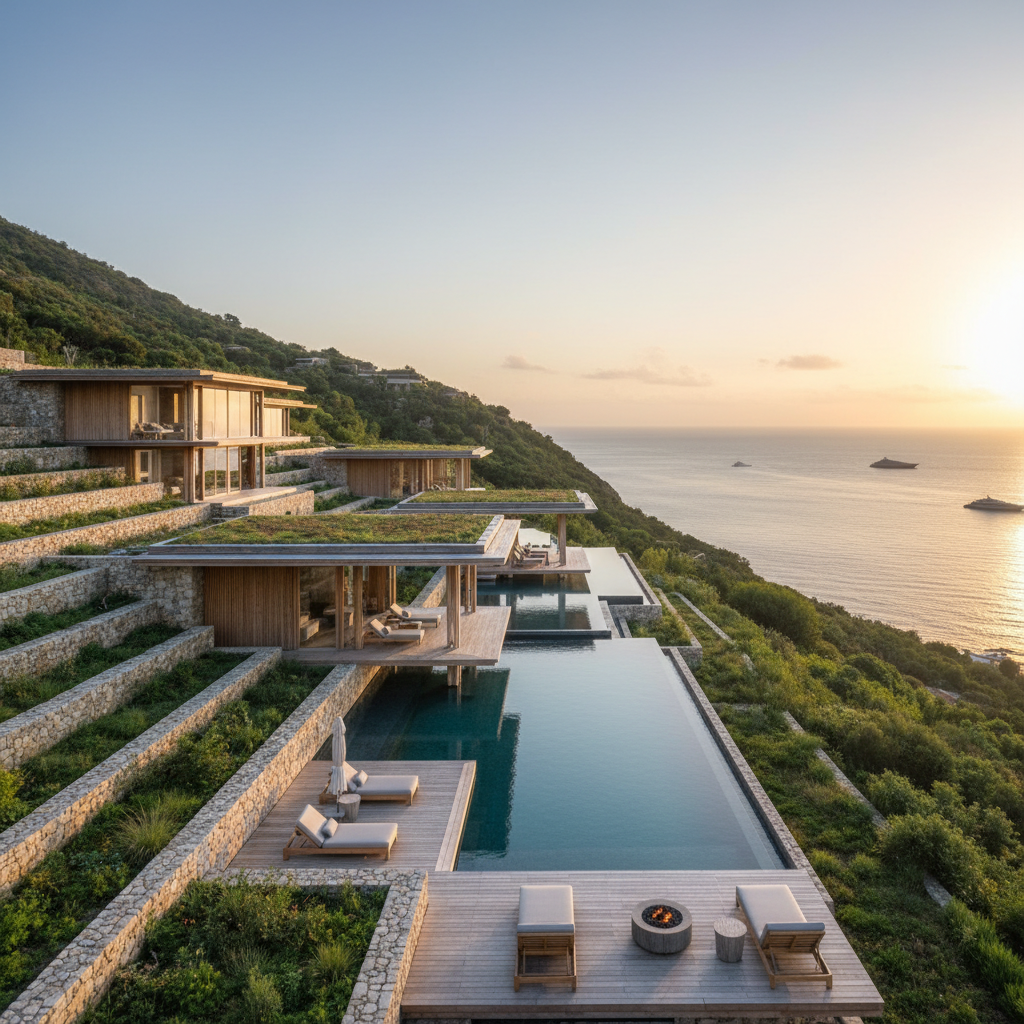
TL;DR — The Bottom Line
Sustainable luxury retreat design in 2026 fuses elevated, land-responsive architecture with invisible high-performance systems, warm minimalist interiors, and personalized wellness programming. For affluent guests and investors, the winning formula combines measurable sustainability, spirit-of-place design, and exclusivity — exactly the positioning that elevated tower concepts like The Lookout Towers are built to deliver.
The luxury hospitality market has changed. Affluent travelers and investors are no longer impressed by sheer scale or ornate finishes — they want immersion, restoration, and proof that their stay treads lightly on the land. Sustainable luxury retreat design has become the defining language of premium nature-based hospitality, where architecture, ecology, and wellness are inseparable. For a brand like The Lookout Towers, this convergence creates a rare opportunity: elevated, low-impact structures that deliver panoramic immersion without the footprint of a conventional resort.
This guide unpacks the principles, materials, systems, and market signals shaping sustainable luxury retreat design in 2026 — and how investors, developers, and discerning guests can recognize the projects most likely to outperform.
Quick Facts
- Core Aesthetic: Warm minimalism, organic curves, tactile natural materials
- Expected Systems: Solar-plus-storage, geothermal HVAC, rainwater harvesting, water recycling
- Preferred Materials: Reclaimed wood, natural plaster, stone, bamboo, FSC-certified timber
- Guest Priority: Sleep optimization, biophilic interiors, personalized wellness
- Market Signal: Sustainability now treated as a strategic imperative, not an upgrade
- Design Principle: Spirit of place — architecture shaped by the land, not imposed on it
Why Sustainable Luxury Retreat Design Defines the 2026 Market
The luxury traveler of 2026 measures value differently. According to industry analysts tracking hospitality design, three priorities now dominate decision-making: nature-connected experiences, measurable sustainability performance, and highly personalized wellness-led hospitality. Sustainable luxury retreat design sits at the intersection of all three.
This shift is structural, not stylistic. Affluent guests increasingly view environmental performance as a status signal — a sign that a property is operating at the highest level of design intelligence. A solar array paired with battery storage, a geothermal loop tucked beneath the site, or a rainwater cistern integrated into the landscape are no longer hidden compromises. They are proof points. Sustainable luxury retreat design transforms these systems into part of the guest narrative.
For investors, the implication is direct: properties that demonstrate verifiable sustainability tend to command higher nightly rates, longer average stays, and stronger repeat bookings. They also reduce operating costs over time — an increasingly important factor as energy and water pricing volatility continues.
The Architecture of Elevation: Why Tower Formats Win
The most compelling sustainable luxury retreat design today rejects sprawl. Instead, it builds upward — carefully, precisely, and in conversation with the landscape. Elevated structures like those pioneered by The Lookout Towers minimize ground disturbance, preserve view corridors, and create a sense of being held within the canopy rather than dropped onto a clearing.
This vertical approach offers four distinct advantages for sustainable luxury retreat design:
- Reduced site impact: A smaller foundation footprint preserves root systems, drainage patterns, and habitat continuity.
- Panoramic immersion: Elevation delivers 360-degree view corridors that low-slung lodges cannot match.
- Natural ventilation: Height supports stack-effect cooling, reducing mechanical HVAC loads.
- Privacy by geometry: Vertical separation between units creates intimacy without dense clustering.
This is the architecture of the “grounded sanctuary” — a design philosophy that treats every structure as a guest of the land, not a conqueror of it.
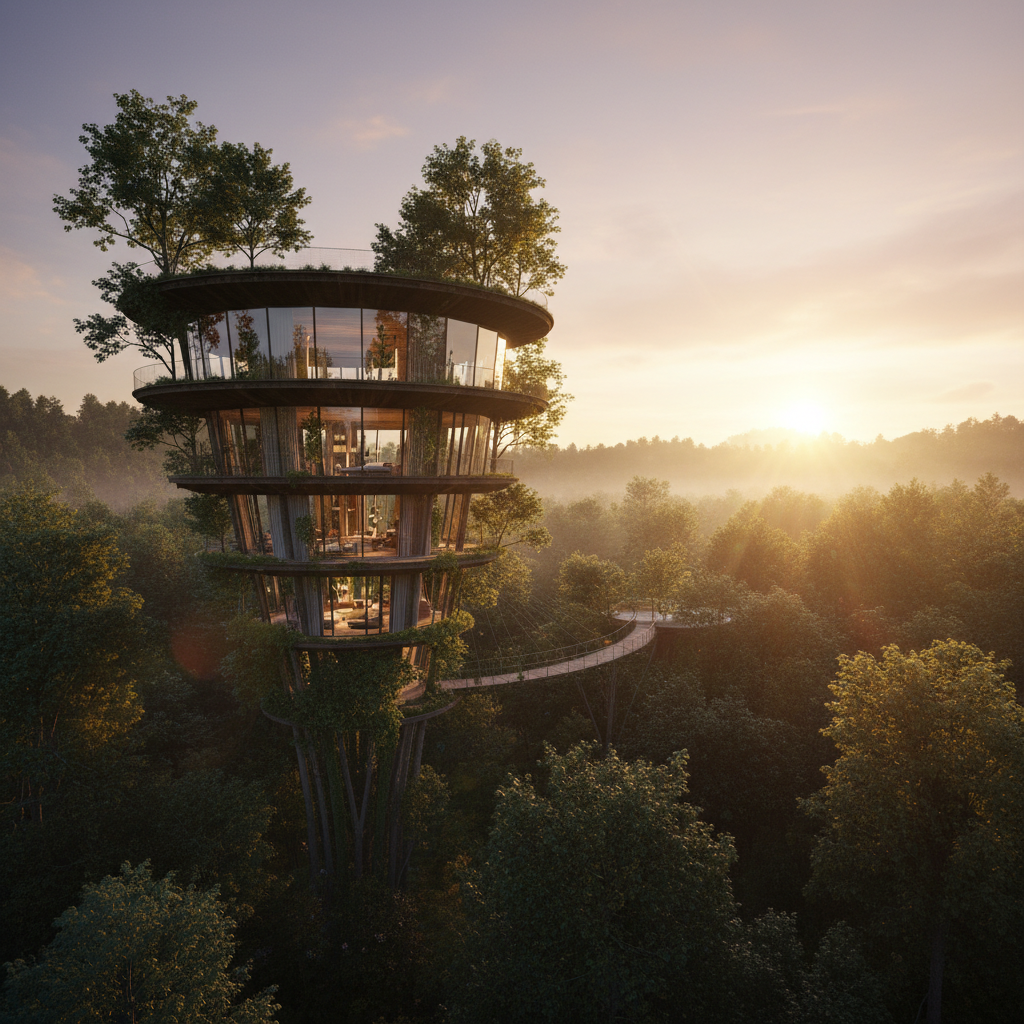
Elevated tower structures use a fraction of the foundation area required by sprawling lodges, preserving soil, root systems, and wildlife corridors. They also enable passive cooling through stack ventilation, reducing energy demand by up to 30% compared with conventional resort construction.
Materials That Signal Sustainable Luxury
Material selection is where sustainable luxury retreat design becomes tangible. The 2026 palette is unmistakably warm, tactile, and honest. Designers are moving away from polished marble and high-gloss lacquer toward surfaces that age beautifully and tell a story of place.
The Preferred Material Palette
- Reclaimed timber: Salvaged barn wood, retired industrial beams, and storm-fallen trees provide character impossible to replicate with new milling.
- Natural lime and clay plasters: These breathe, regulate humidity, and contain no VOCs — supporting healthier indoor air.
- Local stone: Quarried within a defined radius to reduce transport emissions and reinforce regional identity.
- Bamboo and FSC-certified hardwoods: Rapidly renewable and traceable through verified supply chains.
- Recycled metals and low-carbon concrete: Used selectively for structural elements where strength is non-negotiable.
These choices are not aesthetic preferences alone — they are performance decisions. Natural plasters improve humidity regulation. Reclaimed timber stores carbon. Local stone reduces embodied energy. Every material in a thoughtfully executed sustainable luxury retreat design earns its place twice: once in beauty, once in measurable impact.
Invisible Systems: The Engineering Behind Sustainable Luxury Retreat Design
The most sophisticated sustainable luxury retreat design hides its intelligence. Guests should feel comfort, never see the machinery that produces it. This is the principle of “quiet technology” — systems that perform invisibly while the guest experience remains focused on landscape, rest, and presence.
Core Performance Systems
| System | Function | Guest-Facing Benefit |
|---|---|---|
| Solar PV with battery storage | On-site renewable generation and grid resilience | Uninterrupted power, silent operation |
| Geothermal heating & cooling | Ground-source temperature regulation | Even, draft-free comfort year-round |
| Greywater recycling | Reuses sink and shower water for irrigation | Lush landscaping without freshwater draw |
| Rainwater harvesting | Captures roof runoff for non-potable use | Site self-sufficiency, drought resilience |
| High-performance envelope | Triple glazing, continuous insulation, airtight detailing | Acoustic quiet, stable temperatures |
| HRV/ERV ventilation | Filtered fresh air with energy recovery | Superior indoor air quality for sleep |
Each of these systems contributes to both the environmental performance and the sensory quality of the stay. A high-performance envelope is not just energy-efficient — it is acoustically serene. A geothermal system is not just low-carbon — it eliminates the noise and air movement of conventional HVAC. This is sustainable luxury retreat design at its most refined.
Wellness as Architecture, Not Amenity
In 2026, wellness is no longer a spa attached to a hotel. It is woven into the building itself. Sustainable luxury retreat design treats sleep, circadian rhythm, air quality, and biophilic connection as architectural problems to be solved, not services to be added later.
Wellness Design Priorities
- Sleep-optimized suites: Blackout systems, acoustic isolation, circadian lighting, and chemical-free bedding.
- Air-quality engineering: HEPA filtration, low-VOC finishes, and continuous fresh-air exchange.
- Biophilic integration: Living plants, natural textures, water features, and views that change with weather and season.
- Movement spaces: Yoga decks, meditation alcoves, and outdoor lounges that encourage embodied presence.
- Spa-like bathrooms: Soaking tubs, steam showers, and natural light positioned for morning ritual.
The most successful retreats now offer mid-stay personalization — adjusting lighting, temperature, dining, and programming based on guest preferences gathered before arrival. This level of tailoring requires both intelligent systems and trained hospitality staff working in concert. Explore how wellness-led design shapes every Lookout Towers experience.
Through acoustic isolation, circadian lighting, superior air filtration, stable temperatures from geothermal systems, and chemical-free materials. Together, these elements create the conditions for deeper, more restorative sleep — a measurable wellness outcome guests increasingly seek.
The Spirit of Place: Designing With the Land
One of the most important shifts in sustainable luxury retreat design is the rejection of generic luxury templates. The most respected designers now insist that architecture be shaped by the land — its topography, ecology, climate, sightlines, and cultural history — rather than imposed on it.
This principle, often called “spirit of place,” produces retreats that feel inevitable. The structure looks as though it could exist nowhere else. Materials echo the surrounding geology. Window placements frame specific trees, ridgelines, or water features. Pathways follow natural contours. The result is a property that deepens the guest’s relationship with a specific place, not a stylized fantasy of luxury.
For investors, spirit-of-place design also produces durable brand value. Properties that are truly of their landscape are difficult to copy, and they generate the kind of guest stories and imagery that drive organic demand for years.
“The best sustainable luxury retreat design is not what you add to the land — it is what the land tells you to build.”
Privacy, Exclusivity, and the Members-Only Trend
Affluent travelers in 2026 want exclusivity paired with meaningful connection. This has driven the rise of private, members-only, and highly curated retreat formats. Sustainable luxury retreat design supports this market by enabling tightly controlled site density, secluded guest zones, and architectural separation between units.
Elevated tower formats are particularly well-suited to this trend. Each tower can function as a self-contained sanctuary — with its own plunge pool, outdoor lounge, and view orientation — while remaining part of a larger curated estate. This delivers privacy without isolation and exclusivity without homogeneity.
For investors, this model also supports premium yield economics. Fewer, more thoughtfully designed units generate higher revenue per available room than larger inventories of conventional suites, while reducing operating complexity and environmental impact.
How to Evaluate a Sustainable Luxury Retreat Investment
For investors considering sustainable luxury retreat design opportunities, a disciplined evaluation framework matters. The following steps reflect best practices used by hospitality investment professionals in 2026.
- Verify the site response: Does the architecture genuinely respond to topography, climate, and ecology, or has a template been dropped onto the land?
- Audit the systems: Confirm solar-plus-storage capacity, geothermal integration, water strategy, and envelope performance with documented specifications.
- Examine the materials: Request chain-of-custody documentation for timber, stone sourcing radius, and VOC certifications for finishes.
- Assess wellness depth: Look beyond spa amenities — evaluate sleep design, air quality engineering, and personalization infrastructure.
- Test the exclusivity model: Understand unit density, sightline separation, and the guest journey from arrival to departure.
- Model the operating economics: Confirm that sustainability investments reduce long-term operating cost, not just capital expenditure.
Properties that score strongly across all six criteria — like those in The Lookout Towers portfolio — tend to outperform conventional luxury hospitality assets on both yield and brand longevity. Learn more about investment opportunities aligned with these standards.
The Future Trajectory of Sustainable Luxury Retreat Design
Looking forward, three forces will continue to reshape sustainable luxury retreat design through the remainder of the decade. First, sustainability performance will become increasingly measurable, with guests and investors expecting verified data on energy, water, and carbon. Second, AI-supported personalization will deepen, allowing properties to tailor every dimension of the stay — lighting, dining, programming — to individual preferences without intrusive technology. Third, the boundary between architecture and wellness will continue to dissolve, with buildings increasingly designed as therapeutic instruments.
For brands willing to commit to these principles, the reward is a defensible position in one of the most resilient segments of global hospitality. Sustainable luxury retreat design is not a passing aesthetic — it is the operating system of premium nature-based hospitality for the next generation.
Frequently Asked Questions
What is sustainable luxury retreat design?
Sustainable luxury retreat design is an architectural and hospitality approach that combines land-responsive forms, low-impact building systems, natural materials, and wellness-led interiors to deliver high-end, restorative stays with measurable environmental performance.
How much does sustainable luxury retreat design cost compared to conventional luxury construction?
Initial capital costs are typically 10–20% higher due to advanced systems and verified materials, but operating costs are 30–50% lower over the long term thanks to energy, water, and maintenance efficiencies — often producing superior lifetime returns.
What sustainability features do affluent guests actually expect?
Affluent guests expect solar-plus-storage power, geothermal heating and cooling, water recycling, rainwater harvesting, low-VOC finishes, natural materials, and high indoor air quality — all integrated invisibly so the guest experience remains focused on landscape and rest.
Why are elevated tower retreats considered more sustainable than traditional resorts?
Elevated tower formats minimize ground disturbance, preserve habitat and drainage, support passive ventilation, and concentrate luxury into a smaller footprint — delivering panoramic immersion with a fraction of the environmental impact of sprawling resort developments.
Is sustainable luxury retreat design a good investment in 2026?
Yes. Properties designed around verified sustainability, spirit-of-place architecture, and wellness-led programming consistently command higher nightly rates, longer stays, and stronger guest loyalty, while reducing operating cost volatility — making them among the most resilient hospitality assets available.
Conclusion: The New Standard of Luxury
Sustainable luxury retreat design is rewriting what affluent hospitality means. It replaces ornamentation with intention, scale with elevation, and amenity stacking with restorative architecture. For guests, the result is a deeper, quieter, more memorable stay. For investors, it is a more defensible and more profitable asset class. And for the landscapes that host these projects, it is a model of how human design can enhance rather than diminish the natural world.
If you are exploring elevated, nature-connected luxury — whether as a guest, a developer, or an investor — discover how The Lookout Towers brings every principle of sustainable luxury retreat design to life. Contact our team to learn more about reservations, ownership opportunities, and investment partnerships.