Remote Luxury Retreats for Couples: Elevated Escapes
June 6, 2026 · 13 min read
TL;DR — The Bottom Line
Remote luxury retreats for couples have become one of the fastest-growing segments in high-end hospitality, defined by privacy, nature immersion, and bespoke service rather than traditional resort amenities. The best-performing properties combine scarcity (remote geography, panoramic views, small key counts) with curated experiences—private dining, spa rituals, and adventure pairings. Pricing typically ranges from $310 per person per night at wellness-focused properties to $5,795+ per person at ultra-premium estates like Twin Farms, signaling strong, price-insensitive demand from affluent couples.
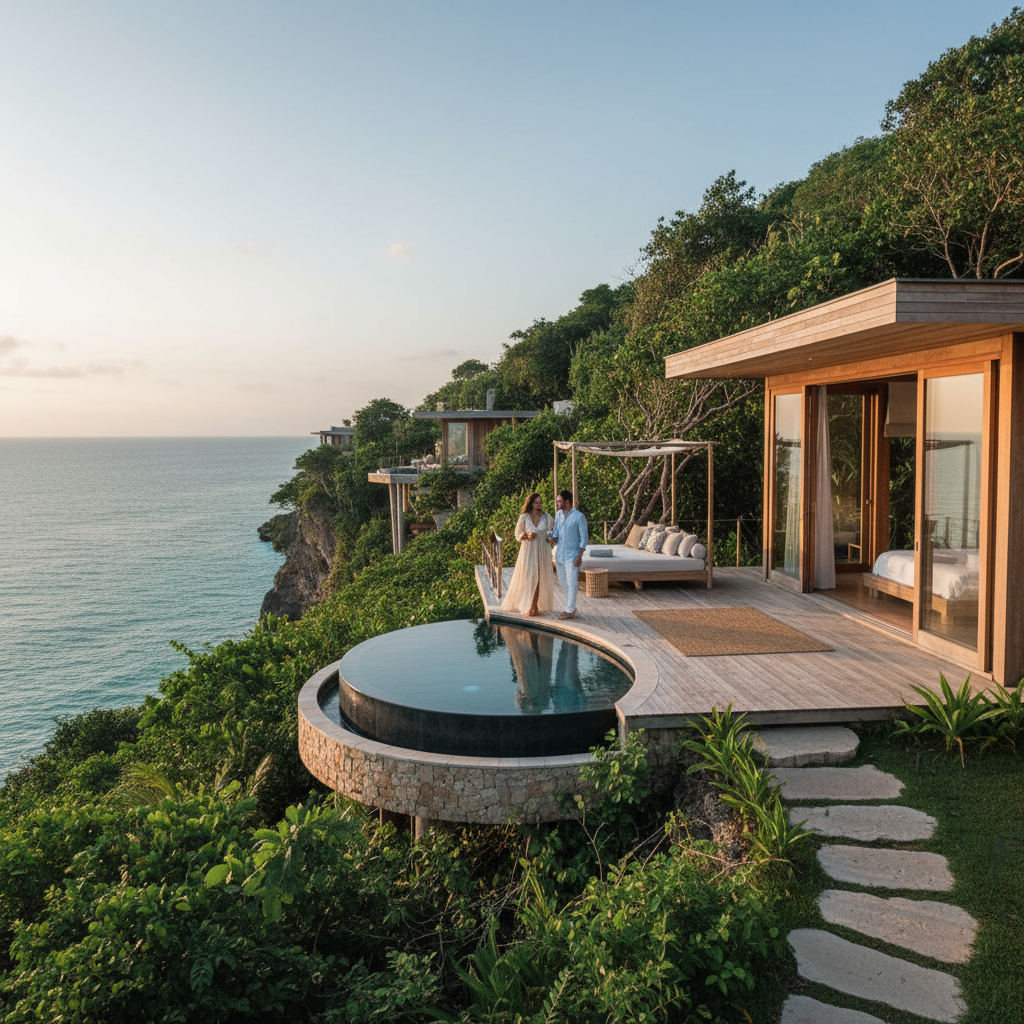
The modern luxury traveler is no longer impressed by marble lobbies or oversized chandeliers. Instead, the most sought-after experiences in 2025 and beyond are remote luxury retreats for couples—elevated, secluded properties that trade conventional resort polish for genuine intimacy, panoramic vistas, and design-led seclusion. Whether perched atop a forested ridge, tucked into a desert canyon, or rising above a coastal cliff, these retreats represent a fundamental shift in how affluent couples define romance, wellness, and time together.
At The Lookout Towers, we've watched this segment evolve from a niche preference into a defining pillar of luxury hospitality and real estate investment. This guide unpacks what makes remote luxury retreats for couples so compelling, how the market is structured, what to look for when booking or investing, and where the category is heading next.
Quick Facts
- Entry-level luxury wellness rate: ~$310 per person per night
- Ultra-premium estate pricing: $1,895–$5,795 per person (Twin Farms, VT)
- Featured couples retreat (Cancun): $5,495 per couple, 8 days / 7 nights
- Benchmark cliffside resort: Post Ranch Inn from $1,425 per night
- Dominant format: Adults-only, small-key, all-inclusive or villa-style
- Core value drivers: Privacy, nature immersion, bespoke service
Why Remote Luxury Retreats for Couples Are Redefining Romance Travel
The traditional luxury hotel model—large key counts, public-facing amenities, and visible status signaling—is losing ground among high-net-worth couples. What's replacing it is a category centered on what hospitality strategists call "experiential seclusion": the deliberate combination of geographic remoteness, architectural intimacy, and personalized service that allows two people to fully disconnect from professional and social demands.
Recent curated lists from major luxury travel publications consistently emphasize privacy as the leading value proposition for couples, ahead of food, design, or even location. This shift is reshaping investment patterns: small-key properties with strong scarcity attributes—elevated terrain, ocean frontage, protected wilderness adjacency—are outperforming larger conventional resorts on average daily rate (ADR) and occupancy resilience.
Remote luxury retreats for couples also benefit from a demographic tailwind. Affluent couples in their 30s through 60s are increasingly choosing fewer, longer, more meaningful trips over frequent short stays. This pattern favors retreats that deliver depth—immersive nature, wellness programming, and curated experiences—over breadth of amenities.
"In luxury hospitality today, privacy is the new penthouse. Couples are willing to pay a premium not for more space, but for fewer people in it."
The Anatomy of a World-Class Couples Retreat
Not every secluded property qualifies as a true remote luxury retreat. The category has matured into a recognizable set of design and service standards. Understanding these helps both travelers select better experiences and investors evaluate assets in the segment.
1. Genuine Geographic Seclusion
The best remote luxury retreats for couples are not merely "quiet" or "private"—they are physically removed from population centers and visual neighbors. This often means elevated terrain, island settings, large private acreage, or wilderness-adjacent positioning. Twin Farms in Vermont, for example, sits on 300 acres, ensuring guests rarely encounter another party.
2. Architectural Distinction
From cliffside cabins to elevated towers, the most compelling properties use architecture to frame the landscape rather than compete with it. Floor-to-ceiling glass, integrated outdoor living, and site-specific design are now table stakes at the top of the market. Properties like our own Lookout Tower residences embody this principle—using verticality and panoramic glazing to create a space that feels simultaneously sheltered and limitless.
3. Invisible but Attentive Service
Luxury couples expect service that anticipates rather than interrupts. Pre-arrival profiling, in-room provisioning, and on-call but unseen staff are now standard at premium retreats.
4. Wellness and Experience Integration
Spa rituals, private guided hikes, in-residence chefs, and curated adventure pairings are increasingly bundled into the offer rather than priced à la carte. This shifts the value proposition from "room plus amenities" to "complete retreat experience."
The Five Dominant Formats in Remote Luxury Retreats for Couples
The category has segmented into five recognizable property types, each with distinct economics and guest experiences.
Private Islands and Coastal Hideaways
The most aspirational tier. Often long-haul destinations like the Maldives, Seychelles, or Caribbean private cays. Strong appeal for milestone occasions; rates often exceed $5,000 per night.
Mountain Lodges and Elevated Towers
A rapidly growing subcategory. These properties leverage elevation for both privacy and dramatic views, often integrating wellness and adventure programming. The Lookout Towers model sits within this category.
Adults-Only All-Inclusive Estates
Properties like Twin Farms (Vermont) and Vista Verde Ranch (Colorado) combine large acreage with comprehensive service. Pricing transparency and predictability appeal to time-poor affluent guests.
Design-Forward Cabins and Villas
Branded rental platforms and small boutique collections now offer architecturally significant cabins with hotel-grade service. This format is particularly strong for longer stays.
Safari Lodges and Wilderness Camps
Combine wildlife immersion with ultra-luxury service. Properties like Xigera Safari Lodge anchor this tier at the upper end of the global market.
A remote luxury retreat prioritizes seclusion, small key counts (often under 30 units), and immersive experiences over the broad amenity sets, large staff visibility, and central locations that define traditional luxury hotels. The retreat model trades convenience for intimacy and exclusivity.
Pricing, Value, and What Affluent Couples Are Actually Buying
Pricing in remote luxury retreats for couples spans a wide spectrum, but the segment shares a common characteristic: relatively low price sensitivity at the top end. The table below outlines typical positioning across the category.
| Tier | Typical Nightly Rate | Example Property Type | Primary Value Driver |
|---|---|---|---|
| Luxury-adjacent wellness | $310–$600 pp/night | Structured wellness retreat | Programming & transformation |
| Upper luxury | $1,000–$2,000/night | Boutique cliffside or lodge | Design & location |
| Ultra-luxury all-inclusive | $1,895–$5,795 pp/night | Adults-only estate (e.g., Twin Farms) | Total seclusion + service |
| Aspirational/iconic | $5,000+/night | Private island, safari lodge | Scarcity & status |
What's notable is that couples at every tier are increasingly buying the experience rather than the room. Featured packages like the $5,495-per-couple Cancun retreat or Xinalani's $2,300-per-couple five-night package signal a market preference for bundled, curated stays over à la carte luxury.
How to Choose the Right Remote Luxury Retreat for Couples
With more curated options entering the market each year, selection has become both easier and more nuanced. The following framework reflects the criteria most often used by experienced luxury travelers and travel advisors.
- Define the retreat intent. Is this a romantic reset, a wellness intensive, an adventure pairing, or a creative escape? The format you choose should match the purpose.
- Audit the privacy profile. Ask about key count, acreage, sightlines between units, and shared spaces. True seclusion is structural, not marketed.
- Evaluate the service model. Is service all-inclusive, à la carte, or hybrid? Pre-arrival profiling is a strong indicator of a property's commitment to personalization.
- Review the experience inventory. The best remote luxury retreats for couples bundle private dining, spa rituals, and guided experiences. Confirm what's included before booking.
- Consider the architecture and setting. View orientation, indoor-outdoor flow, and material quality dramatically affect the experience. Photography rarely tells the full story.
- Plan for transitions. Remote properties often require coordinated transfers. Premium retreats handle this seamlessly; lesser ones do not.
The Investment Case: Why Remote Luxury Retreats for Couples Are a Real Estate Opportunity
Beyond the guest experience, remote luxury retreats for couples represent one of the more compelling segments in luxury hospitality real estate. The fundamentals are favorable: low key counts mean lower operating complexity, high ADR drives strong revenue per available room (RevPAR), and the scarcity of suitable sites creates structural barriers to oversupply.
For investors evaluating this category, three asset characteristics tend to predict outperformance:
- Site scarcity. Elevated terrain, ocean frontage, or wilderness adjacency that cannot easily be replicated nearby.
- Architectural distinction. A design identity strong enough to generate organic media coverage and direct bookings.
- Operational simplicity. Small key counts and bundled service models that scale cleanly without large staffing overhead.
The Lookout Towers model intentionally targets each of these characteristics. Our investment opportunities are designed around elevated, nature-connected sites that combine architectural distinction with the operational profile of a small-key luxury retreat. This approach aligns with broader market signals favoring scarcity-led, experience-driven assets.
The evidence points to durability. Multiple major luxury travel brands have published curated couples-retreat lists annually for several years, branded villa platforms continue to expand, and small-key high-ADR properties consistently outperform broader luxury hospitality benchmarks. The category is structural, not cyclical.
Emerging Trends Shaping the Next Generation of Couples Retreats
Several trends are actively reshaping what affluent couples will expect from remote retreats over the next five years.
Wellness as Integrated Infrastructure
Spa, sauna, cold plunge, and movement spaces are moving from amenity status to core architecture. Properties built without integrated wellness infrastructure are already struggling to compete.
Branded Residences and Hybrid Ownership
The line between hotel and home is blurring. Branded residence models allow couples to own a stake in a luxury retreat property they also use—an arrangement that aligns particularly well with the small-key retreat economics.
Longer Stays and Work-Adjacent Retreats
Affluent couples are increasingly combining retreat travel with remote work, driving demand for high-bandwidth connectivity, ergonomic workspace integration, and stay durations of 7–14+ nights.
Quiet Luxury Aesthetics
Visible logos and ostentatious finishes are giving way to natural materials, neutral palettes, and design that defers to the landscape. This shift favors properties with strong site-specific identity.
Curated Adventure Pairings
Guided hikes, helicopter excursions, wildlife encounters, and private chef experiences are being bundled into multi-day itineraries that elevate the retreat from accommodation to authored journey.
"The next decade of luxury hospitality will be defined less by what's inside the room and more by what's outside the window."
The Lookout Towers Approach to Remote Luxury Retreats for Couples
The Lookout Towers was founded on the conviction that the most meaningful luxury experiences happen at elevation—both literal and metaphorical. Our properties are designed for couples who want genuine seclusion, panoramic immersion in nature, and the architectural quality of a destination property without the friction of a conventional resort stay.
Each tower is positioned on a site selected for view orientation, privacy, and proximity to natural features that reward both stillness and exploration. Interiors prioritize material warmth and tactile quality; service is designed to be present when wanted and invisible when not. The result is a retreat format that fits cleanly into the most demanding category of remote luxury retreats for couples while offering a distinct architectural and experiential identity.
For travelers, this means an environment engineered for reconnection. For investors, it means an asset class with strong scarcity attributes, low operational complexity, and alignment with the dominant trends shaping the next decade of luxury hospitality. Learn more about our experiences and properties to see how the model translates into actual stays and ownership opportunities.
Frequently Asked Questions
What defines a remote luxury retreat for couples?
A remote luxury retreat for couples is a privately situated, design-forward property—typically with a small key count, located in a nature-rich or geographically isolated setting—that combines bespoke service, wellness or experiential programming, and architectural distinction to deliver an exclusive two-person escape.
How much do remote luxury retreats for couples typically cost?
Pricing spans a wide range. Wellness-focused properties start around $310 per person per night, upper-luxury boutique retreats range from $1,000 to $2,000 per night, and ultra-luxury all-inclusive estates like Twin Farms in Vermont range from $1,895 to $5,795 per person depending on season and stay length.
What are the best destinations for remote luxury retreats for couples?
Top destinations include the U.S. mountain regions (Vermont, Colorado, California's Big Sur), desert hideaways in Utah and Arizona, private islands in the Maldives and Caribbean, and safari lodges in Botswana and South Africa. Increasingly, elevated tower-style retreats in forested and mountain settings are emerging as a distinct category.
Are remote luxury retreats for couples a good real estate investment?
Yes, when structured correctly. Small-key, high-ADR retreat properties with strong scarcity attributes—remote geography, panoramic views, architectural distinction—tend to outperform conventional luxury hotels on a per-key basis, with lower operational complexity and structural barriers to nearby oversupply.
How far in advance should I book a remote luxury retreat?
Top-tier properties with small key counts often book 6–12 months in advance, particularly for peak season and holiday weekends. For ultra-premium estates and private island properties, booking 9–18 months ahead is common for couples planning around specific dates.
Conclusion: The Future Belongs to Elevated Escapes
Remote luxury retreats for couples have moved from a niche preference to a defining force in luxury hospitality and real estate. The combination of privacy, nature immersion, architectural distinction, and curated service speaks directly to what affluent couples want most: meaningful time together, on their terms, in places that feel both rare and restorative.
For travelers, the opportunity is to choose retreats with intention—matching format to purpose, scrutinizing privacy and service, and selecting properties that deliver depth rather than breadth. For investors, the opportunity is to participate in a category whose fundamentals are aligned with where luxury is heading: scarcity, experience, and elevation.
The Lookout Towers exists at the intersection of both opportunities. Whether you're planning a defining couples retreat or evaluating an investment in the next generation of luxury hospitality, we invite you to connect with our team to explore how elevated, nature-connected design can transform what a retreat—or a real estate portfolio—can be.