Private Luxury Retreat Investment Returns: 2025 Guide
June 15, 2026 · 11 min read
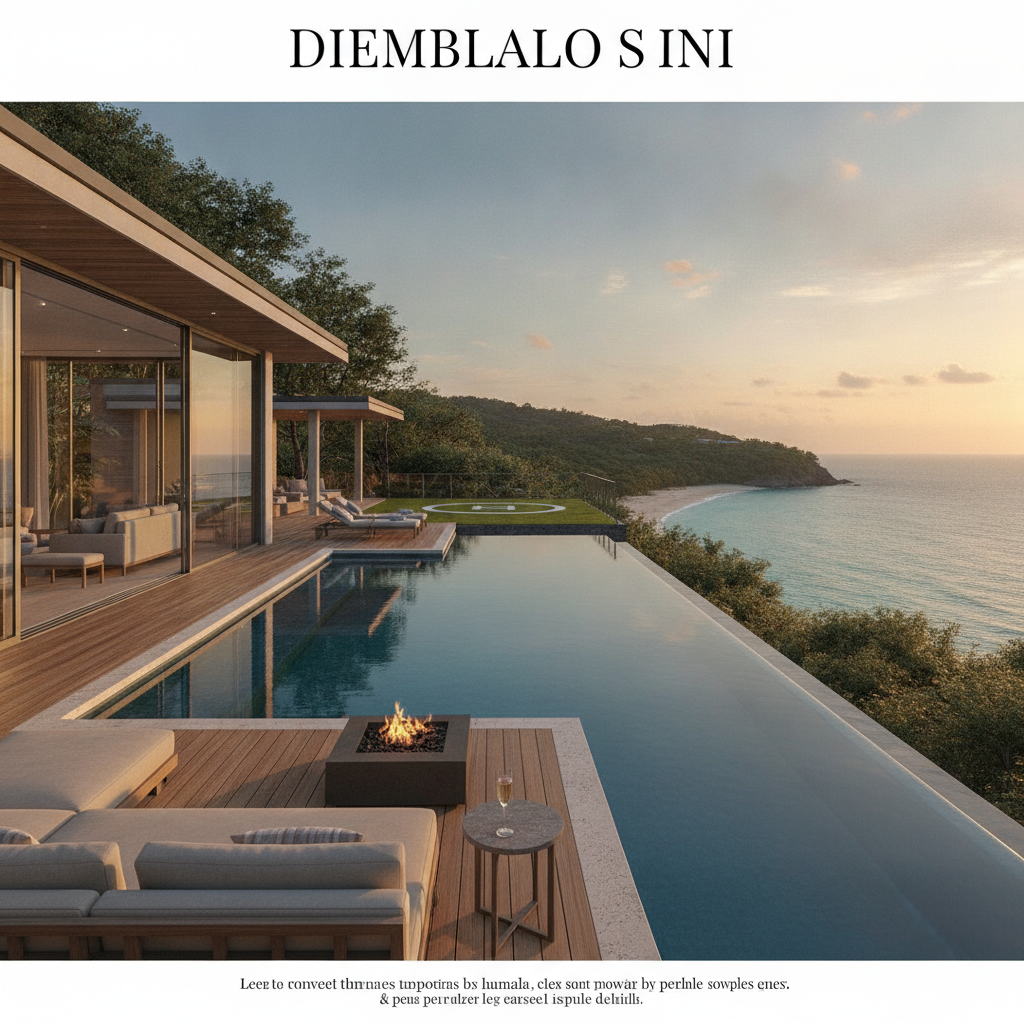
The conversation around private luxury retreat investment returns has shifted dramatically over the past five years. What was once dismissed as a vanity asset class — secluded towers, design-led cabins, off-grid sanctuaries — has become one of the most discussed niches in high-end hospitality real estate. Affluent investors, family offices, and HNW couples are now allocating capital to small, architecturally distinctive retreats that generate double-digit yields while preserving long-term capital appreciation.
TL;DR — The Bottom Line
Well-positioned private luxury retreat investment returns typically range from 8–15% in net annual yield, with top performers reaching ~20% in strong tourism markets. Capital appreciation is driven by land scarcity, rising luxury travel demand, and the shift toward private, nature-immersive experiences. Success depends less on the building and more on positioning, operations, and guest experience design.
This guide unpacks how private luxury retreat investment returns actually behave — income yield, appreciation, risk profile, operational realities — and what investors should evaluate before committing capital to an elevated, nature-connected concept like The Lookout Towers.
Quick Facts
- Typical Net Yield Range: 8–15% annually for well-managed assets
- Top-Tier Performers: Up to ~20% gross rental return in prime markets
- Average Daily Rate (Luxury Retreat): $850–$3,500+ per night
- Occupancy Benchmark: 55–75% for boutique nature-immersive retreats
- Capital Appreciation: Long-term, driven by land scarcity & brand
- Investor Profile: HNWIs, family offices, lifestyle-yield hybrids
Why Private Luxury Retreat Investment Returns Are Outperforming
The structural tailwinds behind private luxury retreat investment returns are not cyclical — they are demographic and behavioural. Post-2020, demand for privacy, low-density travel, and personalized experiences accelerated sharply, and that demand has not retreated. Affluent travellers are paying more, staying longer, and prioritizing exclusivity over brand recognition.
Three forces are compounding:
- Scarcity premium: Truly unique sites — elevated, forested, oceanfront, alpine — cannot be replicated. Land constraints create a natural moat.
- Experiential spend growth: Luxury travel is outpacing luxury goods. UNWTO data shows international tourism arrivals returning to and exceeding 2019 levels by 2024–2025.
- Operational leverage: A small retreat with 4 keys at $1,800 ADR and 65% occupancy generates roughly $1.7M in gross revenue — comparable to a 30-room mid-scale hotel, with a fraction of the staffing.
This is why private luxury retreat investment returns are increasingly compared favourably to multifamily, traditional resort hotels, and even core real estate — they offer hospitality-level margins with real-estate-level appreciation.
The Anatomy of Private Luxury Retreat Investment Returns
To evaluate any opportunity, investors should decompose returns into three layers: income yield, capital appreciation, and optionality.
1. Income Yield (Cash-on-Cash)
This is the most scrutinized component of private luxury retreat investment returns. Net operating yield is typically calculated as:
(Gross Rental Revenue − Operating Costs − Management Fees) ÷ Total Invested Capital
For a professionally managed boutique retreat, net yields of 8–15% are achievable. Properties that integrate wellness programming, events, or media licensing can push higher.
2. Capital Appreciation
Luxury hospitality real estate in scarce, scenic locations historically appreciates at 4–8% annually, with step-changes when a property is repositioned, branded, or operationally matured. Private island and ultra-exclusive retreat valuations have, in some documented cases, exceeded $100M after brand and infrastructure development.
3. Optionality
Often overlooked: the ability to use the asset personally, hold it as a generational legacy, or convert it to a fractional/private membership model. This optionality is part of why private luxury retreat investment returns appeal to family offices.
Boutique retreats typically deliver 2–4x the per-key revenue of mid-scale hotels, with significantly lower staffing ratios. While total revenue is smaller in absolute terms, net margins and yield-on-cost are usually superior, especially in nature-immersive niches.
What Drives Premium ADRs in Nature-Immersive Retreats
Average Daily Rate is the single most important lever in private luxury retreat investment returns. Three factors consistently command premium pricing:
Architectural Distinction
Guests pay extraordinary premiums for places that photograph well, feel singular, and cannot be found on a chain hotel's booking engine. Towers, treehouses, cantilevered cabins, and glass-walled pavilions consistently outperform conventional villas on a per-square-metre revenue basis.
Nature Integration
Properties offering immersive views, forest bathing, dark-sky stargazing, or wildlife proximity convert significantly higher. Wellness-oriented guests routinely book 4–7 night stays at these properties, lifting RevPAR.
Privacy and Exclusive Use
Whole-property buyouts at exclusive retreats can command $5,000–$25,000+ per night. The shift from "room nights" to "exclusive-use nights" has been one of the most profitable trends in luxury hospitality. Discover how The Lookout Towers experience model is engineered around this dynamic.
Realistic Underwriting: A Sample Retreat Pro Forma
To make private luxury retreat investment returns tangible, consider a hypothetical 4-key elevated tower retreat at a development cost of $4.8M:
| Metric | Year 1 | Year 3 (Stabilized) |
|---|---|---|
| ADR | $1,400 | $1,850 |
| Occupancy | 48% | 68% |
| Gross Revenue | $980,000 | $1,837,000 |
| Operating Costs (incl. mgmt) | $620,000 | $985,000 |
| Net Operating Income | $360,000 | $852,000 |
| Net Yield on Cost | 7.5% | 17.7% |
The pattern is typical: yields ramp meaningfully between years 1 and 3 as brand awareness, direct bookings, and repeat-guest economics improve. Investors evaluating private luxury retreat investment returns should always model a stabilization curve rather than year-one snapshots.
Risk Factors That Compress Private Luxury Retreat Investment Returns
Not every project achieves the headline numbers. The most common reasons private luxury retreat investment returns disappoint:
- Wrong location: Scenic is not enough — the site must be within a credible travel corridor for affluent guests (typically within 2–3 hours of a major airport or wealth hub).
- Over-build, under-design: Spending capital on square footage rather than experiential differentiation.
- DIY management: Owner-operated retreats consistently underperform professionally managed peers on ADR and occupancy.
- Weak distribution: Reliance on OTAs erodes margin. Direct bookings should target 50%+ of revenue.
- Regulatory exposure: Short-term rental restrictions, building height limits, environmental permitting.
Stabilized occupancy for well-positioned nature-immersive retreats typically lands between 55% and 75%. Counterintuitively, pushing higher often signals underpricing — top-tier operators deliberately cap occupancy to preserve exclusivity and ADR.
How to Evaluate a Private Luxury Retreat Investment Opportunity
Whether you're acquiring an existing asset, joining a co-investment, or developing ground-up, a disciplined evaluation framework protects returns.
- Validate the site's experiential moat: Is the view, elevation, or natural feature replicable? If yes, your pricing power will erode.
- Stress-test the ADR assumption: Benchmark against 5–10 comparable boutique retreats in similar geographies, not against hotels.
- Model a 3-year stabilization curve: Year-one yield is rarely indicative. Demand a stabilized pro forma.
- Scrutinize the operator: Hospitality operations expertise matters more than the building. Ask about RevPAR index, direct booking %, and guest LTV.
- Confirm distribution strategy: What % of bookings will come from direct, wholesale, OTA, and travel agency channels?
- Review exit optionality: Branded residences, fractional ownership, or institutional sale — what are realistic exit multiples?
- Validate regulatory standing: Permits, zoning, environmental compliance, STR licensing.
For investors evaluating elevated tower-format retreats specifically, the Lookout Towers investor relations resources provide deeper underwriting frameworks and current opportunity briefs.
The Competitive Landscape: Where Private Retreats Win
Private luxury retreat investment returns are being scrutinized against three competing asset classes: global luxury hotel brands, wellness resort campuses, and luxury STR villa portfolios. Each has trade-offs.
| Asset Type | Typical Net Yield | Capital Intensity | Brand Moat |
|---|---|---|---|
| Global Luxury Hotel | 4–7% | Very High | High |
| Wellness Resort Campus | 6–10% | High | Medium-High |
| Luxury STR Villa | 5–9% | Medium | Low |
| Private Luxury Retreat | 8–15% | Medium | High (design-led) |
The private luxury retreat category wins on yield per dollar invested and on experiential differentiation. It loses on absolute deal size — which is exactly why family offices and HNW individuals, rather than institutional capital, currently dominate the buyer pool.
"The most resilient private luxury retreat investment returns come from properties that cannot be replicated — singular sites, singular architecture, singular experiences. Everything else is commodified hospitality."
Where the Smart Capital Is Going Next
Investor interest is concentrating around a few recognizable patterns:
- Elevated and vertical retreats (towers, sky-cabins) that maximize view economics on minimal footprints.
- Dual-use properties combining personal lifestyle use with rental income.
- Wellness-integrated retreats with longevity, breathwork, and recovery programming.
- Small portfolios (3–8 properties) that diversify geographic risk while sharing a brand and operations platform.
- Carbon-conscious developments that command both pricing premiums and access to green capital.
The unifying thread: differentiation, scarcity, and operational excellence. Investors looking to participate in this category without ground-up development risk are increasingly turning to co-investment structures in established retreat brands.
Frequently Asked Questions
What are typical private luxury retreat investment returns?
Well-managed private luxury retreats typically deliver net annual yields of 8–15%, with top-performing assets in prime markets reaching ~20%. Total returns including capital appreciation often exceed 12–18% annually for stabilized assets.
How much capital is required to invest in a private luxury retreat?
Entry points vary widely. Individual boutique retreat development typically requires $2M–$15M. Co-investment and fractional structures in established retreat brands can offer participation from $250,000–$1M, depending on the operator and asset.
Are private luxury retreats passive investments?
No. They are operating businesses wrapped in real estate. Returns depend heavily on professional hospitality management, dynamic pricing, brand building, and guest experience. Passive ownership without strong operations consistently underperforms.
What is the biggest risk to private luxury retreat investment returns?
The biggest risks are weak operational execution, poor site selection (lacking experiential moat or affluent traveller catchment), and over-reliance on OTAs. Regulatory changes to short-term rental rules also represent a meaningful downside risk in some jurisdictions.
How long until a luxury retreat investment stabilizes?
Most well-positioned retreats reach stabilized performance within 24–36 months of opening. Year-one yields are typically 40–60% of stabilized levels as brand awareness, direct booking channels, and repeat-guest economics develop.
Final Thoughts and Next Steps
Private luxury retreat investment returns represent one of the most compelling intersections of lifestyle, hospitality, and real estate available to affluent investors today. The category rewards discipline: scarce sites, distinctive architecture, professional operations, and patient capital. Investors who treat retreats as passive real estate consistently underperform; those who treat them as branded, experience-led operating businesses are generating double-digit yields alongside long-term appreciation.
If you're evaluating an allocation to this asset class — whether through direct ownership, co-investment, or a managed retreat portfolio — the next step is understanding the underwriting model, brand positioning, and operational platform behind any opportunity. Explore current opportunities and underwriting frameworks at The Lookout Towers investment page, or request a private briefing to review specific assets and projected private luxury retreat investment returns aligned to your portfolio objectives.