Prefabricated Luxury Tower Homes: Elevated Living Guide
May 24, 2026 · 13 min read
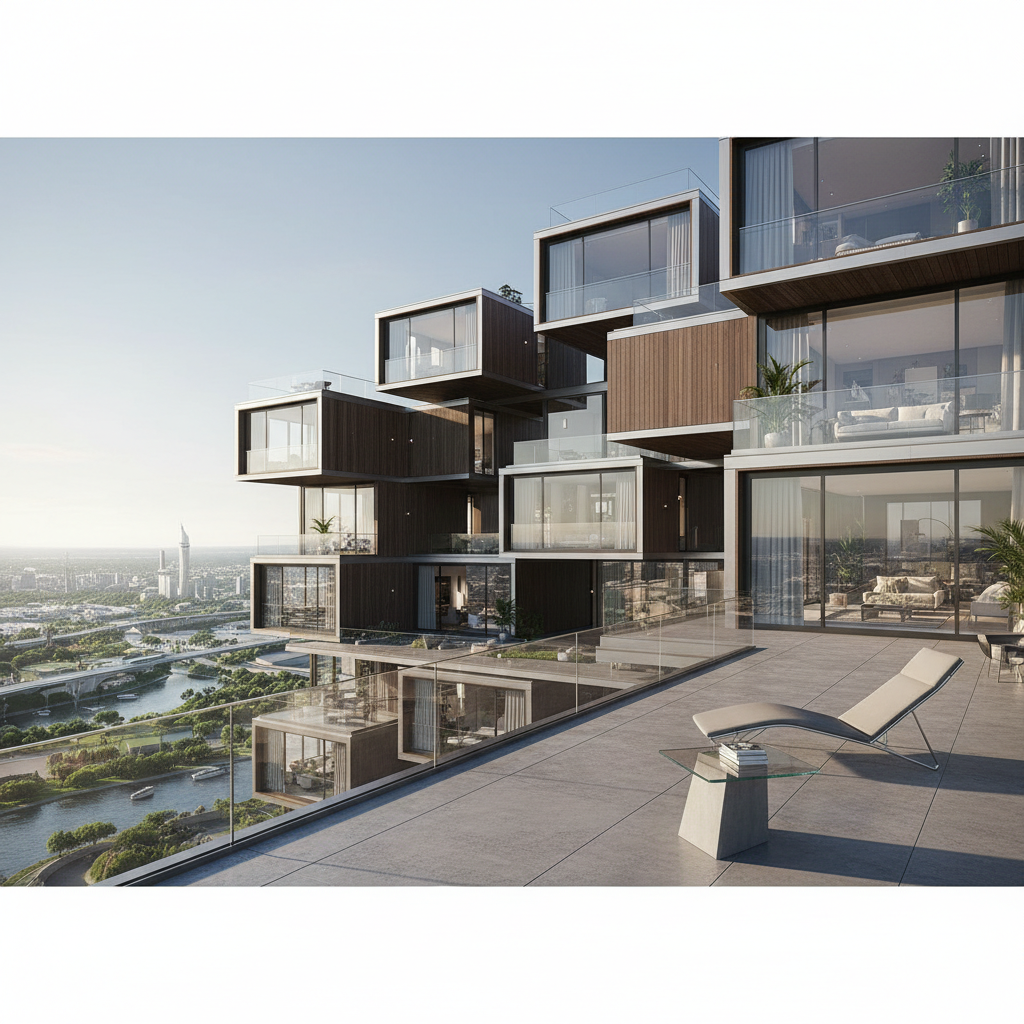
TL;DR — The Bottom Line
Prefabricated luxury tower homes are a fast-emerging category combining factory-built precision, multi-story verticality, and high-end finishes to deliver panoramic, nature-connected living. They offer faster build times, predictable costs, and strong investment yields in experiential hospitality markets — making them an attractive asset for affluent buyers and developers seeking distinctive real estate with elevated returns.
Prefabricated luxury tower homes represent one of the most compelling new asset classes in high-end residential and hospitality real estate. By merging modular construction techniques with vertical architecture and luxury-grade specifications, these structures deliver the views, exclusivity, and design ambition that affluent buyers expect — without the budget overruns, multi-year timelines, and site disruption associated with traditional luxury builds. For investors, they offer a compact footprint, premium nightly rates, and a story-driven brand experience that travelers increasingly seek.
At The Lookout Towers, we've watched this category mature from speculative concept to investable reality. This guide unpacks what prefabricated luxury tower homes are, why they matter now, who's building them, and how to evaluate them as a primary residence, second home, or hospitality investment.
Quick Facts
- Typical height: 2–5 stories (vertical villa format)
- Build timeline: 30–50% faster than site-built equivalents
- Entry price (base unit): ~€150,000 for compact vertical prefabs like the DQ Tower
- Luxury prefab benchmark sale: $4.7M for a prefab home in Bridgehampton, NY
- Footprint advantage: 60–75% smaller ground footprint vs. single-story luxury homes
- Market momentum: Method Homes reported a 50% YoY sales increase in luxury prefab
Why Prefabricated Luxury Tower Homes Are Gaining Momentum
The luxury real estate market has historically been slow to embrace prefabrication, associating it with cookie-cutter aesthetics and budget construction. That perception has collapsed over the last five years. Today, prefabricated luxury tower homes are sold at multimillion-dollar price points and command premium hospitality rates because they solve problems traditional construction cannot.
Three forces are driving adoption. First, land scarcity in scenic markets — coastal bluffs, mountain ridges, forested parcels — has pushed designers to build up rather than out. A vertical tower on a half-acre delivers the same view premium as a sprawling estate on five acres. Second, construction labor shortages have made factory-built modules dramatically more reliable than on-site framing crews. Third, affluent buyers increasingly want experiences over square footage: a 1,200 sq ft tower with a rooftop spa and 270-degree views outperforms a 6,000 sq ft suburban mansion on every emotional and financial metric that matters.
Anatomy of a Prefabricated Luxury Tower Home
Not every multi-story prefab qualifies as a luxury tower home. The category has a recognizable architectural and experiential DNA that distinguishes it from stacked modular apartments or basic vertical cabins.
Structural Format
Most prefabricated luxury tower homes use one of three construction systems: volumetric modules (entire rooms craned into place), structural insulated panels (SIPs) erected on-site, or hybrid steel-and-CLT (cross-laminated timber) frames. The DQ Tower in Europe — frequently cited as one of the first true vertical prefabs — uses a stacked-module approach to deliver a 3-story, 2-bedroom home from a base price of approximately €150,000 before delivery and site work.
Signature Design Elements
- Floor-to-ceiling glazing on at least two elevations
- Rooftop terraces, observation decks, or hot tubs
- Vertical circulation as a design feature (sculptural stairs, glass-walled elevators)
- Compact ground floor footprint (often under 500 sq ft) with expanding upper levels
- Wellness integration: sauna, plunge pool, meditation perch, or spa bath
The Investment Case for Prefabricated Luxury Tower Homes
For investors, prefabricated luxury tower homes occupy a sweet spot between traditional luxury real estate and experiential hospitality. The unit economics are compelling, particularly for short-term rental and boutique resort applications.
Well-positioned vertical retreat properties in scenic markets routinely achieve $600–$1,500+ per night with 60–75% occupancy, translating to gross yields of 10–18% on total project cost — significantly above traditional luxury second homes, which typically generate 3–6%.
Cost and Timeline Advantages
A traditional ground-up luxury home in a scenic market typically takes 18–30 months to complete and runs 15–25% over budget. Prefabricated luxury tower homes compress that timeline to 6–12 months total, with factory construction overlapping site preparation. Cost certainty is dramatically higher because 70–80% of the build happens under controlled factory conditions with locked supplier pricing.
Comparison Table: Prefab Tower vs. Traditional Luxury Build
| Metric | Prefab Luxury Tower | Traditional Luxury Build |
|---|---|---|
| Build timeline | 6–12 months | 18–30 months |
| Budget variance | ±5% | ±15–25% |
| Site disruption | 2–4 weeks | 12–18 months |
| Ground footprint | 300–600 sq ft | 2,000–5,000 sq ft |
| Resale narrative | Iconic / experiential | Conventional luxury |
Investors evaluating tower home investment opportunities should note that the experiential brand premium — the story of staying in a vertical retreat versus another mountain cabin — translates directly into ADR (average daily rate) lift.
Who's Actually Building Prefabricated Luxury Tower Homes
The competitive landscape is still forming. There is no dominant brand in true prefabricated luxury tower homes, but a handful of players define the adjacent categories that affluent buyers compare against.
Vertical-First Innovators
The DQ Tower (Europe) is the most visible early mover, explicitly marketed as a vertical prefab home with a 3-story format. While positioned more as clever small-house design than ultra-luxury, it has proven the engineering and consumer interest in the vertical format.
Luxury Prefab Brands With Stacking Capability
- Stillwater Dwellings — modern luxury prefab with architecturally ambitious finishes
- Dvele — net-zero, tech-forward modular with health-focused performance
- Method Homes — award-winning prefab with strong architect collaborations
- Bauhu — hurricane-rated modular suitable for harsh-climate elevated builds
Experiential Cabin and Micro-Hospitality Brands
Brands like Cotto (UK), Cabin One (Germany), and Eaglecraft (Estonia) compete for the same discretionary dollars by offering iconic small-footprint retreats. They validate demand for design-led nature immersion — exactly the experiential thesis that prefabricated luxury tower homes amplify by adding verticality and view premium.
How to Evaluate a Prefabricated Luxury Tower Home Project
Whether you're buying one as a personal retreat or developing a small portfolio for hospitality use, a disciplined evaluation framework protects your capital and ensures the finished asset delivers on its promise.
Step-by-Step Evaluation Framework
- Validate the site's view asset. Verticality only pays off when the views justify it. Confirm 270°+ unobstructed sightlines from upper floors and protected viewsheds (conservation easements, topography).
- Confirm zoning and height allowances. Many scenic jurisdictions cap structure height at 30–35 feet. Some allow 45+ feet with conditional use permits — critical for 4–5 story formats.
- Audit the prefab manufacturer's track record. Look for at least 10 completed multi-story projects, third-party structural certifications, and a transparent factory tour.
- Model the hospitality P&L. If renting, build a 5-year pro forma with ADR, occupancy, OTA fees, cleaning, and management. Stress-test at 50% occupancy.
- Plan logistics early. Module delivery requires road access, crane staging, and utility connections. Sites with switchback access or wetland buffers can add 20–30% to soft costs.
- Lock the brand and guest experience. The investment thesis depends on storytelling. Photography, naming, and partnership distribution drive the rate premium.
Typical timelines run 6–12 months from contract signing to occupancy: 8–14 weeks for factory production, 4–8 weeks for site preparation (which runs in parallel), 1–2 weeks for module delivery and assembly, and 6–10 weeks for finish-out and inspections.
Sustainability and Performance: The Hidden Premium
One of the underappreciated advantages of prefabricated luxury tower homes is environmental performance. Factory construction reduces material waste by 50–70% compared with site-built homes. Air-sealing is dramatically tighter because envelopes are assembled in controlled conditions. Many luxury prefab manufacturers — Dvele being the most prominent — deliver net-zero-ready units with integrated solar, heat-pump systems, and battery storage as standard.
For affluent buyers, this is not just an ethical alignment — it's a financial asset. Net-zero certifications increasingly drive resale premiums in luxury markets, and they unlock green-financing rates that can shave 50–100 basis points off project financing. The vertical format compounds the advantage: smaller roof and ground exposure per square foot of conditioned space yields naturally lower heating and cooling loads.
The most compelling argument for prefabricated luxury tower homes isn't speed or cost — it's that vertical, factory-built architecture finally lets luxury buyers own a view rather than just a square footage number.
Hospitality Applications: The Lookout Tower Model
Beyond single-family use, prefabricated luxury tower homes are reshaping boutique hospitality. A cluster of 4–8 vertical units on a scenic parcel creates a micro-resort with a coherent architectural identity, minimal land disturbance, and exceptional per-key economics. This is the model The Lookout Towers has built around — vertical retreats positioned as destination experiences rather than commodity lodging.
The economics work because each tower stands alone as a brandable, photographable asset. Guests book the tower itself, not a room number. Repeat bookings, social-media-driven discovery, and direct booking ratios all run materially higher than at conventional boutique hotels. For developers, the modular delivery means a 6-unit project can be commissioned in phases, with revenue from the first units underwriting later additions.
Common Pitfalls and How to Avoid Them
The category is young, and a few recurring mistakes separate successful projects from disappointing ones.
- Underestimating site costs. The factory module may be locked-price, but foundations, utilities, access roads, and septic systems on remote scenic sites can equal or exceed the module cost. Budget 80–120% of module cost for site work in challenging terrain.
- Choosing form over function. Dramatic verticality is meaningless if interior circulation feels cramped. Insist on at least one generous floor plate (typically the main living level) and an elevator-ready shaft on projects above 3 stories.
- Skipping experiential design. A luxury tower without a defined emotional moment — sunrise from the rooftop, fireside soak under stars — competes on commodity terms. Design the moment first; the floor plan follows.
- Ignoring local craft. Prefab modules arrive 80% complete, but the remaining 20% (landscaping, paths, custom millwork) is where local artisans add the soul that justifies the price premium.
For a deeper look at specific tower configurations and pricing, explore our tower home models.
Frequently Asked Questions
What are prefabricated luxury tower homes?
Prefabricated luxury tower homes are multi-story (typically 2–5+ floor) residential or hospitality structures built primarily in a factory and assembled on-site from modules or panels. They combine high-end finishes, verticality for views, and minimal ground footprint, often positioned as retreats, vertical villas, or boutique lookout accommodations.
How much do prefabricated luxury tower homes cost?
Entry-level vertical prefabs like the DQ Tower start around €150,000 for the base unit, excluding delivery and site work. Fully appointed luxury tower homes with premium finishes, site work, and hospitality-grade specifications typically range from $400,000 to $2M+ per tower, with high-end Hamptons-class prefab sales reaching $4.7M.
Are prefabricated luxury tower homes a good investment?
Yes, particularly for short-term rental and boutique hospitality use. Well-positioned vertical retreats achieve $600–$1,500+ nightly ADR with 60–75% occupancy, delivering gross yields of 10–18% — substantially above traditional luxury second homes. The brandable, photogenic format also drives direct bookings and resale premiums.
How long does it take to build a prefabricated luxury tower home?
Typical timelines run 6–12 months from contract to occupancy, compared with 18–30 months for traditional luxury builds. Factory production (8–14 weeks) overlaps site preparation, and on-site module assembly is typically completed in 1–2 weeks.
Can prefabricated luxury tower homes be customized?
Yes. Modern luxury prefab manufacturers offer architect-led customization on layouts, finishes, glazing, wellness features, and exterior cladding. The factory-built base provides cost and timeline certainty, while bespoke interior finishes, landscaping, and site-specific elements deliver the personalization affluent buyers expect.
Conclusion: The Vertical Future of Luxury
Prefabricated luxury tower homes represent a generational shift in how affluent buyers and hospitality investors think about scenic real estate. They deliver what traditional construction cannot: predictable timelines, premium experiential value, environmental performance, and an architectural narrative that travelers and buyers actively seek out. The category is still emerging, which means early movers — both as owners and operators — capture disproportionate brand and economic upside.
Whether you're considering a personal vertical retreat, a hospitality portfolio play, or a legacy property that doubles as an investment, prefabricated luxury tower homes deserve a serious place on your shortlist. To explore current availability, custom configurations, and investment opportunities, connect with The Lookout Towers team for a private consultation.