Modular Luxury Home Builders: Elevated Investment Guide
June 7, 2026 · 13 min read
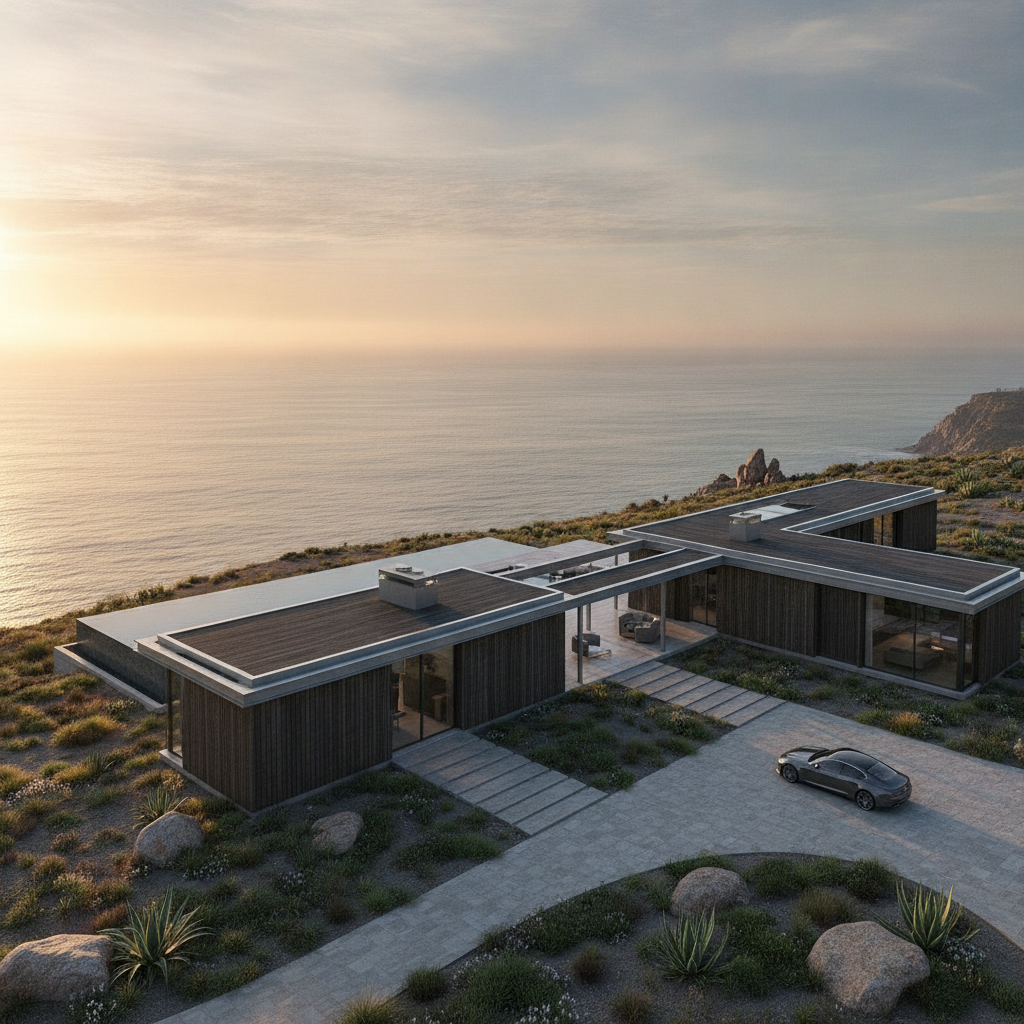
TL;DR — The Bottom Line
Modular luxury home builders are reshaping high-end real estate and hospitality by combining factory precision, architect-led design, and net-zero performance into scalable, investment-grade assets. For developers and affluent buyers, this means faster builds, predictable costs, and the ability to replicate bespoke nature-immersive products like elevated lookout towers across multiple locations without sacrificing luxury character.
The category of modular luxury home builders has evolved far beyond its prefab origins. Today, brands like Dvele, Stillwater Dwellings, and Affinity Modular are delivering net-zero homes, view-optimized villas, and multi-family compounds that rival — and often outperform — traditional site-built luxury construction. For investors and hospitality developers seeking elevated, nature-connected assets, understanding this market is no longer optional. It is the fastest-emerging path to scalable luxury, and it is where brands like The Lookout Towers are pioneering a new asset class: replicable, destination-grade lookout architecture.
Quick Facts
- Construction Speed: 30–50% faster than traditional site-built luxury homes
- Code Compliance: Must meet the same building codes as site-built homes
- Performance Tier: Top builders deliver net-zero or near net-zero energy performance
- Market Leaders: Dvele, Stillwater Dwellings, Affinity Modular, Wind River Built
- Best-Fit Sites: Steep slopes, remote view lots, coastal, forest, and mountain terrain
- Investor Advantage: Predictable schedules, factory-quality consistency, ESG-aligned
What Defines Modular Luxury Home Builders in 2025
The term "modular" once carried connotations of cookie-cutter housing. That perception is now obsolete. Modern modular luxury home builders operate at the intersection of advanced manufacturing, architectural ambition, and sustainability science. They engineer homes in climate-controlled factories using precision robotics, CNC milling, and aerospace-grade tolerances — then assemble them on-site in days rather than months.
What distinguishes luxury-tier modular from mainstream prefab comes down to four pillars:
- Signature architecture: distinctive elevations, dramatic glazing, cantilevers, and minimalist geometry that read as bespoke rather than catalog
- High-performance envelopes: triple glazing, continuous insulation, mechanical ventilation with heat recovery, and net-zero readiness
- Custom or semi-custom layouts tuned to climate, terrain, and view orientation
- Hospitality-grade finishes: stone, hardwood, integrated smart systems, and wellness-focused indoor air quality
This is precisely why the model translates so powerfully to elevated hospitality. A modular system can be engineered once and deployed repeatedly across remote ridgelines, forest canopies, and coastal bluffs — preserving brand consistency while adapting to each site's unique character.
Why Investors Are Backing Modular Luxury Home Builders
The investment thesis behind modular luxury home builders rests on three measurable advantages: time, cost predictability, and ESG alignment. Traditional luxury construction in remote or elevated locations is notoriously volatile — weather delays, labor shortages, and supply chain disruptions routinely blow budgets by 20–40%. Modular construction collapses that risk by moving 60–90% of the build indoors.
Affinity Modular, for example, explicitly markets factory-built consistency as the cornerstone of its institutional appeal, citing schedule certainty and quality control as drivers of long-term asset value. Dvele goes further, positioning its homes as wellness-and-resilience assets — a narrative that resonates with family offices and impact investors looking for ESG-aligned real estate.
Yes — particularly for hospitality and view-property developments. Modular luxury delivers 30–50% faster build times, more predictable budgets, and higher energy efficiency, which translates to lower operating costs and stronger net operating income for short-term rental and boutique hospitality operators.
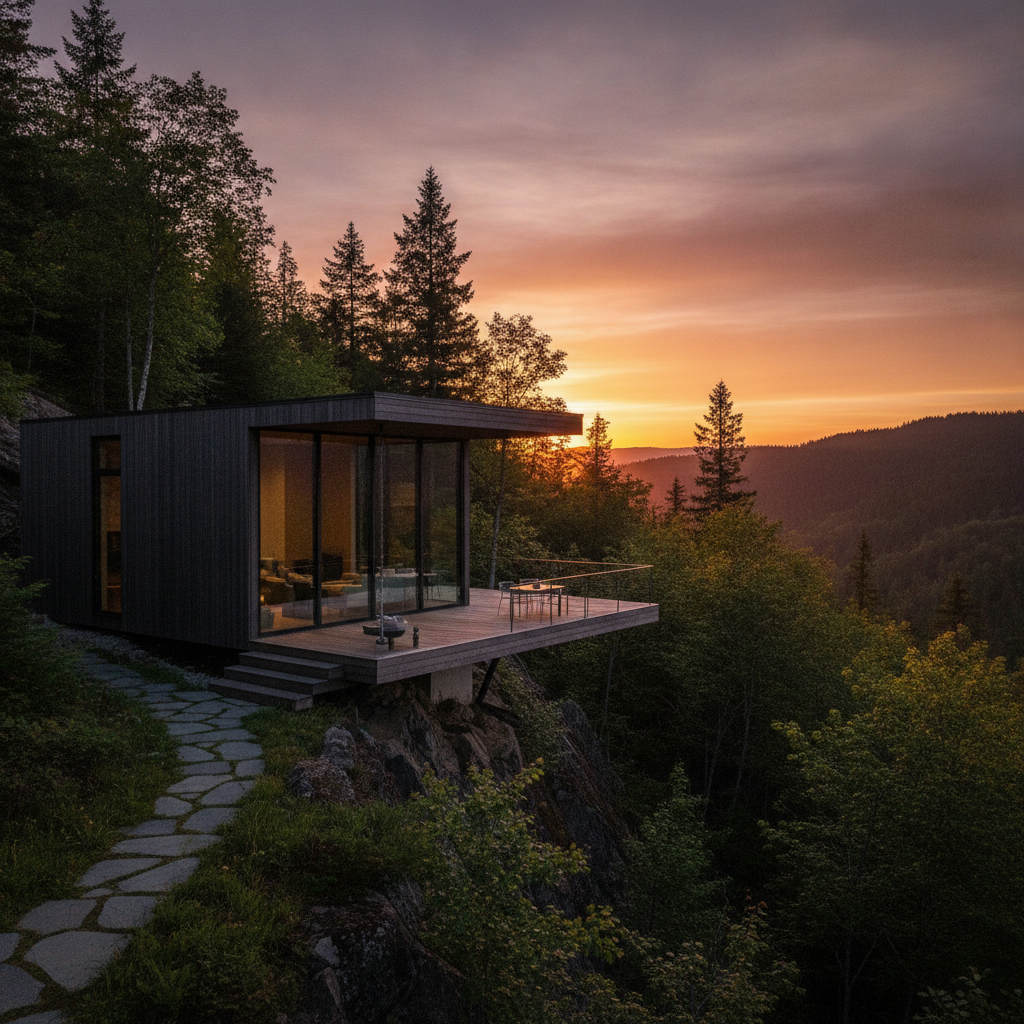
The Leading Modular Luxury Home Builders to Know
The luxury modular space is still relatively concentrated, but a clear hierarchy of specialists has emerged. Each occupies a distinct strategic position, and understanding their differentiation is essential for any investor or developer evaluating partnerships or competitive positioning.
Comparison of Top Modular Luxury Home Builders
| Builder | Position | Signature Strength | Best-Fit Use Case |
|---|---|---|---|
| Dvele | Performance luxury | Net-zero, healthy materials, resilience | Wellness-focused estates, ESG portfolios |
| Stillwater Dwellings | Design-led modern prefab | Architect-driven aesthetics, view lots | Coastal, mountain, and forest view homes |
| Affinity Modular | Custom + multi-family | Factory precision, predictability | Luxury communities, branded residences |
| Wind River Built | Emerging premium | Flexible ADU and custom hybrids | Mixed-use, hospitality compounds |
| Connecticut Valley Homes | Regional custom | Energy-efficient framing | Northeast custom luxury |
What this table reveals is that no single builder currently dominates the intersection of luxury modular construction and elevated, nature-immersive hospitality. That gap is precisely where brands like The Lookout Towers are establishing first-mover advantage — building a category, not just a product.
How Modular Luxury Home Builders Enable Elevated Hospitality
The strategic implications for hospitality go beyond cost savings. When a developer can engineer a signature tower or villa once and replicate it across ten remote sites, the economics of boutique luxury hospitality transform entirely. What was once a one-off bespoke build becomes a scalable branded experience.
Consider the operational realities of building on a remote ridgeline: limited road access, narrow construction windows, sensitive ecosystems, and labor scarcity. Traditional site-built luxury construction in such environments often takes 18–30 months and exposes investors to compounding risk. Modular luxury home builders compress that timeline to 6–10 months, with the bulk of the work happening in a controlled factory hundreds of miles away.
The Replicability Advantage
For investors, replicability is the single most underappreciated lever. A modular luxury tower designed for one location can be deployed with minor site-specific adaptations across a portfolio of locations — preserving brand identity, finishes, guest experience, and operational systems. This is the playbook luxury hotel groups have used for decades; modular construction finally makes it economically viable at the boutique scale.
Sustainability and Performance: The New Luxury Standard
Affluent buyers and hospitality guests increasingly expect luxury to include sustainability. The world's leading modular luxury home builders have made this their core narrative. Dvele's net-zero, healthy-home positioning explicitly targets the wellness-oriented affluent buyer. Stillwater Dwellings markets sustainable materials as a foundational design value, not an add-on.
The performance numbers back the positioning. Factory-built homes typically achieve 15–25% lower energy consumption than equivalent site-built homes due to tighter envelope tolerances and reduced thermal bridging. Waste generation drops by 50–70% because materials are cut to spec and offcuts are recycled within the factory. For hospitality operators, these efficiencies translate directly into lower operating expenses and stronger ESG reporting — both increasingly important to institutional capital partners.
For nature-immersive brands, sustainability is not just marketing. It is essential to securing permits, maintaining community goodwill in sensitive ecosystems, and delivering the authentic guest experience that justifies premium nightly rates. Explore how The Lookout Towers approaches sustainable elevated design for more on the operational playbook.
Through a combination of continuous insulation, triple-glazed windows, airtight construction tolerances achievable only in factory conditions, heat-recovery ventilation, high-efficiency heat pumps, and integrated solar arrays. Brands like Dvele engineer these systems as standard rather than upgrades.
How to Evaluate Modular Luxury Home Builders: A Step-by-Step Framework
Whether you are an investor evaluating a development partner or a buyer commissioning a private estate, the diligence process for modular luxury home builders follows a clear sequence. Use this framework to separate genuine luxury operators from prefab firms repositioning upmarket.
- Verify architectural credibility: Review built portfolios, in-house design talent, and published architectural press. Luxury is a design claim that must be visually defensible.
- Audit factory operations: Tour the manufacturing facility. Look for tolerances, quality control protocols, and material sourcing. Factory conditions predict on-site outcomes.
- Validate performance claims: Request HERS ratings, blower door test results, and energy modeling. Net-zero claims should be documented, not aspirational.
- Assess transport and assembly logistics: Confirm the builder's experience with sites comparable to yours — remote, elevated, or environmentally sensitive locations require specialized rigging and crane capacity.
- Review financial and schedule guarantees: Luxury modular builders should offer fixed pricing and firm delivery dates. Vague terms are a red flag for institutional capital.
- Confirm post-installation service: Warranty terms, smart-system support, and ongoing maintenance access matter especially for hospitality operators running multiple units.
The Investment Case for Elevated Modular Hospitality
Synthesizing the market dynamics, the investment opportunity for elevated, nature-connected modular luxury hospitality is unusually compelling. Short-term rental data consistently shows that unique, architecturally distinctive properties in scenic locations command 2–4x the average daily rate of comparable conventional rentals. When that distinctiveness can be replicated across a portfolio with modular efficiency, the unit economics shift from boutique to institutional-scale.
"The next decade of luxury hospitality will be defined not by more hotels, but by replicable, architecturally signature, nature-immersive experiences delivered through modular precision." This is the strategic thesis driving the most forward-looking developers in the space.
For investors evaluating entry points, the key consideration is brand and category positioning. Generic modular luxury homes face commoditization risk as more builders enter. Branded, destination-grade products with a defensible architectural identity and a replicable operational model — such as the lookout tower category — represent the more durable opportunity. Learn more about investment opportunities with The Lookout Towers.
Frequently Asked Questions
What is the difference between modular and prefab luxury homes?
Prefab is an umbrella term that includes panelized, kit, and modular construction. Modular specifically refers to three-dimensional volumetric units built in a factory and assembled on-site. Luxury modular builders typically deliver homes 80–95% complete from the factory, including finishes, fixtures, and smart systems.
How much do modular luxury home builders typically charge per square foot?
Pricing ranges from roughly $400 to $900+ per square foot delivered and installed, depending on finishes, site complexity, and performance targets. Net-zero and view-optimized homes from premium brands like Dvele and Stillwater Dwellings typically sit in the upper end of that range.
Can modular luxury homes be built on remote or elevated sites?
Yes — in fact, this is one of their core advantages. Because modules arrive largely complete, on-site work and environmental disturbance are minimized. Builders with rigging experience can deliver modular luxury homes to ridgelines, coastal bluffs, and forested sites that would be prohibitively expensive to build conventionally.
Do modular luxury homes appreciate like traditional luxury real estate?
When designed by credentialed architects, sited well, and built to luxury performance standards, modular homes appreciate comparably to or better than site-built luxury homes — particularly in markets that value sustainability and unique architecture. Hospitality-use modular properties often outperform on income yield due to operational efficiency.
Which modular luxury home builders are best for hospitality and short-term rental investment?
For pure residential luxury, Dvele and Stillwater Dwellings lead on design and performance. For hospitality-specific, replicable, elevated nature-immersive products, branded category specialists like The Lookout Towers offer a more turnkey investment-grade model with operational systems built in.
Conclusion: The Elevated Future of Modular Luxury
The rise of modular luxury home builders represents one of the most significant structural shifts in high-end real estate and hospitality in a generation. By collapsing build times, locking in cost predictability, and embedding sustainability as standard, this category has unlocked an entirely new economic model for distinctive, nature-connected properties.
For affluent buyers, this means access to architect-designed, net-zero homes in locations that were previously impractical to build. For investors, it means scalable, ESG-aligned, income-producing assets with institutional-grade predictability. And for hospitality developers, it means the ability to build a true branded category — replicable, signature, and deeply tied to place.
The Lookout Towers sits at the leading edge of this convergence: modular precision, elevated architecture, and nature-immersive hospitality combined into a single investment-grade product. To explore the architecture, investment performance, and partnership opportunities behind the category, visit The Lookout Towers and request a private briefing.