Global Luxury Vacation Home Ownership: 2025 Guide
June 9, 2026 · 13 min read
TL;DR — The Bottom Line
Global luxury vacation home ownership is shifting from full-equity second homes toward experience-driven, design-led, and fractional models. The global luxury real estate market is projected to grow from $285.6B in 2025 to $512.4B by 2034 (6.7% CAGR), and prime second-home demand is centered on turnkey, nature-connected properties. The Lookout Towers positions affluent buyers and investors to access elevated, sustainable, high-yield ownership without the full burden of traditional second-home costs.
Global luxury vacation home ownership has entered a defining new era. Affluent buyers are no longer simply chasing square footage or trophy postcodes — they are chasing rhythm, view, design, and flexibility. The market is broader, more sophisticated, and more tech-enabled than at any point in its history, and that is reshaping how the world's wealthiest households build their property portfolios.
For investors and lifestyle buyers evaluating concepts like The Lookout Towers, the implications are significant. Demand for distinctive, nature-immersive, design-led assets is rising even as inventory expands, giving discerning buyers more leverage and more creative ownership pathways than ever before.
Quick Facts
- Global luxury real estate market (2025): $285.6 billion
- Projected market size (2034): $512.4 billion (6.7% CAGR)
- Prime city price growth (Q1 2025 YoY): +2.8%
- Super-prime ($10M+) sales vs. 2019: ~49% higher
- North America share of luxury market: ~30%
- Typical fractional structure: 4–8 owners, 1/8 to 1/4 shares
The Global Luxury Vacation Home Ownership Market in 2025
The numbers tell a story of resilience and reinvention. According to Knight Frank's Prime Global Cities Index, prime city prices rose 2.8% year over year in Q1 2025, while the broader global luxury real estate market is valued at approximately $285.6 billion in 2025 and projected to reach $512.4 billion by 2034 — a steady 6.7% CAGR. Median prices for single-family luxury homes were up 1.8% year over year in 2025 and 8% versus 2023.
Importantly, inventory at the luxury level has reached a two-year high. That gives buyers entering the global luxury vacation home ownership market more choice and stronger negotiating power than during the frenzied 2021 cycle — without dampening the long-term demand thesis. The super-prime segment ($10M+) remained roughly 49% above 2019 levels in 2022, signaling sustained appetite at the very top of the market even through interest-rate volatility.
What's changed is not whether ultra-high-net-worth buyers want second homes, but how they want to own them. Lifestyle-led destinations offering walkable culture, outdoor recreation, and a strong sense of place are outperforming generic luxury enclaves. Carmel, Santa Barbara, and Breckenridge have all emerged as trend destinations driven by rare settings, high-design homes, and increasingly, co-ownership availability.
Why Affluent Buyers Are Rethinking the Second Home
The traditional luxury vacation home — median price around $1.7 million in premier locations — carries annual maintenance costs of roughly 1% of purchase price, plus property taxes, insurance, staffing, and the opportunity cost of capital. Yet most second homes sit empty 70–80% of the year. That mismatch between cost and utilization is the single biggest force reshaping global luxury vacation home ownership.
Today's affluent buyer is asking sharper questions: How many weeks will I realistically use this asset? What's my all-in cost per night of actual occupancy? Can I unlock yield from unused weeks? Could fractional or co-ownership give me the same lifestyle for a fraction of the capital lockup?
Yes, particularly in lifestyle-led prime destinations where inventory and design quality are limited. Prime global prices grew 2.8% YoY in Q1 2025, and energy-efficient, turnkey homes are commanding 3–5% sale price uplifts. The key is selecting assets with experiential differentiation rather than purely speculative locations.
What Buyers Are Actually Paying Premiums For
The premium drivers in global luxury vacation home ownership have shifted decisively toward the experiential. Knight Frank, Sotheby's International Realty, and Luxury Portfolio International all report the same pattern: buyers will pay more for less square footage if the location, design, and lifestyle story are exceptional.
1. Turnkey Quality
Move-in-ready homes in prime districts are transacting faster and at higher per-square-foot multiples. In Paris, mortgage rates below 3% combined with stable pricing have doubled the pool of active buyers, with the sharpest competition for renovated, turnkey homes.
2. Experiential Living
Proximity to culture, dining, riverfronts, parks, and outdoor recreation now frequently trumps raw square footage. The market is rewarding what Luxury Portfolio calls "extraordinary everyday rhythm."
3. Design-Led, Nature-Connected Architecture
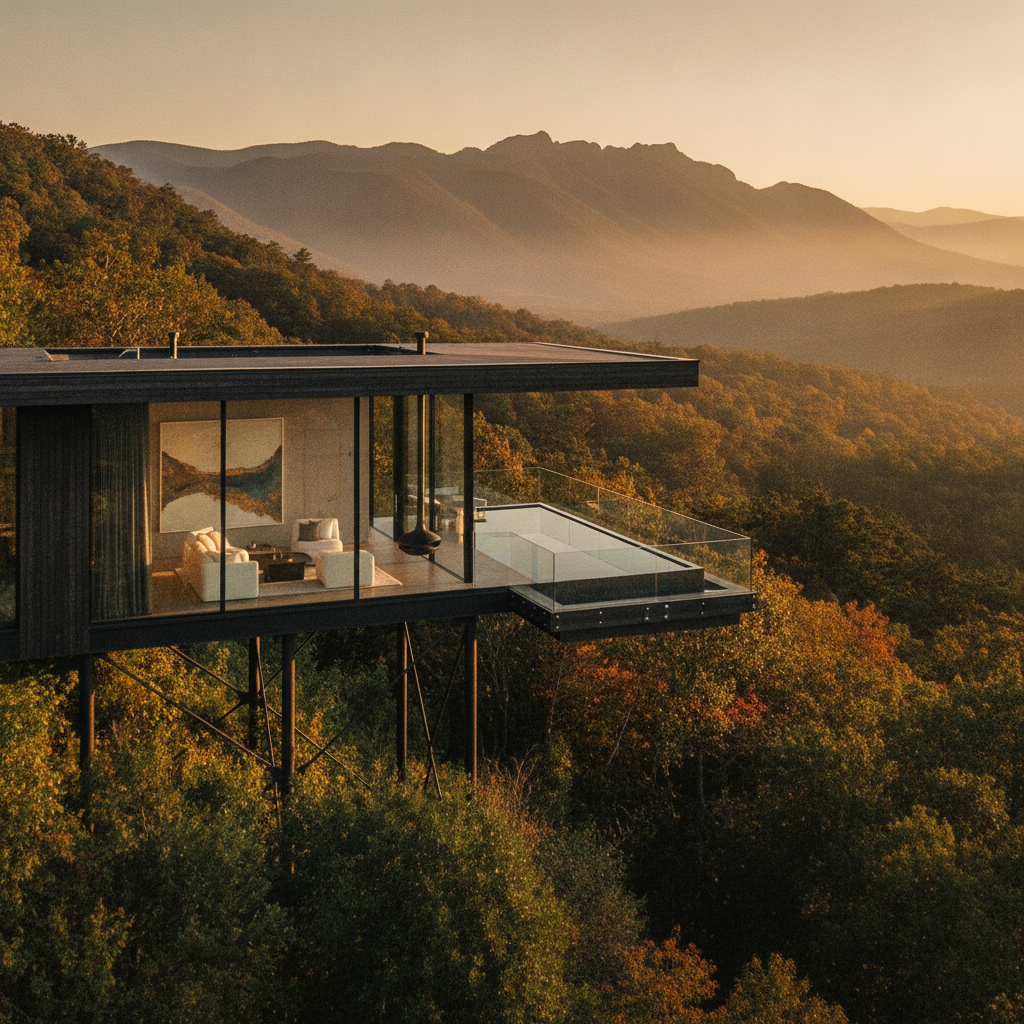
Elevated, view-driven, biophilic homes — the category in which The Lookout Towers operates — are commanding scarcity premiums because they cannot be replicated at scale.
4. Sustainability and Energy Efficiency
Energy-efficient upgrades are delivering 3–5% sale price uplifts and increasingly act as a baseline expectation for affluent buyers under 50.
5. Privacy, Wellness, and Multi-Generational Use
Layouts that support private offices, wellness rooms, and extended family stays have become standard at the top of the market.
Fractional and Co-Ownership: The Structural Shift Reshaping Global Luxury Vacation Home Ownership
The most important structural change in global luxury vacation home ownership over the past five years has been the mainstreaming of fractional and co-ownership models. Platforms like Pacaso, Kocomo, Ancana, Equity Residences, and Fraxioned have educated affluent buyers that they can hold real equity in a high-end vacation home without absorbing 100% of the cost or the operational burden.
How Modern Co-Ownership Works
- An LLC owns the home outright. Each buyer purchases shares in the LLC corresponding to a fixed equity percentage (typically 1/8, 1/4, or 1/2).
- Usage is allocated via a scheduling algorithm. Owners receive equitable access to peak, mid, and off-peak weeks each year.
- A professional operator handles management. Maintenance, staffing, concierge, and bookings are handled centrally, with owners paying pro-rata operating costs.
- Shares can be sold at market value after a defined holding period, capturing any appreciation.
- Optional rental income from unused weeks can be distributed pro-rata, converting unused time into yield.
Comparing Ownership Models in Global Luxury Vacation Home Ownership
| Model | Capital Outlay | Equity | Usage | Management | Yield Potential |
|---|---|---|---|---|---|
| Full ownership | $1.5M–$25M+ | 100% | Unlimited | Owner-managed | Variable / often negative net |
| Co-ownership (1/8) | $200K–$3M | 12.5% deeded | ~6 weeks/year | Professional | Pro-rata rental upside |
| Fractional / private residence club | $150K–$1.5M | Deeded interest | 3–8 weeks/year | Professional | Limited; lifestyle-led |
| Destination club membership | $100K–$500K + dues | None | Flexible across portfolio | Full-service | None |
| The Lookout Towers model | Tiered (whole + fractional) | Deeded equity | Scheduled + flexible | Hands-off, professional | Rental yield on unused weeks |
A 1/8 share in a $2M luxury home costs roughly $250,000 plus pro-rata operating costs of around $7,000–$12,000 annually, in exchange for ~6 weeks of guaranteed annual use. Compared to a fully-owned second home costing $2M plus ~$20,000/year in carrying costs — used for the same 6 weeks — fractional ownership reduces capital outlay by ~87% and operating cost by ~50% per week of actual use.
Where Global Luxury Vacation Home Ownership Is Going Next
Three converging forces will define the next decade of global luxury vacation home ownership: experience design, sustainability, and tech-enabled flexibility.
Experience Design Becomes the Asset
Increasingly, the home is the experience. Elevated architecture, panoramic siting, and immersive nature access — the core thesis behind The Lookout Towers — are now treated as core asset characteristics rather than amenities.
Sustainability as a Pricing Lever
Energy-efficient design is delivering measurable 3–5% sale price uplifts, and ESG-aligned construction (low-impact siting, regenerative materials, off-grid capability) is rapidly moving from "nice to have" to "required" among buyers under 55.
Tech-Enabled, Hands-Off Ownership
Owner portals, dynamic scheduling, in-home IoT, and integrated concierge platforms have eliminated most of the friction that historically discouraged second-home ownership. Hands-off operations are now table stakes — and a competitive baseline for any new entrant.
The defining premium in global luxury vacation home ownership is no longer square footage — it is rhythm, view, and design intelligence per dollar of capital deployed.
How to Evaluate a Global Luxury Vacation Home Ownership Opportunity
Whether you are considering whole ownership, a co-ownership share, or a hybrid structure, the decision framework is similar. Use the following diligence checklist before committing capital:
- Define use case honestly. How many weeks per year will you realistically occupy the home? Anything under 8 weeks is a strong signal for fractional structures.
- Stress-test total cost of ownership. Include acquisition, taxes, insurance, staffing, maintenance, HOA, and opportunity cost of capital.
- Evaluate location resilience. Prioritize destinations with scarce land, planning constraints, strong year-round demand, and climate-resilient siting.
- Audit the operator. For fractional models, examine the management company's track record, fee transparency, and resale liquidity.
- Model the yield case. If rental income is part of the thesis, request historical occupancy and ADR data from comparable assets.
- Confirm exit liquidity. Understand the resale market, transfer fees, and any rights of first refusal.
- Verify design differentiation. Distinctive architecture and siting are the single biggest hedge against future supply growth.
In a market with two-year-high inventory, the only luxury vacation homes that consistently outperform are those that cannot be replicated.
Why The Lookout Towers Fits the Next Decade of Global Luxury Vacation Home Ownership
The Lookout Towers concept aligns precisely with the three structural forces reshaping the global luxury vacation home ownership market. Elevated, nature-immersive towers offer design-led scarcity, the sustainability narrative is built into the siting and construction philosophy, and tiered ownership pathways — from whole ownership to curated fractional shares — give affluent buyers and investors flexibility that traditional villa developments cannot match.
For investors specifically, the model captures three return streams: capital appreciation on scarce, design-led assets; rental yield from professionally managed unused weeks; and the intangible but increasingly priced "experience premium" that buyers under 55 demonstrably pay for. Explore investment opportunities at The Lookout Towers to see how the model is structured.
Frequently Asked Questions
What is global luxury vacation home ownership?
Global luxury vacation home ownership refers to the acquisition of high-end second or seasonal residences — held outright, through fractional/co-ownership LLCs, or via private residence clubs — in premier international destinations, typically valued above USD $1 million and prioritizing lifestyle, design, and yield.
How big is the global luxury vacation home market?
The global luxury real estate market, which includes primary and second homes, was valued at approximately $285.6 billion in 2025 and is projected to reach $512.4 billion by 2034, representing a 6.7% CAGR. Prime city prices rose 2.8% year over year in Q1 2025.
Is fractional ownership the same as a timeshare?
No. Fractional and co-ownership models hold deeded equity in the underlying real estate through an LLC, typically with 4–8 owners holding 1/8 to 1/4 shares. Owners participate in appreciation and can sell their share on the secondary market — fundamentally different from timeshares, which grant only usage rights without asset ownership.
What is the typical cost of a fractional luxury vacation home?
A 1/8 share in a $1.5M–$2M luxury vacation home typically costs $200,000–$300,000, plus annual operating costs of roughly $7,000–$12,000, in exchange for approximately 6 weeks of guaranteed annual use and professional management.
What features command the highest premiums in luxury vacation homes today?
The strongest premium drivers are turnkey quality, experiential location (walkable culture, outdoor access), design-led nature-connected architecture, sustainability and energy efficiency (3–5% price uplift), and layouts supporting privacy, wellness, and multi-generational use.
Conclusion: Owning the Next Era of Luxury
Global luxury vacation home ownership has matured into one of the most sophisticated asset classes available to affluent buyers. The combination of resilient long-term demand, expanded inventory, and the mainstreaming of fractional structures means that today's buyers can access better homes, in better locations, with better economics than at any previous point in the market's history.
The winners over the next decade will be the assets — and the operators — that combine genuine design differentiation, sustainable construction, and flexible, tech-enabled ownership pathways. The Lookout Towers is built precisely for that thesis. To explore ownership and investment opportunities, connect with our ownership team for a private briefing.