Franchise Luxury Boutique Hotels: Investor Guide 2026
June 13, 2026 · 13 min read
TL;DR — The Bottom Line
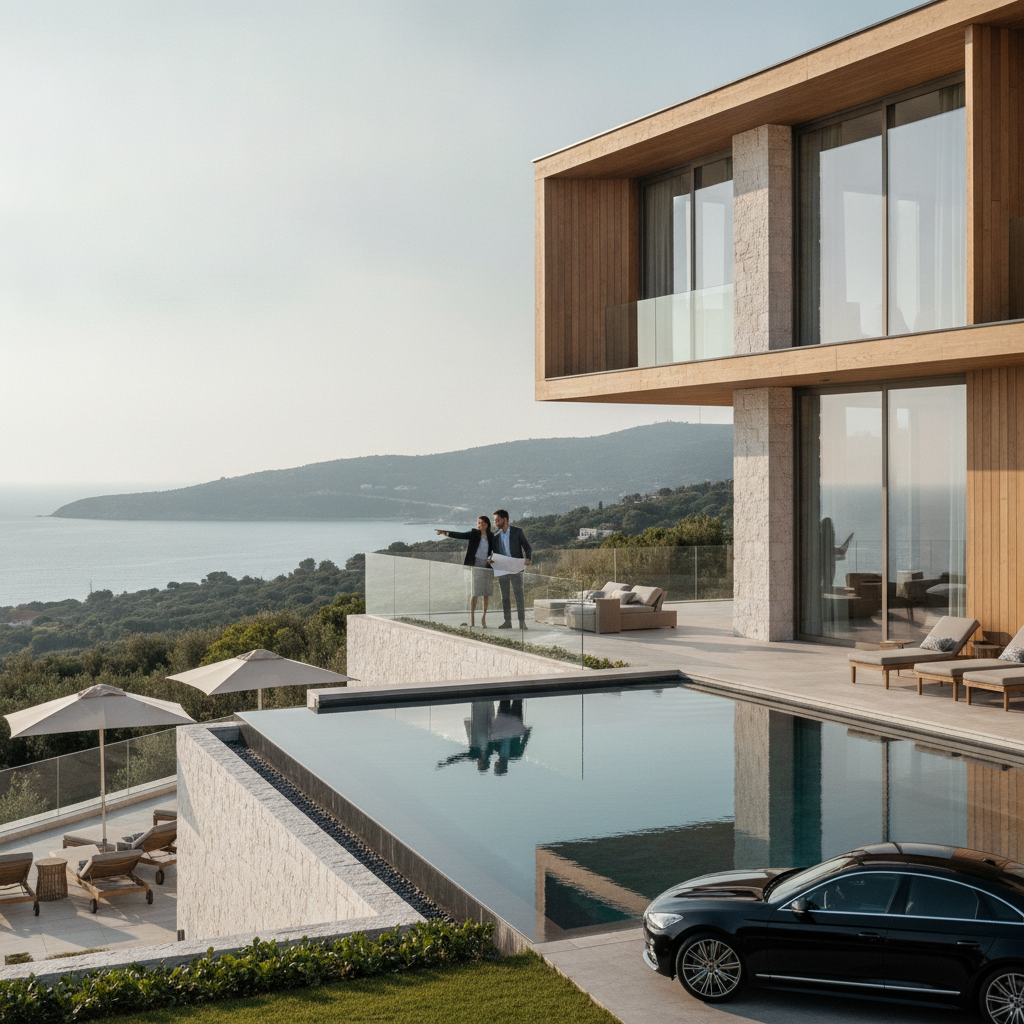
Franchise luxury boutique hotels combine the distinctive design, intimate scale, and premium pricing of independent properties with the distribution, loyalty, and operational systems of global brands. The global hotel franchise market is projected to grow from USD 47.08 billion in 2026 to USD 91.50 billion by 2034 (8.66% CAGR), and independent luxury properties are already achieving ADRs of ~USD 274 and occupancy near 78%. For investors and developers, a nature-elevated concept like The Lookout Towers offers a rare path to high-yield, experience-led hospitality in a category that is scaling faster than traditional resorts.
The hospitality industry is undergoing a quiet but profound transformation. Affluent travelers no longer want cookie-cutter five-star uniformity — they want intimacy, individuality, and immersion. At the same time, sophisticated investors want the scale, financing access, and distribution muscle of a global brand. Franchise luxury boutique hotels sit precisely at this intersection, and they are quickly becoming one of the most compelling asset classes in modern hospitality real estate.
For The Lookout Towers, the rise of franchise luxury boutique hotels represents a defining opportunity: to scale a nature-connected, architecturally iconic concept across multiple destinations while leveraging the trusted infrastructure of the global hotel ecosystem. This guide unpacks the market, economics, models, and strategic playbook behind this fast-growing segment.
Quick Facts
- Global hotel franchise market (2026): USD 47.08 billion
- Projected market size (2034): USD 91.50 billion
- CAGR (2026–2034): 8.66%
- Independent luxury ADR: ~USD 274
- Average occupancy: 78.2%
- Total RevPAR: ~USD 332
- Gross operating profit: >USD 104 per available room
- Typical investment range: £2.96M – £76.82M per property
Why Franchise Luxury Boutique Hotels Are the Fastest-Growing Segment
The traditional luxury hotel model — large key counts, marble lobbies, predictable service scripts — is being disrupted by a generation of travelers who prize authenticity, design, and place. According to industry research, the global hotel franchise market is expected to nearly double over the next eight years, driven by rising discretionary spending, asset-light investor preferences, and surging demand for differentiated experiences.
Within that growth, franchise luxury boutique hotels are outperforming. Where standardized upper-upscale brands compete on consistency, boutique properties compete on character — and character commands premium rates. Independent luxury and upper-upscale hotels generate average daily rates of approximately USD 274 and occupancies above 78%, with total RevPAR reaching USD 332 according to hospitality benchmarking data.
The reason is structural. A boutique property with only 40–80 rooms cannot rely on volume; it must rely on yield. That forces operators to invest in design, storytelling, F&B, and curated experiences — exactly the attributes today's affluent guest is willing to pay for. When that yield engine is paired with a franchise or soft-brand distribution platform, the result is a uniquely high-margin business.
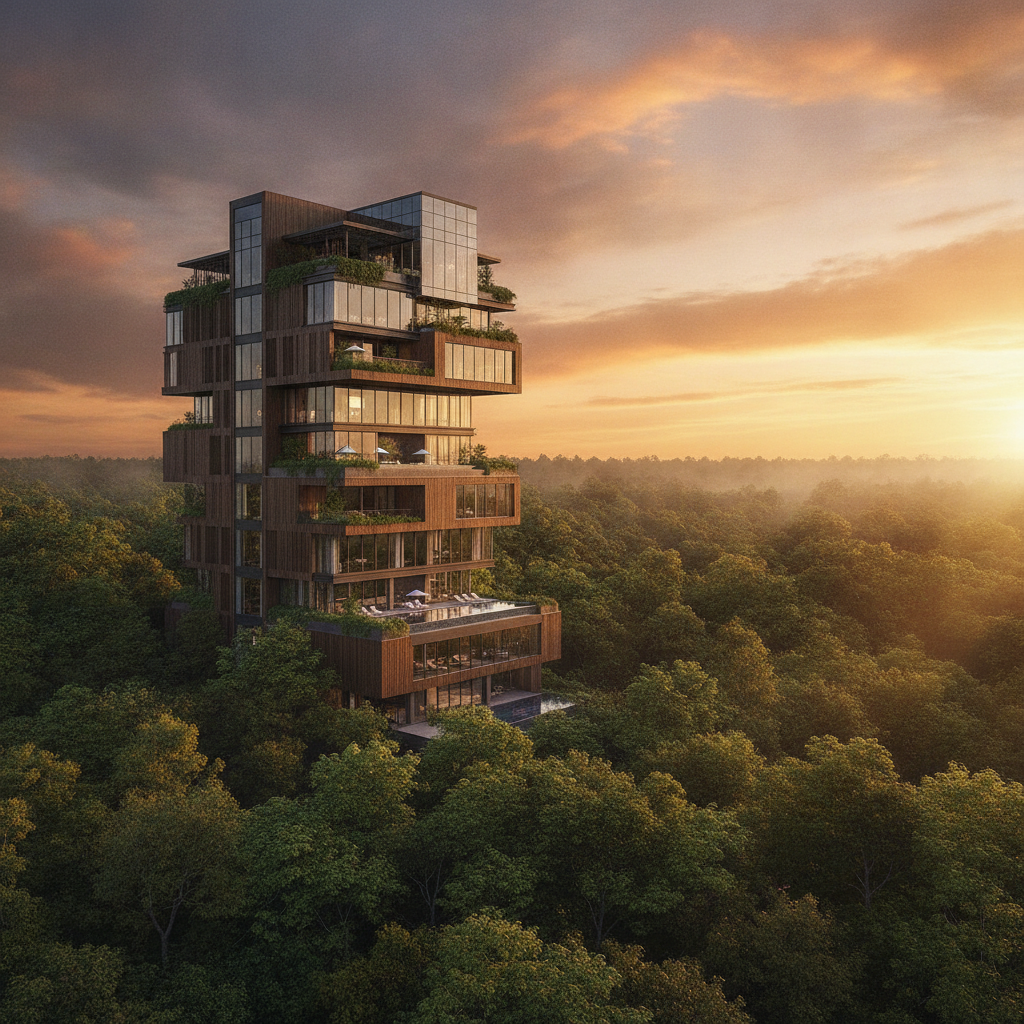
The Lookout Towers concept — vertical, nature-immersed, architecturally singular accommodations — embodies this thesis. Each tower is a destination unto itself, justifying premium pricing, while a unified franchise structure allows the brand to scale across geographies. Explore the underlying philosophy on our about page.
Understanding the Three Models: Franchise, Soft Brand, and Independent
Not every "franchise luxury boutique hotel" is structured the same way. Understanding the differences is critical for investors and developers evaluating where their capital fits best.
Full Franchise
Under a full franchise model, the property operates under a major brand's full standards, name, and systems — think Hotel Indigo (IHG) or Curio Collection (Hilton). Owners gain access to global loyalty programs, central reservations, sales infrastructure, and easier debt financing. The trade-off is reduced design and operational autonomy and higher fee leakage (typically 8–12% of revenue across royalty, marketing, and loyalty fees).
Soft Brand Collection
Soft brands — Marriott's Autograph Collection and Luxury Collection, Hilton's LXR and Curio, Hyatt's Unbound Collection, Accor's MGallery — are the sweet spot for franchise luxury boutique hotels. Properties retain their individual identity, name, and design ethos while plugging into the parent group's distribution and loyalty engine. This is increasingly the model of choice for nature-led, design-forward concepts.
Pure Independent or Branded Collection (e.g., SLH, Design Hotels)
Independent luxury boutiques can also join curated collections like Small Luxury Hotels of the World or Design Hotels (owned by Marriott). These offer marketing reach and partial loyalty integration without the full standards burden of a franchise.
The Economics: What Investors Actually Earn
Franchise luxury boutique hotels are capital-intensive, but the unit economics are compelling when structured correctly. Industry data shows that boutique projects typically require initial investments ranging from £2.96 million for small conversion properties to £76.82 million for ground-up flagship developments. Hotel Indigo, one of the more accessible boutique flags, requires roughly £13.1M–£29.4M per typical property.
Against that capital base, the revenue performance is strong:
| Metric | Independent Luxury / Boutique | Standardized Upper-Upscale |
|---|---|---|
| ADR | ~USD 274 | ~USD 210 |
| Occupancy | 78.2% | 72–74% |
| Ancillary Revenue / Room | USD 117 | USD 70–85 |
| Total RevPAR | USD 332 | USD 240–260 |
| GOP / Available Room | >USD 104 | USD 75–90 |
The premium comes from three sources: rate power (uniqueness justifies higher ADR), F&B capture (boutique restaurants become local destinations), and experiential ancillaries (guided nature experiences, wellness, private dining, events).
A: Well-positioned franchise luxury boutique hotels typically target unlevered yields of 9–14% on stabilized GOP, with cash-on-cash returns of 12–18% once financing is layered in. Nature-led and architecturally iconic properties — like vertical lookout towers — often outperform this range because they command rate premiums and benefit from social media-driven direct bookings.
How The Lookout Towers Fits the Franchise Luxury Boutique Hotels Category
Most boutique brands compete in urban or beach-resort settings. The opportunity for The Lookout Towers is to own a category that virtually no global brand has claimed: vertical, nature-immersed luxury. Each tower functions as a small-key, ultra-experiential property — typically 8–30 keys per site — built into landscapes that cannot be replicated.
That positioning aligns precisely with where franchise luxury boutique hotels are heading: smaller footprints, stronger stories, deeper connection to place. Affluent guests increasingly book for the destination of the property itself, not the city it's near. A canopy-level suite with floor-to-ceiling views of an old-growth forest is, in marketing terms, an unfair advantage.
From a franchise structure standpoint, The Lookout Towers can scale through three vehicles:
- Owned flagship properties that anchor the brand and demonstrate the concept
- Franchised tower developments with qualified landowners and developers in protected or scenic regions
- Soft-brand alliances with a major hospitality group for global distribution and loyalty integration
Learn more about partnership pathways on our investor page.
The Competitive Landscape: Where Boutique Franchises Win
The competitive set for franchise luxury boutique hotels spans three tiers, and understanding each is essential for positioning.
Tier 1: Ultra-Luxury Nature Brands
Aman, Six Senses, One&Only, and Rosewood set the benchmark for nature-immersed luxury. They command extraordinary ADRs (often USD 1,500+) but require massive capital, decade-long development cycles, and large operational footprints. They are not direct franchise peers, but they define the guest expectation.
Tier 2: Soft-Brand Collections
Marriott Autograph, Hilton Curio, Hyatt Unbound, and Accor MGallery are the most direct structural competitors for franchise luxury boutique hotels. They offer distribution and loyalty without erasing identity — but most properties in these collections are urban or resort-based, not wilderness-immersed.
Tier 3: Curated Independent Collections
Small Luxury Hotels of the World, Design Hotels, Relais & Châteaux, and Leading Hotels of the World aggregate independent boutiques under a marketing umbrella. They offer credibility and reach with minimal operational interference.
How to Develop or Invest in Franchise Luxury Boutique Hotels: A Step-by-Step Framework
Whether you are a landowner with a remarkable site, a family office seeking experiential real estate exposure, or a developer scaling a portfolio, the path into franchise luxury boutique hotels follows a clear sequence.
- Define the experiential thesis. What is the irreplaceable reason guests will travel here? Location, architecture, and story must combine into a single compelling answer.
- Validate the site and zoning. Nature-led properties depend on environmental permitting, view corridors, and access. Engage local authorities and ecological consultants early.
- Model the unit economics. Build a 10-year pro forma assuming ADR premiums of 30–60% over local upper-upscale comparables, with ancillary revenue at 35–45% of room revenue.
- Select the brand structure. Compare full franchise, soft brand, and independent paths against your capital structure, autonomy preferences, and distribution needs.
- Secure capital and operator alignment. Most successful franchise luxury boutique hotels are developed by an ownership group with a specialist operator. Alignment on design standards and service ethos is critical.
- Design for storytelling. Every guest moment — arrival, suite, F&B, departure — must be designed to be photographed, shared, and remembered.
- Launch with media and loyalty integration. Coordinate brand launch with the franchise system's PR, loyalty push, and influencer activations.
For developers exploring tower-based concepts, our team offers structured guidance — start at our partnership inquiry page.
A: From site acquisition to stabilized operations, a ground-up franchise luxury boutique hotel typically takes 4–6 years: 12–18 months for permitting and design, 18–30 months for construction, and 24 months to reach stabilized occupancy. Conversion projects can compress this timeline to 2–3 years.
Key Risks and How to Mitigate Them
Like all hospitality real estate, franchise luxury boutique hotels carry risks. The most significant include:
- Capital intensity: Ground-up boutique projects can run £15M–£40M for 30–60 keys. Mitigation: phased development, blended equity-debt structures, and franchise-supported financing.
- Brand fee leakage: Royalty, marketing, and loyalty fees can total 8–12% of revenue. Mitigation: negotiate fee caps and ramp periods; quantify true incremental demand the brand delivers.
- Operational complexity: Small-key luxury requires exceptional staffing ratios. Mitigation: design for operational efficiency from day one; partner with experienced boutique operators.
- Demand concentration: Nature-led properties can be seasonal. Mitigation: build wellness, events, and shoulder-season programming into the concept.
Quotable insight: "The best franchise luxury boutique hotels are not branded buildings — they are branded experiences that happen to occupy extraordinary architecture."
The Future Outlook: Where the Category Goes Next
Three forces will shape the next decade of franchise luxury boutique hotels:
1. Geographic dispersion. Affluent travelers are moving beyond saturated urban centers toward remote, nature-rich destinations. Properties in mountains, forests, coastlines, and deserts will outperform.
2. Vertical and architectural specialization. Iconic structures — towers, treehouses, cliffside pavilions — are becoming destinations in themselves. The Lookout Towers concept is built precisely for this trend.
3. Loyalty and direct-booking convergence. The strongest franchise luxury boutique hotels will balance major-brand loyalty integration with sophisticated direct-booking strategies powered by storytelling and community.
Quotable insight: "Within the next decade, the most valuable hospitality real estate will not be the largest buildings in the best cities — it will be the most unforgettable buildings in the most extraordinary landscapes."
Frequently Asked Questions
What qualifies a property as a franchise luxury boutique hotel?
A franchise luxury boutique hotel typically has 20–100 keys, distinctive design, premium pricing, and operates under a franchise or soft-brand agreement with a major hospitality group. The defining characteristic is the combination of individuality and brand-system distribution.
How much capital is required to develop a franchise luxury boutique hotel?
Investment ranges from approximately £2.96 million for small conversion projects to £76.82 million for flagship developments. Mid-range boutique flags like Hotel Indigo typically require £13.1M–£29.4M per property, plus initial franchise fees around £60,000.
Is a soft brand better than a full franchise for boutique luxury?
For most boutique concepts, soft brands like Marriott Autograph, Hilton Curio, and Hyatt Unbound offer the best balance. They preserve individual identity and design while providing access to global loyalty programs, distribution, and revenue management infrastructure.
What returns can investors expect from franchise luxury boutique hotels?
Well-positioned properties target unlevered yields of 9–14% on stabilized GOP and cash-on-cash returns of 12–18%. Independent luxury hotels achieve ADRs around USD 274, occupancies of 78.2%, and total RevPAR of USD 332 according to industry benchmarks.
How does The Lookout Towers fit into the franchise luxury boutique hotels category?
The Lookout Towers operates a vertical, nature-immersed luxury concept that fills a category gap — virtually no global brand owns the "iconic tower in nature" niche. The model is designed for franchise scalability while preserving small-key intimacy and architectural distinctiveness.
Conclusion: A Defining Opportunity in Modern Hospitality
Franchise luxury boutique hotels represent one of the clearest convergences of consumer demand and investor opportunity in hospitality today. The market is doubling. The unit economics are exceptional. And the category rewards exactly what The Lookout Towers was built to deliver: architectural distinctiveness, nature immersion, and experiential depth — at scale, under a brand system that travels.
For affluent guests, this is the future of luxury travel. For investors and developers, it is a rare combination of yield, story, and durable competitive advantage. The properties that win in the next decade will not be the biggest — they will be the most unforgettable.
If you are exploring development partnerships, investment opportunities, or simply want to experience the concept firsthand, we invite you to connect with our team. The next era of franchise luxury boutique hotels is being built now — and we would welcome you into the conversation.