Benefits of Owning an Architectural Retreat: 2026 Guide
June 3, 2026 · 13 min read
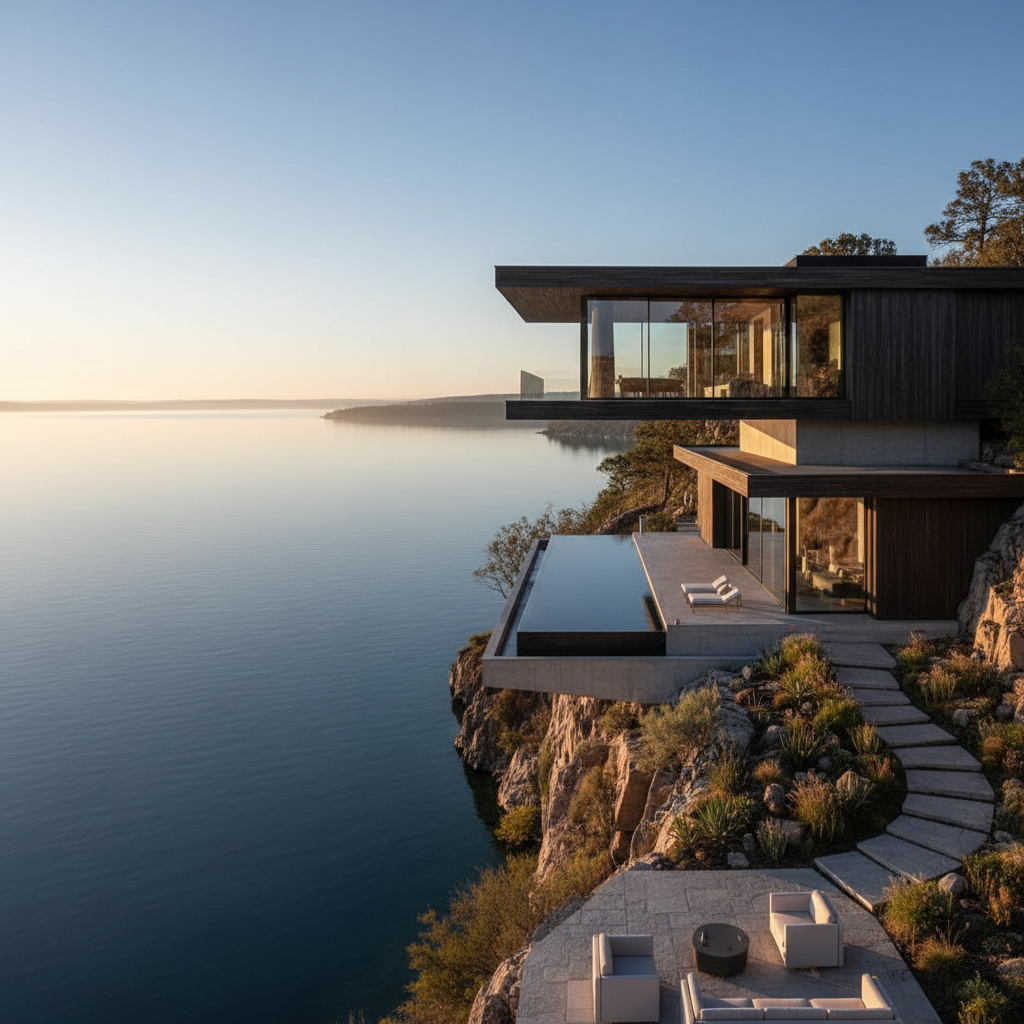
The benefits of owning an architectural retreat extend far beyond a beautiful view or a weekend getaway. For affluent buyers and sophisticated investors, a design-led, nature-immersed property has become one of the most compelling asset classes of the decade — combining lifestyle restoration, social capital, generational legacy, and premium short-stay yields into a single, tangible holding. As demand for unique, secluded, architecturally distinctive stays accelerates, the case for ownership has never been stronger.
TL;DR — The Bottom Line
Owning an architectural retreat delivers three compounding returns: a high-performance personal sanctuary, a premium short-stay investment with above-market ADRs, and a multi-generational legacy asset. Properties like The Lookout Towers — elevated, design-driven, and nature-immersed — outperform traditional second homes because they monetize their distinctiveness while appreciating as scarce, irreplaceable architecture in protected landscapes.
Quick Facts
- Category: Design-led luxury hospitality real estate
- Typical ADR premium: 2–4x over standard vacation rentals in the same region
- Creative productivity lift: 34% of professionals report their best ideas occur outside traditional work environments
- Investor profile: Affluent buyers seeking lifestyle + yield + legacy in one asset
- Use case: Hybrid personal use and high-margin short-term rental
- Key value drivers: Scarcity, architectural distinction, elevation, privacy, nature immersion
Why the Benefits of Owning an Architectural Retreat Are Reshaping Luxury Real Estate
The post-2020 luxury traveler is no longer satisfied with branded hotels or generic vacation homes. They are seeking experiences that feel curated, restorative, and visually unforgettable — qualities that an architectural retreat delivers natively. This shift has created a structural tailwind for owners: the same property that serves as a private sanctuary also commands premium nightly rates when placed on the rental market.
Unlike a conventional second home, an architectural retreat is built around experience design. Panoramic glazing, sculptural form, elevated positioning, and seamless indoor-outdoor flow are not aesthetic indulgences — they are the very features that justify a 2–4x ADR premium versus comparable nearby rentals. When you understand this dynamic, the benefits of owning an architectural retreat become measurable, not just emotional.
For The Lookout Towers specifically, the elevated tower typology adds a layer of scarcity that flat-land cabins cannot replicate. Height, panorama, and engineering complexity create defensible value — and defensible pricing power. Explore the investment philosophy behind this approach to see how architecture, location, and operations compound.
The Lifestyle Dividend: Wellbeing, Focus, and Creative Performance
The first and most immediate of the benefits of owning an architectural retreat is personal: a measurable improvement in how you think, rest, and recover. For founders, executives, surgeons, creatives, and high-output professionals, this is not a soft benefit — it is competitive infrastructure.
Stress reduction and mental reset
Time spent in a deliberately calm, nature-immersed environment is repeatedly linked to lower cortisol, improved sleep architecture, and faster cognitive recovery. An architectural retreat compresses the "getting away" ritual into a single drive — no airports, no check-ins, no compromise on aesthetics or privacy.
Creative output and strategic thinking
According to research on workplace creativity, 34% of professionals report their most creative ideas occur outside the traditional work environment, often during retreats, travel, or extended time in nature. Architectural retreats designed with spaciousness, silence, and expansive views amplify this effect — turning a weekend into a strategic offsite of one.
Yes. A vacation home prioritizes square footage and amenities; an architectural retreat prioritizes experience per square foot — view corridors, material honesty, acoustic calm, and nature integration. That experiential intensity is what unlocks premium rental yields and long-term appreciation that ordinary second homes cannot match.
The Financial Case: Why Architectural Retreats Outperform Traditional Second Homes
Among the benefits of owning an architectural retreat, the financial argument is the most under-discussed — and the most rigorous. Three forces work in the owner's favor simultaneously.
1. Premium ADRs and occupancy
Architecturally distinctive stays — the kind featured in Architectural Digest, Dwell, or Condé Nast Traveler — routinely outperform comparable rentals in their region by 2–4x on average daily rate. Guests are not paying for a bed; they are paying for a story, a photograph, and a memory.
2. Capital appreciation through scarcity
Land that has been thoughtfully improved — with signature architecture, trails, landscaping, and curated amenities — sells faster, attracts more interest, and commands higher prices than raw or generically built parcels. Architectural retreats in protected or zoning-constrained landscapes benefit from a permanent supply ceiling.
3. Hybrid use efficiency
Unlike a pure investment property, an architectural retreat allows the owner to enjoy peak personal use weeks while monetizing the remainder. This hybrid model frequently produces a net carrying cost near zero — or positive cash flow — while the underlying asset appreciates.
| Metric | Traditional Second Home | Architectural Retreat |
|---|---|---|
| Average Daily Rate (ADR) | Market baseline | 2–4x premium |
| Media & press potential | Low | High (design publications) |
| Occupancy in shoulder seasons | Moderate | Strong (experience-driven) |
| Supply elasticity | High | Low — scarcity protected |
| Owner emotional ROI | Variable | High and consistent |
To understand how these dynamics play out in a live portfolio, review the ownership and yield model The Lookout Towers offers.
Legacy, Family, and Social Capital
One of the most enduring benefits of owning an architectural retreat is its function as a generational asset — a place that gathers a family across decades and accumulates meaning the way other assets accumulate yield.
A multi-generational gathering point
Retreats become the setting for reunions, holidays, milestone birthdays, and unplugged weekends. In an era when extended families are geographically scattered and digitally saturated, a dedicated, beautiful, private place to converge has become rare — and therefore valuable.
Legacy beyond inheritance
Architectural retreats are routinely described by owners as "a legacy for future generations" — a place to pass on values, traditions, and memories alongside wealth. Children who grow up returning to a signature property inherit not just an asset, but an identity tied to place.
Social capital and design status
An architecturally significant property carries reputational weight within affluent networks. When the retreat is associated with a known architect, brand, or publication, it becomes a soft marker of taste — and a magnet for the kind of guests, partners, and conversations that elevate the owner's broader life.
How to Evaluate the Benefits of Owning an Architectural Retreat Before You Buy
Not every "designer cabin" is an investment-grade architectural retreat. To capture the full benefits of owning an architectural retreat, evaluate any opportunity against the following framework.
- Architectural distinctiveness: Is the design genuinely original and photogenic enough to earn media coverage? Generic minimalism is no longer differentiated.
- Location scarcity: Is the site protected from future overbuilding by zoning, topography, or conservation status?
- Elevation and views: Does the property command a panorama that cannot be replicated nearby? Elevation is the single most defensible value driver.
- Operational infrastructure: Is there a professional operator, brand, or management framework in place to deliver consistent luxury service?
- Hybrid use flexibility: Does the ownership structure permit personal use without compromising rental performance?
- Brand association: Is the property part of a recognized collection that drives direct bookings and reduces dependence on OTAs?
When all six factors align, the asset compounds across lifestyle, yield, and legacy dimensions simultaneously. Browse available tower properties to see how this framework translates into real opportunities.
Most owners of well-positioned architectural retreats can claim 6–10 peak weeks per year for personal use while still capturing 70–80% of the property's gross rental potential. The key is reserving shoulder weeks for personal use and releasing high-demand windows to guests — a calendar strategy your operator should help engineer.
The Experience Economy: Why Architectural Retreats Win the Modern Traveler
The luxury traveler in 2026 is fundamentally different from the luxury traveler of 2015. Today's affluent guest is experience-rich and time-poor. They want a stay that can be photographed, remembered, and shared — not just slept in. This is the macro tailwind behind every one of the benefits of owning an architectural retreat.
From hotels to havens
Branded hotels deliver consistency, but they no longer deliver story. Architectural retreats deliver both rarity and narrative — a tower in a forest, a glass cabin on a ridge, a sculptural form perched above a valley. Every stay produces content the guest will share, marketing the property to the next guest at no cost to the owner.
Wellness without a spa
Modern wellness is increasingly defined by environment rather than service. A well-designed retreat — silent, naturally lit, framed by trees and sky — delivers more measurable restoration than many full-service spas. This shifts the value equation toward architecture and location, and away from operational overhead.
"An architectural retreat is the rare asset that earns its keep three ways at once: it heals you, it pays you, and it outlives you."
Risks, Realities, and How to Mitigate Them
A balanced view of the benefits of owning an architectural retreat requires acknowledging the risks — and how serious owners mitigate them.
Operational complexity
Luxury short-stay performance depends on flawless operations: cleaning, guest experience, maintenance, and dynamic pricing. Solo owners frequently underperform branded or professionally managed collections. The solution is partnering with an experienced operator from day one.
Concentration risk
A single property in a single market is exposed to localized weather, regulation, or demand shocks. Owners increasingly mitigate this by buying into multi-site collections or fractional structures that diversify exposure.
Design depreciation
Trendy architecture ages quickly; timeless architecture appreciates. Prioritize properties whose design draws on permanent principles — proportion, material honesty, relationship to landscape — rather than passing aesthetics.
Regulatory shifts
Short-term rental regulation is tightening in many markets. Architectural retreats in zoned hospitality areas or operated under commercial frameworks are largely insulated; private residential rentals are not. Always confirm the regulatory posture of the asset before purchase.
Frequently Asked Questions
What are the main financial benefits of owning an architectural retreat?
The main financial benefits include premium average daily rates (typically 2–4x comparable rentals), strong shoulder-season occupancy driven by experience demand, capital appreciation through architectural scarcity, and hybrid use efficiency that allows personal enjoyment while generating rental income — often resulting in near-zero net carrying costs.
How does an architectural retreat compare to a traditional vacation home as an investment?
Architectural retreats consistently outperform traditional vacation homes on ADR, media exposure, resale velocity, and emotional ROI. Because their design is irreplaceable and supply is constrained, they behave more like a scarce collectible than a commodity real estate asset, supporting both income and long-term appreciation.
Can I use an architectural retreat personally while still earning rental income?
Yes. Most owners reserve 6–10 peak personal-use weeks per year and release the remainder to luxury short-stay guests, capturing 70–80% of the property's gross rental potential. A professional operator helps engineer the calendar to maximize both personal enjoyment and revenue.
What makes The Lookout Towers different from other architectural retreats?
The Lookout Towers focuses specifically on elevated tower typologies in protected natural landscapes — a configuration that combines panoramic views, engineered scarcity, and a recognizable brand identity. This elevation-first approach creates defensible pricing power that flat-land cabins and standard luxury rentals cannot replicate.
What are the biggest risks of owning an architectural retreat, and how are they managed?
The biggest risks are operational complexity, design depreciation, regulatory tightening, and single-market concentration. These are managed by partnering with an experienced operator, choosing timeless architecture over trend-driven design, buying in zoned hospitality areas, and considering multi-site or fractional structures for diversification.
Conclusion: A Single Asset That Pays You Back Three Ways
The benefits of owning an architectural retreat are not theoretical — they are measurable in dollars, in sleep quality, in family memories, and in the legacy you leave behind. Few asset classes deliver simultaneously across lifestyle, yield, and generational dimensions. Architectural retreats do.
For affluent buyers and investors who want their capital to do more than appreciate — who want it to restore, to signal, and to endure — the elevated, design-led retreat is becoming the defining asset of the next decade. The Lookout Towers exists precisely at this intersection: architecture, elevation, nature, and yield, engineered into a single, ownable experience.
To explore current ownership opportunities, yield models, and available tower properties, visit The Lookout Towers and speak with the team about which configuration aligns with your lifestyle and investment goals.