Architectural Retreats for Sale: Luxury Investor Guide
June 20, 2026 · 13 min read
TL;DR — The Bottom Line
Architectural retreats for sale represent the convergence of designer-led hospitality, luxury real estate, and experiential travel. The segment is driven by affluent buyers seeking nature-immersive, design-forward properties that deliver both lifestyle value and yield. The Lookout Towers offers a rare opportunity to own architecturally significant micro-resort assets with branded hospitality upside, capital appreciation potential, and personal use rights in elevated, nature-connected settings.
The market for architectural retreats for sale has evolved from a niche curiosity into one of the most compelling intersections of luxury real estate and boutique hospitality. Today's most discerning buyers are no longer simply purchasing a second home or a hotel asset — they are acquiring a design-driven lifestyle position, a story, and an income stream wrapped into a single property. Whether the goal is portfolio diversification, a private nature sanctuary, or a high-yield boutique hospitality venture, architectural retreats sit at the apex of what affluent investors and travelers now demand.
At The Lookout Towers, we view this segment not as a trend but as a structural shift. Guests want fewer, deeper, more memorable experiences. Investors want assets whose architectural distinctiveness creates pricing power, brand defensibility, and resale liquidity. Architectural retreats deliver on both fronts — and the supply of truly exceptional opportunities remains tightly constrained.
Quick Facts
- Category: Designer-led micro-resort & branded retreat real estate
- Typical key count: 3–20 architecturally distinctive units
- Premium ADR range: $450–$1,800+ per night in peak season
- Buyer profile: UHNW individuals, family offices, boutique hospitality investors
- Core value drivers: Architecture, site, scarcity, brand narrative
- Exit options: Operational sale, branded residence resale, refinancing
Why Architectural Retreats for Sale Are Reshaping Luxury Real Estate
The last decade has seen the line between hospitality and real estate dissolve. Branded residences from operators like Aman, Six Senses, and Four Seasons have normalized the idea that a home can deliver hotel-grade service, while boutique hotels have begun offering ownership stakes in their most coveted units. Architectural retreats for sale represent the purest expression of this convergence — properties small enough to remain personal, distinctive enough to command premium rates, and structured to be owned, operated, or both.
Three forces are driving the surge in demand for architectural retreats for sale:
- Experience economics: Affluent travelers will pay disproportionately more for properties that feel singular. A well-designed tower with a 360-degree view commands rates that would be impossible for a conventional cabin in the same location.
- Yield compression elsewhere: With traditional luxury real estate offering modest rental returns, investors are seeking assets where design scarcity creates pricing power and short-term rental yields outperform.
- Lifestyle access: Buyers increasingly want their investments to double as personal sanctuaries. Architectural retreats provide both an emotional and financial return.
According to design and hospitality industry observers, the shift is toward what some call "living retreats" — properties where landscape, local materials, and site-specific design create a sense of place that mass-market hospitality cannot replicate. This is precisely the territory where architectural retreats for sale outperform.
What Defines a True Architectural Retreat?
Not every scenic cabin qualifies as an architectural retreat. The distinction matters because pricing, financing, brand positioning, and resale liquidity all depend on the property's design pedigree and experiential integrity. When evaluating architectural retreats for sale, look for the following characteristics:
1. Signature architectural intent
The property should be conceived by an architect or design team with a clear vision — vertical towers, cantilevered pavilions, glass-walled lookouts, or structures that respond intentionally to topography. Generic A-frames and prefab cabins do not qualify.
2. Site-specific integration
True architectural retreats are inseparable from their landscapes. The architecture frames a specific view, weather pattern, or ecological condition. This site-specificity is what creates lasting scarcity.
3. Hospitality-grade systems
Even when sold as private residences, the best architectural retreats are engineered for guest hospitality — durable finishes, efficient turnover design, robust connectivity, and operational layouts that support short-term rental performance.
4. Narrative and brand potential
Editorial visibility, social-media performance, and PR appeal all matter. A property that photographs powerfully and tells a clear story commands premium rates and resale interest.
It depends on structure. Many are sold as residential properties with short-term rental income, while clusters of three or more units are typically structured as boutique hospitality assets. Buyers should clarify zoning, lodging permits, and tax treatment before closing.
The Three Categories of Architectural Retreats for Sale
Understanding the market requires distinguishing the three dominant transaction types currently available to investors and lifestyle buyers.
Design-led hotels and micro-resorts
These are operational properties — typically 3 to 30 keys — where architecture and landscape are the primary value drivers. They are sold as income-generating businesses with established ADR, occupancy, and brand equity. Pricing typically reflects a multiple of trailing EBITDA, adjusted upward for design distinctiveness and growth potential.
Branded residential retreats
Residences integrated into a hospitality brand or operating cluster, sold for outright ownership with access to managed rental programs, concierge services, and shared amenities. Buyers gain lifestyle access plus passive yield, while the operator retains brand control and quality consistency.
Standalone architectural homes positioned as retreats
One-off architecturally significant homes — towers, lodges, compounds — marketed as private retreats that can also operate as micro-hospitality ventures or event venues. These are trophy assets where scarcity, design pedigree, and PR potential drive value.
The Lookout Towers operates across the first two categories, offering buyers a curated portfolio of architectural retreats for sale that combine signature vertical design, operational track record, and the optionality to own privately or participate in a managed rental program. Explore the current portfolio of available retreats to see how these models are structured in practice.
The Investment Case for Architectural Retreats for Sale
Architectural retreats are not a substitute for diversified real estate — they are a complement to it. The investment thesis rests on five pillars:
Premium ADR and pricing power
Architectural distinctiveness allows operators to charge two to four times the nightly rate of comparable conventional accommodations in the same region. A glass-walled tower in a forest commands rates that a wooden cabin next door simply cannot.
Occupancy resilience
Design-forward retreats tend to maintain higher occupancy during shoulder seasons because they are destinations in themselves. Guests travel specifically for the property rather than the surrounding region.
Capital appreciation through scarcity
Truly architectural properties cannot be replicated at scale. Zoning, permitting, and design execution create defensible moats. Over time, well-known architectural retreats tend to appreciate faster than the broader luxury real estate market.
Brand-driven resale liquidity
Properties with strong editorial visibility and a track record of high guest reviews resell more quickly and at firmer prices than anonymous luxury homes. The brand becomes an asset in itself.
Lifestyle dividend
Unlike pure financial assets, architectural retreats deliver direct personal use value. Owners can occupy the property during peak seasons, host family, or use it as a creative or wellness sanctuary.
How to Evaluate Architectural Retreats for Sale: A Buyer's Framework
Buying an architectural retreat is more nuanced than acquiring a traditional luxury home. It blends real estate diligence with hospitality operating analysis. Use the following framework when assessing opportunities.
- Architectural pedigree review: Confirm the architect of record, design intent, and whether the property has received editorial coverage, awards, or design-media recognition.
- Site and landscape audit: Evaluate the view corridors, microclimate, access, and ecological setting. The site is half the asset.
- Operational performance analysis: Request trailing 12–24 months of ADR, occupancy, RevPAR, and guest review data. Compare to regional benchmarks.
- Brand and distribution review: Assess the property's editorial footprint, OTA performance, direct booking share, and social-media engagement.
- Regulatory and zoning verification: Confirm short-term rental permits, lodging classifications, septic and water rights, and any local restrictions.
- Capex and maintenance reserve: Architectural retreats often use specialty materials. Budget for higher-than-average maintenance and refresh cycles.
- Exit strategy modeling: Model scenarios for operational sale, branded residence resale, owner-occupied use, and partial-share structures.
Standalone architectural retreats typically range from $850,000 to $4.5 million, while multi-unit operational micro-resorts can range from $3 million to $25 million depending on key count, location, brand equity, and trailing financial performance.
Where Architectural Retreats for Sale Are Emerging Fastest
While architectural retreats can be found across nearly every luxury destination, certain geographies have emerged as concentration points where buyers find the highest density of high-quality architectural retreats for sale.
Mountain and forest regions
The Pacific Northwest, the Catskills, the Blue Ridge, the Dolomites, and the Scandinavian fells have all become hotbeds for tower-style and elevated cabin retreats. The combination of dramatic topography, mature forest cover, and proximity to affluent urban markets makes these regions structurally attractive.
Coastal and cliffside locations
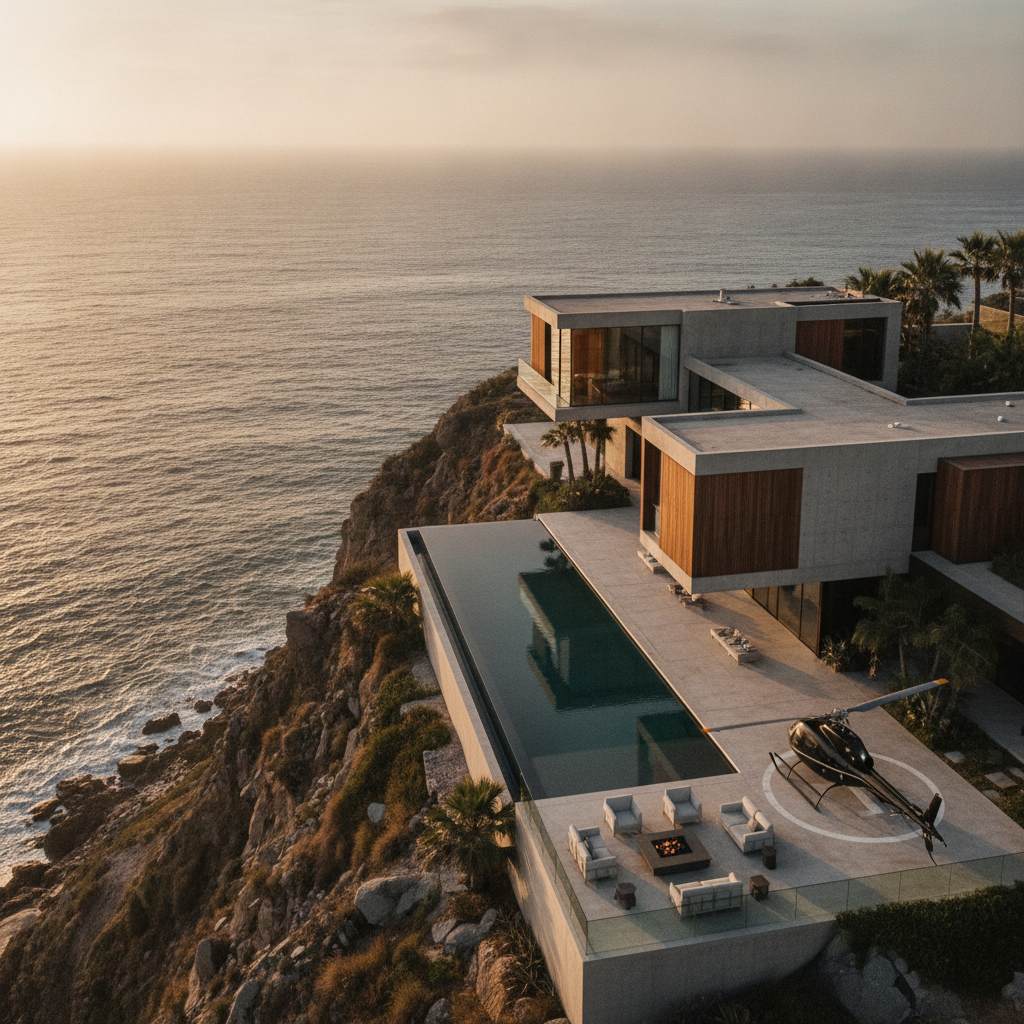
Coastal cliffside architectural retreats command some of the highest ADRs in the global market. Properties in California's Big Sur corridor, Portugal's Alentejo coast, and New Zealand's South Island are notable benchmarks.
Desert and high-plain settings
The American Southwest, Patagonia, and parts of Morocco have seen a wave of sculptural, sun-responsive architectural retreats whose visual drama photographs powerfully and supports premium positioning.
The Lookout Towers maintains relationships across multiple regions and actively curates investment-grade architectural retreats for sale with verified operating data and design provenance.
Comparing Architectural Retreats to Adjacent Asset Classes
| Asset Class | Typical Yield | Lifestyle Use | Liquidity | Scarcity Premium |
|---|---|---|---|---|
| Architectural Retreats for Sale | 6–12% | High | Moderate | Very High |
| Branded Residences | 3–6% | High | High | Moderate |
| Conventional Luxury Second Homes | 1–3% | High | Moderate | Low |
| Boutique Hotels (20+ keys) | 5–9% | Low | Moderate | Moderate |
| STR Investment Cabins | 4–8% | Moderate | High | Low |
Architectural retreats consistently sit in the upper quadrant for both yield and scarcity premium, which is why sophisticated investors increasingly include them in luxury real estate portfolios.
The Lookout Towers Approach to Architectural Retreats for Sale
The Lookout Towers occupies a deliberate position at the intersection of architecture, hospitality, and real estate. Every property in our portfolio is selected against a strict design and performance filter: signature vertical architecture, site-specific integration, hospitality-grade operations, and clear narrative identity.
For buyers, this means access to architectural retreats for sale that have been vetted not only as real estate but as operating businesses with demonstrable guest demand. For investors, it means transparency on trailing performance, occupancy benchmarks, and brand metrics. For lifestyle owners, it means joining a collection of properties whose collective brand strengthens the value of each individual asset.
The collection includes standalone tower retreats, small clusters operated as micro-resorts, and select branded ownership opportunities. Buyers can engage with the portfolio through outright purchase, fractional structures, or managed-rental participation. To explore current acquisition opportunities, visit the Lookout Towers acquisitions team directly.
"The most valuable architectural retreats are those where the building, the site, and the brand reinforce each other — creating an asset that cannot be replicated even with unlimited capital."
Trends Shaping the Next Five Years
Several structural shifts will define how architectural retreats for sale perform over the coming five years:
- Wellness integration: Sauna, cold plunge, breathwork, and forest-bathing infrastructure are becoming standard expectations rather than premium add-ons.
- Off-grid sophistication: Buyers increasingly value energy independence — solar, battery storage, water capture — paired with high-speed connectivity.
- Editorial scarcity: Properties with verified design provenance and PR footprints will pull further ahead of generic luxury cabins.
- Branded micro-collections: Small portfolios of 5–20 properties under a unified brand will outcompete one-off retreats on distribution and resale.
- Fractional and co-ownership: Equity-style fractional structures will lower the entry threshold for design-forward retreats and expand the buyer pool.
Frequently Asked Questions
What makes architectural retreats for sale different from luxury vacation homes?
Architectural retreats are designed specifically to deliver an experiential and hospitality-grade stay, with site-specific architecture, hospitality systems, and operational design built in. Luxury vacation homes prioritize private residential comfort and rarely command the same nightly rate premiums or brand-driven resale value.
How much income can an architectural retreat realistically generate?
Top-performing architectural retreats can generate annual gross revenue of $180,000 to $650,000 per unit, depending on location, key count, brand visibility, and operating model. Net yields typically range from 6% to 12% after management and capex reserves.
Can I use an architectural retreat personally while renting it out?
Yes. Most ownership structures allow flexible owner-use windows alongside managed rental programs. The Lookout Towers offers structures specifically designed to balance personal use with revenue performance.
What financing options exist for architectural retreats for sale?
Financing varies by structure. Standalone retreats often qualify for second-home or investment-property loans, while multi-unit operational retreats are typically financed as hospitality assets through commercial lenders, SBA programs, or private credit.
How long does it take to acquire and operationalize an architectural retreat?
For operational retreats, closing typically takes 60–120 days, with continued operation through transition. For pre-operational or under-construction properties, the timeline extends to 9–18 months depending on permitting, build phase, and brand onboarding.
Conclusion: A Defining Moment for Architectural Retreats
The market for architectural retreats for sale is no longer experimental — it is one of the most disciplined and rewarding niches in luxury real estate. The convergence of design-led hospitality, experience economics, and investor demand for resilient yield has created a window in which buyers can acquire genuinely scarce assets with both lifestyle and financial upside.
For affluent individuals and investors who want a luxury asset that performs — emotionally and economically — architectural retreats represent a category where scarcity, design, and hospitality combine into something far greater than the sum of their parts.
The Lookout Towers is built precisely for this moment. To discuss current architectural retreats for sale, request a portfolio brief, or arrange a private viewing, connect with our team at thelookouttowers.com and begin exploring an asset class designed for the way luxury is lived today.