Best Sugar Free Energy Gummies: Complete 2026 Buyer's Guide
October 18, 2026 · 13 min read
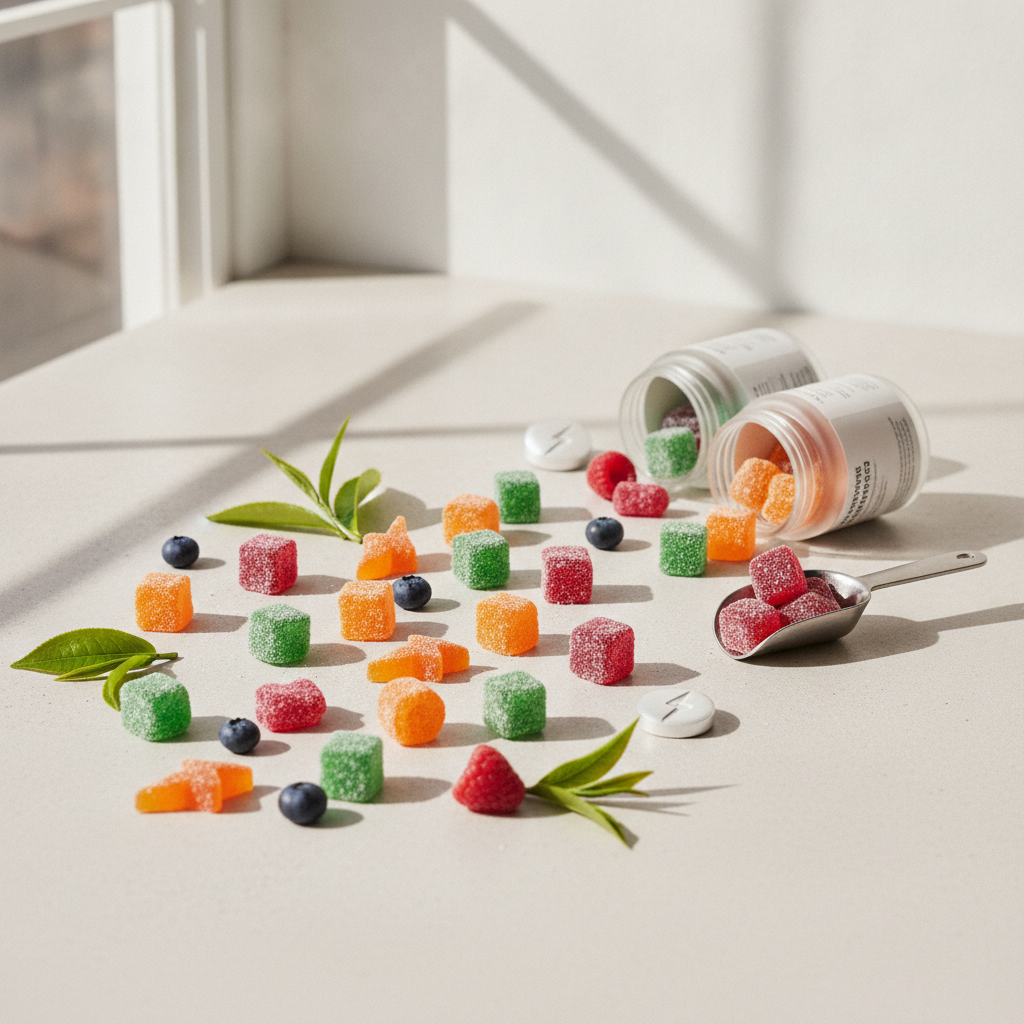
If you're scrolling through supplement aisles or online marketplaces trying to find the best sugar free energy gummies, you're not alone. Active professionals, students, and fitness-minded consumers are increasingly swapping sugary energy drinks and syrupy shots for portion-controlled, zero-sugar alternatives that deliver a clean lift without the glucose spike. This guide breaks down exactly what separates the best sugar free energy gummies from the rest of the pack, how much caffeine you should actually look for, and how to use them strategically so you get steady energy instead of a jittery spike-and-crash cycle.
TL;DR — The Bottom Line
The best sugar free energy gummies combine a moderate, clearly labeled caffeine dose (ideally 40–80 mg per serving), zero added sugar, transparent sourcing, and a fast-dissolving format suited for work, commuting, or workouts. Avoid products that hide caffeine amounts, stack multiple stimulants without disclosure, or rely on sugar alcohols that cause digestive discomfort. Look for brands — like SpeedLabs — that publish full ingredient panels and dosing guidance rather than vague "all-day energy" claims.
Quick Facts
- Market size (2025): $315.5 million globally, projected to reach $535.5 million by 2032 (7.85% CAGR)
- Natural caffeine share: 56.6% of the 2025 energy-gummies market, vs. 30.46% synthetic caffeine
- Recommended caffeine range: 40–80 mg per serving for most adults
- Online retail share: 46.6% of category distribution in 2025
- Competitor caffeine range: approximately 40 mg to 125 mg per piece across the gum and gummy category
What Are the Best Sugar Free Energy Gummies, Exactly?
Before comparing products, it helps to define the category clearly. Not every "energy gummy" on a shelf is created equal — some are glorified vitamin gummies with a trace of caffeine, while others pack as much stimulant as a strong cup of coffee into a single chew.
The best sugar free energy gummies distinguish themselves through three things: a disclosed caffeine dose per piece, a sugar-free sweetening system that doesn't trigger bloating or digestive upset, and a format that's fast enough to matter before a meeting, a workout, or a long commute. Unlike energy drinks that require refrigeration or water, gummies are shelf-stable, discreet, and easy to dose precisely — one or two pieces, rather than guessing how much of a 16-ounce can you actually need.
The category itself is growing quickly. The global energy-gummies market was estimated at $315.5 million in 2025 and is projected to reach $535.5 million by 2032, reflecting a 7.85% compound annual growth rate, according to a 2025 market research estimate.[1] That growth is being driven largely by consumers who want functional nutrition in a format that doesn't feel like "taking medicine."

Why Choose Sugar-Free Over Traditional Energy Products?
Traditional energy drinks, shots, and candies often rely on 20–50 grams of added sugar per serving to mask the bitterness of caffeine and taurine. That sugar load contributes to the rapid "crash" people associate with energy products — not necessarily the caffeine itself. The best sugar free energy gummies solve this by separating the stimulant effect from the sugar spike entirely.
This matters most for people who consume energy products daily. A professional who drinks two sugary energy drinks a day can unknowingly add 300–400 empty calories and 60–100 grams of sugar to their diet every single day — well above the American Heart Association's recommended daily added-sugar limit for most adults. Swapping to the best sugar free energy gummies removes that sugar burden while keeping the functional benefit of caffeine intact.
Yes — the energizing effect comes from the caffeine (or other stimulants) in the formula, not the sugar. Sugar can create a short-lived mood and glucose lift, but it also contributes to the subsequent crash. A well-formulated sugar-free gummy delivers the same stimulant effect without that added volatility.
It's worth noting that "sugar-free" doesn't automatically mean "calorie-free" or "additive-free." Some products substitute sugar with sugar alcohols like maltitol or sorbitol, which can cause bloating or a laxative effect in sensitive individuals when consumed in larger amounts. The best sugar free energy gummies typically use alternatives such as allulose, stevia, or monk fruit, which tend to be better tolerated.
What Makes the Best Sugar Free Energy Gummies? Key Criteria
Not all stimulant gummies are formulated with the same rigor. When evaluating options, we recommend judging products against six criteria that matter most for active professionals and fitness-focused consumers.
| Criterion | What to Look For |
|---|---|
| Caffeine dose | A moderate serving, ideally 40–80 mg, with a clearly labeled maximum daily intake |
| Sugar content | 0 g added sugar, with total carbohydrates and sweetener type disclosed |
| Onset speed | Fast-dissolving, chewable texture designed for quick absorption before work or exercise |
| Energy profile | Caffeine paired with sensible, evidence-based ingredients — not vague "sustained energy" marketing |
| Tolerability | Minimal use of sugar alcohols or stacked stimulants that can cause GI discomfort or jitters |
| Transparency | Full disclosure of caffeine source, dose per gummy, serving size, allergens, and testing standards |
Products with very high caffeine loads — some competitor chews reach 100–125 mg per piece — may appeal to performance athletes, but they also raise the risk of overconsumption, since it's easy to eat "just one more" gummy without realizing how much caffeine has stacked up. This is one reason the best sugar free energy gummies are often formulated in the 40–80 mg range: potent enough to notice, but far less likely to cause overstimulation than a 125 mg dose.

How Much Caffeine Should Be in Sugar Free Energy Gummies?
This is one of the most common questions we hear, and the honest answer is: it depends on your tolerance, body weight, and how much caffeine you already consume from coffee, tea, or soda. That said, general guidance can help you set expectations.
The U.S. Food and Drug Administration has cited up to 400 mg of caffeine per day as generally not associated with adverse effects for most healthy adults. For a single serving of the best sugar free energy gummies, a dose in the 40–80 mg range — roughly equivalent to half a cup to a full cup of brewed coffee — tends to provide noticeable alertness without pushing people toward jitteriness, especially when paired with other caffeinated beverages throughout the day.
For comparison, the competitive landscape spans a wide range: some caffeine gum and chew products deliver as little as 40 mg per piece (such as nootropic-focused brands combining caffeine with L-theanine), while others offer 100–125 mg per piece aimed at endurance athletes or military-style performance use. The best sugar free energy gummies for everyday professional use typically land closer to the lower-to-moderate end of that spectrum, allowing for flexible dosing — one gummy for a light boost, two for a stronger effect — rather than forcing every user into a single high dose.
This depends entirely on the caffeine per gummy and your total daily caffeine intake from all sources. If each gummy contains 40 mg of caffeine, staying under roughly 4–6 gummies (160–240 mg) across a day, combined with any coffee or tea, generally keeps most healthy adults under commonly cited caffeine guidance. Always check the product label for a specific maximum serving recommendation.
It's also worth noting that caffeine source doesn't change its pharmacological effect. Whether caffeine comes from green coffee beans, green tea extract, guarana, or a synthetic source, the body metabolizes it similarly. A product labeled "natural caffeine" is not automatically gentler or safer — total milligrams per serving is what matters most, which is why the best sugar free energy gummies disclose this number clearly on the front of the label, not buried in fine print.
Best Sugar Free Energy Gummies vs. Other Energy Formats
Gummies aren't the only portable energy format on the market. Understanding how they compare to gum, drinks, and capsules helps clarify when they make the most sense.
| Format | Typical Caffeine | Pros | Considerations |
|---|---|---|---|
| Sugar-free energy gummies | 40–80 mg | Portion-controlled, discreet, no water needed, no added sugar | Slower onset than liquids; dose varies by brand |
| Energy gum/mints | 40–125 mg | Very fast buccal absorption, no swallowing required | Texture and taste less approachable for some users |
| Energy drinks | 80–300 mg | Fast, familiar format | Often high in added sugar and calories unless labeled sugar-free |
| Caffeine capsules | 100–200 mg | Precise dosing, no taste | Slower onset; harder to split doses mid-day |
For professionals who want a middle ground — faster and more controlled than coffee, but gentler than high-dose gum or energy drinks — the best sugar free energy gummies occupy a useful niche. They're easy to carry in a bag or desk drawer, don't require refrigeration, and allow for incremental dosing throughout the day rather than one large stimulant hit.
How to Choose and Use the Best Sugar Free Energy Gummies
Selecting a product is only half the equation — how and when you use sugar-free energy gummies significantly affects whether you get steady energy or an unwanted crash. Here's a practical approach.

- Check the caffeine-per-gummy first. Before looking at flavor or packaging, find the milligram count per serving. If it isn't clearly listed, treat that as a red flag.
- Calculate your total daily caffeine load. Add up coffee, tea, soda, and any other stimulant products you already consume before adding gummies into the mix.
- Start with a single gummy. Even if the label allows two, assess your personal tolerance with one serving first, especially the first time you try a new brand.
- Time it strategically. Take gummies 20–30 minutes before the activity requiring focus or energy — a work block, a workout, or a commute — rather than reactively after fatigue has already set in.
- Avoid late-day use. Caffeine has a half-life of roughly 5 hours in most adults, so consuming gummies after mid-afternoon can interfere with sleep quality.
- Pair with hydration and a light snack if needed. This can reduce the chance of stomach discomfort, particularly on an empty stomach.
Following this sequence helps ensure that even the best sugar free energy gummies on the market are used in a way that supports steady energy rather than overstimulation. SpeedLabs designs its formulations around this exact use case: moderate, disclosed dosing that fits into a professional's actual daily rhythm rather than a one-size-fits-all mega-dose. You can review current formulations and dosing guidance directly on the SpeedLabs homepage.
Common Myths About Sugar Free Energy Gummies
As the category grows, misinformation tends to grow with it. Here are two of the most persistent misconceptions worth addressing directly.
Another common myth is that more caffeine always equals more energy. In reality, once caffeine intake exceeds an individual's tolerance threshold, additional milligrams tend to produce diminishing returns on alertness while increasing the likelihood of jitteriness, anxiety, or a harder crash later. This is a core reason the best sugar free energy gummies are formulated around moderate, repeatable doses rather than maximum stimulant loads.
Competitor products illustrate this range well: nootropic-focused gum brands tend to use around 40 mg of caffeine paired with L-theanine for smoother focus, mid-tier fitness gums sit around 50–60 mg, and high-stimulant military or endurance-focused products reach 100–125 mg per piece.[2] The best sugar free energy gummies for daily professional use generally sit in the moderate zone, prioritizing consistency over intensity.
Frequently Asked Questions
What are the best sugar free energy gummies for daily use?
The best sugar free energy gummies for daily use typically contain 40–80 mg of caffeine per serving, zero added sugar, and clearly disclosed ingredients. This moderate dosing range supports consistent energy without the overstimulation risk associated with higher-caffeine products.
Do sugar free energy gummies cause a crash like energy drinks do?
Much of the "crash" associated with traditional energy drinks comes from the rapid rise and fall of blood sugar after a high-sugar dose, not caffeine alone. Because the best sugar free energy gummies contain no added sugar, many users report a steadier energy experience, though caffeine sensitivity still varies by individual.
How much caffeine is in a typical sugar free energy gummy?
Caffeine content varies widely across the category, from roughly 40 mg to over 100 mg per piece. The best sugar free energy gummies generally fall in the 40–80 mg range per serving, which approximates half a cup to a full cup of brewed coffee.
Are sugar free energy gummies safe to take every day?
For most healthy adults, moderate daily caffeine intake — generally cited as up to 400 mg per day by the FDA — is not associated with adverse effects. However, individuals who are pregnant, caffeine-sensitive, or managing certain health conditions should consult a healthcare provider before making sugar-free energy gummies a daily habit.
What ingredients should I avoid in sugar free energy gummies?
Watch for undisclosed caffeine amounts, excessive sugar alcohols (which can cause digestive discomfort in larger servings), and products that stack multiple unlabeled stimulants. The best sugar free energy gummies list total caffeine per serving, sweetener type, and any additional active ingredients clearly on the packaging.
Final Thoughts: Finding the Best Sugar Free Energy Gummies for Your Routine
The sugar-free energy gummy category is still maturing, which means label transparency matters more than brand hype. The best sugar free energy gummies will always disclose exact caffeine content, avoid vague "all-day energy" promises, use well-tolerated sweeteners, and offer flexible dosing for different needs — a lighter option for routine focus and a stronger option for demanding workouts or long workdays.
As the global market moves toward $535.5 million by 2032, more brands will enter this space, and not all of them will prioritize transparency the way they should.[1] Before choosing a product, compare the caffeine-per-serving, check for added sugar, and consider how the dose fits into your overall daily intake from coffee, tea, and other sources.
SpeedLabs formulates its gummies around moderate, clearly labeled caffeine doses designed for real working schedules — not extreme stimulant loads. If you're ready to try a cleaner approach to portable energy, explore the full lineup on the SpeedLabs website and find the serving size that matches your day.