Coffee Flavor Profiles Explained: The Complete Guide
May 15, 2026 · 13 min read
TL;DR — The Bottom Line
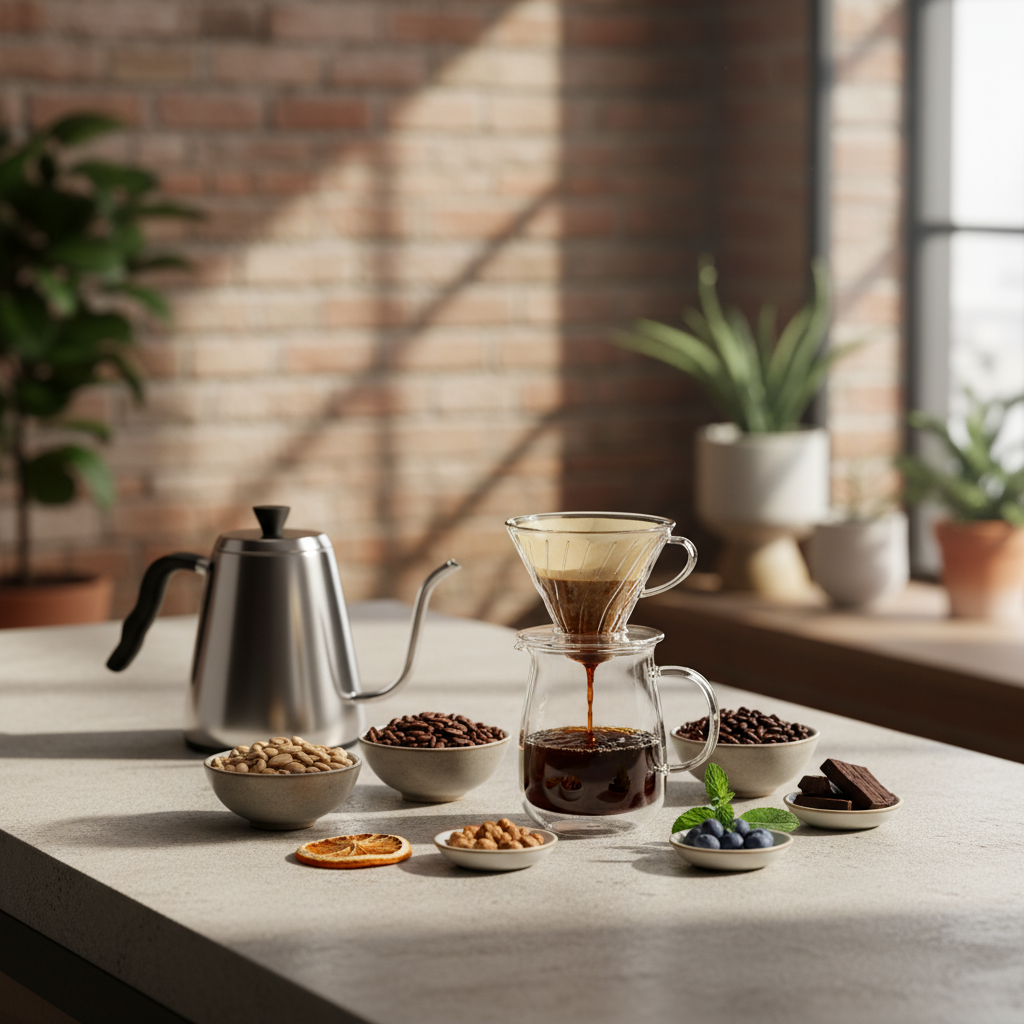
Coffee flavor profiles explained simply: every cup's taste is shaped by origin, altitude, processing method, roast level, and brew technique working together. African coffees tend toward bright, fruity, and floral notes; Latin American coffees deliver balanced sweetness and nuts; Asian coffees offer earthy, full-bodied depth. Understanding these dimensions helps you order smarter, brew better, and appreciate the craft behind every single cup.
Quick Facts
- Primary flavor dimensions: Aroma, Flavor, Acidity, Body, Sweetness, Aftertaste
- SCA Flavor Wheel categories: Over 110 distinct flavor descriptors recognized
- Altitude impact: Coffees grown above 1,500m typically develop denser sweetness and brighter acidity
- Processing methods: 3 main types — Washed, Natural, and Honey — each producing distinct flavor results
- Roast range: Light, Medium, Medium-Dark, and Dark roasts each amplify different flavor compounds
- Top producing regions: Ethiopia, Colombia, Brazil, Guatemala, Sumatra, and Costa Rica dominate specialty coffee
If you've ever stood at a café counter staring at a menu that says "notes of blueberry, jasmine, and brown sugar" and wondered what any of that actually means — you're not alone. Getting coffee flavor profiles explained in plain, accessible language is one of the most useful things a coffee lover can do. At Slow Street Coffee, we believe that understanding what's in your cup transforms coffee from a morning ritual into a genuine sensory experience. This guide breaks down everything: the science behind taste, how growing regions shape flavor, what roast levels do, and how you can start identifying flavors in your own cup — no formal training required.
What a Coffee Flavor Profile Actually Is
Getting coffee flavor profiles explained starts with understanding that coffee is not a single note — it's a chord. Professional tasters (called Q Graders) and the Specialty Coffee Association (SCA) break flavor down into several distinct sensory dimensions, each contributing something different to the overall impression of the cup.
The Six Core Sensory Dimensions
- Aroma — What you perceive before the coffee even touches your lips. Aromas can be floral (jasmine, rose), fruity (berry, citrus), nutty (almond, hazelnut), or roasty (dark chocolate, toast).
- Flavor — The combination of taste and retronasal aroma experienced while drinking. This is the broadest category and includes fruit, spice, caramel, and hundreds of other descriptors.
- Acidity — Not sourness, but brightness. Well-developed acidity in specialty coffee feels lively and pleasant, like a crisp green apple or soft stone fruit. Poor acidity feels sharp or vinegary.
- Body — The weight and texture of coffee in your mouth. A light-bodied coffee feels more like tea; a full-bodied one feels thick, creamy, or syrupy.
- Sweetness — Natural sugar-like pleasantness, ranging from honeyed and floral to brown sugar and molasses. Sweetness balances acidity and bitterness.
- Aftertaste (Finish) — The flavor that lingers after you swallow. A long, clean, pleasant finish is a hallmark of high-quality coffee.
The SCA's famous Flavor Wheel, developed in collaboration with World Coffee Research, maps over 110 flavor descriptors across these sensory categories. It's the industry standard for discussing coffee flavor profiles explained at every level, from producer to barista to curious consumer. If you want to go deeper on what makes a coffee qualify as specialty grade in the first place, our guide on what makes coffee specialty grade covers the full scoring system in detail.
Not at all — and this is one of the most common misconceptions in coffee. In specialty coffee, acidity refers to a positive, bright, lively quality that makes the coffee taste vibrant and complex. It's a perception of liveliness on the palate, not a harsh chemical experience. Think of the pleasant tartness in a ripe strawberry versus the sharp sting of vinegar — both are acidic, but only one is enjoyable. Great specialty coffees from Ethiopia or Kenya are celebrated precisely for their vivid, expressive acidity.
The Core Drivers Behind Every Coffee Flavor Profile
Understanding coffee flavor profiles explained means following the coffee from seed to cup and recognizing where the flavor comes from at each stage. Five major factors shape what ends up in your glass: origin, altitude, variety, processing, and roast.
Origin and Growing Region
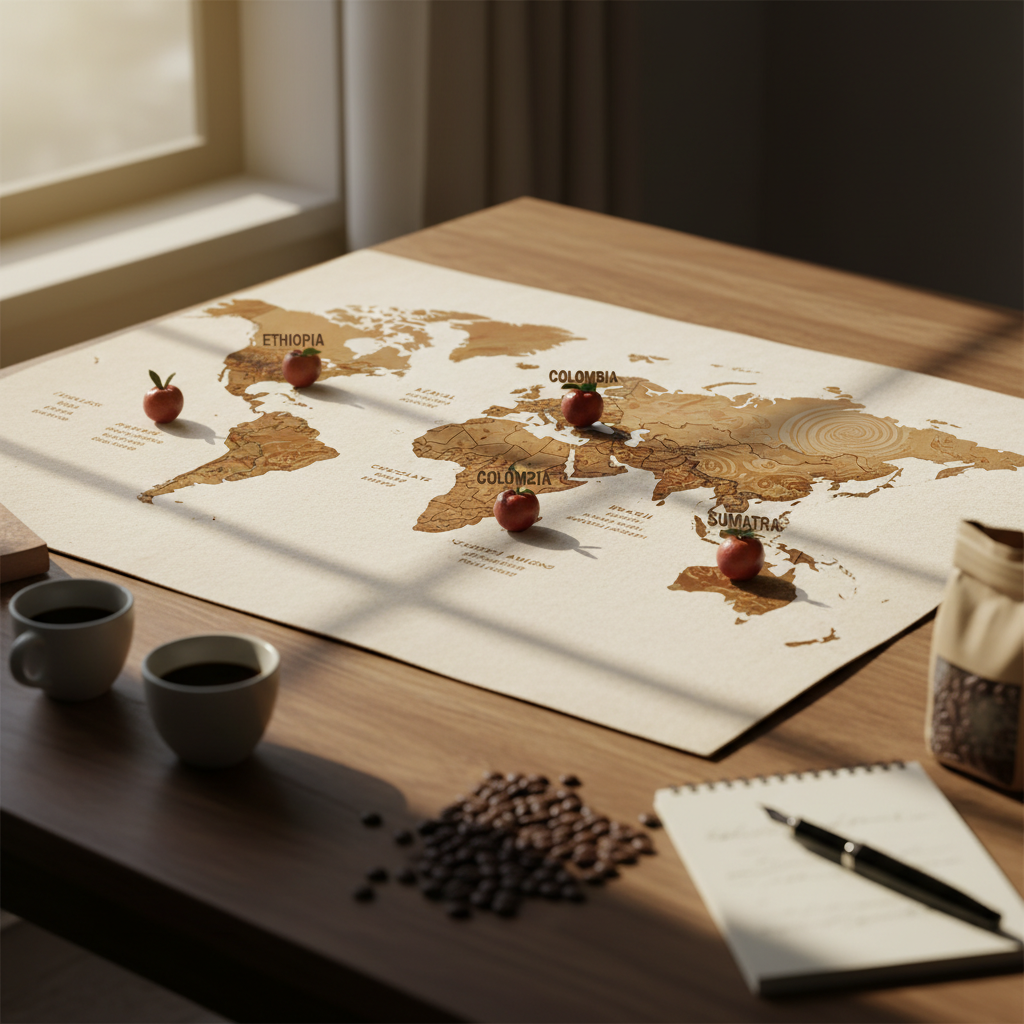
Geography is destiny in coffee. Different regions of the world produce dramatically different flavor signatures, largely due to climate, soil composition, and traditional farming practices. Here's how the major producing regions break down:
- Africa (Ethiopia, Kenya): Bright, fragrant, fruity, and often floral. Ethiopian coffees commonly show blueberry, jasmine, and bergamot. Kenyan coffees lean toward blackcurrant, tomato, and sharp citrus. Acidity is typically medium to high, and the flavor is expressive and complex.
- Central America (Costa Rica, Guatemala, Honduras): Clean, balanced, and approachable. Expect citrus, stone fruit, and gentle sweetness with medium to high acidity. Costa Rican coffees often showcase bright apple or peach notes; Guatemalan coffees can develop deeper chocolate and spice complexity at higher altitudes.
- South America (Brazil, Colombia, Peru): Brazil is the world's largest producer and tends toward full body, low acidity, and flavors of milk chocolate, peanut, and caramel — excellent for espresso blends. Colombia produces well-balanced cups with mild sweetness, some nuttiness, and gentle fruit. Peruvian coffees are smooth, mild, and approachable with soft floral or honey notes.
- Asia/Pacific (Sumatra, Java, Papua New Guinea): Earthy, spicy, and full-bodied. Sumatran coffees are famously syrupy with notes of dark chocolate, cedar, and herbs. Low acidity and a heavy mouthfeel define the profile — very different from African or Latin American coffees, but deeply satisfying in their own right.
Altitude
Research suggests altitude is one of the single most reliable predictors of cup quality. At higher elevations — typically above 1,500 meters — cooler temperatures slow the coffee cherry's maturation, allowing sugars to develop more fully and creating denser, more complex beans. The result: brighter acidity, more aromatic complexity, and a richer sweetness. Coffees grown at lower altitudes tend to be smoother and less complex, with more straightforward chocolate and nutty notes.
Coffee Variety (Cultivar)
Just like wine grapes, different coffee varieties have distinct genetic flavor tendencies. Geisha (or Gesha) is famous for its extraordinary floral and tea-like delicacy. Bourbon and Typica are classic heirloom varieties with balanced sweetness. Ethiopian heirloom landraces — grown from wild-origin genetic stock — are responsible for some of the most complex and unique flavor profiles in the world. Studies have shown that variety interacts heavily with climate and processing, meaning the same cultivar can taste entirely different depending on where and how it's grown.
How Processing Methods Shape Coffee Flavor Profiles
One of the most dramatic — and often least understood — contributors to coffee flavor profiles explained is the processing method: what happens to the coffee cherry after it's harvested. The same beans from the same farm can taste completely different depending on how they're processed.
Washed (Wet Process)
The fruit is fully removed from the seed before drying. This produces the clearest, most transparent expression of origin character. Washed coffees tend to be clean, bright, and high in acidity with well-defined fruit and floral notes. If you want to taste what a specific growing region actually tastes like — its terroir — a washed coffee is your best window.
Natural (Dry Process)
The whole coffee cherry dries with the fruit still attached to the seed. As it dries, the fruit's sugars ferment and penetrate the bean, producing intense berry notes, a heavier body, and a sweetness that can border on jammy or even wine-like. Natural process coffees are bold and expressive. They can be polarizing — done well, they're extraordinary; done poorly, they can taste fermented or muddy.
Honey Process
A middle path: some of the fruit's mucilage (the sticky layer between the fruit skin and the bean) is left on during drying. The more mucilage retained (yellow, red, or black honey), the sweeter, more fruit-forward, and heavier-bodied the result. Honey process coffees are often described as having a smooth sweetness with soft fruit character and medium body — beloved by many specialty drinkers for their approachable complexity.
Roast Level and Its Effect on Flavor
Roast level is where many coffee drinkers start their understanding of coffee flavor profiles explained — and it genuinely matters. Heat transforms the chemical composition of the bean through a process called the Maillard reaction and caramelization, creating hundreds of new flavor compounds while breaking down others.
Light Roast
Light roasts (sometimes called "City" or "Cinnamon" roast) preserve the most origin character. You'll taste the coffee's natural sugars and acids clearly — expect floral, fruity, tea-like, or grain-like notes depending on the origin. The body is lighter, the acidity is more pronounced, and the roast flavor itself is minimal. These are the coffees that genuinely taste like blueberry or jasmine — because those compounds are still intact.
Medium Roast
Medium roasts balance origin character with some roast development. Acidity softens slightly, body increases, and sweeter caramel or brown sugar notes begin to emerge. Many drinkers find medium roast coffees the most approachable and versatile — they work beautifully as drip coffee, pour-over, or milk-based drinks.
Medium-Dark and Dark Roast
As beans roast longer, the origin's delicate fruit and floral notes diminish and roast-forward flavors take over: dark chocolate, bittersweet cocoa, toasted nuts, molasses, and smoky or charred notes at the extreme end. Body becomes heavier and creamier, acidity drops significantly, and the bitterness of roasting itself becomes a dominant flavor. These roasts perform beautifully in espresso and milk-based drinks, where their bold character stands up to steamed milk.
If you're new to exploring coffee flavor profiles, a medium roast from a Central or South American origin is an excellent starting point. These coffees offer a balanced, approachable cup — not too acidic, not too roasty — with natural sweetness and gentle complexity. Once you're comfortable there, try a light-roasted Ethiopian coffee to experience fruit and floral notes, then a dark-roasted Sumatran to explore earthy, full-bodied depth. The journey is the point.
Brew Method and Its Role in the Final Cup
Even with the world's best beans and the perfect roast, brew method dramatically shapes how coffee flavor profiles explained manifest in your final cup. Extraction — how much of the bean's soluble compounds end up in your coffee — is controlled by grind size, water temperature, contact time, and brew ratio.
- Pour-Over (V60, Chemex): Clean, bright, and nuanced. The paper filter removes most oils, producing high clarity that lets origin character and acidity shine. Ideal for light and medium roasts from fruity or floral origins.
- French Press: Full-bodied, rich, and textured. No paper filter means coffee oils stay in the cup, increasing perceived body and mouthfeel. Works beautifully with medium-dark and dark roasts.
- Espresso: Concentrated, intense, and layered. High pressure over a short time extracts a wide range of compounds including rich crema. Origin character is compressed but present — a great espresso from an Ethiopian natural process is something else entirely.
- Cold Brew: Smooth, low-acid, and naturally sweet. The extended cold extraction (12–24 hours) produces a mellow cup that softens acidity and highlights chocolate and caramel notes — ideal for darker roasts or full-bodied Latin American coffees.
- AeroPress: Versatile and forgiving. Depending on technique, it can produce espresso-adjacent concentrate or clean, bright cups resembling pour-over. Great for experimenting with flavor development.
Water quality matters too. Research suggests that water with a moderate mineral content (especially magnesium) actually enhances the extraction of sweet and acidic flavor compounds, while very soft or very hard water can flatten or distort the profile. San Francisco's municipal water is relatively soft, which is worth accounting for if you're brewing at home.
How to Taste Coffee Like a Professional
Tasting coffee intentionally is a learnable skill, and getting coffee flavor profiles explained in your own sensory experience is deeply satisfying. Here's a simple framework to start developing your palate:
- Smell it first (dry aroma): Before adding water, smell the ground coffee. What jumps out? Fruit? Chocolate? Flowers? This sets your expectation and primes your palate.
- Smell it again after brewing (wet aroma): The hot water releases different volatile compounds. Notice how the aroma changes.
- Slurp it (seriously): Professional cuppers slurp coffee loudly and deliberately to spray it across the palate. This aerates the liquid and distributes it across all taste receptors simultaneously.
- Identify the basic tastes: Is it sweet? Sour? Bitter? Where do you taste each one — front of tongue, sides, back?
- Look for specific flavors: Does it remind you of a fruit, a nut, a spice, a flower? Don't overthink it — your first instinct is usually meaningful.
- Assess body and texture: Does it feel thin and watery, or thick and coating? Like skim milk or whole cream?
- Notice the finish: After you swallow, what lingers? Is it pleasant? Long or short?
The SCA Flavor Wheel is a helpful visual tool to keep nearby during tasting sessions. Start with broad categories (fruity, nutty, roasty) and work your way inward toward specific descriptors (blackcurrant, hazelnut, dark chocolate). The more coffees you taste intentionally, the faster your vocabulary grows. If you're interested in exploring a variety of flavor profiles from locally roasted beans, our San Francisco coffee subscription box guide is a great way to taste your way through different origins and roast levels from the comfort of home.
Slow Street Coffee's Approach to Flavor and Community
At Slow Street Coffee, our approach to coffee flavor profiles explained is rooted in the belief that great coffee should be approachable — not intimidating. San Francisco is a city of curious, engaged, thoughtful people, and the slow streets movement itself is about slowing down, connecting, and savoring the moment. That philosophy extends directly to how we think about what's in your cup.
We curate our menu with flavor accessibility in mind: we'll always have an approachable, balanced option for someone who just wants a reliable, delicious cup, alongside something more adventurous for the coffee explorer who wants to taste a washed Ethiopian natural or a honey-processed Costa Rican microlot. Our staff are trained not just to pull shots and steam milk, but to speak the language of flavor — so when you ask "what does this taste like?" you get a real, helpful answer, not just "it's smooth."
We also believe strongly in transparency: knowing where your coffee comes from, how it was grown, how it was processed, and who grew it. That context doesn't just make the coffee taste better (though it does) — it creates a relationship between the drinker and the supply chain that makes every cup more meaningful. The specialty coffee industry's focus on traceability and quality is something we're proud to be a part of, right here in our corner of San Francisco.
"The most important thing about understanding a coffee's flavor profile isn't memorizing tasting notes — it's learning to pay attention. Every cup has something to tell you if you're willing to listen."
Frequently Asked Questions About Coffee Flavor Profiles
What does "coffee flavor profile" mean?
A coffee flavor profile is the complete sensory description of a brewed coffee, covering six key dimensions: aroma (what it smells like), flavor (what it tastes like), acidity (its brightness or liveliness), body (its weight and texture in the mouth), sweetness (natural sugar-like qualities), and aftertaste (what lingers after swallowing). Together, these attributes paint a comprehensive picture of what makes one coffee taste different from another.
Why does coffee taste different depending on where it's grown?
Coffee absorbs characteristics from its environment — a concept similar to terroir in wine. Soil mineral content, altitude, rainfall patterns, temperature fluctuations, and local microclimates all influence how the coffee cherry develops and what chemical compounds accumulate in the bean. Ethiopian coffees grown at high altitudes in ancient heirloom genetics taste dramatically different from low-altitude Brazilian coffees grown in tropical conditions — even if both are the same species of plant.
Does roast level change the caffeine content of coffee?
Minimally and not in the way most people assume. Caffeine is a very stable compound that doesn't significantly degrade during roasting. By weight, light and dark roasts contain nearly the same amount of caffeine. However, because dark roast beans are less dense (they expand during roasting), a scoop of dark roast beans by volume may actually yield slightly less caffeine than the same scoop of lighter roast beans. The best way to control caffeine is to control your dose by weight, not by roast level.
What's the difference between washed and natural process coffees?
Washed (or wet process) coffees have the fruit removed before drying, producing clean, bright cups where the bean's natural origin character comes through clearly. Natural (or dry process) coffees dry with the fruit still on, allowing fruit sugars to ferment and infuse the bean — producing intense berry, jammy, or wine-like flavors with heavier body and sweetness. Honey process sits in the middle, leaving some fruit mucilage on during drying for a balance of sweetness and clarity.
How can I start identifying flavors in my coffee at home?
Start by brewing intentionally and tasting without distraction. Smell the coffee before and after brewing. Take a slow, deliberate sip and ask yourself: is it bright or mellow? Heavy or light? Does it remind you of a specific fruit, nut, chocolate, or flower? Keep a simple tasting journal noting origin, roast level, brew method, and your impressions. Over time, you'll build a personal flavor vocabulary and start recognizing patterns — like how Ethiopian coffees tend to taste fruity and floral, while Brazilian coffees taste chocolatey and smooth.
Conclusion: Your Cup Has a Story to Tell
Getting coffee flavor profiles explained isn't about becoming a coffee snob — it's about becoming a more engaged, more curious, more satisfied coffee drinker. Every cup that crosses the counter at Slow Street Coffee carries a story in its flavor: the altitude where the cherry ripened, the hands that picked and processed it, the roaster who developed it to showcase its best qualities, and the barista who dialed in the extraction to make it sing in your cup.
Whether you're drawn to the bright, berry-laden complexity of a washed Ethiopian, the smooth chocolatey comfort of a Brazilian natural, or the adventurous earthiness of a Sumatran single origin, there's a whole world of flavor waiting to be explored. The language of coffee flavor profiles explained here is your key to navigating it.
Come in, ask questions, taste something new, and let us help you find your perfect cup. That's what we're here for — one slow, intentional sip at a time.
Ready to explore flavor in your own home setup? Visit Slow Street Coffee to learn about our current single-origin offerings, seasonal roasts, and how to find us in San Francisco's slow streets community.