What Is a Duvet vs Comforter? The Real Difference Explained
August 19, 2026 · 13 min read
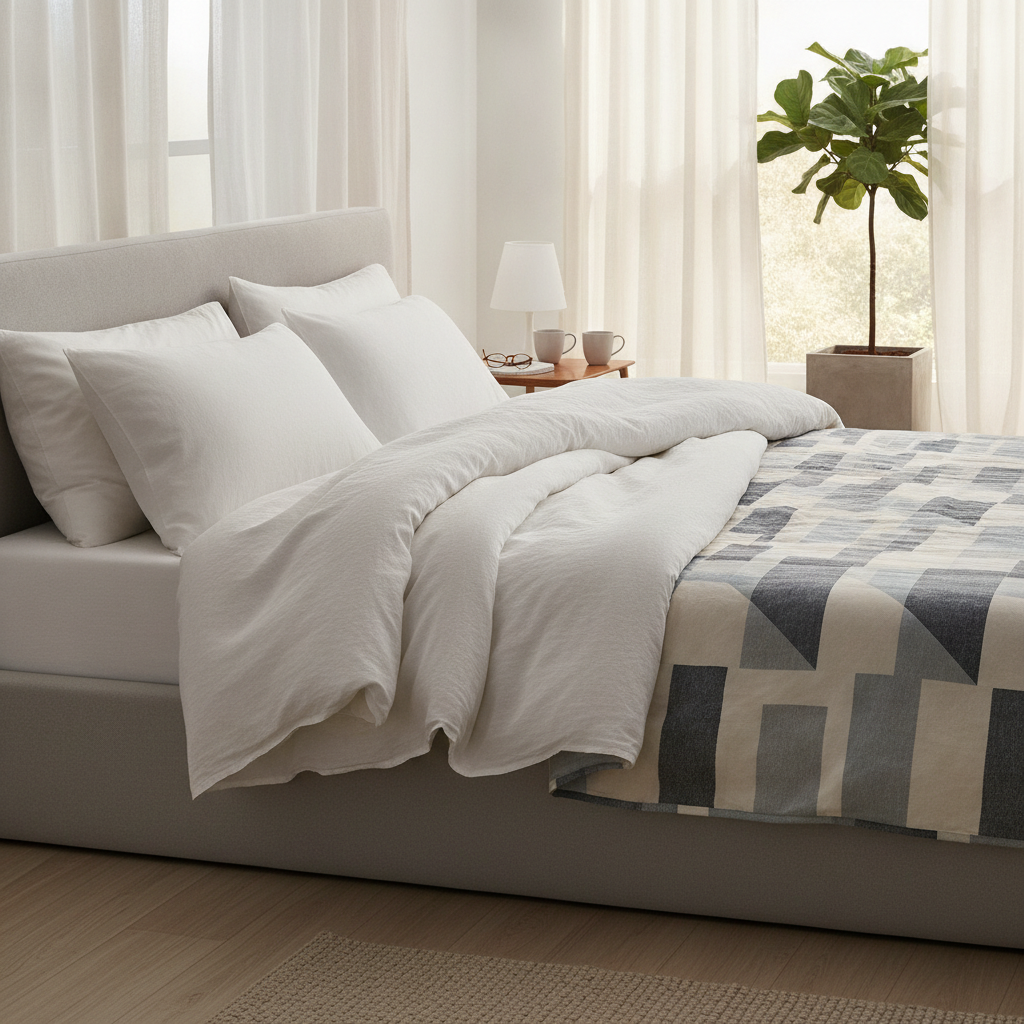
What is a duvet vs comforter? In short, a duvet is a two-piece bedding system made up of a plain insert and a removable, washable cover, while a comforter is a single quilted blanket used exactly as it comes off the shelf. That structural difference, one piece versus two, is the root of nearly every other distinction between them, from how they feel to how they're cleaned to how well they resist shifting and bunching in the middle of the night.
For homeowners who've spent years wrestling a lumpy comforter back into place at 2 a.m., or shoving an insert into a cover like it's a pillowcase fight, the duvet vs comforter question isn't academic. It's about whether your bedding actually stays put, stays clean, and stays comfortable night after night. This guide breaks down exactly what is a duvet vs comforter in practical terms, so you can choose the system that fits your household, not just your décor.
TL;DR, The Bottom Line
A duvet is an insert plus a removable, washable cover; a comforter is one sewn-together blanket. Duvets offer more style flexibility and easier spot-cleaning (you wash the cover, not the whole insert), while comforters offer simplicity and no assembly. The real-world dealbreaker for many homeowners is shifting and bunching, which affects both, but duvets with reinforced attachment points and comforters with tight baffle-box stitching hold up best over time.
What Is a Duvet vs Comforter? The Core Definitions
Understanding what is a duvet vs comforter starts with construction, not fabric or fill. A duvet is technically two separate products working together: an insert (the insulating layer) and a cover (the decorative, protective shell). A comforter, by contrast, is manufactured as a single finished item, shell fabric and fill quilted together in one step, ready to use straight out of the packaging.
This two-piece design is why hotels and design-forward homeowners gravitate toward duvets: you can change the entire look of a bedroom by swapping the cover, without ever replacing the insulating core. A comforter offers no such flexibility, the pattern, color, and quilting you buy is the pattern, color, and quilting you're stuck with until you replace the whole thing.
Quick Facts
- Duvet structure: Two-piece system (insert + removable cover)
- Comforter structure: Single quilted piece, shell and fill sewn together
- Primary duvet advantage: Only the cover needs frequent washing
- Primary comforter advantage: No assembly, ready to use immediately
- Common failure point (both): Fill shifting and bunching over time without reinforced stitching or attachment points
- Typical duvet weight vs comforter: Duvets run thicker and loftier; comforters are usually lighter for the same size
Duvet vs Comforter: How Each One Is Built
Once you understand what is a duvet vs comforter at the construction level, the functional differences make more sense. A duvet insert is typically boxier and loftier, built to trap air and insulate on its own, it's rarely designed to be attractive, since it's meant to live inside a cover. The cover itself closes with buttons, a zipper, snaps, or ties along one or more edges, similar to a giant pillowcase.
A comforter's shell fabric is stitched directly through the fill in a channel, box, or baffle-box pattern. This quilting is doing double duty: it's both the visual design and the mechanism holding the fill in place. There's no cover to remove, which means the comforter itself takes all the wear from sheets, bodies, and regular use.
| Feature | Duvet | Comforter |
|---|---|---|
| Pieces involved | Insert + separate cover | One sewn piece |
| Styling flexibility | High, swap covers anytime | Low, fixed design |
| Assembly required | Yes, insert into cover | No |
| Washing the whole thing | Rarely necessary | Required periodically |
| Typical warmth | Thicker, loftier | Lighter, more evenly flat |
| Shifting risk | Insert can migrate inside cover without ties | Fill can clump within quilted channels |

Technically yes, but it defeats the purpose. Duvet inserts are usually plain white or cream and lack the decorative finishing of a comforter, and using one uncovered exposes it to dirt and oils that would otherwise be caught by a washable cover.
Warmth, Fill, and Feel: Which Keeps You Cozier?
Both duvets and comforters can be filled with the same materials, down, down alternative, synthetic microfiber, or cotton batting, so fill type alone doesn't answer what is a duvet vs comforter when it comes to warmth. Instead, it's the construction that changes the feel. Duvet inserts are generally cut thicker and loftier, giving them a plush, cocoon-like drape that many people describe as feeling heavier and warmer, even at the same fill weight as a comforter.
Comforters tend to be quilted more tightly and evenly, which produces a flatter, smoother profile. That can be an advantage in warmer climates or for people who dislike the heavier, enveloping feel of a duvet, but it also means comforters sometimes struggle to match a duvet's warmth-to-weight ratio.
Care and Cleaning: What Is a Duvet vs Comforter When It's Time to Wash?
This is where the practical answer to what is a duvet vs comforter really matters for busy households. With a duvet, you strip the cover the way you'd strip a pillowcase and toss it in with your regular laundry. The insert itself, the bulky, hard-to-dry part, stays largely untouched, needing a deep wash only occasionally, since the cover is absorbing daily contact with skin, oils, and dust.
A comforter offers no such shortcut. Because it's one piece, the entire thing has to go into the wash (often a large-capacity or commercial machine, since home washers can struggle with king-size comforters), and drying can take multiple cycles to avoid trapped moisture and mildew. Many owners quietly wash comforters far less often than recommended simply because of the hassle, a real hygiene tradeoff that's rarely advertised.
Duvet covers should be washed every one to two weeks, similar to sheets, since they're the layer in direct contact with your body. Comforters, lacking a removable layer, typically only need washing every one to three months, but because the process is more cumbersome, they're often washed less frequently than that in practice.
Sierra Dreams was built partly around solving this exact friction point. If you want bedding designed for effortless changes without the wrestling match of stuffing an insert into a cover, it's worth exploring the systems available at Sierra Dreams.
The Real Sleep Frustration: Shifting, Bunching, and Cold Spots
Ask any homeowner who's owned both, and the shifting-and-bunching problem, not fill type, not thread count, is usually the deciding factor in how they feel about their bedding. Understanding what is a duvet vs comforter in this context means looking past marketing copy and into how each system behaves after weeks of actual use.
In a duvet, the insert sits loose inside the cover. If the cover only has a few corner ties, or none at all, the insert can slide, twist, or bunch into one corner overnight, leaving cold, thin patches everywhere else. This is the single most common complaint about duvet systems, and it's why more attachment points, ties, loops, or snap systems along multiple edges, not just the corners, make such a measurable difference in stability.
Comforters have their own version of the same problem. Because there's no cover buffering movement, comforters can slide across smooth sheets, especially on beds without a footboard or with a slippery duvet-style top sheet. Internally, the quilting stitches are the only thing preventing fill migration; over repeated wash cycles, that stitching can loosen, letting fill clump into lumps and leaving bald, cold spots behind.

Quotable takeaway: Shifting and bunching are rarely about fill quality, they're almost always about how (and how many places) the insert or fill is anchored in place.
This typically happens when a duvet cover has only two or four corner ties instead of a full perimeter of attachment points. Without enough anchors, gravity and movement during sleep gradually pull the insert toward one end of the cover, especially over a bunched-up night's sleep.
Which One Should You Choose? Duvet vs Comforter by Lifestyle
There's no universally "better" answer to what is a duvet vs comforter, the right choice depends on how you actually live and sleep. A few practical scenarios:


- You redecorate often or love seasonal refreshes: A duvet lets you change the entire bedroom look by swapping just the cover, without buying new insulation every time.
- You want zero assembly and grab-and-go simplicity: A comforter, often sold in a coordinated set with shams, is ready to use the moment it's unpackaged.
- You have allergies or sensitive skin: A duvet's washable cover means the layer touching your face gets cleaned far more often than a comforter typically does.
- You share a bed and fight over covers at night: Look closely at attachment systems in either category, a duvet with only corner ties or a comforter with loose quilting will both shift under two people moving independently.
- You live somewhere with big seasonal temperature swings: A duvet system lets you keep one cover and switch inserts (lightweight in summer, heavier in winter) without buying entirely new bedding sets.
A Simple Decision Checklist
- Assess your laundry setup. If you don't have a large-capacity washer/dryer, a duvet's separate, lighter cover is far easier to manage than a bulky whole comforter.
- Check attachment points before buying. Whether you choose a duvet or comforter, look for multiple ties, loops, or snap-style anchors, not just two corner loops, to reduce shifting.
- Match fill weight to your climate. Consider a lighter fill for warm sleepers regardless of whether you land on a duvet or comforter.
- Decide how often you want to redecorate. If style flexibility matters, the duvet's two-piece system wins by default.
- Test the insert-to-cover fit. A duvet insert that's slightly oversized for its cover will bunch faster; look for size-matched sets.
Cost, Value, and Longevity Compared
Sticker price alone won't settle what is a duvet vs comforter for your budget, it's the long-term cost of ownership that matters. A duvet system often costs more upfront (you're buying two components), but the insert can last for years since it's rarely exposed to direct wear, body oils, or frequent washing. Covers are relatively inexpensive to replace or add to a rotation, which spreads cost out over time and extends the usable life of your core investment.
Comforters are usually cheaper as a single purchase and are frequently bundled into complete bedding sets, which appeals to homeowners furnishing a room quickly. However, because the entire piece absorbs wear and requires full washing, comforters can show fading, fill clumping, and fabric thinning sooner, particularly with budget synthetic fills that break down after repeated laundering.
For most households, a duvet system offers better long-term value because the insert experiences less wear and the cover can be replaced affordably, effectively extending the bedding's usable lifespan compared to a single-piece comforter that ages as one unit.
If you're evaluating premium options built specifically to resist the shifting and laundering headaches described above, Sierra Dreams' engineered bedding systems at sierradreams.com are designed around exactly this kind of long-term durability thinking.
Frequently Asked Questions About Duvets vs Comforters
What is a duvet vs comforter in the simplest terms?
A duvet is a two-piece system, a fluffy insert plus a separate, washable cover, while a comforter is a single quilted blanket used on its own, with no cover required.
Do I need a top sheet with a duvet or a comforter?
Neither strictly requires a top sheet, since both act as the top layer of bedding. Many people skip the top sheet with a duvet because the cover is already washable, while comforter users sometimes add a top sheet to reduce direct contact and extend time between full washes.
Which is easier to keep clean, a duvet or a comforter?
A duvet is generally easier to keep clean because only the lightweight cover needs frequent washing, while the bulky insert is laundered rarely. A comforter has no separable layer, so the entire piece must be washed, which is more cumbersome and often leads to less frequent cleaning.
Can a duvet insert replace a comforter?
Yes, a duvet insert can be used similarly to a comforter, but since inserts are typically plain and undecorated, they're meant to sit inside a cover rather than serve as a standalone decorative layer.
Why does my comforter or duvet keep shifting at night?
Shifting happens when there aren't enough attachment points holding the insert or fill in place, either too few corner ties on a duvet cover or loosened quilting stitches on a comforter after repeated washing.
Final Thoughts: Choosing What's Right for Your Bed
At the end of the day, what is a duvet vs comforter comes down to how you want to live with your bedding: a duvet trades a little extra assembly for long-term flexibility, easier cleaning, and better durability, while a comforter trades that flexibility for immediate simplicity. Neither is objectively superior, but for discerning homeowners tired of nightly shifting, bunching, and cold spots, the details of construction and attachment matter far more than the label on the package.
If you're ready to stop fighting with bedding that slides, clumps, or won't stay put, explore Sierra Dreams' engineered duvet and comforter solutions at Sierra Dreams and find a system built to stay exactly where you put it, night after night.