Is Kapok Breathable? What Hot Sleepers Should Know
September 21, 2026 · 13 min read
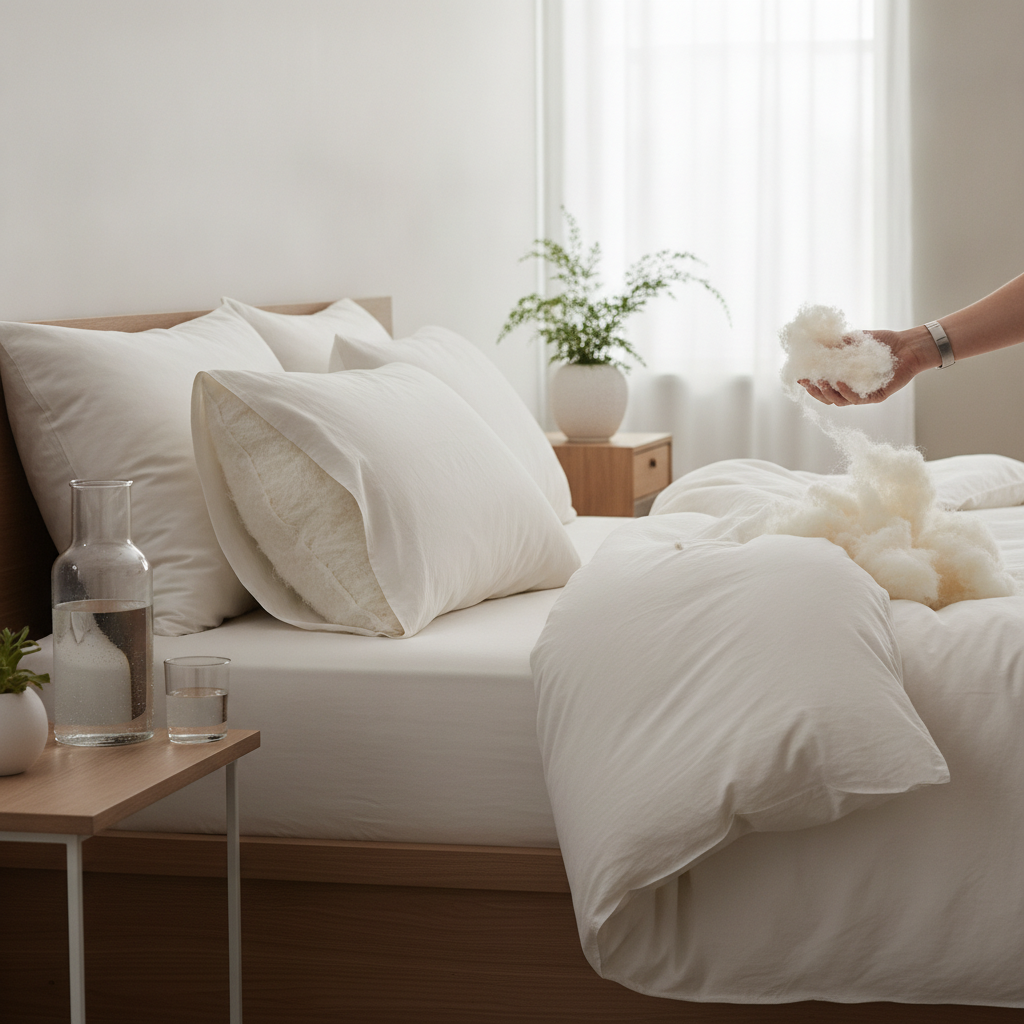
If you've been shopping for natural bedding, you've likely landed on the question: is kapok breathable? It's a fair question, especially if you're a hot sleeper who has been burned (literally) by memory foam pillows or synthetic comforters that trap heat all night. The short answer is yes, kapok is genuinely breathable, thanks to its hollow fiber structure and moisture-resistant coating. But "breathable" isn't quite the same as "cooling," and understanding that distinction matters if you want your next pillow or comforter to actually solve your overheating problem rather than just rebrand it. At Sierra Dreams, we work with kapok and other natural fills daily, so we wanted to give you a clear, honest picture of what this fiber can and can't do for hot sleepers.
TL;DR, The Bottom Line
Yes, kapok is breathable. Its hollow, air-filled fibers create natural airflow channels, and its waxy coating repels moisture instead of absorbing it, which helps prevent that clammy, overheated feeling. However, kapok is best described as "cool-to-neutral" rather than aggressively cooling, it outperforms memory foam and dense polyester but typically falls short of wool, natural latex, or lightweight down for pure heat dissipation. For most hot sleepers, kapok is a smart, breathable, low-maintenance choice, especially when paired with a breathable cotton or linen cover.
Quick Facts
- Fiber hollowness: Kapok fibers are up to roughly 80% hollow air space
- Breathability ranking: Better than memory foam and polyester; less breathable than wool or ventilated latex
- Moisture behavior: Naturally water-repellent (waxy coating), not absorbent like cotton
- Weight: Kapok is one of the lightest natural fibers used in bedding fill
- Best paired with: Breathable natural covers like cotton, linen, or Tencel for maximum airflow
Is Kapok Breathable? The Short Answer
To answer the core question directly: is kapok breathable? Yes, and the reasons come down to basic fiber physics. Kapok fibers are hollow tubes filled mostly with air, and when thousands of them are loosely clustered together inside a pillow or comforter, they create a network of tiny air channels. Heat and moisture vapor generated by your body can move through those channels and escape, rather than getting trapped against your skin the way it does in dense synthetic fills or solid memory foam.
This is why kapok is frequently recommended in natural bedding guides as a suitable option for warm sleepers and humid climates. It doesn't insulate heat the way heavier fills do, and it doesn't compress into an airless block the way memory foam can. So when someone asks is kapok breathable enough for everyday comfort, the evidence points to a confident yes for the majority of sleepers.
Yes, in most practical measures. Cotton is breathable but absorbent, meaning it can soak up moisture and feel damp over time. Kapok is breathable and moisture-resistant, so it lets air move freely while pushing moisture away rather than holding onto it.
What Makes Kapok Fiber Breathable? A Look Inside the Fiber
Understanding why kapok performs the way it does requires a quick look at its structure. Each kapok fiber is essentially a tiny, sealed tube, hollow on the inside, with a thin, waxy outer wall. That hollow core is what gives kapok its exceptional lightness (it's often compared to down for how little it weighs relative to its loft) and it's also what allows air to move so freely through a mass of the fibers.
Unlike cotton, which is a solid, absorbent fiber, kapok's waxy surface repels water rather than soaking it in. This dual structure, hollow and air-filled on the inside, water-resistant on the outside, is the core reason kapok shows up so often in discussions about natural, breathable fill materials. It behaves less like a sponge and more like a ventilated, moisture-shedding cushion.
When manufacturers loosely fill a pillow or comforter with kapok (rather than compressing it tightly), those air channels stay open, and the breathability benefit is maximized. Overpacking a kapok product with too much fiber can reduce this airflow, which is one reason fill density matters as much as the fiber itself.

Is Kapok Breathable Enough for True Hot Sleepers?
This is where nuance matters. Is kapok breathable enough for someone who wakes up drenched in sweat every night, regardless of what they sleep on? Possibly, but it depends on expectations. Kapok doesn't include active cooling technologies like gel infusions, phase-change materials, or specialized "cooling" treatments. Its performance is a function of its natural structure and the environment around it, room temperature, humidity, and the breathability of the cover fabric all play a role.
Independent product evaluations often describe kapok's feel as "cool-to-neutral." That means it won't trap heat the way memory foam does, but it also won't deliver the same aggressive heat-wicking sensation you'd get from something like ventilated natural latex or raw wool. If you blend kapok with memory foam, a common combination in hybrid pillows, the breathability advantage can be partially offset, and the resulting product tends to sleep neutral rather than distinctly cool.
For moderately warm sleepers, or those who run warm but aren't dealing with severe night sweats, kapok is typically a very good fit. For sleepers who consider themselves extreme heat generators, pairing kapok with a highly breathable cover and considering a lower fill weight will make a noticeable difference.

Kapok vs. Other Natural Fills: A Breathability Comparison
To really answer is kapok breathable in a meaningful way, it helps to see how it stacks up against the other fill materials commonly used in natural bedding. Here's a side-by-side comparison based on how each material typically performs for airflow and heat management.
| Fill Material | Breathability for Hot Sleepers | Key Notes |
|---|---|---|
| Solid memory foam | Poor | Traps heat, minimal airflow; often too warm for hot sleepers |
| Polyester clusters | Mediocre | Affordable but can trap heat compared to natural fibers |
| Kapok | Good | Hollow, cool-to-neutral, moisture-resistant, very lightweight |
| Down | Good, but warm | Breathable at low fill weight; can run hot at heavier fill levels |
| Wool | Very good | Excellent moisture-wicking and temperature regulation |
| Natural latex (ventilated) | Very good | Strong airflow via pinholes; often top choice for hot sleepers |
As the table shows, kapok holds a strong middle position: it's a clear step up from memory foam and polyester, and while it doesn't quite match wool or ventilated latex, it offers a lighter, softer, more down-like feel that many of those materials can't replicate.
Does Kapok Absorb Sweat and Moisture?
One of the more misunderstood aspects of kapok is how it handles moisture. Many natural fibers, like cotton and wool, are absorbent, they soak up moisture and hold it until it evaporates. Kapok works differently. Its waxy outer coating makes it naturally water-repellent, so rather than absorbing sweat directly into the fiber, it tends to move moisture along and away from the body.
This is a key part of why the answer to is kapok breathable includes more than just airflow, it's also about staying dry. A fill that lets air through but still gets saturated with moisture can end up feeling damp and heavy over time. Kapok's combination of airiness and water resistance helps it feel dry to the touch even in humid conditions, which is a meaningful advantage for sleepers in warm, sticky climates.
Yes. Because kapok resists absorbing moisture rather than soaking it up, it tends to feel less clammy in humid environments compared to purely absorbent fills. The hollow fiber structure also allows trapped humidity to escape more easily than it would in a dense synthetic fill.
Who Benefits Most From Kapok, and Who Should Look Elsewhere?
Given everything above, kapok is an excellent fit for certain sleepers and a less ideal fit for others. Here's how that typically breaks down:


- Good fit: Sleepers who run warm-to-moderately hot and want a lightweight, down-like feel without animal products
- Good fit: People sensitive to allergens who still want natural loft and softness
- Good fit: Sleepers in humid climates who want a fill that resists feeling damp
- Good fit: Anyone who wants a moldable, adjustable pillow fill rather than a rigid foam core
- Consider alternatives: Extreme night sweaters who need maximum active cooling, wool or ventilated latex may serve better
- Consider alternatives: Sleepers who want zero insulation whatsoever, since kapok still has some loft-related warmth at higher fill levels
The honest takeaway: is kapok breathable enough for the average hot sleeper? Almost certainly yes. Is it the single most cooling material on the market? No, but it earns its place by combining breathability with a soft, natural, vegan-friendly feel that few other fills can match.
How to Maximize the Breathability of a Kapok Pillow or Comforter
Even the most breathable fiber can underperform if it's used incorrectly. If you want to get the most out of a kapok product, follow these practical steps.
- Choose a breathable cover fabric. Pair kapok fill with cotton, linen, or a lightweight percale weave rather than a tightly woven synthetic case, which can trap heat regardless of what's inside.
- Avoid overstuffing. A pillow or comforter that's packed too densely with kapok loses some of its natural air channels. Look for products designed with balanced fill levels.
- Fluff regularly. Kapok fibers can compress over time; regularly fluffing your pillow restores loft and airflow.
- Keep your bedroom cool and ventilated. Since kapok's performance is influenced by ambient conditions, a cooler room amplifies its natural breathability.
- Layer strategically. If you sleep hot, consider lighter kapok-filled toppers or pillows in warmer months and heavier natural fills in winter.
These small adjustments can make a measurable difference in how breathable your kapok bedding feels night to night.
Kapok Breathability at a Glance: What the Research Suggests
Multiple independent sleep-product reviewers and natural bedding guides converge on similar conclusions when evaluating whether kapok is breathable: it consistently outperforms memory foam and dense polyester for airflow, while sitting just behind wool and ventilated latex. According to natural bedding researchers cited in industry comparisons of pillow fill materials, kapok's hollow fiber structure and water-repellent coating are the two primary drivers of its breathability advantage over conventional synthetic fills.
"Kapok's hollow, air-filled fibers allow heat to escape rather than accumulate, making it a genuinely breathable alternative to dense synthetic fills." This kind of consensus across product testing sources reinforces that the question is kapok breathable has a well-supported, evidence-based answer: yes, with realistic expectations about its cool-to-neutral (rather than aggressively cold) feel.
At Sierra Dreams, we design our bedding with these material realities in mind, pairing natural fills like kapok with breathable covers so you get the benefits without the guesswork. You can browse our current collection at Sierra Dreams to see how we approach breathable, natural bedding.
Frequently Asked Questions
Is kapok breathable enough for year-round use?
Yes. Kapok's breathability makes it comfortable in most seasons, though very hot sleepers may prefer a lighter fill in summer and a slightly higher fill for winter warmth.
Is kapok breathable compared to memory foam?
Significantly more so. Memory foam is dense and traps heat close to the body, while kapok's hollow fiber structure allows air to circulate, reducing heat buildup.
Does kapok sleep hot like down?
Not typically. Down can feel warm at heavier fill weights due to its insulating properties, while kapok tends to feel cooler because of its open, airy fiber structure and moisture-repelling coating.
Is kapok breathable for people who sweat a lot at night?
It can help, since kapok resists absorbing moisture and allows airflow, but extreme night sweaters may still prefer wool or ventilated natural latex for maximum cooling performance.
What makes kapok different from cotton in terms of breathability?
Cotton is absorbent and can hold onto moisture, while kapok is hollow and water-repellent, allowing it to stay drier and feel less clammy over extended use.
Final Thoughts on Kapok Breathability
So, is kapok breathable? The evidence is clear: yes, thanks to its hollow fiber structure and natural moisture resistance. It won't deliver the icy sensation of specialized cooling gels, but it offers a dependable, cool-to-neutral comfort that beats out memory foam, polyester, and even heavier down for everyday warm-sleeper needs. If you're a discerning homeowner tired of bedding that overheats, clumps, or shifts through the night, kapok is worth serious consideration, especially when it's paired thoughtfully with breathable covers and balanced fill design.
Ready to experience breathable, natural comfort for yourself? Explore Sierra Dreams' bedding collection at sierradreams.com and discover how thoughtfully designed natural fills can transform your sleep.