Hypoallergenic Duvet Inserts Natural Fill: 2026 Guide
July 22, 2026 · 14 min read
TL;DR, The Bottom Line
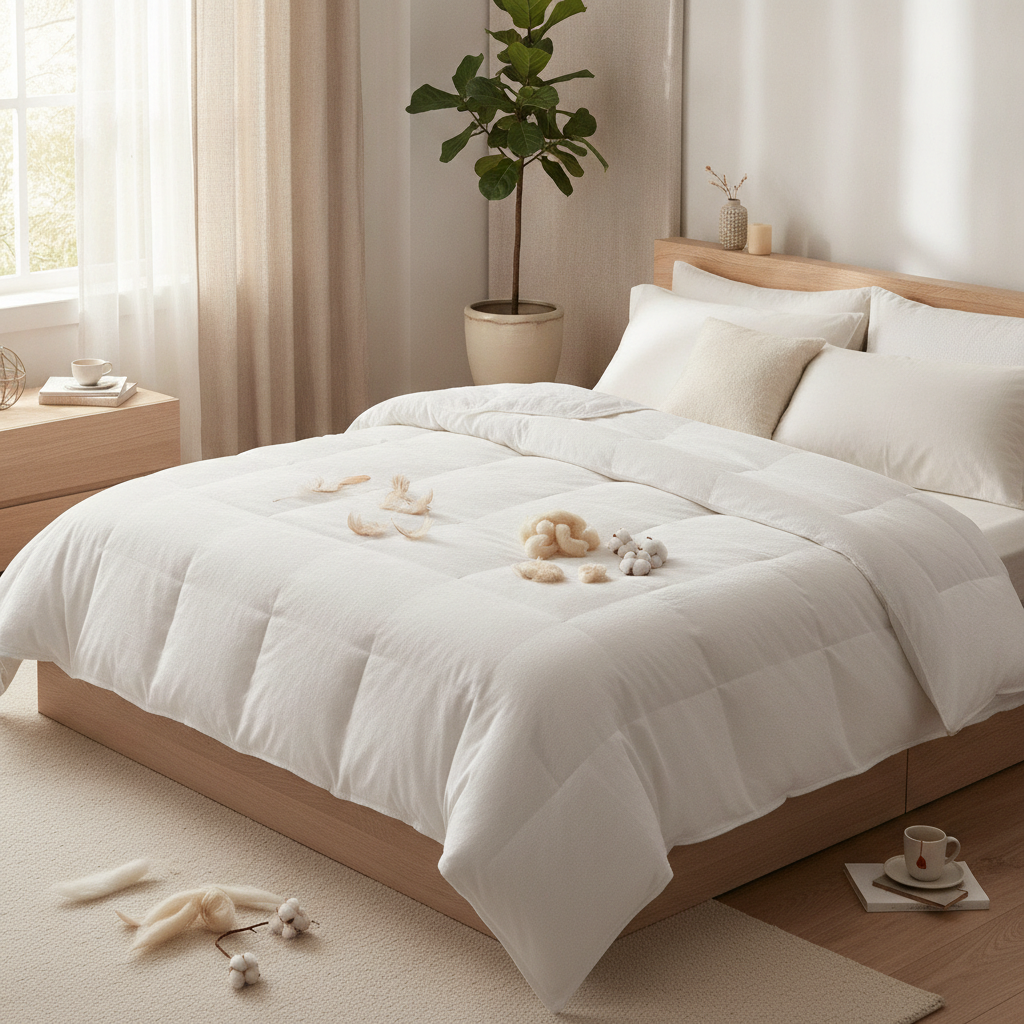
Hypoallergenic duvet inserts with natural fill combine allergy-friendly materials like organic cotton, wool, and kapok with breathable, low-chemical constructions. In 2026, the best options pair certified natural fibers with tight-weave shells and baffle-box quilting to prevent shifting, bunching, and moisture buildup. Sierra Dreams' Align™ System takes this a step further by keeping your duvet insert stable all night while maintaining hypoallergenic performance.
If you have spent any time shopping for premium bedding in 2026, you have probably noticed how crowded the market has become with claims about clean sleep, eco-conscious materials, and allergy-friendly design. Yet finding truly effective hypoallergenic duvet inserts natural fill shoppers can trust remains surprisingly difficult. The reason is simple: the fill material alone does not determine whether a duvet is hypoallergenic. Cover fabric, construction quality, finishing chemicals, and moisture management matter just as much, and most brands only tell you part of the story.
This 2026 guide from Sierra Dreams cuts through the marketing noise. We will walk you through what natural fills actually work for sensitive sleepers, how to evaluate construction and certifications, and why anti-shift design is the missing piece most premium brands overlook. Whether you are managing seasonal allergies, chemical sensitivities, or simply want a healthier bedroom environment, you will leave with a clear framework for choosing the right insert.
Quick Facts
- Most common natural fills: Wool, organic cotton, kapok, silk, natural latex
- Key allergy triggers to avoid: Formaldehyde finishes, polyurethane foams, chemical adhesives
- Recommended shell fabric: Tight-weave organic cotton or TENCEL (300+ thread count)
- Best construction for stability: Baffle-box quilting with anti-shift attachment
- Latex allergy warning: Natural latex is NOT safe for latex-allergic users
- Certifications to look for: GOTS, OEKO-TEX Standard 100, GOLS
What Makes Hypoallergenic Duvet Inserts Natural Fill Different in 2026
The category of hypoallergenic duvet inserts natural fill has evolved significantly. Ten years ago, "hypoallergenic" typically meant synthetic microfiber designed to resist dust mites. Today, the smartest shoppers know that synthetic fills often introduce their own problems, trapped heat, off-gassing, and micro-shedding of plastic fibers. Natural fills, when properly constructed, can outperform synthetics on nearly every metric that matters to sensitive sleepers.
The shift is driven by three converging trends. First, consumers are more informed about chemical exposure in the home. Second, allergy diagnoses continue to rise, pushing demand for genuinely low-trigger bedding. Third, sustainability has become a mainstream concern, aligning eco-conscious buyers with the clean-sleep movement. The result is a booming market for hypoallergenic duvet inserts natural fill options that meet all three demands simultaneously.
What separates a truly hypoallergenic natural-fill duvet from a marketing-driven imitation? Four things: material purity, construction integrity, moisture management, and stability. A wool duvet stuffed into a loose synthetic shell is not meaningfully hypoallergenic. A kapok insert treated with formaldehyde-based flame retardants defeats its own purpose. The whole system has to work together.
Often yes, but not automatically. Wool, kapok, and silk naturally resist dust mites and mold when kept dry and encased in tight-weave shells. However, poor construction or chemical finishing can eliminate those benefits, so certifications and cover fabric matter as much as the fill itself.
The Best Natural Fills for Allergy-Sensitive Sleepers
Not all natural fills perform equally when it comes to hypoallergenic bedding. Below is a breakdown of the most reliable options in the 2026 market, along with the tradeoffs each involves.
Wool
Wool is one of the most naturally hypoallergenic fibers available. It resists dust mites, wicks moisture, regulates temperature across seasons, and is inherently flame-resistant, meaning it does not require chemical flame retardants. For sensitive sleepers, ethically sourced organic wool with GOTS or ZQ certification is the gold standard. The only caveat: a small percentage of people are sensitive to lanolin, though most wool used in bedding is scoured to remove it.
Organic Cotton
Cotton fills provide a breathable, lightweight, and machine-washable option ideal for warm climates or year-round use. Certified organic cotton avoids pesticide residues, and when combined with a tight-weave cover, it creates a durable barrier against allergens. Cotton is heavier than wool or kapok, so it works best for sleepers who prefer a substantial, blanket-like feel.
Kapok
Kapok is a silky plant fiber harvested from the seed pods of the kapok tree. It is exceptionally light, breathable, and naturally resistant to mites and mold. Kapok duvets feel similar to down without the animal-derived allergen concerns, making them a favorite among vegan and allergy-conscious shoppers. The tradeoff is that kapok compresses over time and benefits from occasional fluffing.
Silk
Mulberry silk fill offers a luxurious, temperature-regulating experience with strong hypoallergenic credentials. Silk resists dust mites, mold, and bacteria. It drapes beautifully and feels cool in summer, warm in winter. Silk inserts sit at the top of the price range but are prized by sleepers with severe sensitivities.
Natural Latex Shreds (with caution)
Shredded natural latex appears in some duvet-adjacent products for its bounce and resilience. However, latex is a documented allergen for a meaningful portion of the population, so it should be avoided entirely by anyone with known latex sensitivity, even when marketed as "natural."

Comparing Natural Fills at a Glance
| Fill Type | Weight | Breathability | Dust Mite Resistance | Best For |
|---|---|---|---|---|
| Wool | Medium | Excellent | High | Year-round, temperature-swing sleepers |
| Organic Cotton | Heavy | Good | Moderate-High | Warm climates, machine-washable needs |
| Kapok | Very Light | Excellent | High | Vegan sleepers, down alternative |
| Silk | Light-Medium | Excellent | Very High | Severe allergies, luxury seekers |
| Natural Latex | Heavy | Moderate | High | Not for latex-allergic sleepers |
Why Cover Fabric and Construction Matter as Much as Fill
Here is a truth most premium brands do not emphasize: a duvet's hypoallergenic performance depends heavily on what surrounds the fill. Even the cleanest wool or kapok can trigger reactions if the shell fabric traps moisture, releases chemicals, or allows dust mites to penetrate. When evaluating hypoallergenic duvet inserts natural fill options, always ask about the cover.
Tight-Weave Shells
Look for cover fabrics with a thread count of at least 300, ideally in organic cotton or TENCEL. A tight weave creates a physical barrier that dust mites cannot penetrate. This matters because dust mites, not the fill itself, are the primary indoor allergen for most sensitive sleepers.
Low-VOC Processing
Volatile organic compounds released by dyes, flame retardants, and adhesives can trigger headaches, respiratory irritation, and skin reactions. Certifications like OEKO-TEX Standard 100 verify that finished textiles are free from harmful residues. Sierra Dreams builds every insert to strict low-emission standards.
Baffle-Box Quilting
Baffle-box construction uses internal fabric walls to keep fill evenly distributed. Without it, natural fills migrate to the edges, leaving cold spots and clumping. Sewn-through quilting is cheaper but far less effective for long-term loft retention.
The Overlooked Problem: Shifting, Bunching, and Sleep Quality
Even the most premium hypoallergenic duvet inserts natural fill product on the market can fail you at 3 a.m. if it shifts inside the cover, bunches at the foot of the bed, or leaves you exposed and cold. This is the single most overlooked functional problem in premium bedding, and it is one of the reasons Sierra Dreams built its Align™ System into every insert.
Traditional duvet inserts attach to covers with a few loose corner ties. In practice, those ties fail almost immediately. The insert slides, twists, and clumps, and you spend part of every night rearranging bedding instead of sleeping. For allergy-sensitive users, this is more than an annoyance: constant handling of bedding stirs up dust and disrupts the moisture barrier that keeps mites at bay.
Sierra Dreams' anti-shift construction addresses this with a patent-pending attachment system that holds the insert flat and even inside the cover, night after night. Combined with baffle-box quilting and dense natural fills, this creates a duvet that stays put, retains loft, and preserves its hypoallergenic performance for years rather than months.

How to Choose Hypoallergenic Duvet Inserts Natural Fill for Your Needs
Choosing the right insert comes down to matching materials, construction, and certifications to your specific sensitivities and lifestyle. Here is a step-by-step framework.
- Identify your triggers. Are you reacting to dust mites, chemicals, animal proteins, or a combination? Get an allergy panel if you are unsure. This will tell you which fills to avoid (down for feather allergies, latex for latex sensitivity, wool for lanolin sensitivity).
- Choose a fill that matches your climate and comfort preference. Wool for temperature regulation, kapok for lightweight down-alternative feel, cotton for warm sleepers, silk for luxury and severe sensitivities.
- Verify certifications. Look for GOTS (Global Organic Textile Standard), OEKO-TEX Standard 100, GOLS (for latex), or ZQ (for wool). These verify both material purity and chemical safety.
- Inspect construction details. Confirm baffle-box quilting, a tight-weave shell (300+ thread count), and secure closures. Ask whether the insert includes anti-shift attachments.
- Consider maintenance. Cotton and some wool inserts are machine-washable; silk and kapok typically require spot cleaning or professional care. Match this to your lifestyle.
- Pair with a protective cover. Even a great insert benefits from a washable, tight-weave duvet cover changed weekly to minimize allergen accumulation.
A well-made natural-fill insert with baffle-box construction and a quality shell should last 8 to 12 years with proper care. Signs it is time to replace include persistent flatness even after fluffing, visible clumping, or a musty odor that does not respond to airing out.
Certifications and Trust Signals to Look For in 2026
The 2026 bedding market is saturated with vague claims like "eco-friendly," "natural," and "non-toxic" that carry no verification. Real trust comes from third-party certifications. Here is what each one means and why it matters for hypoallergenic performance.


- GOTS (Global Organic Textile Standard): Certifies that fibers are organically grown and that the entire manufacturing chain meets strict environmental and social criteria, including bans on toxic chemicals.
- OEKO-TEX Standard 100: Tests finished textiles for over 100 harmful substances. Essential for chemically sensitive users.
- GOLS (Global Organic Latex Standard): Verifies organic natural latex production. Only relevant if you tolerate latex.
- ZQ Merino: Ensures ethically produced wool with animal welfare and environmental standards.
- MADE SAFE: Screens products for known toxins and behavioral hazards, common in premium natural bedding brands.
When comparing hypoallergenic duvet inserts natural fill options across brands, a stack of these certifications is a strong signal that the company has done the work to verify its claims. Absence of certifications does not automatically mean a bad product, but it does mean you are relying on the brand's word alone.
Caring for Your Hypoallergenic Duvet Inserts Natural Fill
Even the best insert needs proper care to maintain its hypoallergenic performance. Follow these practices to extend the life and effectiveness of your investment.
Weekly Care
Air out your duvet by pulling back the covers each morning for at least 30 minutes. This allows moisture from body heat to dissipate, which is critical for preventing dust mite proliferation. Wash your duvet cover weekly in hot water (130°F or higher) to kill mites and remove skin cells.
Seasonal Care
Rotate and shake your duvet monthly to redistribute fill evenly. Every three to six months, air it outdoors in indirect sunlight for a few hours, UV light naturally reduces mite and bacteria populations. Store off-season inserts in breathable cotton bags, never plastic, to prevent moisture buildup.
Deep Cleaning
Follow the manufacturer's instructions carefully. Cotton and some wool inserts can be machine-washed on gentle cycles with mild detergent. Kapok and silk typically require professional cleaning. Never dry-clean natural fills with harsh solvents, these residues can trigger the very sensitivities the insert was designed to prevent.
The best hypoallergenic duvet is one that stays cleaner longer, moves less, and asks less of your immune system every single night.
Why Sierra Dreams Approaches Natural-Fill Bedding Differently
Sierra Dreams was built around a simple observation: premium bedding brands were selling either performance or purity, but rarely both. You could find luxurious anti-shift duvets full of synthetic fill, or beautiful organic inserts that slid around the bed all night. Our mission has been to close that gap with hypoallergenic duvet inserts natural fill products that deliver on both fronts.
Every Sierra Dreams insert combines certified natural fills with tight-weave organic cotton shells, baffle-box quilting, and our patent-pending Align™ System that keeps the insert stable inside the cover. We source materials with full traceability, avoid polyurethane foams and chemical adhesives entirely, and back each product with a promise of clean-sleep performance. Learn more about our full bedding lineup at Sierra Dreams.
A truly hypoallergenic duvet is a system, not a single ingredient, fill, shell, construction, and stability all have to work together.
Frequently Asked Questions
What is the most hypoallergenic natural fill for a duvet insert?
Wool and silk are generally considered the most hypoallergenic natural fills because both naturally resist dust mites, mold, and bacteria while regulating moisture. Kapok is an excellent plant-based alternative for vegan sleepers or those with animal-fiber sensitivities. The best choice depends on your specific triggers, climate, and comfort preferences.
Are hypoallergenic duvet inserts natural fill options safe for people with severe allergies?
Yes, when properly constructed. Look for certifications like GOTS and OEKO-TEX Standard 100, a tight-weave shell of at least 300 thread count, and baffle-box quilting. Avoid latex if you have a latex allergy and wool if you are sensitive to lanolin. Pairing the insert with a washable protective cover further reduces allergen exposure.
How do I stop my natural-fill duvet from shifting inside the cover?
Traditional corner ties fail quickly. The most effective solution is an insert designed with an anti-shift attachment system, such as Sierra Dreams' Align™ System, which holds the insert flat and evenly distributed inside the cover. Baffle-box quilting inside the insert also prevents the fill itself from migrating.
Can I machine wash a natural-fill duvet insert?
It depends on the fill. Organic cotton and some washable wool inserts can be machine-laundered on gentle cycles with mild detergent, then tumble-dried on low with wool dryer balls. Kapok and silk typically require spot cleaning or professional care. Always follow the manufacturer's instructions to preserve loft and hypoallergenic performance.
How long do hypoallergenic duvet inserts natural fill products last?
A quality natural-fill insert with baffle-box construction and a durable shell should last 8 to 12 years with proper care. Wool and silk tend to have the longest lifespans, while kapok may require refluffing or partial refilling after several years. Signs of replacement include persistent flatness, clumping, or odor that does not respond to airing.
Bringing It All Together
Choosing the right hypoallergenic duvet insert with natural fill is one of the highest-impact upgrades you can make to your sleep environment in 2026. Done well, it reduces allergen exposure, improves temperature regulation, eliminates chemical off-gassing, and gives you a bed that feels as good as it looks. Done poorly, based on marketing claims alone, it can leave you with a product that shifts, clumps, and disappoints within a season.
The framework is straightforward: match the fill to your triggers and comfort preferences, verify certifications, insist on tight-weave shells and baffle-box construction, and look for anti-shift design that keeps the insert stable night after night. When all four pieces come together, you get bedding that quietly does its job so you can focus on rest.
Ready to experience the difference that thoughtful design and clean materials can make? Explore Sierra Dreams' full collection of hypoallergenic duvet inserts and anti-shift bedding systems and discover what it feels like to sleep on bedding built for both purity and performance.