Down Duvet Insert Guide: Fill Power, Weight & Warmth
August 23, 2026 · 13 min read
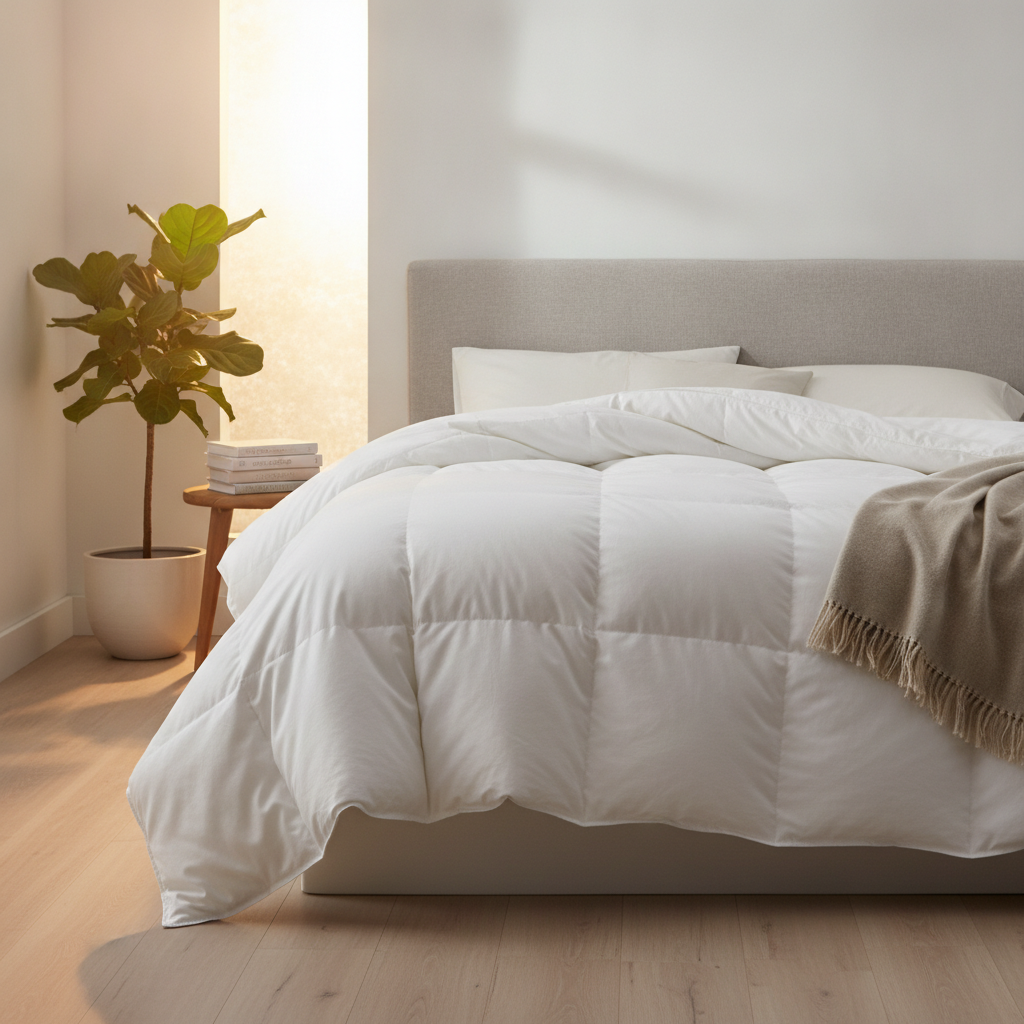
Choosing the right down duvet insert can feel like decoding a foreign language, fill power, fill weight, baffle box, cassette construction. Yet for discerning homeowners who are tired of duvets that shift, bunch, and never quite match the room's temperature, understanding these numbers is the difference between a bedding upgrade and a bedding regret. This guide breaks down exactly how fill power and fill weight interact to create real-world warmth, so you can select a down duvet insert that performs the way you expect it to, night after night.
TL;DR, The Bottom Line
A down duvet insert's true warmth comes from two numbers working together: fill power (down quality and loft, typically 300–900+) and fill weight (total ounces of down, typically 16–70+ oz for a queen). Higher fill power delivers more warmth per ounce, allowing lighter, less bulky inserts, while fill weight is the primary lever for adjusting overall warmth level. For most homes, a 600–800 fill power down duvet insert with a calibrated fill weight in the 28–44 oz range offers the best balance of warmth, loft, and comfort.
Quick Facts
- Fill power range for quality inserts: 600–900+ cubic inches per ounce
- Ideal all-season fill weight (queen, 700 FP): 28–36 oz
- Minimum fill weight for proper insulation: approximately 400 g (14 oz)
- Ultra-warm winter fill weight: 44–70+ oz
- Sweet spot fill power for most sleepers: 700–750
What Is a Down Duvet Insert, Exactly?
A down duvet insert is the fluffy, insulating core that sits inside a duvet cover, distinct from a comforter, which is typically a finished, decorative piece sold without a removable cover. The insert's shell is filled with clusters of down (the soft plumage found beneath a duck or goose's feathers) and is engineered with internal baffles or sewn-through channels to keep that down evenly distributed.
Unlike synthetic alternatives, natural down clusters trap air in three-dimensional pockets, which is what gives a well-made down duvet insert its signature light, cloud-like drape. But loft and warmth aren't the same thing as a random pile of feathers, performance depends on how much down is used, how good that down is, and how well the shell construction keeps it in place.
Fill Power Explained: What the Numbers Actually Mean
Fill power is the number most shoppers fixate on, and for good reason, it tells you how efficiently a down duvet insert converts weight into warmth. Here's how the ranges typically break down:
| Fill Power Range | Quality Level | Best Use Case |
|---|---|---|
| 250–450 | Low to medium | Budget, decorative, or lightweight inserts |
| 450–600 | Medium to good | Value-focused, warm sleepers, mild climates |
| 600–750 | Good to very good | All-season down duvet inserts; balanced price and performance |
| 750–900+ | Excellent | Premium, luxury, cold-climate or winter use |
Most quality-focused brands, including Sierra Dreams, cluster their offerings in the 600–800+ range because this is where a down duvet insert achieves genuine loft without excessive bulk. A 700–750 fill power down duvet insert is frequently cited as the practical sweet spot: lofty enough to feel luxurious, efficient enough to stay lightweight, and durable enough for years of nightly compression and recovery.
Not by itself. Fill power measures quality and loft efficiency, not total warmth. A high fill power down duvet insert with very little fill weight can actually feel cooler than a lower fill power insert stuffed with more down. Warmth is a product of fill power and fill weight combined.

Fill Weight: The Overlooked Warmth Driver
If fill power is about quality, fill weight is about quantity, and it's the metric most shoppers overlook. Fill weight refers to the total ounces (or grams) of down packed inside a down duvet insert, and it is the primary factor determining how warm that insert will actually feel on your bed.
Recent buying guides for queen-size, 700 fill power down duvet inserts offer these general benchmarks:
- Lightweight (16–24 oz): Best for rooms above 72°F or hot sleepers
- All-season (28–36 oz): Suited to 65–72°F rooms; works for most households
- Medium warmth (36–44 oz): Ideal for cooler rooms, roughly 60–68°F
- Extra/ultra warmth (44–70+ oz): Designed for rooms below 62°F or unheated spaces
One widely cited insulation chart recommends a minimum fill weight of around 400 grams (about 14 oz) for a standard comforter to provide adequate warmth at all, regardless of fill power. Below that threshold, even premium down struggles to insulate effectively because there simply isn't enough material to trap sufficient warm air.
Fill Power + Fill Weight: How They Work Together for True Warmth
The most reliable way to evaluate any down duvet insert is to look at fill power and fill weight side by side, then factor in construction and shell fabric. Industry experts consistently frame warmth as a formula: overall warmth equals fill power, plus fill weight, plus construction, plus fabric density.
In practice, this plays out in two common patterns:
- High fill power + moderate fill weight: Produces a lofty, warm, but noticeably lighter down duvet insert, the hallmark of premium bedding that feels like it's "floating" rather than pressing down on the sleeper.
- Moderate fill power + high fill weight: Produces a warm but denser, heavier insert. This combination is often more affordable and can suit cold climates where weight is less of a concern than raw insulation.
For homeowners who value both warmth and a refined feel, the ideal down duvet insert typically pairs a fill power of 700–850 with a carefully calibrated fill weight, enough to insulate properly for the intended season, but not so much that the insert becomes overstuffed. Overstuffing, incidentally, is one of the underlying causes of the shifting and bunching that frustrates so many duvet owners, since excess loose fill has more room to migrate within an underbaffled shell.
Fill power measures the quality and loft efficiency of the down itself (how much space one ounce fills when fully lofted). Fill weight measures the total quantity of down used in the insert. Fill power tells you how light and airy the warmth will feel; fill weight tells you how much actual warmth is packed in.
Matching Your Down Duvet Insert to Climate and Room Temperature
The "right" down duvet insert isn't universal, it depends on your bedroom's typical temperature, your household's heating habits, and your personal sleep temperature. A few practical guidelines:
- Warm climates or heated homes (68–75°F): A lightweight down duvet insert with 16–28 oz of 700+ fill power down typically provides enough warmth without overheating.
- Moderate climates (65–70°F): An all-season down duvet insert in the 28–36 oz range covers most three-season needs and is the most commonly purchased category.
- Cold climates or unheated bedrooms (below 62°F): A medium-to-ultra warmth down duvet insert, often 40 oz or more, is worth the added weight for consistent overnight comfort.
- Couples with mismatched temperature preferences: Consider two twin-size inserts of different warmth levels zipped or layered under a single duvet cover, rather than compromising on one middle-ground insert.

Construction Matters: Why Baffles Affect Warmth, Not Just Shape
Fill power and fill weight determine potential warmth, but construction determines whether that warmth is delivered evenly. Most quality down duvet inserts use one of two shell designs:


- Sewn-through construction: Fabric is stitched directly through both layers, creating flat pockets. This is lightweight and inexpensive but creates seams with no insulation, which can allow cold spots.
- Baffle box construction: Fabric "walls" are sewn between the top and bottom layers, creating three-dimensional chambers that let the down fully loft in every section. This design is more expensive to manufacture but delivers far more even warmth distribution across the entire down duvet insert.
For a down duvet insert with a high fill power and generous fill weight, baffle box construction is essential, without it, all that quality down simply can't loft to its full insulating potential, and heavier fill has more tendency to slide toward the edges over time.
How to Choose the Right Down Duvet Insert: A Step-by-Step Checklist
- Identify your room's typical winter and summer temperatures. This determines your target warmth category before you even look at specific products.
- Set a fill power range. For most households, aim for 600–800; cold sleepers or luxury seekers should look toward 750–850+.
- Match fill weight to your warmth category. Use the 16–70+ oz benchmarks above as your baseline, adjusting up or down based on personal temperature preference.
- Confirm baffle box construction. Avoid sewn-through designs if you want even warmth and reduced shifting.
- Check certifications. Look for responsible down sourcing standards (such as RDS) and OEKO-TEX-certified shell fabric for safety and ethical assurance.
- Consider your duvet cover system. Even the best down duvet insert can bunch inside a poorly fitted cover, so pairing it with a well-designed, corner-tied or snap-secured cover matters as much as the insert itself.
Frequently Asked Questions
What fill power is best for a down duvet insert?
For most homeowners, a fill power between 600 and 800 offers the best balance of warmth, loft, and price. Fill power above 800 delivers marginally more warmth-to-weight efficiency but at a significantly higher cost, making it best suited to cold sleepers or true luxury buyers.
What fill weight should I choose for a queen-size down duvet insert?
For an average bedroom kept between 65–72°F, choose a fill weight of roughly 28–36 oz in a 700 fill power down duvet insert. Cooler rooms below 62°F warrant 44 oz or more, while warm rooms above 72°F are comfortable with 16–24 oz.
How warm is a 700 fill power down duvet insert?
Warmth depends on fill weight, not fill power alone. A 700 fill power down duvet insert can range from lightweight (16–24 oz, suited to warm rooms) to ultra-warm (44–70+ oz, suited to cold or unheated rooms), so always check both numbers together.
Does higher fill power mean better quality down?
Generally yes, fill power reflects how efficiently down clusters trap air, and higher numbers indicate larger, more mature, better-formed clusters. However, quality also depends on cleanliness, species (goose down typically has higher fill power potential than duck down), and ethical sourcing certifications.
Why does my down duvet insert feel lumpy even with high fill power?
Lumping usually results from construction, not fill power. Sewn-through designs or oversized baffle chambers allow down to migrate and clump over time. Choosing a down duvet insert with tight, well-engineered baffle box construction, paired with proper fill weight, significantly reduces this issue.
The Bottom Line on Fill Power, Weight, and Warmth
A high-performing down duvet insert isn't defined by a single flashy number on the packaging. It's the product of thoughtful engineering: fill power that ensures quality loft, fill weight that's calibrated to your actual bedroom conditions, and construction that keeps everything evenly distributed night after night. When these three elements align, you get a duvet insert that feels weightless yet warm, exactly what discerning homeowners expect from a genuinely premium down duvet insert.
At Sierra Dreams, every down duvet insert is developed with this full equation in mind, not just headline fill power figures. If you're ready to stop guessing and start sleeping under bedding tuned to your actual room and comfort preferences, explore the current collection at Sierra Dreams and find the fill power and fill weight combination built for your climate.