Cotton Duvet Cover Guide: Weave, Weight and Feel Explained
September 1, 2026 · 13 min read
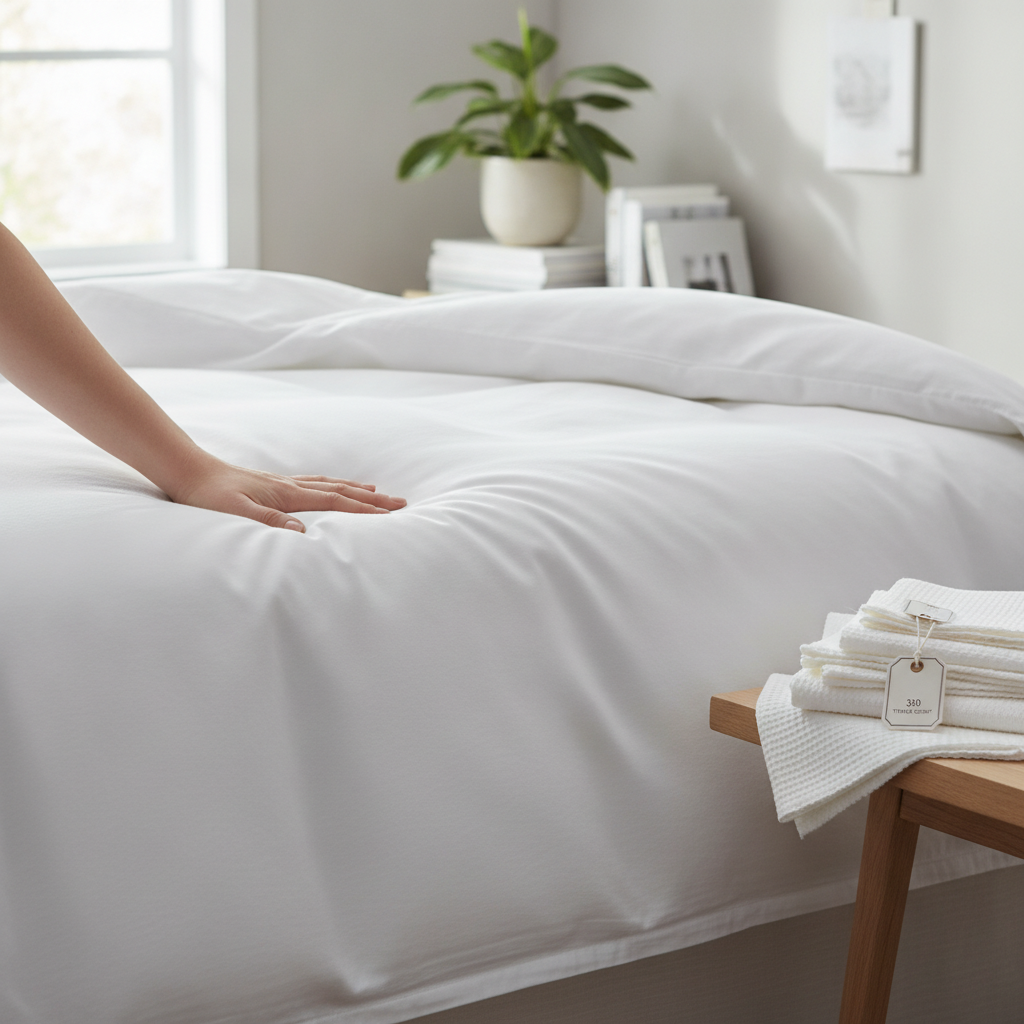
Few bedding upgrades feel as deceptively simple, and turn out to be as technically nuanced, as choosing the right cotton duvet cover. Walk into any home goods aisle or scroll through a dozen online listings, and you'll see thread counts shouted in bold type while the details that actually determine comfort, weave structure, fabric weight, and hand feel, get buried in fine print. At Sierra Dreams, we think discerning homeowners deserve better information, especially if nightly shifting, bunching, or a duvet cover that never quite feels 'right' has become a source of frustration.
This guide breaks down exactly what separates a mediocre cotton duvet cover from an exceptional one: the weave (percale vs. sateen), the weight (measured in GSM, not just thread count), and the resulting feel against your skin. We'll also connect these technical factors to the everyday problem so many sleepers face, covers that twist, slide, or clump inside the duvet insert, so you can shop with real clarity.
TL;DR, The Bottom Line
A quality cotton duvet cover comes down to three factors: weave (crisp percale vs. silky sateen), weight (measured in GSM, ideally 115–150 GSM for year-round use), and feel (matte and breathable vs. smooth and lustrous). Thread count alone is a poor predictor of comfort, anything above 400 TC in cotton delivers diminishing returns. Look for long-staple cotton, a tight weave, and secure closures to prevent the shifting and bunching that plague lower-quality covers.
Quick Facts
- Percale weight range: roughly 100–130 GSM, plain one-over-one-under weave
- Sateen weight range: roughly 120–150 GSM, four-over-one-under float weave
- Ideal thread count for cotton: 200–400 TC for percale; 300–600 TC for sateen
- Diminishing returns threshold: thread counts above ~600 TC rarely improve real-world feel
- Best percale use case: warm sleepers and warm climates
- Best sateen use case: cooler sleepers wanting a softer, silkier drape
What Is a Cotton Duvet Cover, and Why Does Construction Matter?
A cotton duvet cover is the outer shell that wraps around a duvet insert, closing with buttons, ties, or a zipper along one edge. Its job sounds simple, but the construction of the fabric determines almost everything about how it performs night after night: how it breathes, how it drapes, how it resists pilling, and, critically for many households, whether it holds the insert securely or lets it migrate and bunch into one corner by morning.
Two cotton weaves dominate the premium duvet cover market: percale and sateen. Both start with the same basic material, cotton yarn, but the way that yarn is interlaced changes the fabric's density, weight, and surface texture. Understanding this distinction is the single most useful thing a homeowner can learn before comparing cotton duvet cover options, because it explains far more about comfort than thread count ever will.

Percale vs. Sateen: The Weave That Shapes Every Cotton Duvet Cover
Percale is a plain, one-over-one-under weave, the simplest and oldest weave structure in textiles. This tight, balanced interlacing produces a fabric that feels crisp, matte, and notably breathable, often described as the 'fresh hotel sheet' handfeel. Because the weave is so tightly balanced, percale cotton duvet covers tend to launder well and hold up to years of washing without losing their structure, which is exactly why they're favored by warm sleepers and anyone in a hot climate.
Sateen, by contrast, uses a float weave: each cross-thread floats over three or four yarns before tucking under one. That longer float allows more yarn surface to catch the light, producing sateen's signature sheen, softer hand, and heavier drape. A sateen cotton duvet cover generally feels more luxurious against the skin but runs slightly warmer than percale at an equivalent thread count, and lower-quality sateen can be more prone to snagging.
| Attribute | Percale Weave | Sateen Weave |
|---|---|---|
| Weave structure | Plain, one-over-one-under | Float, one-under-three-or-four-over |
| Surface feel | Crisp, matte | Smooth, lustrous sheen |
| Typical thread count | 200–400 TC | 300–600 TC |
| Typical weight | 100–130 GSM | 120–150 GSM |
| Best for | Warm sleepers, warm climates | Cooler sleepers, cozy drape |
Neither is objectively better, percale suits warm sleepers who want a crisp, breathable feel, while sateen suits those who prefer a softer, silkier drape and don't mind slightly warmer sleep. Sierra Dreams offers both constructions specifically so you can match the weave to your body's actual temperature preferences rather than guessing.
Weight and GSM: Reading the Real Comfort Metric Behind a Cotton Duvet Cover
Thread count gets all the marketing attention, but fabric professionals rely on a different number: GSM, or grams per square metre. GSM measures how much cotton fiber is actually packed into the cloth, and it's a far more reliable indicator of how a cotton duvet cover will feel, drape, and insulate than thread count alone.
- Lightweight (100–150 GSM): Best for warm sleepers and warm-climate bedrooms; premium percale duvet covers often sit around 110–125 GSM.
- Balanced, year-round (150–220 GSM): Offers a soft, substantial hand feel without excessive warmth; common in higher-thread-count sateen and denser percale weaves.
- Heavier winter weights (140–170 GSM, often brushed): Typically found in flannel or brushed-cotton duvet covers designed for cold-climate winters.
Here's a useful rule of thumb: once a cotton duvet cover's thread count climbs past roughly 600, additional threads are usually achieved by twisting multiple thin plies together to inflate the number on the label, not by adding genuine fiber density. That's why two duvet covers listed at '800 thread count' and '300 thread count' can sometimes feel nearly identical, or the lower number can even feel better, once you account for GSM and staple length.

The Feel Factor: Hand, Drape and the Sensory Side of Cotton
'Feel' is the most subjective of the three variables, but it's not mysterious, it's the direct product of weave and weight working together. A lightweight percale cotton duvet cover feels cool, crisp, and slightly textured, almost like a fresh cotton dress shirt. A heavier sateen cover feels closer to a smooth, cool sheet of satin, with a fuller drape that pools softly rather than lying flat.
Staple length matters here too. Long-staple cotton, the kind used in premium percale and sateen, produces smoother, stronger yarns with fewer protruding fiber ends, which translates directly into a softer surface feel and less pilling over time. Short-staple cotton, even at a high thread count, tends to feel rougher and shed more lint after repeated washing.
This usually comes down to short-staple cotton fibers or an inflated thread count achieved through thin, multi-ply yarns rather than genuine fiber density. Look for long-staple or combed cotton and a stated GSM in the 115–150 range for a consistently soft hand feel.
Solving Shifting and Bunching: What to Look for in a Cotton Duvet Cover
Weave and weight determine comfort, but for many homeowners the real daily frustration isn't softness, it's a cotton duvet cover that slides off-center, bunches into one corner, or leaves the insert exposed at 3 a.m. This is a design problem as much as a fabric problem, and it's worth evaluating separately from weave and GSM.
When comparing cotton duvet cover options, look specifically for:
- Interior corner ties or loops that anchor to the duvet insert's corners, preventing the insert from sliding independently of the cover.
- A full-length, sturdy closure, button, zipper, or snap, rather than a partial closure that leaves a gap for the insert to migrate through.
- A tight, stable weave (higher GSM percale or sateen) that resists stretching out of shape after repeated washing, which can loosen ties and closures over time.
- Reinforced corner stitching, since corners bear the most stress from nightly tossing and turning.
Sierra Dreams engineers its cotton duvet cover collection with exactly this frustration in mind, pairing premium percale and sateen fabrics with anchor points designed to keep the insert exactly where you put it. If shifting and bunching have been a recurring complaint in your household, the fix usually starts with better internal construction, not just softer fabric. You can browse the full range at Sierra Dreams to see how weave, weight, and stability come together in a single design.


How to Choose the Right Cotton Duvet Cover for Your Sleep Style
With weave, weight, and construction now in mind, here's a practical process for narrowing your search:
- Identify your temperature preference. If you run warm or live in a warm climate, start with a percale cotton duvet cover in the 110–130 GSM range. If you tend to feel cold or prefer a cozier drape, lean toward sateen at 130–150 GSM.
- Check the GSM, not just the thread count. A listing that states both thread count and GSM is a good sign of a transparent, quality-focused brand.
- Confirm the cotton type. Long-staple or combed cotton (including organic certifications) signals a smoother, more durable fabric than generic short-staple cotton.
- Inspect the closure and interior anchoring. Look for full-length closures and interior ties or loops if shifting has been an issue with previous covers.
- Match the size precisely to your duvet insert. An oversized cotton duvet cover is one of the most common causes of bunching, regardless of fabric quality.
Measure your duvet insert directly rather than relying on 'Queen' or 'King' labels alone, since sizing varies by brand; a cover that's more than a few inches larger than the insert in any dimension is far more likely to bunch or shift during the night.
Caring for Your Cotton Duvet Cover: Washing, Drying and Longevity
Even the best-constructed cotton duvet cover will lose some of its crisp feel or lustrous sheen if it's cared for improperly. A few habits preserve both weave integrity and weight over years of use:
- Wash in cool or warm water, not hot, to reduce fiber breakdown and shrinkage.
- Avoid overloading the washer, a cramped drum causes excess friction that weakens long-staple yarns.
- Tumble dry on low or line dry whenever possible; high heat is the fastest way to degrade the smooth hand of both percale and sateen.
- Skip fabric softener on percale specifically, since it can coat fibers and dull the crisp, breathable feel that makes percale desirable in the first place.
- Wash before first use to remove manufacturing residue and allow the fabric to reach its true, settled hand feel.
Well-maintained, quality cotton typically softens slightly with each wash for the first several cycles, then stabilizes, a good cotton duvet cover should feel better after ten washes than it did fresh out of the packaging, not worse.
Frequently Asked Questions
What is the best thread count for a cotton duvet cover?
For most sleepers, 200–400 TC in percale or 300–600 TC in sateen offers the best balance of softness and durability. Beyond roughly 600 TC, additional threads typically come from thinner multi-ply yarns rather than genuine fiber density, so higher isn't automatically better.
Is percale or sateen better for hot sleepers?
Percale is generally the better choice for hot sleepers because its plain, tight weave allows more airflow and has a naturally crisp, cool-to-the-touch feel, while sateen's denser float weave traps slightly more heat.
What GSM should I look for in a cotton duvet cover?
Look for 100–130 GSM if you want a lightweight, breathable percale cover, or 130–150 GSM for a heavier, more substantial sateen cover with a fuller drape. GSM in the 150–220 range is common in year-round, balanced-weight options.
How do I stop my cotton duvet cover from bunching or shifting?
Choose a cover with interior corner ties or loops that anchor to the duvet insert, confirm the cover's size closely matches the insert's dimensions, and use a full-length closure rather than a partial one. A tighter, higher-GSM weave also resists stretching that can loosen these anchor points over time.
Does a cotton duvet cover need to match the duvet insert size exactly?
It should be as close as possible; a cover more than a couple of inches larger than the insert in length or width creates extra fabric that migrates and bunches, which is one of the most common causes of shifting complaints.
Choosing a cotton duvet cover doesn't have to mean gambling on thread-count marketing or guessing at fabric quality from a product photo. Once you understand how weave, weight, and feel interact, and how construction details like corner anchoring solve the shifting and bunching problems so many households face, you can shop with genuine confidence. Sierra Dreams builds every cotton duvet cover in our collection around these exact principles: transparent GSM and weave information, long-staple cotton, and secure interior construction designed for real nights, not just showroom photos. Explore the collection at Sierra Dreams and find the weave and weight that finally fits how you actually sleep.