100 Cotton Sheets: What the Label Should Really Tell You
August 24, 2026 · 13 min read
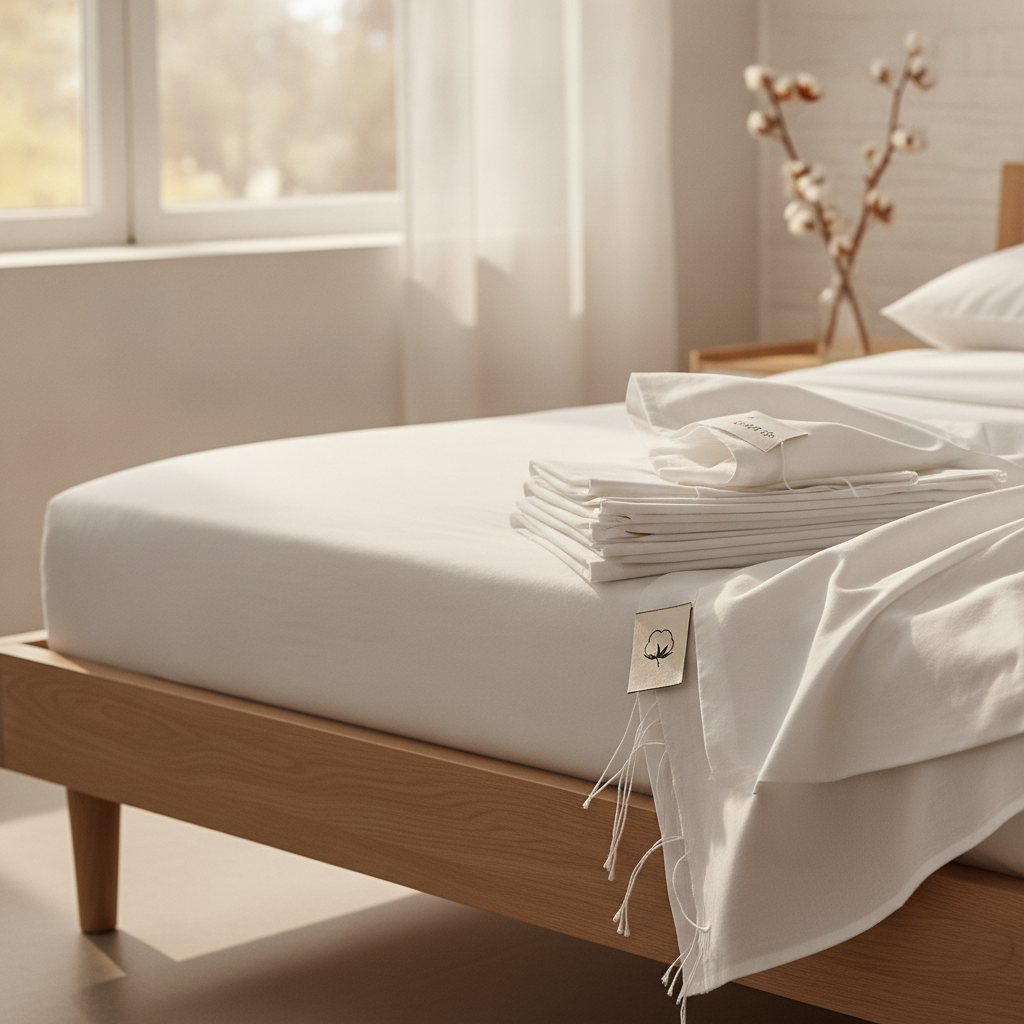
Walk down any bedding aisle or scroll through an online shop, and you'll see the phrase "100 cotton sheets" printed on package after package. But that label is doing a lot more legal and practical work than most shoppers realize. For discerning homeowners who are tired of sheets that pill, thin out, or slide off the mattress within months, learning to read a 100 cotton sheets label correctly is the single fastest way to separate genuine quality from clever marketing.
At Sierra Dreams, we believe transparency starts on the tag. This guide breaks down exactly what a 100 cotton sheets label is legally required to disclose, what a truly high-quality label should add voluntarily, and how to spot the red flags that signal a set won't hold up past a few washes.
TL;DR, The Bottom Line
A genuine 100 cotton sheets label must state the fiber content (100% cotton, no substitutions), country of origin, the responsible manufacturer, and care instructions. Beyond legal minimums, the best labels also disclose cotton type (like long-staple or Supima), weave (percale, sateen, or jersey), thread count with ply, and third-party certifications such as OEKO-TEX or GOTS. If a label is vague about any of these, treat it as a warning sign rather than a marketing win.
Quick Facts
- Legal fiber threshold: A sheet can only be labeled 100 cotton sheets if it contains no other fibers beyond minor trim like thread or elastic
- Ideal thread count range: 200–400 for genuine 100% cotton, per most independent buying guides
- Best cotton type indicator: "Long-staple" or "Supima" cotton signals stronger, less pilling-prone yarn
- Common weave options: Percale (crisp, cool), sateen (silky, warmer), jersey (stretchy knit)
- Required label elements: Fiber content, country of origin, manufacturer identity, and care instructions
What a 100 Cotton Sheets Label Is Legally Required to Disclose
In the United States and similar markets, textile labeling isn't just a suggestion, it's regulated. Any product marketed as 100 cotton sheets must meet specific legal standards before that claim can appear on the tag.
- Fiber content statement: The label must list the generic name of every fiber present at 5% or more by weight, in order of predominance. A sheet cannot be called 100 cotton sheets unless it is made entirely of cotton, with the only exception being minor non-cotton trim like stitching thread.
- Country of origin: The label must state where the product was manufactured. This has become an important proxy for consumers evaluating labor standards and manufacturing quality.
- Responsible party: The manufacturer, importer, or marketer responsible for the product must be identifiable on the label, not hidden behind a generic house brand name.
- Care instructions: Regulators require clear laundering, drying, and ironing instructions for ordinary use, which matters enormously for cotton since improper care can cause shrinkage or premature wear.
It's worth noting that terms like "cotton-rich" are a different animal entirely. That phrasing typically means the product contains 50% or more cotton blended with synthetic fibers, not the genuine 100 cotton sheets you're likely searching for. If the word "blend," "rich," or "touch" appears anywhere near the word cotton, assume it isn't pure.
Yes. Minor structural components like thread, elastic in fitted sheet corners, or small trim pieces are generally excluded from the fiber content calculation, so a set can still legitimately be sold as 100 cotton sheets even with these small exceptions.
Decoding Fiber Type, Staple Length, and Cotton Grade
Legal compliance tells you the sheets are pure cotton, but it says nothing about how that cotton was grown or spun, and that's where the real quality differences live. A high-quality 100 cotton sheets label will go further than the bare minimum and specify the cotton's origin and staple length.
Staple length matters more than most shoppers realize
Cotton fiber comes in different lengths, called "staples." Longer staples produce stronger, smoother yarns with fewer protruding fibers, which translates directly into less pilling, less linting, and a softer hand-feel that improves with washing rather than degrading. Labels that specify "long-staple cotton" or branded fibers like Supima® are signaling a meaningfully different product than generic short-staple cotton, even though both could technically be marketed as 100 cotton sheets.
Common cotton designations you'll see on labels
- Supima cotton: A trademarked American long-staple cotton known for strength and consistency.
- Egyptian cotton: Traditionally refers to extra-long-staple cotton grown in Egypt, though the term is sometimes used loosely in marketing, look for verification.
- Turkish cotton: Known for a plush, absorbent feel, often used in towels but increasingly in sheeting too.
- Upland cotton: The most common cotton type worldwide, shorter staple, perfectly serviceable but less premium.
When a label simply says "100 cotton sheets" with no further detail on staple length or growing region, it's not lying, but it's also not telling you the full story of what you're paying for.

Thread Count, Ply, and Weave: What the Numbers Really Mean
Few numbers on a bedding label are as misunderstood, or as manipulated, as thread count. For genuine 100 cotton sheets, understanding this figure correctly can save you from overpaying for an inflated number that doesn't reflect real quality.
What thread count actually measures
Thread count is the number of vertical and horizontal threads woven into one square inch of fabric. Higher isn't automatically better. Independent buying guides consistently point to a sweet spot of roughly 200 to 400 for genuine, single-ply 100 cotton sheets, balancing breathability, softness, and durability. Counts above 800 are frequently achieved using multi-ply yarns, where two or three thinner threads are twisted together and each counted separately, rather than genuinely finer, denser weaving.
| Thread Count Range | What It Typically Means |
|---|---|
| 180–200 | Basic weave, often percale, budget-friendly |
| 200–400 | Widely regarded sweet spot for quality single-ply cotton |
| 400–600 | Denser weave, often sateen, more drape and softness |
| 800+ | Frequently multi-ply construction; verify claims carefully |
Weave type shapes feel and performance
The weave listed (or omitted) on a label is arguably more predictive of your sleep experience than thread count alone.
- Percale: A plain, one-over-one-under weave that produces a crisp, cool, matte finish. Percale 100 cotton sheets tend to feel more stable on the mattress and resist clinging.
- Sateen: A satin-style weave with more threads floating over the surface, producing a silky, lustrous, heavier drape, luxurious, but it can trap more heat.
- Jersey: A knit rather than a woven fabric, offering T-shirt-like stretch and softness, though the stretch can sometimes contribute to sheets shifting on the mattress.
If your biggest frustration is sheets that bunch, twist, or pop off the corners overnight, weave and construction matter just as much as fiber purity. This is exactly why Sierra Dreams pairs premium 100 cotton sheets with engineered stay-in-place design rather than relying on fabric alone to keep everything anchored.
Certifications, Country of Origin, and Ethical Claims Worth Trusting
Beyond fiber and construction, the most trustworthy 100 cotton sheets labels include verifiable third-party credentials rather than vague self-declared claims like "eco-friendly" or "ethically made."
Certifications that carry real weight
- OEKO-TEX Standard 100: Tests finished textiles for harmful substances, giving assurance that the fabric touching your skin is free of concerning chemical residues.
- GOTS (Global Organic Textile Standard): Verifies organic fiber content and traces environmental and social criteria throughout the supply chain.
- Fair Trade certifications: Indicate labor standards were audited at the farming or manufacturing level.
Country of origin labeling, while legally required, also gives you useful context. Cotton grown and spun domestically or in regions with established quality reputations (such as certain U.S. regions for Supima, or Egypt for extra-long-staple cotton) often correlates with more consistent fiber quality, though certification is a more reliable indicator than geography alone.
No. Certifications like OEKO-TEX and GOTS address chemical safety and organic/ethical sourcing, not fiber content itself. You still need to check the separate fiber content statement to confirm the sheets are genuinely 100 cotton sheets rather than a blend.
Care Instructions: What They Reveal About Your Sheets' Quality
It's easy to skip past the care symbols, but they often reveal more about construction quality than the marketing copy above them. Genuine, well-made 100 cotton sheets typically tolerate machine washing in warm water and tumble drying on low, without requiring excessive special handling.
Red flags in care instructions
- "Dry clean only" on a basic cotton sheet set is unusual and may indicate a finish or blend that wasn't fully disclosed.
- Extremely restrictive washing temperatures paired with a low price point can suggest weaker, lower-grade yarns prone to shrinkage or damage.
- No care label at all is a compliance red flag, regulations require this information, and its absence should make you question the seller's overall transparency.
Cotton naturally softens with washing, which is part of its long-term appeal over synthetic alternatives. If a label warns against normal washing or recommends unusually delicate handling for a standard weight sheet, that's worth investigating before you buy.


Common Label Red Flags and Marketing Myths
Marketing language on bedding packaging has grown more sophisticated, and some phrases are designed to imply quality without legally committing to anything specific.
Phrases to read carefully
- "Egyptian cotton feel", This phrasing avoids claiming the sheets are actually made from Egyptian cotton; it only claims a similar texture.
- "Luxury cotton" or "premium cotton", These are subjective marketing terms with no regulated definition or standard behind them.
- Inflated thread counts without ply disclosure, As covered above, a number alone doesn't tell the full story.
- "Cotton-rich", As noted earlier, this signals a blend, not genuine 100 cotton sheets.
The safest approach is to look for specificity: named cotton type, disclosed weave, thread count with ply information, and recognized certifications. Vague, feel-good language without these specifics is a signal to look elsewhere or ask the retailer directly for documentation.
How to Read a 100 Cotton Sheets Label in 5 Steps
- Check the fiber content statement first. Confirm it says "100% cotton" with no blended fibers listed, aside from minor trim.
- Look for cotton type and staple length. Names like Supima, Egyptian, or "long-staple" indicate a stronger, longer-lasting yarn.
- Identify the weave. Percale, sateen, or jersey each behave differently on your mattress and affect temperature regulation.
- Note the thread count and ply. Favor the 200–400 range for single-ply construction over unverified high numbers.
- Scan for certifications and origin. OEKO-TEX, GOTS, and a clearly stated country of manufacture add credibility beyond the marketing copy.
Following these five steps takes less than a minute per product but dramatically improves your odds of choosing genuinely high-quality 100 cotton sheets rather than a set that looks impressive on the shelf and disappoints after a month of use.
At Sierra Dreams, every set of 100 cotton sheets we produce is built around this same transparency standard, clearly disclosed fiber sourcing, named weave construction, and verified certifications, because we believe informed shoppers make better long-term customers.
Frequently Asked Questions About 100 Cotton Sheets
What thread count is best for 100 cotton sheets?
Most independent buying guides recommend a range of roughly 200 to 400 for genuine, single-ply 100 cotton sheets. This range balances breathability, softness, and durability without relying on inflated multi-ply counting tricks common above 800.
What's the difference between percale and sateen 100 cotton sheets?
Percale uses a plain weave that produces a crisp, cool, matte fabric that tends to feel more stable on the bed. Sateen uses a satin-style weave that creates a silkier, heavier drape with a subtle sheen, but it typically sleeps warmer than percale.
Do 100 cotton sheets shrink after washing?
Some shrinkage, typically 3–5%, is normal for cotton, especially in the first few washes. Following the label's recommended water temperature and drying settings minimizes this. Pre-shrunk or sanforized cotton, when disclosed on the label, reduces this further.
How can I tell if 100 cotton sheets are genuinely high quality from the label alone?
Look for specific, verifiable details: named cotton type (such as Supima or Egyptian long-staple), disclosed weave (percale or sateen), thread count paired with ply information, and recognized certifications like OEKO-TEX or GOTS. Vague marketing language without these specifics is a signal to look further.
Is "cotton-rich" the same as 100 cotton sheets?
No. "Cotton-rich" typically indicates a blend containing 50% or more cotton mixed with synthetic fibers. Genuine 100 cotton sheets must contain only cotton fiber, aside from minor non-cotton trim like stitching thread.
The Bottom Line on Choosing 100 Cotton Sheets
A trustworthy label does more than satisfy a regulation, it gives you the information needed to predict comfort, durability, and long-term value before you ever unwrap the package. When you know how to read fiber content statements, cotton type, weave, thread count, and certifications together, choosing genuine 100 cotton sheets becomes far less guesswork and far more confidence.
Sierra Dreams was built on the belief that homeowners deserve that level of transparency as a baseline, not a premium upgrade. Explore our collection of thoughtfully sourced, clearly labeled 100 cotton sheets at Sierra Dreams and experience bedding that's engineered to stay comfortable, and in place, night after night.