Green Light Therapy Wavelength for Migraine Relief Guide
June 21, 2026 · 13 min read
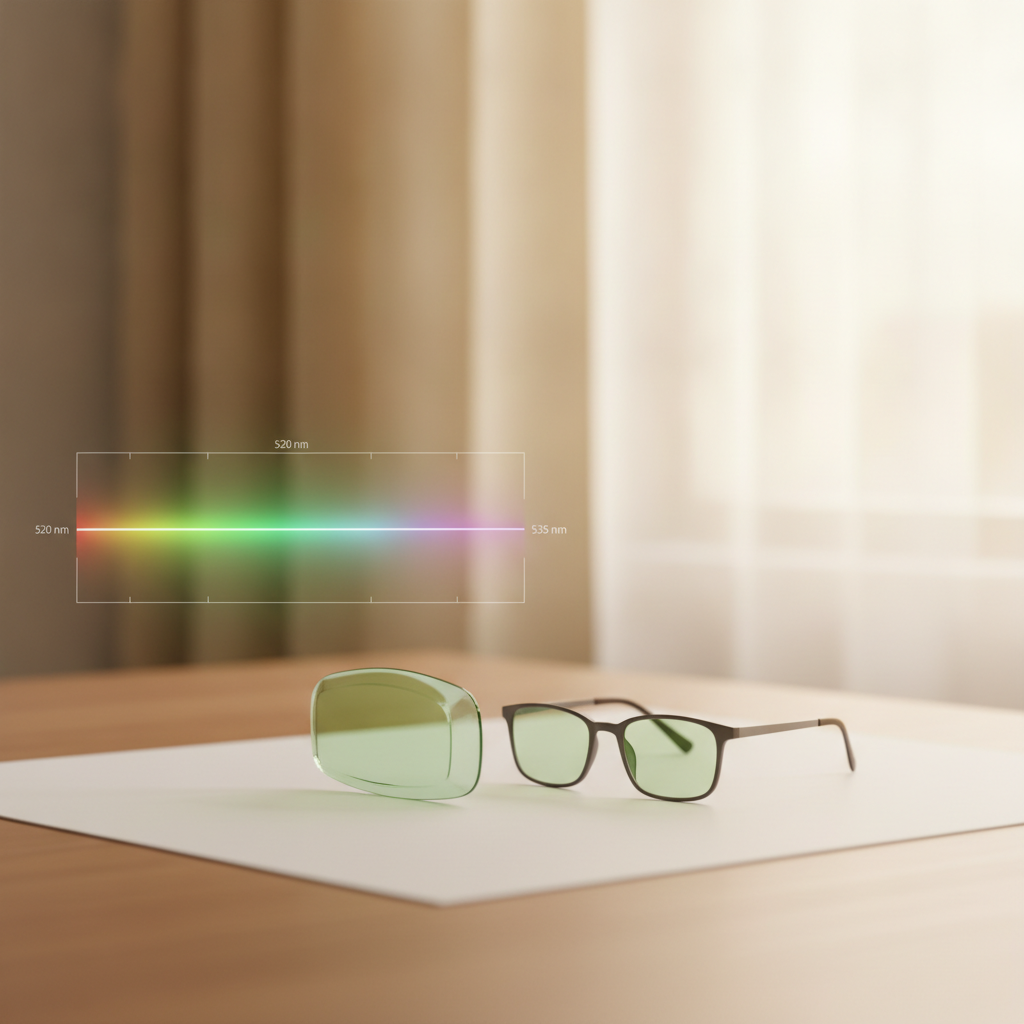
If you live with migraine, you already know that light can be your enemy. But emerging research suggests that a very specific slice of the visible spectrum may actually do the opposite — calming the pain pathways instead of igniting them. The green light therapy wavelength for migraine relief sits in a narrow band between 520 and 535 nanometers, and clinical studies from Harvard Medical School and the University of Arizona are showing remarkable, drug-free results.
TL;DR — The Bottom Line
The optimal green light therapy wavelength for migraine relief is a narrow band of 520–535 nm, delivered at low intensity through the eyes for 1–2 hours daily. Clinical studies show roughly 60% reductions in monthly headache days and pain intensity, with no significant side effects. Unlike broad-spectrum green bulbs, only narrow-band devices targeting this precise wavelength produce the documented therapeutic effect.
Quick Facts
- Optimal wavelength: 520–535 nm narrow band
- Daily exposure: 1–2 hours in a dim room
- Headache day reduction: ~60% in clinical trials
- Pain intensity reduction: From 8/10 to 3.2/10 (~60%)
- Delivery method: Through the eyes, not the skin
- Side effects reported: None significant
What Is the Ideal Green Light Therapy Wavelength for Migraine Relief?
Not all green light is created equal. The therapeutic effect depends entirely on hitting a very specific, narrow slice of the visible spectrum. According to Dr. Rami Burstein's lab at Harvard Medical School, the most effective green light therapy wavelength for migraine relief is a narrow band centered at 520 nm, plus or minus 10 nm. Independent clinical work from the University of Arizona, led by Dr. Mohab Ibrahim, has converged on the same range — roughly 515 to 535 nm.
Why does precision matter? Because broadband "green" light from a hardware-store bulb contains a wide mix of wavelengths, including small amounts of blue and yellow that can actually aggravate photophobia. Narrow-band green light, by contrast, generates the smallest electrical signals in the retina and visual cortex of any visible color, which is why it doesn't trigger the cortical hyperexcitability associated with migraine attacks.
The science here is consistent across multiple peer-reviewed studies. Burstein's 2016 study in Brain found that blue, red, amber, and white light all increased migraine pain — but narrow-band green light at low intensity actually reduced pain by about 20% in real-time exposure. That single finding launched a wave of research into the green light therapy wavelength for migraine relief.
Why narrow-band beats broad-spectrum
- Narrow-band (520–535 nm): Used in clinical trials. Produces measurable reductions in pain and headache days.
- Broad-spectrum "green" bulbs: Often contain bleed-through from blue and yellow wavelengths; no clinical evidence of benefit.
- Green-tinted overlays or filters: Filter out other colors but don't actively deliver therapeutic green light.
The Science: How Green Light Calms a Migraine Brain
To understand why the green light therapy wavelength for migraine relief works, you need to understand what happens in the migraine brain when light enters the eye. In healthy individuals, light signals travel from the retina through the optic nerve to the visual cortex and other brain regions. In someone with migraine, these signals are amplified — especially during an attack — producing the painful photophobia that drives so many sufferers into dark rooms.
Researchers have identified several converging mechanisms that explain green light's unique effect:
1. Smaller electrical signals in pain pathways
Burstein's lab demonstrated that narrow-band green light produces dramatically smaller electrical responses in the retina and cortex compared to blue, red, or white light. Less electrical activity means less activation of the trigeminovascular system that drives migraine pain.
2. Endorphin release
University of Arizona research found that daily green light exposure increases endorphin production — the body's natural painkillers. This may explain the gradual, cumulative benefit seen in patients who use the therapy daily for several weeks.
3. Anti-inflammatory effects
Animal studies from the same Arizona team showed that green light exposure reduces inflammatory markers in the nervous system and increases anti-inflammatory responses, addressing one of the underlying drivers of chronic migraine.
4. Autonomic nervous system regulation
Clinical observations suggest the green light therapy wavelength for migraine relief may calm hyperexcitable brain circuits and modulate the autonomic nervous system, reducing the sensory overload that triggers many attacks.
The therapeutic effect is mediated through the eyes. The light must enter the visual system to engage the retinal pathways that ultimately reduce pain signaling. Wearing it as a skin treatment will not produce the documented migraine benefits.
Clinical Evidence: What the Studies Actually Show
The clinical data behind the green light therapy wavelength for migraine relief is more robust than most natural therapies in the migraine space. Here are the headline numbers from peer-reviewed trials.
Harvard photophobia study (Burstein, 2016)
- Most light colors (blue, red, white, amber) worsened headache pain and photophobia.
- Narrow-band green light at low intensity reduced headache pain by ~20% during real-time exposure.
- Established green as the only color that does not aggravate migraine.
University of Arizona green LED (GLED) trial
A landmark study evaluated daily exposure to narrow-band green LED light in patients with episodic and chronic migraine. Results after 10 weeks of daily exposure:
| Metric | Episodic Migraine | Chronic Migraine |
|---|---|---|
| Headache days/month before | ~7.9 | ~22.3 |
| Headache days/month after | ~2.4 | ~9.4 |
| Pain intensity (0–10) before | 8.0 | 8.0 |
| Pain intensity after | 3.2 | 3.2 |
| Reduction in pain | ~60% | ~60% |
Additional benefits reported in the Arizona trial included:
- Shorter headache duration when attacks did occur
- Improved sleep quality (falling asleep and staying asleep)
- Improved ability to perform work and daily activities
- Reduced reliance on acute migraine medications
- No significant side effects reported across the study population
"A majority of participants reported greater than 50% reduction in headache days per month" — University of Arizona Health Sciences study on green LED exposure.
How to Use Green Light Therapy: A Step-by-Step Protocol
If you're going to invest in a green light therapy device, the protocol matters as much as the wavelength. Here's the evidence-based approach used in clinical trials and recommended by migraine specialists.
- Set up a dim room. Turn off overhead lights and close blinds. The lamp should be the dominant light source.
- Position the lamp 3–6 feet away. You don't need to stare directly at it — reflected light is fine.
- Expose your eyes for 1–2 hours daily. Most clinical protocols use 2 hours, often before bed.
- Engage in low-stimulation activities. Read a paper book, listen to music or a podcast, meditate, or simply rest. Avoid screens, which emit blue light that cancels the benefit.
- Be consistent for at least 10 weeks. The Arizona trial showed cumulative benefit that built over 8–10 weeks of daily use.
- Track your headache days. Use a migraine diary or app to objectively measure changes.
For more on building a daily routine, see our guide to how to use your green light lamp and our recommended migraine relief protocol.
No. Standard green bulbs emit broad-spectrum light with significant bleed-through into blue and yellow wavelengths, which can actually worsen photophobia. The clinical benefit depends on a narrow-band LED specifically engineered to emit the 520–535 nm green light therapy wavelength for migraine relief.
Myths vs. Reality: Clearing Up Common Misconceptions
Choosing the Right Lamp: What to Look For
The market for green light products has exploded, but most of what's sold online doesn't deliver the green light therapy wavelength for migraine relief that the research validates. Here's what to evaluate before buying.
Wavelength specification
The product page should explicitly state a narrow band around 520–535 nm. If the manufacturer can't tell you the peak wavelength and bandwidth, walk away.
Intensity (lux) controls
Clinical protocols use low-intensity green light. A good therapeutic lamp offers adjustable brightness so you can stay in the comfortable, low-lux range used in studies.
Pure narrow-band LED
Look for LEDs engineered specifically for this purpose, not white LEDs with a green filter. Filtered white light leaks other wavelengths that undermine the therapy.
Quality of construction
You'll be using this lamp for hours every day, often near your bed or reading chair. Build quality, flicker-free operation, and silent function matter.
Independent validation
Check whether the brand cites the actual peer-reviewed research and matches its specifications to that research, rather than making vague "science-backed" claims.
You can compare specifications and read more about engineering choices on our lamp specifications page.
"The therapeutic effect of green light therapy isn't about the color you see — it's about the precise wavelength reaching your retina. A few nanometers in either direction changes everything."
Who Benefits Most From Green Light Therapy?
The green light therapy wavelength for migraine relief appears to help a wide range of patients, but the strongest results have been documented in specific groups:
- Chronic migraine sufferers (15+ headache days per month) — saw the largest absolute reductions in headache days.
- Episodic migraine patients looking for a preventive option without medication side effects.
- People with severe photophobia — green light is the only color that doesn't worsen photophobia and may reduce it.
- Patients sensitive to migraine medications or those who have tried multiple preventives without success.
- Pregnant or breastfeeding patients who want to avoid pharmacological options.
- Individuals with comorbid sleep disturbance — daily green light use was associated with improved sleep in the Arizona study.
Green light therapy is not a replacement for medical care. It's best used as an adjunct to a comprehensive migraine plan that may include lifestyle modifications, identified trigger avoidance, and — where appropriate — medication.
Frequently Asked Questions
What is the best green light therapy wavelength for migraine relief?
The optimal wavelength is a narrow band centered around 520 nm (plus or minus 10 nm), with the broader therapeutic range falling between 515 and 535 nm. Harvard and University of Arizona research both converge on this narrow window.
How long does it take to see results from green light therapy?
Most clinical studies use a daily protocol of 1–2 hours for 8–10 weeks. Some patients notice improvements within a few weeks, but the strongest reductions in headache days and pain intensity typically build over the full 10-week period.
Are there any side effects of green light therapy for migraine?
Published clinical trials have reported no significant side effects. Some users notice mild eye fatigue if they sit too close or use intensity that is too high. Following the recommended low-intensity, dim-room protocol minimizes any discomfort.
Can I use green light therapy along with my migraine medication?
Yes. Green light therapy is non-pharmacological and does not interact with medications. Many patients use it as an adjunct to triptans, CGRP inhibitors, or preventive medications. Always coordinate any new therapy with your treating clinician.
Will a green bulb from the hardware store work for migraine relief?
No. Standard green bulbs emit broad-spectrum light that includes wavelengths outside the therapeutic 520–535 nm window. These extraneous wavelengths can actually aggravate photophobia. Only narrow-band engineered green LEDs deliver the clinical benefit.
The Bottom Line: A Drug-Free Tool With Real Evidence
For decades, migraine sufferers have been told that light is only ever a trigger to avoid. The research on the green light therapy wavelength for migraine relief turns that assumption on its head. Within a narrow band of 520–535 nanometers, low-intensity green light isn't just neutral — it's actively therapeutic, with clinical studies documenting roughly 60% reductions in monthly headache days and pain intensity, alongside improvements in sleep and daily function.
This is not a magic cure. It demands consistency — 1 to 2 hours of daily exposure for 8 to 10 weeks — and it requires using a device engineered to deliver the precise wavelength validated by research, not a generic green bulb. But for migraine patients who want a natural, drug-free, side-effect-free tool to add to their treatment plan, the evidence is increasingly hard to ignore.
Ready to put the green light therapy wavelength for migraine relief to work in your own life? Explore the MyGreen Lamp, engineered to the precise 520–535 nm specification used in clinical research. Visit mygreenlamp.com to learn more, read patient stories, and find the right lamp for your routine.