Benefits of Green Light Therapy for Light Sensitivity
June 20, 2026 · 13 min read
TL;DR — The Bottom Line
The benefits of green light therapy for light sensitivity are best documented in migraine and photophobia research, where narrow-band green light around 520 nm has been shown to reduce headache pain by about 20% and improve photophobia in roughly 53% of attacks. Unlike white or blue light, low-intensity green light is unusually tolerable for migraine sufferers and may even soothe symptoms. It's a complementary, drug-free tool — not a cure — and dose, wavelength, and intensity all matter.
If bright lights trigger your migraines, make your eyes ache, or send your nervous system into overload, you've probably wondered whether any kind of light could actually help instead of hurt. That's where the conversation about the benefits of green light therapy for light sensitivity begins. Over the past decade, neurologists and pain researchers at institutions like Harvard Medical School have discovered that a very specific slice of the visible spectrum — narrow-band green light — behaves differently in the brain than other colors, offering a rare combination of comfort and measurable symptom relief.
This guide breaks down what the science actually says, how green light therapy works for photophobia and sensory overload, what dose and wavelength matter, and how to use it safely at home. Whether you're managing chronic migraine, post-concussion light sensitivity, or general sensory overwhelm, understanding the benefits of green light therapy for light sensitivity can help you make a more informed, drug-free choice.
Quick Facts
- Pain reduction (Harvard study): ~20% with narrow-band green light
- Headache-day reduction (Arizona report): ~60% fewer per month
- Photophobia improvement: 53% of migraine attacks in diary study
- Headache improvement: 55% of attacks in diary study
- Optimal wavelength: 515–535 nm
- Optimal intensity: ~4–100 lux (low)
- Side effects reported: None measured in cited studies
What Is Green Light Therapy and Why Does Light Sensitivity Matter?
Light sensitivity, clinically known as photophobia, is one of the most disabling features of migraine, post-concussion syndrome, dry eye disease, fibromyalgia, and many neurological conditions. For people who experience it, ordinary sunlight, fluorescent office lighting, or even a phone screen can trigger eye pain, nausea, and worsening headaches. The benefits of green light therapy for light sensitivity stem from the surprising discovery that not all wavelengths affect the brain equally.
Green light therapy uses a narrow band of green wavelengths — typically between 515 and 535 nanometers — delivered at low intensity. Unlike standard light therapy lamps used for seasonal affective disorder (which rely on bright white or blue light), green light lamps for photophobia are designed to be dim, soothing, and visually comfortable. Research by Dr. Rami Burstein at Harvard Medical School found that this specific green band activates retinal and cortical pathways much less aggressively than other colors, which is why it can reduce — rather than worsen — migraine pain.
The Science Behind the Benefits of Green Light Therapy for Light Sensitivity
The pivotal study that put green light therapy on the migraine map came from Beth Israel Deaconess Medical Center and Harvard Medical School. Researchers exposed migraine patients to white, blue, green, amber, and red light at various intensities. Across the board, most colors made migraine pain worse — except green. At low intensity, green light reduced headache severity by approximately 20% and was the only color that did not aggravate photophobia.
Why? The retina contains cones and intrinsically photosensitive retinal ganglion cells (ipRGCs) that send signals through the optic nerve to pain-processing regions of the brain, including the thalamus. Narrow-band green light produces a smaller electrical signal in both the retina and the cortex than other wavelengths, meaning the brain interprets it as far less "loud." For a sensitized migraine brain, that quieter signal can be the difference between a flare and relief.
What the Clinical Data Shows
- Harvard Medical School: ~20% pain reduction with narrow-band green light in migraine patients.
- University of Arizona (Dr. Mohab Ibrahim): Migraine sufferers experienced about a 60% reduction in headache days per month, with a majority reporting more than 50% improvement.
- Migraine Again diary study: Photophobia improved in 53% of attacks and headache in 55% of attacks.
- Frontiers in Neurology (fibromyalgia): Significant reductions in average pain intensity and improvements in quality-of-life scores, with no measured side effects.
Narrow-band green light generates a much smaller electrical signal in the retina and visual cortex than blue, white, or red light. That weaker signal travels through the same pain pathways activated during a migraine but stimulates them far less, allowing the brain to perceive less light-driven pain.
Key Benefits of Green Light Therapy for Light Sensitivity
When we talk about the benefits of green light therapy for light sensitivity, we're really talking about a cluster of interrelated improvements that matter most to migraine and sensory-overload patients. Here's what the research and clinical reports support.
1. Reduced Photophobia During Attacks
Most migraine sufferers retreat to dark rooms because all light hurts. Narrow-band green light gives them a usable middle ground — enough light to function without triggering or worsening symptoms. In diary studies, photophobia improved in over half of attacks when patients used green light.
2. Lower Headache Intensity
The Harvard findings showed a measurable ~20% reduction in pain intensity during active migraine. While modest, that reduction can be the difference between debilitating pain and functional discomfort.
3. Fewer Headache Days Per Month
Long-term, daily green light exposure (typically 1–2 hours in the evening) has been associated with up to a 60% drop in monthly headache days in some cohorts — comparable to outcomes seen with prescription preventives, but without the side effects.
4. Improved Quality of Life
The fibromyalgia trial in Frontiers in Neurology found that green light improved multiple quality-of-life measures, including sleep, mood, and daily function — likely because reducing chronic pain has downstream benefits across all domains of well-being.
5. A Drug-Free, Side-Effect-Free Option
Across the studies cited, no measurable side effects were observed. For patients who can't tolerate triptans, beta-blockers, or anti-CGRP medications, green light offers a complementary path. Explore our science page for a deeper dive into the clinical evidence.
How to Use Green Light Therapy for Light Sensitivity at Home
The benefits of green light therapy for light sensitivity depend heavily on getting the protocol right. Wavelength, intensity, distance, and duration all matter. Here's a practical, research-aligned approach.
- Choose a true narrow-band lamp. Look for a device that specifies a wavelength between 515 and 535 nm. Generic green LEDs from a hardware store usually emit a broader spectrum and may not produce the same effect.
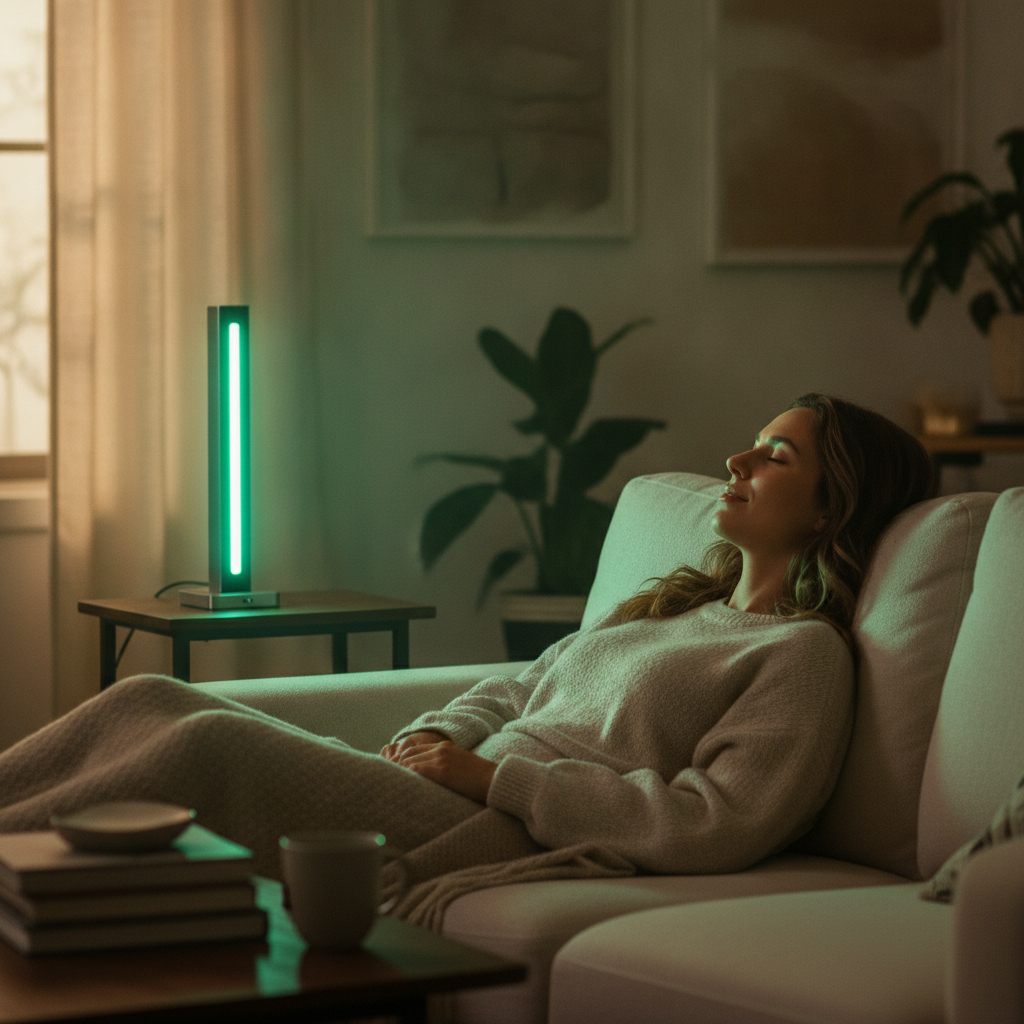
- Use it in a dark or dim room. The point is not bright stimulation — it's replacing harsh ambient light with a single calming wavelength. Turn off overhead lights and screens.
- Start with 1–2 hours per evening. Most clinical protocols, including the Arizona study, use about 2 hours of daily exposure for 10 weeks.
- Maintain low intensity (~4–100 lux). Sit about 3–6 feet from the lamp. You should not be staring directly into it; ambient bathing is the goal.
- Be consistent. Benefits typically appear after several weeks of daily use, not overnight.
- Track your symptoms. Keep a simple headache diary noting frequency, intensity, photophobia, and sleep. This helps you and your clinician evaluate progress.
Browse our curated lineup of clinically calibrated devices on the MyGreen Lamp shop to find a model that fits your space and routine.
Some migraine patients report acute relief during an attack within 1–2 hours of exposure. Preventive benefits — fewer headache days and reduced overall light sensitivity — typically emerge after 4–10 weeks of consistent daily use.
Green Light vs. Other Light Therapies: A Quick Comparison
It's easy to confuse green light therapy with red light therapy or SAD lamps. They serve very different purposes.
| Type | Wavelength | Primary Use | Effect on Migraine |
|---|---|---|---|
| Narrow-band green | 515–535 nm | Migraine, photophobia, sensory overload | Reduces pain (~20%) |
| White SAD lamps | Broad spectrum | Seasonal depression, circadian rhythm | Often worsens migraine |
| Blue light | ~470 nm | Alertness, mood | Strongly aggravates migraine |
| Red / near-infrared | 630–850 nm | Skin, muscle recovery | Mildly aggravates migraine |
Who Benefits Most from Green Light Therapy?
While the strongest evidence centers on migraine, several overlapping populations report meaningful improvement with green light exposure.
- Chronic and episodic migraine patients — particularly those with prominent photophobia.
- Post-concussion syndrome — light sensitivity is one of the most persistent symptoms, and green light can make recovery environments tolerable.
- Fibromyalgia patients — the Frontiers in Neurology trial showed reduced pain intensity and improved quality of life.
- People with sensory processing differences — including some autistic adults and individuals with PTSD who experience sensory overload in bright environments.
- Dry eye and photophobia from neurological conditions — green light offers a comfortable visual environment without exacerbation.
If you'd like to understand whether your specific condition fits the profile, our condition guide walks through each use case in detail.
"Narrow-band green light is the only color of the visible spectrum that doesn't aggravate migraine — and at low intensity, it can actually reduce pain." — adapted from research by Dr. Rami Burstein, Harvard Medical School
Safety, Limits, and What Green Light Therapy Cannot Do
The benefits of green light therapy for light sensitivity are real, but it's important to set realistic expectations. Green light therapy is not a cure for migraine, photophobia, or any underlying neurological condition. It is a complementary tool that works alongside — not instead of — your treatment plan.
That said, safety data is favorable. Across the cited studies, no measurable side effects were reported. Green light at low intensity does not damage the retina, does not disrupt melatonin production as severely as blue light, and is well tolerated even during active migraine attacks. Still, if you have a pre-existing retinal condition, epilepsy with photosensitivity, or are taking photosensitizing medications, consult your physician before starting.
It's also worth noting that not every green light product on the market is calibrated to the therapeutic 515–535 nm band. Marketing claims often outpace the science, particularly among low-cost imports. Look for transparent wavelength and lux specifications.
Frequently Asked Questions
What are the main benefits of green light therapy for light sensitivity?
The primary benefits include reduced photophobia, lower headache intensity (about 20% in clinical studies), fewer migraine days per month (up to 60% reduction in some reports), improved quality of life, and a drug-free option with no reported side effects in published studies.
Does green light therapy actually work for migraines?
Yes, peer-reviewed research from Harvard Medical School and the University of Arizona shows that narrow-band green light around 520 nm can reduce migraine pain and photophobia. It's the only color of light shown to not aggravate migraine and to potentially relieve it at low intensity.
How long should I use a green light therapy lamp each day?
Most clinical protocols recommend 1–2 hours of daily exposure in a dim or dark room, sitting 3–6 feet from the lamp. Preventive benefits typically appear after 4–10 weeks of consistent use, though some patients report acute relief during migraine attacks within hours.
Are there any side effects of green light therapy?
The studies cited (Harvard, Arizona, and the Frontiers in Neurology fibromyalgia trial) reported no measurable side effects. Narrow-band green light at low intensity is considered well tolerated. However, individuals with retinal disease, photosensitive epilepsy, or who take photosensitizing medication should consult a doctor first.
Can I use any green light bulb, or do I need a special lamp?
You need a true narrow-band lamp in the 515–535 nm range. Generic green LEDs from hardware stores emit a broader spectrum that often includes wavelengths known to worsen migraines. The therapeutic benefits depend on both wavelength precision and low intensity (around 4–100 lux).
Conclusion: A Gentle Light for an Overstimulated World
For millions of people, light is the enemy. Migraines, concussions, fibromyalgia, and sensory overload turn ordinary environments into minefields. The benefits of green light therapy for light sensitivity offer something rare in pain management: a tool that is gentle, drug-free, backed by peer-reviewed science, and increasingly accessible at home. The evidence — from Harvard's 20% pain reduction to Arizona's 60% drop in headache days — points to a small but real shift in how we think about light itself. Not all light hurts. Some of it, used correctly, can help heal.
If you're ready to explore whether a narrow-band green light lamp belongs in your routine, visit MyGreen Lamp to find clinically calibrated devices designed specifically for migraine and photophobia relief. Your nervous system — and your evenings — may never feel the same.