LightScalpel Laser Frenectomy Benefits Explained
May 19, 2026 · 7 min read
TL;DR — The Bottom Line
LightScalpel laser frenectomy benefits include superior precision, minimal bleeding, reduced pain, faster recovery, and lower infection risk compared to traditional scissors or scalpel techniques. For infants, children, teens, and adults in Central Florida dealing with tongue-tie or lip-tie restrictions, the LightScalpel CO₂ laser system offers a clinically advanced, patient-friendly solution that supports better feeding, speech, and overall oral function — often with procedures completed in seconds and recovery measured in days rather than weeks.
Quick Facts
- Laser Type: LightScalpel CO₂ laser at 10,600 nm wavelength
- FDA Clearance: Cleared for soft-tissue incision, excision, ablation, and frenectomy
- Infant Procedure Time: Often 10–30 seconds of actual lasing per tie
- Adult Procedure Time: Typically 10–20 seconds of laser time once anesthesia is effective
- Recovery: Most patients resume normal activities within 1–2 days
- Sutures Required: Rarely needed due to simultaneous tissue sealing
What Is a LightScalpel Laser Frenectomy?
If you or your child has been told you have a tongue-tie or lip-tie, you've likely heard the term frenectomy — the procedure that releases the tight band of tissue (frenum) limiting movement. What you may not yet know is that how that procedure is performed makes an enormous difference in the experience, outcome, and recovery. That's where understanding the full spectrum of LightScalpel laser frenectomy benefits becomes essential for any family in Central Florida navigating this decision.
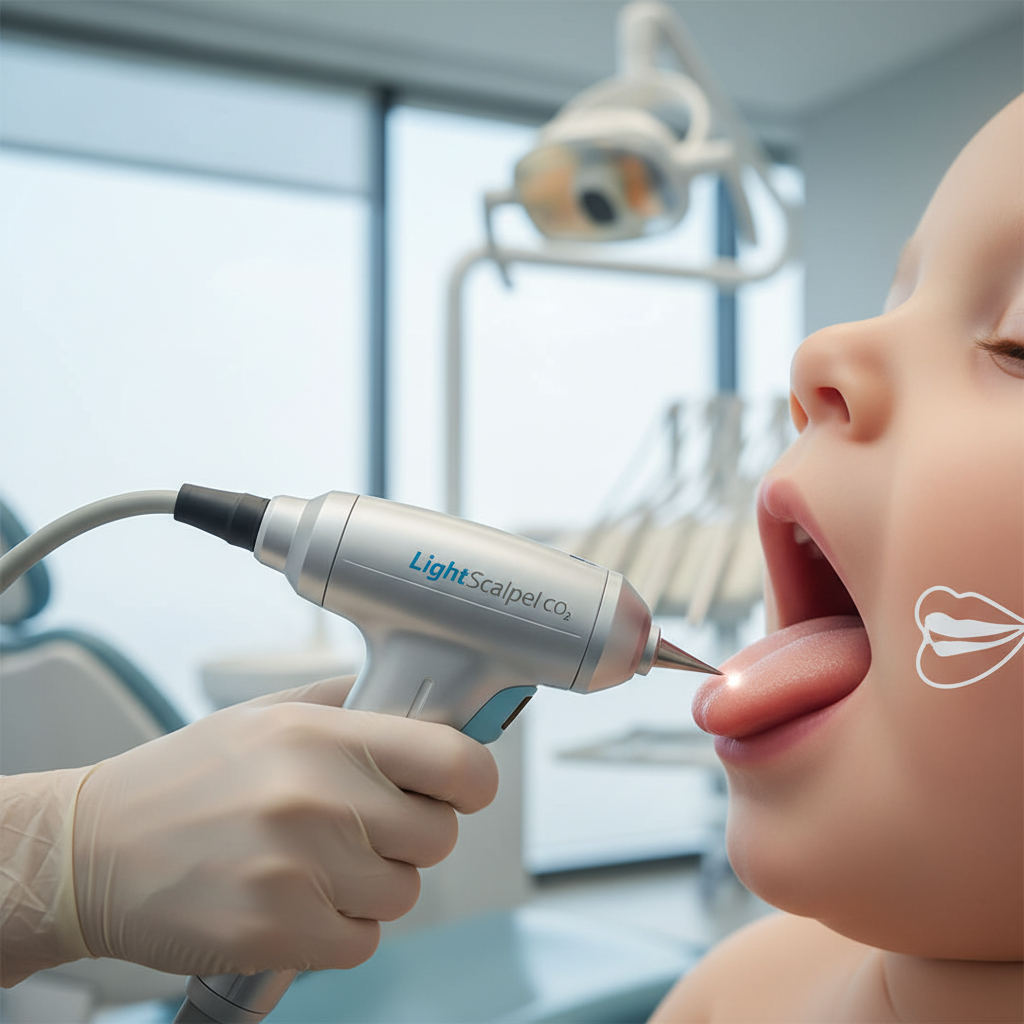
The LightScalpel system is an FDA-cleared CO₂ laser platform designed specifically for soft-tissue dental and medical procedures. It operates at a 10,600 nm wavelength, which is highly absorbed by water in soft tissue. This property allows the laser to cut through the restrictive frenum with extraordinary precision while simultaneously cauterizing the wound — sealing blood vessels and nerve endings as it works. The result is a cleaner, faster, and far more comfortable procedure than what was possible with older instruments.
At Lakeland Tongue Tie, this technology is used every day to help infants struggling to breastfeed, toddlers with speech delays, teenagers dealing with jaw and dental development issues, and adults finally addressing a lifetime of oral restrictions. Understanding why the LightScalpel CO₂ laser is the preferred choice for frenectomy starts with a closer look at its specific, documented advantages.
LightScalpel Laser Frenectomy Benefits: Precision and Tissue Preservation
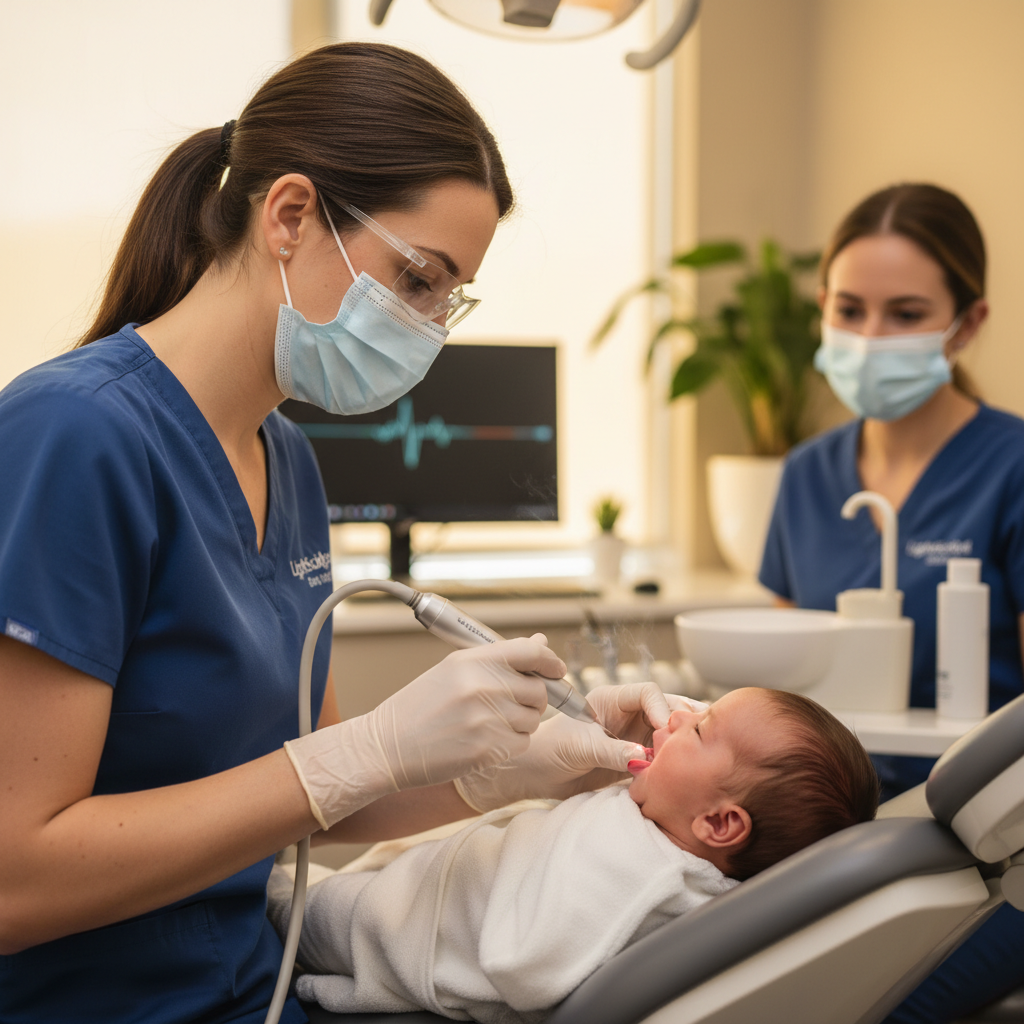
Perhaps the most clinically significant of all LightScalpel laser frenectomy benefits is the unmatched precision the CO₂ laser delivers. Traditional scissors and scalpel techniques involve mechanical cutting that can inadvertently damage adjacent structures — nerves, salivary ducts, and gland tissue that are critically important for oral function. The laser beam, by contrast, is an extraordinarily fine, focused energy source that removes only the targeted restrictive tissue.
This precision is especially critical in infants, where the oral anatomy is incredibly small and compact. A newborn's mouth offers very little margin for error. Releasing too little tissue may result in an incomplete correction that fails to resolve breastfeeding difficulties. Releasing too much, or damaging surrounding tissue, can create scar tissue that causes re-attachment — the very problem the procedure was meant to solve. The LightScalpel CO₂ laser's controlled beam minimizes both risks.
For older children and adults, precision translates into functional release quality. Research suggests that controlled, diamond-shaped releases — the clinical standard advocated by leading tongue-tie specialists — are far easier to achieve with a laser than with blunt scissors. When the tissue is released cleanly and completely, patients experience better range of motion, more effective speech therapy outcomes, and faster functional improvement.
Precision determines whether the procedure delivers a complete, functional release of the restricted frenum without damaging the salivary ducts, nerves, or surrounding healthy tissue. An incomplete release means continued restriction; damage to adjacent structures can create new problems. The LightScalpel CO₂ laser's focused beam achieves the exact tissue removal needed — and nothing more — making it safer and more effective than mechanical cutting tools, particularly in the small mouths of infants.
Reduced collateral heat is another dimension of precision worth noting. Unlike electrocautery (electrical burning devices sometimes used in conventional procedures), the CO₂ laser produces minimal thermal spread to surrounding tissue. Studies have shown that controlled incisions with reduced collateral heat are associated with smoother healing, better wound geometry, and lower rates of excessive scar tissue formation — all of which contribute to long-term functional success.
Minimal Bleeding for a Clearer, Safer Surgical Field
One of the most frequently cited LightScalpel laser frenectomy benefits — by both clinicians and families — is the near-complete elimination of significant bleeding during the procedure. The CO₂ laser accomplishes this by coagulating (sealing) small blood vessels at the same moment it cuts through tissue. In practice, this means the surgical site remains clean and visible throughout the entire release.
Why does this matter clinically? A clear, blood-free surgical field allows the provider to precisely assess the depth and completeness of the release in real time. With scissors or scalpel, bleeding can obscure the anatomy, making it harder to verify that the frenum has been fully released. With the LightScalpel laser, the provider maintains continuous visual clarity — which directly improves outcome accuracy.
For parents watching their infant undergo a frenectomy, minimal bleeding also has a significant psychological benefit. The absence of visible blood makes the procedure far less alarming to observe, and the infant typically shows less distress. Research suggests that infants undergoing laser frenectomy tolerate the procedure remarkably well, often requiring only topical anesthetic or a very small amount of local anesthesia. Many providers report that infants are calm enough to breastfeed immediately following the procedure — which serves both as a comfort measure and as an immediate functional test of the release.
Reduced Pain, Swelling, and Scarring After the Procedure
The postoperative experience is often what concerns families most — and it's an area where LightScalpel laser frenectomy benefits are especially compelling. Compared to conventional scalpel techniques, CO₂ laser frenectomies are consistently associated with significantly less postoperative pain, swelling, and scarring.
The mechanism behind this is directly tied to how the laser interacts with tissue. When the laser seals nerve endings at the incision site as it cuts, it reduces the acute pain signaling that normally follows a mechanical wound. Additionally, because there is minimal tissue trauma and virtually no tearing or crushing of cells (as can occur with scissors), the inflammatory response that drives swelling is substantially reduced.
Less swelling and inflammation also means less wound contraction during healing — and wound contraction is one of the primary causes of scar tissue formation and, more critically, frenum re-attachment after frenectomy. Re-attachment is a documented risk with any frenectomy technique, but it is generally considered to be lower with laser procedures due to the cleaner wound edges and reduced scarring response.