What to Expect During a Home Inspection Tampa Bay Guide
May 29, 2026 · 13 min read
TL;DR — The Bottom Line
A home inspection in Tampa Bay typically takes 2–4 hours and covers the roof, structure, plumbing, electrical, HVAC, insulation, and moisture-related concerns critical to Florida's climate. Buyers should expect a written report within 24–48 hours, plus optional add-ons like four-point, wind mitigation, mold, termite, and sewer scope inspections that affect insurance and negotiations.
Buying or selling a home in Tampa Bay can be one of the most significant financial decisions of your life, and knowing what to expect during a home inspection Tampa Bay is essential to protecting that investment. Florida's unique combination of intense sun, humidity, hurricane risk, and aging housing stock makes the inspection process here different from many other markets. Whether you're a first-time buyer in St. Petersburg, a seller in South Tampa, or relocating to Clearwater, understanding the inspection process helps you negotiate confidently, anticipate costs, and avoid expensive surprises.
This comprehensive guide walks you through every phase of the inspection process, the local risks inspectors prioritize, the optional inspections that matter most in Florida, and how to use the final report to your advantage. If you're working with a Tampa Bay real estate professional like Kyle Hollister, you'll likely receive specific guidance on which inspectors to trust and which add-ons make sense for your property.
Quick Facts
- Typical duration: 2–4 hours for a standard home
- Report delivery: 24–48 hours after the inspection
- Average cost in Tampa Bay: $300–$500 for a standard inspection
- Median age of U.S. owner-occupied homes: 41 years
- Homes built before 1959: approximately 37% of U.S. housing stock
- Common add-ons: four-point, wind mitigation, mold, termite, pool/spa, sewer scope
What to Expect During a Home Inspection Tampa Bay: The Standard Process
When you schedule a home inspection in Tampa Bay, the process generally unfolds in five predictable phases. Knowing what to expect during a home inspection Tampa Bay homeowners go through allows you to plan your day, attend key moments, and ask informed questions. Most certified inspectors follow a systematic checklist aligned with InterNACHI or ASHI standards, adapted for Florida-specific conditions.
1. Pre-Inspection Scheduling and Preparation
Once your offer is accepted, you'll typically have a 7–15 day inspection period written into your contract. Buyers should book an inspector within 48 hours of acceptance because qualified inspectors in Tampa Bay book up quickly, especially during peak season (January through April). Sellers preparing a pre-listing inspection should schedule 2–3 weeks before going live.
2. Exterior Evaluation
The inspector starts outside, examining the roof (often with drones or ladders), siding, soffits, fascia, gutters, drainage, grading, driveways, decks, and accessory structures. In Tampa Bay, this phase emphasizes roof age, shingle condition, flashing integrity, and signs of wind or hail damage — all critical for insurance underwriting.
3. Interior Evaluation
Inside, the inspector tests every accessible outlet, switch, faucet, window, and door. They evaluate ceilings, walls, and floors for cracks or water staining; check appliances; inspect bathrooms and kitchens; and test HVAC performance — vital in our humid climate where a struggling system can lead to mold within weeks.
4. Attic, Crawlspace, and Mechanical Systems
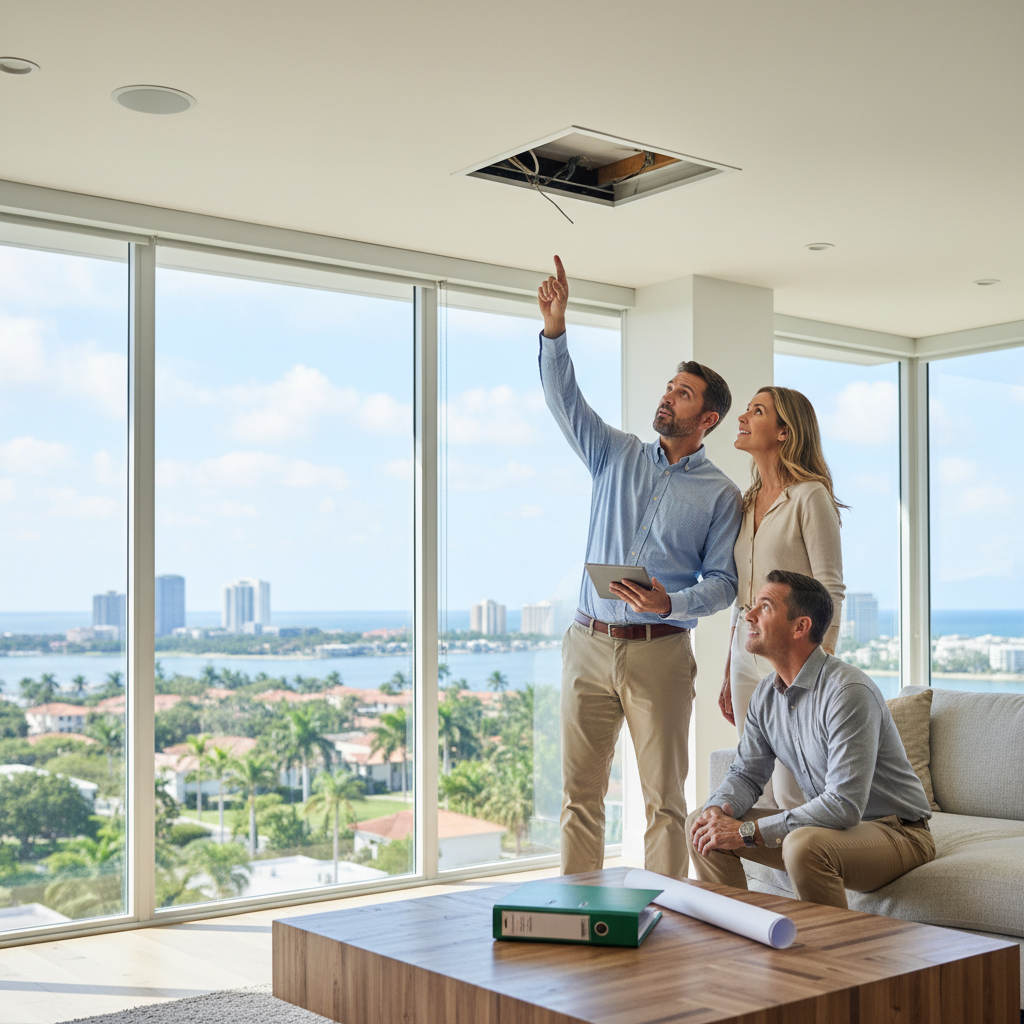
Where accessible, inspectors enter attics and crawlspaces to evaluate insulation, ventilation, ductwork, plumbing connections, electrical wiring, and signs of pests or moisture. Tampa Bay attics frequently reveal heat-related shingle deterioration and inadequate ventilation that drives up cooling bills.
5. Walkthrough and Report Delivery
Most inspectors conclude with a verbal walkthrough summarizing major findings. The full written report — with photographs, condition notes, and recommendations — usually arrives within 24–48 hours.
Why Tampa Bay Inspections Focus on Florida-Specific Risks
Understanding what to expect during a home inspection Tampa Bay properties undergo means recognizing the unique environmental pressures inspectors prioritize. Unlike inland markets, Tampa Bay homes contend with salt air, intense UV exposure, sustained humidity, hurricane-force winds, and storm surge zones. These factors reshape inspection priorities dramatically.
Roof Condition and Wind Resistance
Roofs are the single most scrutinized component in Florida inspections. Insurance carriers often refuse to issue or renew policies on roofs older than 15 years (asphalt shingle) or 25 years (tile/metal). Inspectors document the roof's age, remaining useful life, and wind mitigation features such as hip geometry, secondary water resistance, and hurricane straps.
Moisture Intrusion and Humidity Damage
With average humidity above 75% much of the year, even small leaks can foster mold quickly. Inspectors use moisture meters and thermal imaging to identify hidden water intrusion behind walls, around windows, and at stucco-to-foundation transitions — a common defect in Tampa Bay homes built in the 1990s and 2000s.
HVAC Performance
Air conditioning isn't a luxury here — it's a structural necessity. Inspectors verify supply-to-return temperature differentials, check refrigerant lines, evaluate condensate drainage, and note system age. A failing HVAC system can cost $7,000–$12,000 to replace.
While not required, attendance is strongly recommended. Being present allows you to ask questions in real time, see issues firsthand, and better understand the inspector's findings. Most Tampa Bay inspectors welcome buyer attendance during the final walkthrough portion.
Essential Add-On Inspections for Tampa Bay Homes
A standard home inspection won't cover everything Florida insurers and lenders require. When considering what to expect during a home inspection Tampa Bay buyers should plan for, add-on inspections are often non-negotiable — especially for homes over 20 years old. Many local inspectors bundle these services to save you scheduling headaches.
Four-Point Inspection
Required by most insurers for homes 20+ years old, the four-point covers roof, electrical, plumbing, and HVAC. It costs $75–$150 when bundled with a full inspection and is often the difference between getting insured and not.
Wind Mitigation Inspection
This documents storm-resistant features and typically saves homeowners 20–45% on the wind portion of their insurance premium — often paying for itself within the first year. The report is valid for five years.
Termite / WDO Inspection
Wood-destroying organisms (subterranean termites, drywood termites, powderpost beetles) thrive in Florida. A WDO report is often required by VA loans and is highly recommended for any wood-frame or older home.
Mold Assessment
If the inspector flags moisture, a licensed mold assessor can sample air and surfaces. Remediation costs can range from $500 for small areas to $30,000+ for whole-home contamination.
Pool and Spa Inspection
Tampa Bay's pool-heavy housing market makes this critical. Inspectors evaluate equipment, plumbing, electrical bonding, screen enclosures, and surface condition.
Sewer Scope
A camera is run through the main sewer line to identify root intrusion, breaks, or bellies. Common in older neighborhoods like Seminole Heights and Old Northeast where clay pipes still exist.
| Inspection Type | Typical Cost | When You Need It |
|---|---|---|
| Standard Home Inspection | $300–$500 | Every transaction |
| Four-Point | $75–$150 (bundled) | Homes 20+ years old |
| Wind Mitigation | $75–$150 (bundled) | All Florida homes (insurance savings) |
| Termite/WDO | $75–$150 | VA loans, wood-frame homes |
| Mold Assessment | $300–$600 | Visible moisture or musty odors |
| Pool/Spa | $100–$200 | Any property with a pool |
| Sewer Scope | $150–$300 | Homes 30+ years old, large trees |
How Long Does a Tampa Bay Home Inspection Take?
Knowing what to expect during a home inspection Tampa Bay timeline-wise helps you plan. A standard 2,000-square-foot single-family home typically takes 2.5–3.5 hours. Larger properties, older homes with deferred maintenance, or homes with multiple add-ons can extend to 5–6 hours.
- Condos under 1,500 sq ft: 1.5–2 hours
- Standard single-family (1,500–2,500 sq ft): 2.5–3.5 hours
- Larger homes (2,500–4,000 sq ft): 3.5–5 hours
- Luxury or estate homes (4,000+ sq ft): 5–7 hours
If you've ordered add-on inspections, expect another 30–90 minutes total. For a complete view of your transaction timeline, visit our Tampa Bay buyer's guide.
Reading and Acting on Your Inspection Report
The written report is the heart of what to expect during a home inspection Tampa Bay process delivers. Modern reports include photographs, severity ratings, and repair recommendations. Most are 40–80 pages long and organized by system.
Severity Levels Explained
- Safety hazards: Immediate risks like exposed wiring, gas leaks, or structural deficiencies
- Major defects: Items costing $1,000+ to repair (roof replacement, HVAC failure, foundation cracks)
- Maintenance items: Routine upkeep like caulking, filter changes, or minor repairs
- Monitor items: Conditions that should be watched over time
Using the Report in Negotiations
Tampa Bay buyers generally have three options after receiving the report:
- Request repairs — typically focused on safety hazards and major defects
- Request a credit at closing — often preferred by sellers and lenders
- Request a price reduction — common when major systems need replacement
- Walk away — if your contract has an inspection contingency, you can typically exit without losing earnest money
Sellers can prepare in advance by reviewing common red flags. Learn more about prepping your property at our sellers' resource page.
Yes. In Florida's standard contracts, inspection-related repairs are typically negotiable, not mandatory. However, lenders may require certain safety or insurability fixes before closing — particularly anything flagged on the four-point inspection. A skilled agent will help you prioritize requests strategically.
How to Prepare for Your Tampa Bay Home Inspection
Whether you're buying or selling, preparation directly affects what to expect during a home inspection Tampa Bay outcomes. A well-prepared property allows the inspector to access every system, reducing the chance of "unable to inspect" notations that complicate insurance and negotiations.
For Sellers: Pre-Inspection Checklist
- Clear access to the attic, electrical panel, water heater, and HVAC units
- Replace burned-out light bulbs (so the inspector can verify fixtures work)
- Replace HVAC filters and clean condensate drain lines
- Ensure all utilities are on (water, gas, electric)
- Trim landscaping away from the roof, siding, and AC condenser
- Address known issues — small repairs prevent bigger negotiation hits
- Gather documentation: permits, roof age, recent repairs, warranties
For Buyers: What to Bring and Ask
- A notebook or phone for taking notes
- Your contract's inspection deadline
- Questions about anything you noticed during showings
- Specific concerns about insurability — ask the inspector to flag four-point issues separately
"In Tampa Bay, the home inspection isn't just a defect-finding exercise — it's an insurance qualification, a negotiation tool, and a roadmap for the next decade of homeownership."
Common Tampa Bay Inspection Findings (and What They Cost)
Based on patterns across thousands of Tampa Bay inspections, certain issues appear repeatedly. Knowing these in advance helps you budget and negotiate intelligently.
| Issue | Frequency | Typical Repair Cost |
|---|---|---|
| Aging roof (nearing 15+ years) | Very common | $8,000–$25,000+ |
| HVAC system 10+ years old | Common | $7,000–$12,000 |
| Polybutylene plumbing (1978–1995) | Common in older homes | $4,000–$15,000 |
| Stucco cracking / moisture intrusion | Common | $500–$10,000 |
| Federal Pacific / Zinsco electrical panels | Older homes | $1,500–$3,500 |
| Improper attic ventilation | Very common | $300–$1,500 |
| GFCI outlets missing in wet areas | Very common | $15–$30 per outlet |
| Termite activity / damage | Common | $1,500–$8,000 |
For homes built before 1995, polybutylene plumbing is an especially serious insurability concern — most carriers will not insure homes with active poly. If you're house hunting in established neighborhoods, work with an agent who knows how to identify these red flags before you even make an offer.
"A $400 home inspection that uncovers a $12,000 HVAC failure or an uninsurable roof has just delivered a 30x return on your investment."
Choosing the Right Tampa Bay Home Inspector
Not all inspectors are equal. Florida licenses home inspectors through the Department of Business and Professional Regulation (DBPR), but credentials, experience, and reporting quality vary widely.
What to Look For
- Florida state license (HI#) — verify on the DBPR website
- InterNACHI or ASHI certification — indicates ongoing education
- $500K+ E&O insurance — protects you if something is missed
- Sample reports available — review before booking
- Local experience — minimum 3–5 years inspecting Tampa Bay homes
- Bundle pricing — for four-point, wind mitigation, and termite
Your real estate agent should be willing to recommend several inspectors — not pressure you toward one. For trusted referrals across Hillsborough, Pinellas, and Pasco counties, reach out via our contact page.
Frequently Asked Questions
How much does a home inspection cost in Tampa Bay?
A standard home inspection in Tampa Bay typically costs $300–$500, depending on home size, age, and features. Add-on inspections like four-point ($75–$150), wind mitigation ($75–$150), termite ($75–$150), and sewer scope ($150–$300) are usually bundled at a discount. Larger or older homes can push total costs to $700–$1,000.
What does a home inspector check in Tampa Bay?
Tampa Bay inspectors evaluate the roof, exterior, structure, attic, electrical, plumbing, HVAC, insulation, ventilation, interior surfaces, appliances, and moisture-related concerns. Florida inspections place extra emphasis on storm damage, wind mitigation features, humidity-related issues, mold risk, and components affecting insurability.
Should I get a four-point inspection in Tampa Bay?
Yes, if your home is 20+ years old. Most Florida insurance carriers require a four-point inspection (roof, electrical, plumbing, HVAC) before issuing or renewing a policy. Without it, you may be unable to obtain homeowner's insurance, which would prevent closing on the property.
How long after the inspection do I get the report?
Most Tampa Bay inspectors deliver the written report within 24–48 hours. Reports typically include photographs, condition notes, severity ratings, and repair recommendations, organized by system. Same-day reports are sometimes available for an additional fee or simpler properties.
Can a home inspection kill a Tampa Bay real estate deal?
Yes, inspections can derail deals when major defects emerge — especially uninsurable roofs, polybutylene plumbing, active mold, or structural issues. However, most issues are negotiable through repair credits or price reductions. Working with an experienced local agent helps you respond strategically rather than emotionally.
Conclusion: Your Next Step in the Tampa Bay Market
Now that you know what to expect during a home inspection Tampa Bay properties go through, you're equipped to navigate one of the most consequential steps in any real estate transaction. From understanding the 2–4 hour walkthrough timeline, to evaluating insurance-critical add-ons like four-point and wind mitigation, to interpreting your report and negotiating effectively — preparation is your greatest advantage.
Tampa Bay's unique climate, aging housing stock, and evolving insurance landscape mean that every inspection tells a story about a home's past and its future. Buyers who treat the inspection as a strategic tool — not a formality — consistently negotiate better outcomes, avoid uninsurable properties, and step into homeownership with clear-eyed confidence.
Ready to buy or sell in Tampa Bay with an expert who understands the inspection process inside and out? Connect with Kyle Hollister today for personalized guidance, trusted inspector referrals, and a real estate experience built around your goals. Visit hollister-realestate.com to schedule a free consultation.