How to Maintain a Hotel Cold Plunge Unit: Full Guide
October 23, 2026 · 13 min read
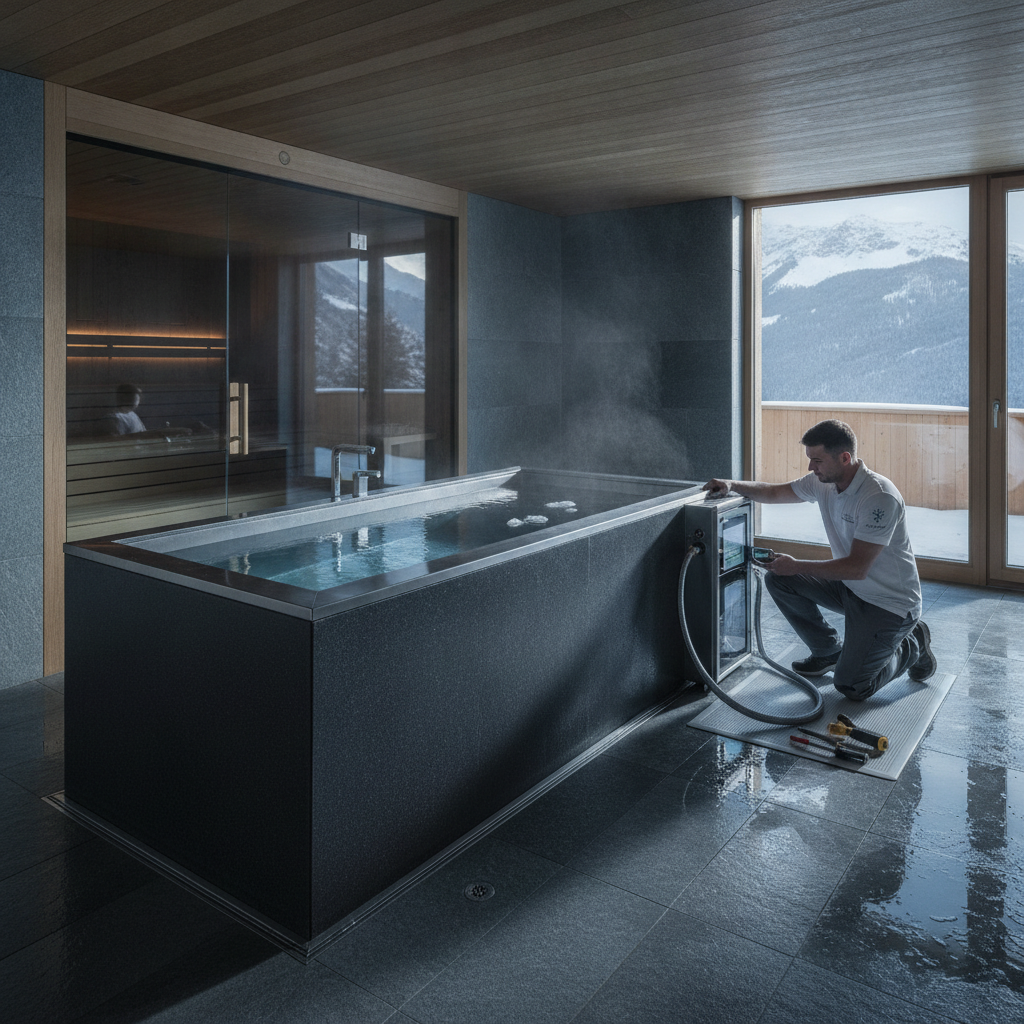
Knowing how to maintain a hotel cold plunge unit is quickly becoming a core operational competency for wellness-forward properties, not a side task left to whoever happens to be on duty. As cold therapy moves from boutique novelty to expected amenity, general managers and spa directors are discovering that a poorly maintained unit can turn a guest-loved feature into a liability, a health code violation, or an expensive repair bill. This guide breaks down exactly how to maintain a hotel cold plunge unit using the same operational discipline hotels already apply to pools and spas — without turning your engineering team into aquatic chemists.
TL;DR — The Bottom Line
Learning how to maintain a hotel cold plunge unit means treating it as a commercial aquatic system: test and log water chemistry daily, clean filters and baskets weekly, service the chiller and seals monthly, and document every step for compliance. Properties that follow a structured maintenance calendar avoid the two most common failure points — chiller breakdowns and water quality incidents — and extend unit lifespan by years rather than months.
Quick Facts
- Commercial share of cold plunge demand: up to 81.4% of the market in 2025, per one industry estimate
- Global cold plunge market size (2025): approximately $354.6 million, projected to reach $659.9 million by 2033
- Projected market growth rate: roughly 8.1% CAGR through 2033
- Typical commercial unit price range: approximately $6,499–$12,946 depending on configuration and region
- Recommended water testing frequency: at minimum once daily, more often during peak occupancy
- Recommended deep-clean frequency: monthly to quarterly, in addition to daily and weekly tasks
How to Maintain a Hotel Cold Plunge Unit: Why It Matters More Than Ever
A residential cold tub sitting in a single-family backyard gets used by the same handful of people a few times a week. A hotel cold plunge unit might see a dozen different guests a day, every day, year-round. That difference in bather load changes everything about how to maintain a hotel cold plunge unit correctly. What works for a home setup — occasional draining, eyeballing the water, topping off chemicals when you remember — simply fails under commercial use.
Public health guidance increasingly treats cold plunges the same way it treats hot tubs and therapy pools: as aquatic venues that require filtration, residual disinfectant, documented inspection, and defined cleaning schedules. Hotels that skip this step aren't just risking equipment failure — they're risking guest illness, regulatory citations, and the kind of online review that undoes months of marketing investment. Properties researching commercial-grade cold plunge systems should evaluate maintenance requirements with the same seriousness they apply to pool and spa compliance.
The Core Maintenance Framework: Daily, Weekly, and Monthly Tasks
The fastest way to answer the question of how to maintain a hotel cold plunge unit is to stop thinking of maintenance as one activity and start thinking of it as three layered cycles: daily operational checks, weekly mechanical upkeep, and monthly or quarterly deep service. Each layer catches different problems before they become expensive ones.
Daily tasks (every operating day, plus after heavy-use periods)
- Test and log water chemistry. Record disinfectant residual, pH, and temperature at opening and at least once more during peak hours.
- Inspect circulation components. Check the skimmer, strainer basket, pump, and drain for debris, unusual noise, or reduced flow.
- Clean high-touch surfaces. Wipe steps, handrails, covers, and the surrounding floor with an approved disinfectant.
- Watch for warning signs. Cloudy water, odor, biofilm, icing on the chiller, or alarm codes should trigger an immediate response, not a note for tomorrow.
- Enforce guest hygiene protocols. Require a pre-immersion shower and post clear signage excluding guests with open wounds or active illness.
Weekly tasks
- Clean or backwash filters per the manufacturer's specification — this is the single most-skipped task in hotel settings.
- Inspect water-contact surfaces for scale, staining, or slime buildup.
- Clean dosing lines, sensors, and injection points for automated treatment systems.
- Check the chiller's condenser coil or air intake for dust and restricted airflow.
- Review a week's worth of logs to spot slow-developing trends, like gradually rising chemical consumption.
Monthly or quarterly tasks
- Deep-clean and disinfect the vessel, plumbing access points, and equipment enclosure.
- Descale components if local water hardness warrants it.
- Inspect seals, gaskets, and hose connections for wear.
- Calibrate temperature and chemical sensors.
- Schedule a professional chiller inspection, even if performance seems normal.
High-touch surfaces and visible debris should be addressed after every use, water chemistry should be tested at least daily, filters cleaned weekly, and a full deep-clean performed monthly to quarterly. Non-recirculating tanks require draining and disinfecting between every use, which is why most hotels use recirculating systems instead.
Water Chemistry and Sanitation: The Non-Negotiable Core of Cold Plunge Maintenance
If there is one place where shortcuts cause the most damage, it is water chemistry. Understanding how to maintain a hotel cold plunge unit's water quality is really a question of balancing three things: a continuous residual disinfectant, correct pH, and reliable circulation. UV and ozone systems are excellent supplemental tools, but neither provides lasting residual protection once a guest steps out of the water. Most commercial guidance still recommends a chlorine or bromine residual as the backbone of the sanitation plan, applied according to local regulations and the equipment manufacturer's instructions.
| Parameter | Recommended Check Frequency | Why It Matters |
|---|---|---|
| Disinfectant residual (chlorine/bromine) | Daily, more often at peak use | Prevents bacterial and viral contamination between cleanings |
| pH level | Daily | Affects disinfectant effectiveness and guest skin/eye comfort |
| Water temperature | Daily, continuous monitoring preferred | Confirms therapeutic range and chiller function |
| Filter condition | Weekly | Maintains clarity and circulation efficiency |
| Full system disinfection | Monthly to quarterly | Removes biofilm that routine cleaning can miss |
Chiller and Filtration Equipment: Preventing the Failures That Shut You Down
Ask any spa director who has dealt with a chiller failure during a fully booked weekend, and they'll tell you that learning how to maintain a hotel cold plunge unit's mechanical systems matters just as much as water chemistry. Chillers are the most expensive and most failure-prone component of any commercial cold plunge installation, and most breakdowns trace back to the same preventable causes: clogged filters restricting flow, dust-blocked condenser coils forcing the compressor to overwork, and neglected refrigerant or electrical checks.
A basic preventive schedule dramatically reduces unplanned downtime:
- Weekly: Clear dust and debris from the condenser or air intake.
- Weekly: Confirm temperature sensors match an independent thermometer reading.
- Monthly: Inspect electrical connections, vibration levels, and unusual noise.
- Quarterly or per manufacturer spec: Schedule professional servicing, including refrigerant checks.
- Ongoing: Make sure automated alerts for temperature drift or pump failure reach a staff member who can act immediately, not just a dashboard nobody checks.
Hotels increasingly favor systems with remote monitoring and app-connected controls precisely because front-desk and engineering staff rarely have time to manually check a plunge unit every hour. Remote alerts turn a potential Saturday-night failure into a Tuesday-afternoon maintenance ticket.
Routine tasks — clearing debris, checking filters, monitoring temperature readings — can be handled by trained in-house engineering staff. Refrigerant work, compressor diagnostics, and warranty-covered repairs typically require a certified technician, which is why many hotels pair in-house daily checks with a quarterly professional service contract.
Staff Training, Documentation, and Liability Protection
Even the best-designed maintenance schedule fails if nobody owns it. A surprising number of properties that struggle with how to maintain a hotel cold plunge unit don't have an equipment problem — they have an accountability problem. Tasks get split across housekeeping, engineering, and spa staff with no single owner, logs get skipped during busy weeks, and small issues go unreported until they become large ones.
A workable documentation system doesn't need to be complicated:
- Assign a primary and backup owner for daily water testing and logging, typically spa or wellness staff.
- Assign engineering ownership for weekly mechanical checks and the chiller inspection schedule.
- Keep a physical or digital log of every test result, cleaning, and service visit — this is the record that protects the property if a guest incident is ever disputed.
- Post clear guest-use policies near the unit, including shower requirements, time limits, and health exclusions.
- Review logs monthly at a department head level, not just at the line-staff level.
Documentation also matters for insurance and liability purposes. A property that can show a consistent maintenance log is in a far stronger position than one relying on staff memory if a guest ever raises a health or safety concern.
Common Maintenance Mistakes That Shorten Unit Lifespan
Most of the premature failures we see in hotel cold plunge units trace back to a handful of repeated mistakes. Recognizing them is half the battle in learning how to maintain a hotel cold plunge unit for the long term.
- Treating UV or ozone as a complete sanitation solution. Both are valuable supplements, but neither replaces a residual disinfectant for guest safety between cleanings.
- Letting filters run past their service interval. A clogged filter forces the pump and chiller to work harder, shortening both their lifespans.
- Ignoring small leaks. A minor drip today is a pump or electrical failure next quarter.
- Skipping logs during busy periods. This is exactly when chemistry drifts fastest due to higher bather load.
- Assuming a residential-grade unit can handle hotel traffic. Units built for occasional home use typically lack the filtration capacity and chiller duty cycle rating required for daily, multi-guest commercial use.
- Delaying professional chiller service. Waiting for a visible failure instead of following a preventive schedule almost always costs more in emergency repairs and lost amenity days.
Properties evaluating new installations or replacing aging equipment often find it worthwhile to review maintenance and service support as part of the purchase decision, not as an afterthought. HotelPlunge works with properties to align equipment selection with realistic in-house maintenance capacity, which is often the deciding factor in long-term reliability.
Frequently Asked Questions
How often should a hotel cold plunge unit be cleaned?
Surfaces and visible debris should be cleaned after every use. Water chemistry should be tested and logged at least once daily, with additional checks during high-occupancy periods. Filters need weekly cleaning, and a full deep-clean and disinfection should happen monthly to quarterly, depending on usage volume.
What chemicals are used to maintain a hotel cold plunge unit's water quality?
Most commercial cold plunge units rely on a chlorine or bromine residual disinfectant, with pH balancers to keep the water in a safe and comfortable range. UV and ozone systems are commonly added as supplemental treatment, but they do not eliminate the need for a measurable disinfectant residual.
How long do commercial cold plunge chillers typically last with proper maintenance?
With consistent preventive maintenance — regular filter cleaning, condenser care, and professional servicing — commercial-grade chillers are generally built to handle years of daily hotel use. Lifespan varies by brand and duty cycle, but neglected units often fail years earlier than their rated service life.
Does a hotel cold plunge unit need a dedicated staff member for maintenance?
Not necessarily a full-time role, but it does need a clearly assigned owner. Many properties split responsibility between spa or wellness staff for daily water testing and engineering staff for weekly mechanical checks, with a professional service contract covering quarterly chiller inspections.
What's the difference between maintaining a recirculating versus non-recirculating cold plunge?
Non-recirculating tanks generally require draining, cleaning, and disinfecting between uses, which is rarely practical for a hotel with multiple daily guests. Recirculating systems with continuous filtration and residual disinfectant are the standard approach for how to maintain a hotel cold plunge unit under real commercial bather loads.
Conclusion: Make Maintenance Part of the Guest Experience Strategy
Guests don't see the daily water tests, the weekly filter cleaning, or the quarterly chiller inspection — they only see whether the cold plunge is clean, cold, and working when they want to use it. That's exactly why how to maintain a hotel cold plunge unit deserves the same operational rigor hotels already apply to pools, spas, and life-safety systems. A documented, layered maintenance program protects guest health, protects the property from liability, and protects the equipment investment itself.
If your property is evaluating a new installation or trying to get more reliable performance from an existing unit, HotelPlunge can help you match equipment, maintenance protocols, and staff training to your property's actual usage patterns. Reach out to start building a maintenance plan that keeps your cold plunge amenity running at its best, season after season.