Hotel Wellness Equipment In-Suite: A 2026 GM's Guide
July 29, 2026 · 13 min read
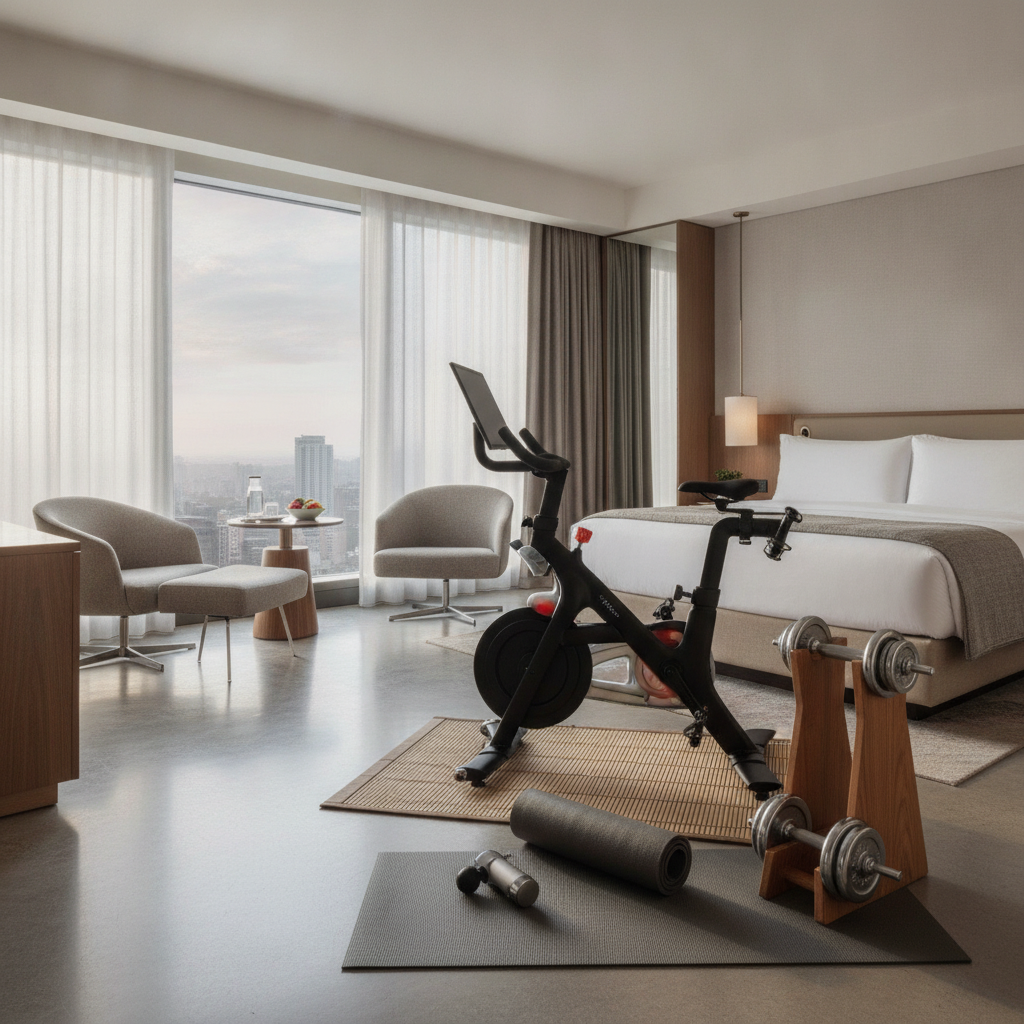
Hotel wellness equipment in-suite has moved from a niche amenity reserved for penthouse suites to a core expectation shaping how travelers choose where to stay. As wellness tourism spending climbs and guests increasingly prioritize privacy over communal gyms, hotel General Managers, Spa & Wellness Directors, and property owners are being asked the same question by ownership groups and revenue teams alike: what belongs in the room, and how do we justify the investment?
TL;DR — The Bottom Line
Hotel wellness equipment in-suite now spans far beyond a yoga mat and a mini-fridge of electrolyte drinks. Leading properties are deploying tiered systems — modular fitness kits, smart mirrors and connected bikes, recovery tools like percussion massagers and red light panels, and premium recovery installations — mapped to specific room categories to lift ADR, differentiate against competitors, and build loyalty. The winning approach is not "more equipment," it's the right equipment, matched to guest segment, space, and brand positioning, sourced from vendors who understand hospitality operations, not just consumer retail.
Quick Facts
- Global wellness economy value (2025): $6.8 trillion, with wellness tourism a primary growth driver
- Hotels offering fitness facilities (2016): 85%, up from 63% in 2004
- Hilton's Five Feet to Fitness kit: 11+ pieces of equipment plus a kiosk with 200+ instructional videos
- Cold plunge/recovery tub market projection: Expected to reach USD 1.14 billion globally by 2032
- Industry framing: Wellness amenities are now described by luxury hospitality consultants as "no longer a luxury; it's an expectation"
What Counts as Hotel Wellness Equipment In-Suite?
Before building a program, it helps to define the category clearly, because "wellness equipment" means very different things to a boutique lifestyle hotel and a five-star resort.
This category has expanded rapidly. Where hotel wellness equipment in-suite once meant a resistance band and a foam roller left on a shelf, it now commonly includes modular fitness stations, connected fitness mirrors, percussion massage devices, infrared or red light therapy panels, compression recovery boots, air and sleep-quality tech, and — for top-tier suites — dedicated recovery installations built into the bathroom or a converted nook. The common thread is privacy: guests increasingly want the ability to train, stretch, or recover on their own schedule, without booking a spa slot or sharing equipment with strangers.
Answer: No. While luxury and upper-upscale properties lead in scope and technology, midscale and upscale brands like Sheraton, Westin, and Kimpton have normalized baseline in-room wellness kits (yoga mats, resistance bands, gear-lending programs), meaning even limited-service hotels are expected to offer something beyond an empty room and a hallway sign pointing to the gym.
The Business Case: Why In-Suite Wellness Equipment Drives Revenue
For owners and GMs evaluating capital spend, the question is never "is wellness popular" — it's whether hotel wellness equipment in-suite pays for itself. The data suggests it does, particularly in premium and luxury tiers where wellness-focused travelers already skew toward higher spend per stay.
The global wellness economy reached an estimated $6.8 trillion in 2025, with wellness tourism cited repeatedly as one of its fastest-growing segments (Global Wellness Institute, https://globalwellnessinstitute.org). That is not an abstract macro trend — it shows up directly in guest booking behavior, willingness to pay a premium for "recovery" or "wellness" room categories, and repeat-stay loyalty among guests who feel a property understands their routine.
Historical adoption curves support this too. By 2016, 85% of U.S. hotels already offered some form of fitness facility, up from 63% just twelve years earlier — a structural shift toward fitness as baseline infrastructure, not an afterthought (industry hospitality benchmarking data). The next stage of that curve is happening now: hotels are moving fitness and recovery out of the basement and into the room.
Three revenue levers make the business case concrete:
- ADR uplift on wellness-designated suites. Properties that create a distinct "recovery suite" or "wellness room" category can price it at a premium over a standard room of identical square footage, because the equipment itself becomes the differentiator.
- Reduced dependency on spa staffing and scheduling. In-suite equipment lets guests self-serve recovery (stretching, percussion massage, light stationary cycling) without needing a therapist or booked appointment, freeing spa staff for higher-margin treatments.
- Loyalty and review sentiment. Wellness amenities are increasingly cited in guest reviews and OTA filters; properties investing in visible, usable hotel wellness equipment in-suite tend to see it referenced positively in guest feedback, which supports conversion for future bookings.
"Wellness in hospitality is no longer a luxury; it's an expectation" — a framing now echoed across luxury hospitality consulting and design circles as in-room recovery and fitness infrastructure becomes standard in upper-tier hotels.
Core Categories of In-Suite Wellness Equipment
Hotel wellness equipment in-suite generally falls into four functional categories. Understanding these helps GMs and Spa Directors avoid over-investing in one area (say, cardio) while neglecting another (recovery), which is where most programs underdeliver on guest expectations.
| Category | Typical Equipment | Best-Fit Room Tier | Example Approach |
|---|---|---|---|
| Fitness Kits & Stations | Resistance bands, suspension trainers, modular wall bays, yoga mats, foam rollers | Standard to Upscale | Hilton's Five Feet to Fitness uses a Gym Rax wall system with 11+ accessories and a kiosk offering 200+ guided videos |
| Connected/Smart Devices | Interactive fitness mirrors, connected spin bikes, app-based guided workouts | Upscale to Luxury | Conrad Nashville pairs an Echelon Reflect mirror with a Peloton bike and free weights in select wellness rooms |
| Recovery Tools | Percussion massagers, compression boots, red light/infrared panels, foam rollers | Upscale to Luxury | Positioned as an in-room complement to spa treatments, reducing scheduling friction |
| Premium Recovery Installations | Sauna units, contrast therapy setups, dedicated recovery equipment built into bathroom or suite layout | Luxury / Signature Suites | Used as a headline differentiator for top-tier suite categories and long-stay guests |
Note that this category structure deliberately treats cold-water immersion and plunge-specific installations as their own specialized track — GMs evaluating that path should consult dedicated plunge-focused resources, since sourcing, plumbing, and space requirements differ meaningfully from general fitness and recovery equipment covered here.
Smart & Connected Wellness Tech Inside the Suite
The fastest-growing subsegment of hotel wellness equipment in-suite is connected technology — devices that combine physical equipment with digital content, tracking, or personalization. This matters strategically because it lets a modest physical footprint deliver an outsized guest experience.
Examples already operating at scale include:
- Interactive fitness mirrors (such as lululemon Studio Mirror or Echelon Reflect) that turn a slim wall-mounted panel into a full class library, replacing what would otherwise require a dedicated gym room.
- Connected bikes placed in premium suites, giving guests access to live and on-demand cycling classes without leaving the room — The Mark Hotel in New York pairs this with a portable Technogym Case kit and QR-code-accessed guided workouts.
- On-demand wellness content integration, where in-room entertainment systems surface yoga, meditation, or recovery programming alongside standard streaming options.
For Spa & Wellness Directors, the appeal of connected hotel wellness equipment in-suite is data: many systems can report usage patterns back to hotel management, informing which suite categories actually justify continued investment versus which sit idle. That performance data is increasingly used to justify Phase 2 wellness capex to ownership groups.
Answer: Often yes. Devices like connected mirrors and bikes typically involve a hardware purchase plus a recurring content subscription, which hotels usually absorb as an operating cost rather than passing directly to guests, treating it similarly to in-room streaming service fees.
Designing a Tiered In-Suite Wellness Program
Rather than deploying identical hotel wellness equipment in-suite across every room, the properties seeing the best ROI use a tiered model. This avoids the two most common failure modes: under-equipping premium suites (leaving revenue on the table) or over-equipping standard rooms (destroying ROI through unnecessary capex and maintenance load).
A Practical Rollout Framework
- Audit guest segments and current demand signals. Review review-site mentions of fitness/wellness, spa utilization data, and any existing guest requests for in-room equipment before committing to a category.
- Define three tiers — Standard (lightweight kits available on request), Premium (dedicated fitness or recovery equipment installed in select suites), and Signature (a fully built wellness suite combining connected tech and premium recovery tools).
- Match equipment to space realistically. A 300-square-foot standard room cannot accommodate the same hotel wellness equipment in-suite footprint as a 900-square-foot suite; plan modular, wall-mounted, or foldable solutions for smaller rooms.
- Pilot before scaling. Instrument 5–10 rooms with the proposed tier structure for 60–90 days, tracking usage, guest feedback, and any operational strain on housekeeping or engineering.
- Train front desk and in-room dining staff to reference the wellness amenities at check-in and via digital concierge messaging — equipment that guests don't know exists generates zero incremental revenue or loyalty value.
- Review and refresh annually. Wellness technology cycles fast; a smart mirror or connected device purchased in 2024 may already lag competitor offerings by 2026.
Procurement & Vendor Selection Checklist
Sourcing hotel wellness equipment in-suite is meaningfully different from purchasing consumer fitness gear. GMs and procurement teams should evaluate vendors on hospitality-specific criteria, not just product specs.
- Commercial-grade durability. Equipment must withstand daily multi-guest use, frequent cleaning with hospitality-grade disinfectants, and higher usage cycles than residential products are designed for.
- Space and installation compatibility. Confirm electrical, plumbing (where relevant), and structural load requirements before committing to any suite layout — retrofitting mid-project is costly.
- Warranty and service response time. A broken connected mirror or recovery device sitting idle in a signature suite for weeks is a direct revenue and reputation risk; vendors should offer hospitality-specific service-level agreements.
- Brand and design alignment. Equipment finishes and footprint should match the suite's design language — a bulky consumer-grade device can undercut an otherwise premium room presentation.
- Staff training support. Vendors should provide onboarding materials for housekeeping (cleaning protocols) and front-of-house teams (how to describe and demonstrate the equipment to guests).
HotelPlunge works with GMs, Spa & Wellness Directors, and ownership groups to evaluate exactly these tradeoffs when planning hotel wellness equipment in-suite programs, from initial space assessment through equipment selection and staff onboarding. Learn more at HotelPlunge.
Common Mistakes to Avoid
Even well-funded wellness programs stumble on avoidable errors. The most frequent issues we see in property assessments include:
- Treating equipment as decor. Devices installed purely for photography or marketing imagery, without genuine guest usability, tend to sit unused and generate maintenance costs without revenue benefit.
- Ignoring housekeeping workflow. Recovery tools and connected devices need clear cleaning protocols; failing to train housekeeping teams leads to hygiene complaints and premature equipment wear.
- Underestimating noise and space constraints. Connected bikes and certain recovery devices generate noise or vibration that can affect adjoining rooms if not properly planned.
- No feedback loop. Without tracking usage or guest sentiment, GMs cannot make informed decisions about which hotel wellness equipment in-suite investments to expand versus retire.
Answer: A modular fitness kit (resistance bands, suspension trainer anchor point, mat, foam roller) can fit in a closet-sized footprint of roughly 2–3 square feet when stored, while connected devices like smart mirrors typically need a clear wall section of about 4 feet by 2 feet plus surrounding floor space for movement.
Frequently Asked Questions
What is hotel wellness equipment in-suite?
Hotel wellness equipment in-suite refers to fitness, recovery, or health-focused equipment placed directly inside a guest room or suite, allowing guests to exercise or recover privately rather than using a shared hotel gym or spa facility.
Which hotel brands currently offer the most developed in-suite wellness programs?
Hilton's Five Feet to Fitness concept, Conrad Nashville's wellness rooms with connected mirrors and bikes, and The Mark Hotel in New York with its portable Technogym Cases are among the most publicly documented examples, alongside broader gear-lending and in-room kit programs at Westin, Sheraton, and Kimpton.
Is in-suite wellness equipment worth the investment for mid-tier hotels?
Yes, in scaled form. Modular kits — resistance bands, yoga mats, foam rollers — cost relatively little to deploy across many rooms and have already been normalized at the upscale and midscale level, making them a low-risk entry point before considering premium connected devices or recovery installations.
How do hotels maintain and clean in-suite wellness equipment?
Most properties integrate wellness equipment into existing housekeeping protocols with hospitality-grade disinfectant wipe-downs between stays, supplemented by manufacturer-recommended deep-cleaning schedules; vendors should provide specific guidance since consumer-grade cleaning instructions often don't account for hotel turnover frequency.
What's the difference between in-suite wellness equipment and a hotel's main fitness center?
The main fitness center serves all guests communally and typically houses larger cardio and strength equipment, while hotel wellness equipment in-suite is scaled for privacy and personal use within a single room, prioritizing convenience, discretion, and integration with the suite's design over machine variety.
Conclusion: Building a Wellness Program That Guests Actually Use
The direction of travel is clear: hotel wellness equipment in-suite is shifting from a competitive edge reserved for flagship luxury properties to an expected feature across upscale and even midscale segments. The hotels winning in this space aren't necessarily the ones with the most equipment — they're the ones that matched the right fitness kits, connected devices, and recovery tools to the right room tiers, trained staff to promote them, and built a feedback loop to refine the program over time.
For General Managers, Spa & Wellness Directors, and Property Owners evaluating next steps, the priority is a clear-eyed audit: what do your guests actually use, what does your competitive set already offer, and where can hotel wellness equipment in-suite realistically fit into your existing room inventory without disrupting design or operations. HotelPlunge partners with hospitality teams to plan, source, and implement in-suite wellness programs built around real guest usage data rather than trend-chasing. Visit HotelPlunge to start scoping a program suited to your property's room mix and guest profile.