Eco-Friendly Cold Plunge for Hotels: A Sustainability Guide
September 19, 2026 · 13 min read
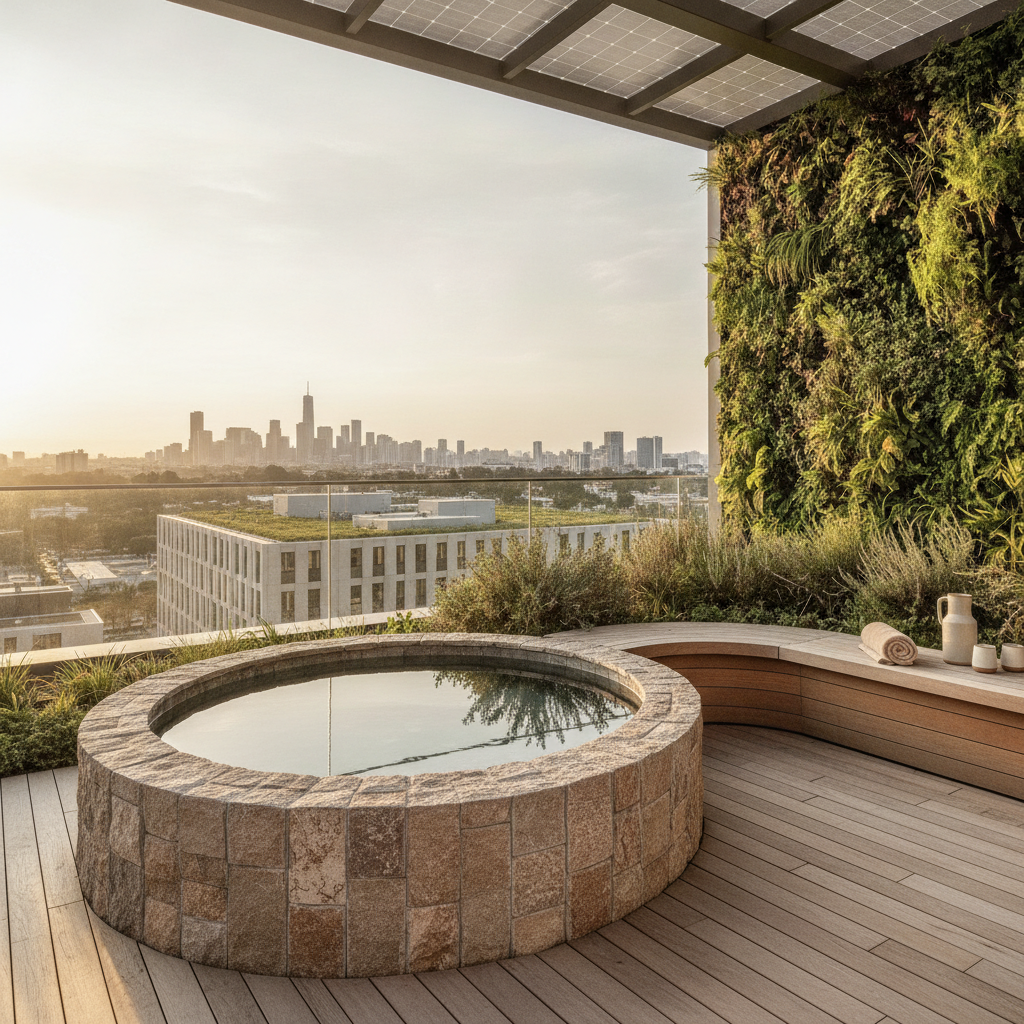
Hotel guests no longer see wellness and sustainability as separate amenities — they expect both at once. An eco-friendly cold plunge for hotels delivers the cold-therapy experience travelers are searching for while meeting the energy, water, and materials standards that general managers, spa directors, and owners are now held to. This guide breaks down what actually makes a cold plunge system sustainable, the metrics that matter, and how to evaluate options without greenwashing.
TL;DR — The Bottom Line
An eco-friendly cold plunge for hotels combines high-efficiency chillers (often under 1.5 kWh/day), low-GWP refrigerants like R290 or R32, closed-loop filtration that keeps water clean for weeks instead of days, and smart insulation that cuts standby energy loss. These systems reduce operating costs and utility strain while giving hotels a guest-facing story that supports broader sustainability positioning and certifications.
Quick Facts
- Low-power chiller benchmark: ~1.35 kWh/day for high-efficiency commercial cold plunge engines
- Ultra-low-power units: as little as 500 W consumption for continuous operation
- Heat-pump contrast systems: can save 70–75% of heating/cooling energy versus resistive systems
- Water reuse window: closed-loop filtration can keep plunge water clean for weeks without draining
- Refrigerant trend: R290 and R32 are the leading low-GWP refrigerants in modern plunge chillers
What Is an Eco-Friendly Cold Plunge for Hotels?
Before comparing products, it helps to define the term precisely, because "eco-friendly" is used loosely across the wellness equipment market.
In practice, an eco-friendly cold plunge for hotels is judged on four dimensions: how much electricity it draws per day, how the refrigerant used affects global warming potential, how much water it consumes or wastes over a service cycle, and how well insulation and controls prevent energy loss between uses. A unit that scores well on guest experience but poorly on these four factors isn't genuinely sustainable — it's simply a cold plunge with good marketing.
For property owners weighing new wellness capital expenditures, this distinction matters. An eco-friendly cold plunge for hotels isn't a separate product category from a standard cold plunge; it's a standard of engineering that any plunge system — freestanding, in-suite, or spa-based — can be measured against.
Why Sustainable Cold Plunge Systems Matter for Hospitality in 2026
Sustainability has moved from a marketing checkbox to a core decision factor in hotel wellness purchasing. Industry trend reporting on hospitality wellness for 2025–2026 points to sustainability, hyper-personalization, and hybrid hot-cold experiences as the three forces reshaping spa and wellness investment. Guests increasingly ask about water-efficient hydrotherapy, responsible resource use, and the environmental footprint of amenities before booking premium wellness packages.
This shift has direct implications for cold plunge purchasing decisions. A property that installs a resource-heavy, high-draw chiller may deliver a great guest experience in year one, but face rising utility costs, water-use scrutiny, and maintenance headaches by year three. An eco-friendly cold plunge for hotels avoids that trajectory by design — lower daily energy draw, less frequent water changes, and refrigerants that won't trigger future compliance issues as environmental regulations tighten.
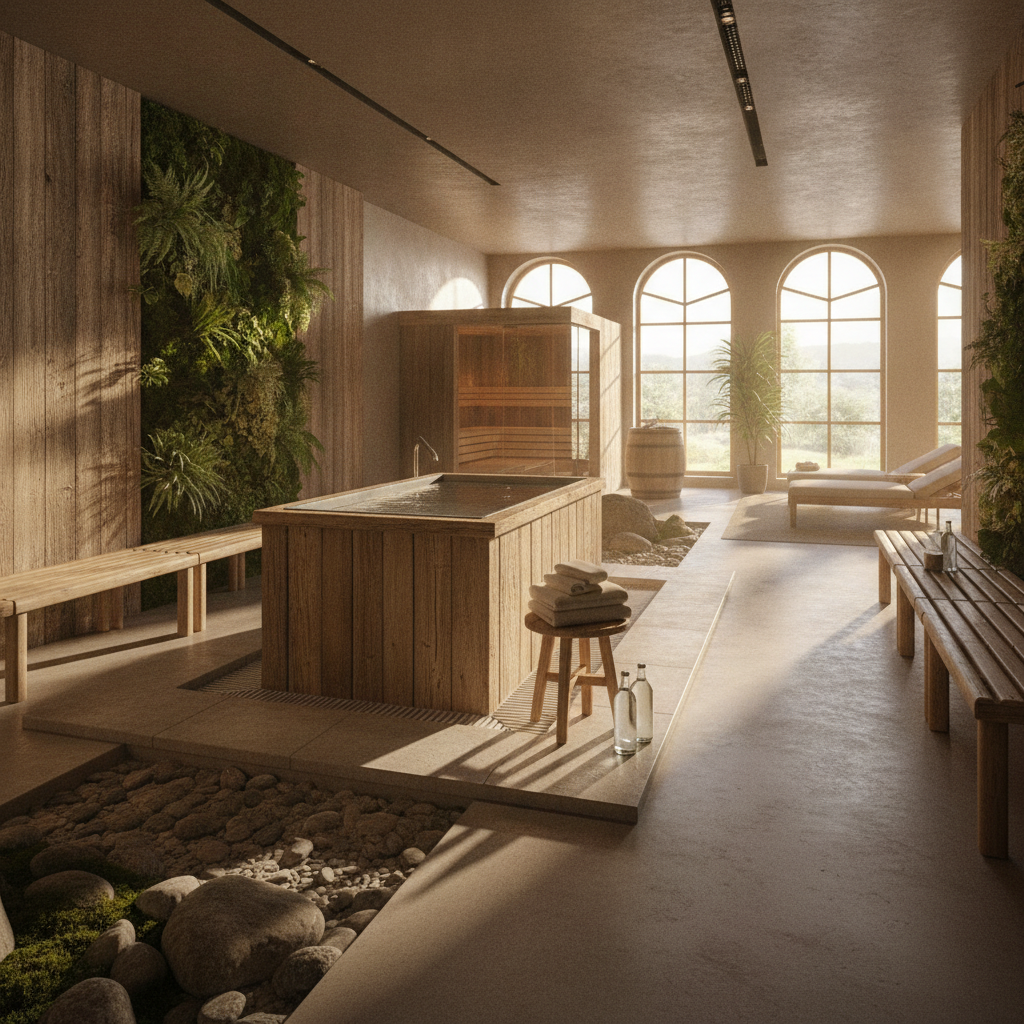
There's also a regulatory dimension. In water-stressed markets, hospitality operators are already facing pressure around landscaping, pool refill rates, and hydrotherapy water use. Wellness researchers have noted a broader shift away from high-volume, high-turnover ice baths toward gentler, less water-intensive cooling rituals — including snow rooms, misting stations, and cool-air relaxation spaces — specifically framed as a response to water conservation pressure. An eco-friendly cold plunge for hotels sits squarely in this movement: it delivers genuine cold therapy without the resource footprint that regulators and sustainability auditors are starting to flag.
Not necessarily. Many efficient chillers and closed-loop filtration systems carry a similar or only modestly higher upfront cost, and the lower daily energy draw and reduced water changes typically offset the difference within the first one to two years of operation.
Energy Efficiency Benchmarks for Eco-Friendly Cold Plunge for Hotels
Energy consumption is the single biggest lever separating an eco-friendly cold plunge for hotels from a conventional one, because chillers run continuously to maintain target temperatures around 39–55°F (3.9–12.8°C).
Recent commercial product benchmarks give buyers concrete numbers to compare against:
- High-efficiency cold plunge chillers report daily consumption near 1.35 kWh, explicitly marketed on the basis that lower draw saves both money and emissions.
- Some wellness-center-grade units run on as little as 500 W, optimized for facilities with frequent, all-day use rather than occasional bookings.
- Heat-pump-based hot-cold contrast systems, which power both sauna and plunge experiences, report 70–75% energy savings versus resistive heating/cooling approaches, while covering a temperature range from roughly -5°C to +40°C.
For a general manager comparing vendor quotes, the practical takeaway is simple: ask for the kWh/day figure under realistic occupancy conditions, not just the compressor's rated wattage. A unit rated at 500 W that cycles constantly may consume more daily energy than a 1.5 kW unit with a smarter duty cycle. This is where an eco-friendly cold plunge for hotels earns its designation — not from a single spec number, but from the combination of compressor efficiency, insulation quality, and smart cycling that determines real-world draw.
Look for daily consumption in the 0.5–1.5 kWh range for single-suite units under typical guest usage patterns; anything significantly higher usually signals outdated compressor technology or insufficient insulation.
Water Stewardship: Closed-Loop Filtration and Low-Water Designs
Water use is the second pillar of an eco-friendly cold plunge for hotels, and it's often overlooked in favor of energy metrics. Traditional plunge pools and tubs require frequent draining and refilling to maintain water quality — a resource cost that scales quickly across a property with multiple wellness amenities.
Modern eco-friendly cold plunge for hotels designs address this through:
- Closed-loop circulation and advanced filtration that keeps water clean for weeks rather than days, dramatically cutting drain-and-refill frequency.
- Insulated covers that reduce evaporation between uses, which also helps maintain temperature and reduces the compressor's workload.
- Sealed, low-turnover tank designs that limit water loss during filtration cycles compared to open-loop hydrotherapy pools.
This matters beyond the utility bill. Properties in drought-prone regions or markets with tightening water-use ordinances are increasingly required to document water efficiency for new amenities. A cold plunge system that can demonstrate weeks-long water cycles rather than daily refills gives operators a much easier compliance story — and a genuine talking point for eco-conscious guests who ask how the amenity is maintained.
Refrigerants, Insulation, and Materials That Reduce Environmental Impact
Refrigerant choice is a technical detail that carries outsized environmental weight. Older refrigerants carry high global warming potential (GWP), meaning even small leaks contribute disproportionately to a property's carbon footprint. An eco-friendly cold plunge for hotels should specify its refrigerant, not bury it in a spec sheet footnote.
The two refrigerants showing up most often in current commercial cold plunge chillers are:
- R290 (propane-based): marketed explicitly as energy-efficient and environmentally friendly, with substantially lower GWP than legacy refrigerants.
- R32: another low-GWP option gaining traction in commercial chiller lines for its balance of efficiency and reduced carbon footprint.
Some manufacturers still use R410 refrigerant, promoted as "environmentally friendly" relative to older HCFC blends, but it carries a higher GWP than R290 or R32. Buyers evaluating an eco-friendly cold plunge for hotels should ask vendors directly which refrigerant class is used and request the GWP rating rather than accepting general "eco-friendly" language at face value.
Beyond refrigerants, high-density, multi-layer insulation — sometimes described as Scandinavian-style insulation in hybrid hot-cold tub lines — reduces the energy needed to hold target temperature between guest sessions. Paired with energy-saving circulation pumps (some rated as low as 0.25 kW/h), insulation quality can be as important as compressor efficiency in the total energy picture.
Comparing Eco-Friendly Cold Plunge Formats for Hotels
Not every eco-friendly cold plunge for hotels looks the same. Property type, guest volume, and space constraints all influence which format delivers the best sustainability-to-experience ratio. The table below summarizes the main categories operators are evaluating in 2026.
| Format | Typical Energy Profile | Water Use Profile | Best Fit |
|---|---|---|---|
| High-efficiency single-unit chiller tank | ~1.0–1.5 kWh/day | Closed-loop, weeks between changes | Spa suites, boutique properties |
| Low-power wellness-center unit | ~500 W continuous | Closed-loop with filtration cycling | High-traffic gym/spa areas |
| Heat-pump hot-cold contrast system | 70–75% savings vs. resistive systems | Shared water circuit with sauna/hot side | Resort wellness circuits |
| Dry cold plunge / cryo alternative | Low, no water heating/cooling load | Minimal to none | Water-restricted or space-limited properties |
Dry cold exposure systems deserve particular attention. These deliver intense cold sensation through air rather than water immersion, positioning themselves as an eco-friendly alternative for properties that want cold therapy benefits without any water draw at all. They won't replace the immersive experience many guests associate with a true plunge, but they're worth evaluating for space- or water-constrained properties as part of a broader eco-friendly cold plunge for hotels strategy.
How to Evaluate and Market an Eco-Friendly Cold Plunge for Hotels
Once you understand the technical criteria, the evaluation process becomes straightforward. Here's a practical sequence for spa directors and GMs vetting vendors:
- Request real-world kWh/day data — not just compressor wattage — under a usage pattern matching your expected guest volume.
- Confirm refrigerant type and GWP rating in writing; ask specifically whether the unit uses R290, R32, or a legacy higher-GWP refrigerant.
- Ask about filtration cycle length — how many days or weeks between required drain-and-refill, and what treatment method (UV, ozone, chemical) is used.
- Evaluate insulation and standby loss — how much energy the unit consumes overnight or during low-occupancy periods when it's simply maintaining temperature.
- Verify maintenance and lifecycle costs — a genuinely eco-friendly cold plunge for hotels should reduce both utility and service costs over a 5–7 year horizon, not just at installation.
On the marketing side, guests respond to specifics, not vague claims. Instead of labeling an amenity simply "eco-friendly," properties that cite actual figures — such as low-GWP refrigerant use or weeks-long water cycles — build more credibility with the growing segment of travelers actively seeking sustainable wellness options. HotelPlunge's eco-friendly cold plunge systems are built around these exact criteria, giving properties both the technical performance and the guest-facing story sustainability-minded travelers look for.
Cite specific, verifiable figures — refrigerant type and GWP rating, daily energy consumption, and water cycle length — rather than general "green" language. Guests and sustainability-conscious travel media increasingly expect data, not adjectives.
For properties assessing multiple wellness upgrades at once, it's worth reviewing offerings directly through HotelPlunge to compare efficiency specs across chiller sizes and formats before finalizing a purchase order.
Frequently Asked Questions
What makes a cold plunge "eco-friendly" for hotel use?
An eco-friendly cold plunge for hotels combines a high-efficiency chiller (typically 0.5–1.5 kWh/day), a low-GWP refrigerant such as R290 or R32, closed-loop water filtration that extends time between refills to weeks, and high-density insulation that limits standby energy loss.
Do eco-friendly cold plunge systems cost more than standard units?
Upfront pricing is often comparable to standard units, and the lower energy draw plus reduced water-change frequency typically pays back any premium within one to two years of normal hotel operation.
How much water does an eco-friendly cold plunge for hotels actually use?
Closed-loop systems with advanced filtration can maintain water quality for weeks without draining, meaning monthly water use can be lower than a single guest room bathtub filled daily, depending on tank size and usage volume.
What refrigerant should hotels look for in a sustainable cold plunge chiller?
Look for R290 or R32, both low global warming potential refrigerants that reduce carbon footprint compared to legacy options like standard R410 or older HCFC-based refrigerants.
Are dry cold plunge systems more eco-friendly than water-based ones?
Dry cold exposure systems use little to no water and generally lower energy loads than large water tanks, making them a strong option for hotels prioritizing water conservation, though they offer a different sensory experience than full water immersion.
Final Thoughts on Choosing an Eco-Friendly Cold Plunge for Hotels
The hospitality wellness market is converging on a clear standard: guests want cold therapy, but operators need it delivered responsibly. An eco-friendly cold plunge for hotels isn't a niche upgrade — it's becoming the baseline expectation for any property serious about both guest experience and operating efficiency. By focusing on verified energy benchmarks, low-GWP refrigerants, closed-loop water systems, and honest marketing language, hotels can offer a signature wellness amenity that holds up under both guest scrutiny and sustainability audits.
If your property is ready to evaluate options that meet these standards, explore HotelPlunge to see how an eco-friendly cold plunge for hotels can be sized and specified for your exact guest volume, space, and sustainability goals.