GOAT Culture Meaning and Impact: A Complete Guide
June 7, 2026 · 13 min read

The phrase "Greatest Of All Time" has evolved from a niche piece of sports slang into one of the most powerful organizing ideas in modern entertainment. Understanding the GOAT culture meaning and impact is essential for anyone who follows sports, music, gaming, or pop culture today, because GOAT debates now drive billions of social impressions, fuel fandom tribalism, and shape how we measure greatness across every domain. At GoatWars, we live and breathe these debates, and in this guide we'll unpack where GOAT culture came from, why it works, and how it's reshaping online entertainment.
TL;DR — The Bottom Line
GOAT culture is the global practice of debating and ranking the "Greatest Of All Time" across sports, music, gaming, and pop culture. Its meaning has expanded from a sports-specific superlative into a universal language of legacy, dominance, and era-defining excellence. The impact is massive: GOAT debates drive social media engagement, build tribal communities, fuel media revenue, and have become a core entertainment format in their own right.
Quick Facts
- Acronym: Greatest Of All Time
- Mainstream sports debut: Early 1990s, popularized around Michael Jordan
- Hip-hop milestone: LL Cool J's album G.O.A.T. (2000)
- Primary domains: Sports, music, gaming, film, creators
- Driving platforms: TikTok, YouTube, X/Twitter, Reddit, Discord
- Core behavior: Ranking, voting, bracket-building, and head-to-head debate
What Is GOAT Culture and Why Does It Matter?
At its core, the GOAT culture meaning and impact revolves around a simple but powerful behavior: humans love to rank things. GOAT culture formalizes that instinct into a recurring, social, and often tribal activity. To call someone "the GOAT" is not just to say they're excellent — it's to declare they are the singular standard against which everyone else must be measured.
This distinction matters. "Very good" is descriptive; "GOAT" is hierarchical. It implies legacy, longevity, cultural impact, and the kind of dominance that defines an era. That's why GOAT debates feel high-stakes even when nothing material is on the line. You're not just rating a player or artist — you're voting on history itself.
For fans, this creates an irresistible engagement loop: a claim is made, identities are activated, evidence is marshaled, and the debate spreads. Multiply that by every sport, genre, and fandom on the internet, and you get a global entertainment phenomenon that platforms like GoatWars are built to harness.
The Origins and Evolution of GOAT Culture
To fully grasp the GOAT culture meaning and impact, it helps to trace where the term came from and how it scaled from locker rooms to TikTok feeds.
From Symbolism to Slang
Long before the acronym existed, goats themselves carried heavy cultural symbolism. Across mythologies — from the Ancient Near East to Norse and Greek traditions — goats represented strength, virility, fertility, abundance, resilience, and cunning. That latent symbolism made "goat" a surprisingly apt vehicle when the acronym "Greatest Of All Time" emerged in the late 20th century.
The Sports Catalyst
The modern mainstream usage is widely traced to the early 1990s, when sports media began applying "GOAT" to Michael Jordan as he dominated the NBA. Muhammad Ali had famously called himself "The Greatest" decades earlier, and his wife Lonnie Ali later trademarked "G.O.A.T." as a business entity — a direct linguistic bridge between Ali's self-mythology and the acronym we use today.
Hip-Hop Amplification
Hip-hop turbocharged the term. LL Cool J's 2000 album G.O.A.T. (Greatest Of All Time) embedded the phrase into music culture, and from there it spread through lyrics, mixtapes, and album titles for the next two decades.
The Social Media Explosion
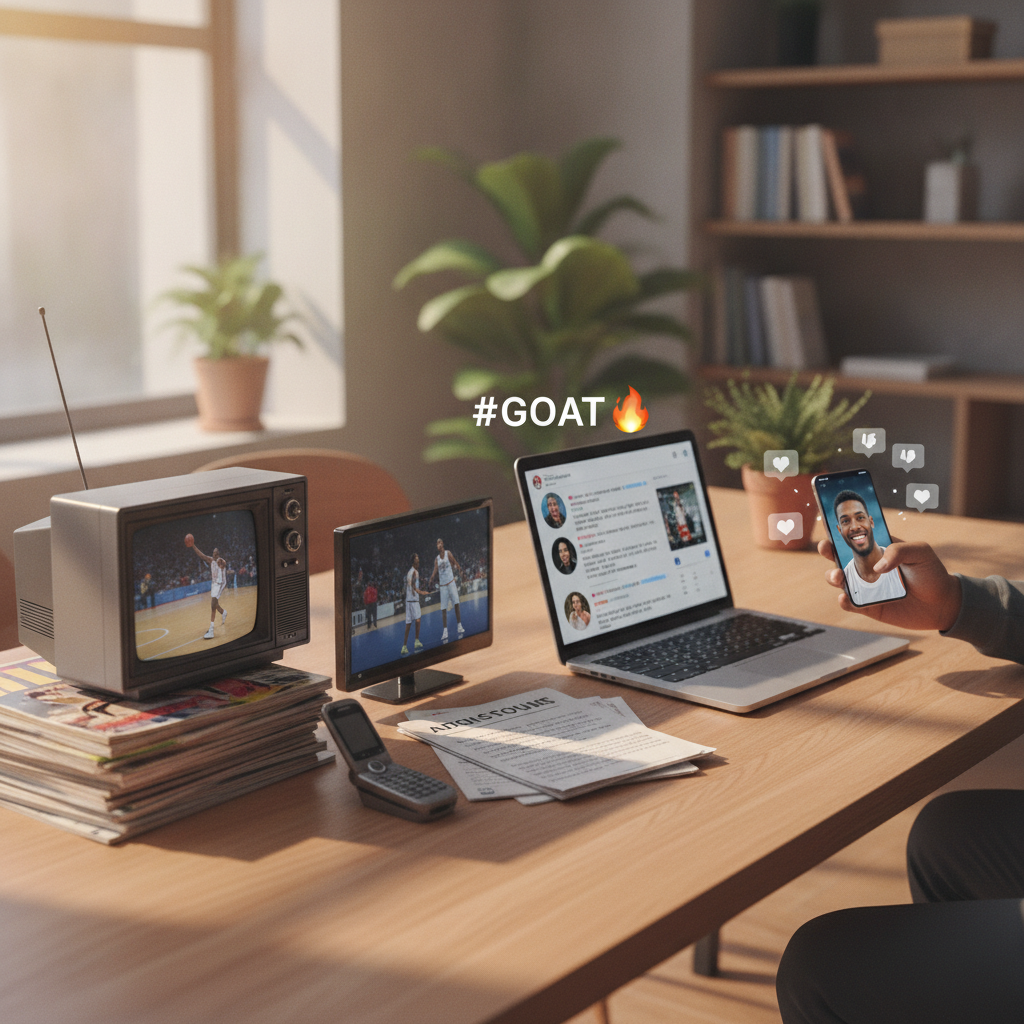
The real inflection point came with social media. Twitter, Instagram, TikTok, and YouTube made GOAT debates infinitely repeatable and remixable. Short-form video, in particular, turned tier lists, hot takes, and "Top 5" rankings into a dominant content format. GOAT discourse moved out of specialist sports media and into the hands of every fan with a phone.
The Symbolic Power Behind the Word "GOAT"
One reason the GOAT culture meaning and impact resonates so strongly is the deep symbolic resonance the word carries — even subconsciously.
- Resilience and independence: Goats have historically symbolized survival in harsh environments, mapping perfectly onto athletes and artists who endure across eras.
- Power and vitality: In the Ancient Near East, goats were tied to abundance, intelligence, and good luck, often associated with benevolent deities.
- Mischief and transgression: Goats also carry ambivalent symbolism — rule-breakers, boundary-pushers — which fits perfectly with figures like Ali, Jordan, or Kanye who reshaped their fields by defying convention.
This symbolic depth gives GOAT discourse a mythic quality. When we crown a GOAT, we're not just running numbers — we're telling a story about greatness.
No. While GOAT originated in sports media, the term is now applied across music, film, gaming, esports, business, and even internet creators. The GOAT culture meaning and impact has expanded to virtually every domain where comparative excellence can be debated.
How GOAT Culture Dominates Sports, Music, and Pop Culture
The reach of GOAT culture today is staggering. Let's look at how it manifests across major domains.
Sports: The Original Battleground
GOAT debates are now a standard feature of sports media:
- Basketball: Michael Jordan vs. LeBron James — arguably the most-debated GOAT question in modern sports.
- Football (soccer): Lionel Messi vs. Cristiano Ronaldo, a rivalry that has defined two decades.
- American football: Tom Brady vs. Joe Montana vs. Patrick Mahomes.
- Tennis: Djokovic vs. Federer vs. Nadal.
- Combat sports: Ali, Mayweather, Jon Jones, and ongoing UFC GOAT discourse.
Sports networks deliberately seed GOAT framing because "legacy games" drive ratings and social engagement.
Music: From Rappers to Pop Icons
Music GOAT debates are arguably even more emotionally charged because they involve taste, identity, and generational allegiance. Conversations include Jay-Z vs. Nas vs. Eminem vs. Kendrick in hip-hop, Beyoncé vs. Mariah vs. Whitney in R&B/pop, and The Beatles vs. The Rolling Stones in classic rock.
Gaming and Esports
In esports, GOAT discourse is already a dominant fan ritual — Faker in League of Legends, s1mple in Counter-Strike, SonicFox in fighting games. Gaming brought a new wrinkle: tier lists, which formalized GOAT-style ranking into native gameplay culture.
Film, TV, and Creators
From "GOAT director" debates (Scorsese, Nolan, Tarantino) to "GOAT YouTuber" arguments (MrBeast, PewDiePie), the format scales endlessly. The GOAT culture meaning and impact has become a universal grammar for talking about excellence online.
The Real Impact of GOAT Culture on Fans and Communities
So what does this all mean in practice? The GOAT culture meaning and impact goes well beyond fun arguments. It shapes how communities form, how content gets made, and how identity gets expressed online.
1. Identity and Tribalism
Picking a GOAT is an identity statement. Saying "Jordan over LeBron" or "Messi over Ronaldo" signals which generation, region, or value system you align with. GOAT debates function like sports rivalries scaled to the entire internet.
2. Content Engine for Creators
For creators, GOAT content is a renewable resource. Tier lists, head-to-head matchups, and ranking videos consistently outperform other formats because they invite comments, duets, and quote-tweets. The format is participatory by design.
3. Engagement Goldmine for Platforms
Social platforms benefit massively from GOAT debates. Every claim invites a counter-claim, and the algorithm rewards that engagement. This is why GOAT framing dominates sports Twitter, YouTube thumbnails, and TikTok hooks.
4. Cultural Canon Building
Over time, repeated GOAT debates actually shape the historical canon. When a player or artist is consistently invoked in GOAT conversations, their legacy crystallizes. GOAT culture is literally writing history in real time.
Why GOAT Culture Works So Well in Online Entertainment
From an entertainment-design perspective, the GOAT culture meaning and impact is a near-perfect product. It has the four ingredients every viral format needs:
- Low barrier to entry: Anyone with an opinion can participate. You don't need credentials to argue Jordan vs. LeBron.
- Infinite replay value: Every new season, album, or era reopens old debates and creates new ones.
- Built-in conflict: Disagreement is the point. The format thrives on opposing views.
- Identity stakes: Your GOAT picks say something about you, which makes participation emotionally meaningful.
This is exactly why platforms built around structured GOAT debates — like GoatWars — turn what used to be chaotic Twitter arguments into persistent, gamified, community-driven experiences.
Because they're not really about settling who's best — they're about expressing identity, building community, and engaging with history. Each generation, performance, and statistical milestone reopens the conversation, which is precisely what makes the GOAT culture meaning and impact so durable.
How to Participate in GOAT Culture Like a Pro
Whether you're a casual fan, a creator, or building a community, here's how to engage with GOAT culture meaningfully.
- Define your criteria first. Are you measuring peak dominance, longevity, championships, cultural impact, or statistical output? GOAT debates collapse when criteria aren't agreed upon.
- Bring evidence, not just vibes. Stats, milestones, and historical context turn a hot take into a real argument.
- Respect the era. Comparing across eras requires acknowledging rule changes, competition depth, and cultural context.
- Engage, don't just declare. The fun is in the exchange. Ask questions, steelman opponents, and stay open to being persuaded.
- Use structured formats. Brackets, tier lists, and head-to-head matchups (the foundation of GoatWars) sharpen debates and produce better outcomes than chaotic threads.
The Future of GOAT Culture
Looking ahead, the GOAT culture meaning and impact will only deepen as new technologies and platforms emerge.
- AI-assisted debates: Expect AI-generated stat breakdowns, simulated matchups, and personalized GOAT rankings to become standard.
- Cross-domain GOAT discourse: Comparisons between athletes and artists, or even creators and traditional celebrities, will accelerate.
- Persistent community canons: Platforms that aggregate fan votes over time — rather than relying on ephemeral polls — will produce living, evolving GOAT lists.
- Gamification: Bracket tournaments, voting streaks, and reputation systems will turn GOAT debate into a true competitive format.
"GOAT culture is the closest thing modern entertainment has to a universal language — every fandom speaks it, and every generation rewrites it."
Frequently Asked Questions
What does GOAT culture mean?
GOAT culture refers to the widespread practice of debating, ranking, and celebrating the "Greatest Of All Time" across sports, music, and pop culture. It's a participatory entertainment format that shapes fandom, identity, and online discourse.
Why is GOAT culture so impactful in online entertainment?
GOAT culture is impactful because it combines low participation barriers, infinite replay value, built-in conflict, and identity stakes. Together, these create one of the most engagement-rich content formats on the internet, driving social impressions, community formation, and cultural canon-building.
Where did the term GOAT originate?
The acronym "Greatest Of All Time" gained mainstream traction in the early 1990s through sports media coverage of Michael Jordan, building on Muhammad Ali's earlier "The Greatest" mythology. LL Cool J's 2000 album G.O.A.T. cemented it in hip-hop and broader pop culture.
How do I make better GOAT arguments online?
Start by defining clear criteria (peak vs. longevity, stats vs. cultural impact), bring evidence, respect era differences, and engage in structured formats like brackets or head-to-head matchups instead of chaotic threads. Platforms like GoatWars make this easier by providing dedicated GOAT debate infrastructure.
Will GOAT culture continue to grow?
Yes. With the rise of AI, gamified voting platforms, and cross-domain comparisons, the GOAT culture meaning and impact will continue to expand. New tools will make debates more structured, more data-rich, and more community-driven than ever.
Conclusion: Join the Debate
The GOAT culture meaning and impact stretches far beyond simple arguments about who's the best. It's a global entertainment format, a community ritual, a content engine, and a living way of writing cultural history. Every time you weigh in on Jordan vs. LeBron, Messi vs. Ronaldo, or Kendrick vs. Drake, you're participating in something much bigger than a hot take — you're shaping the canon.
If you're ready to take your GOAT takes from chaotic timelines to structured, gamified, community-powered debates, head over to GoatWars and put your picks to the test. Vote in head-to-head matchups, build your tier lists, and help crown the real GOATs across every domain. The debate never ends — and that's exactly the point.