How Long to Cold Plunge: Time, Temp & Weekly Dose
June 11, 2026 · 13 min read
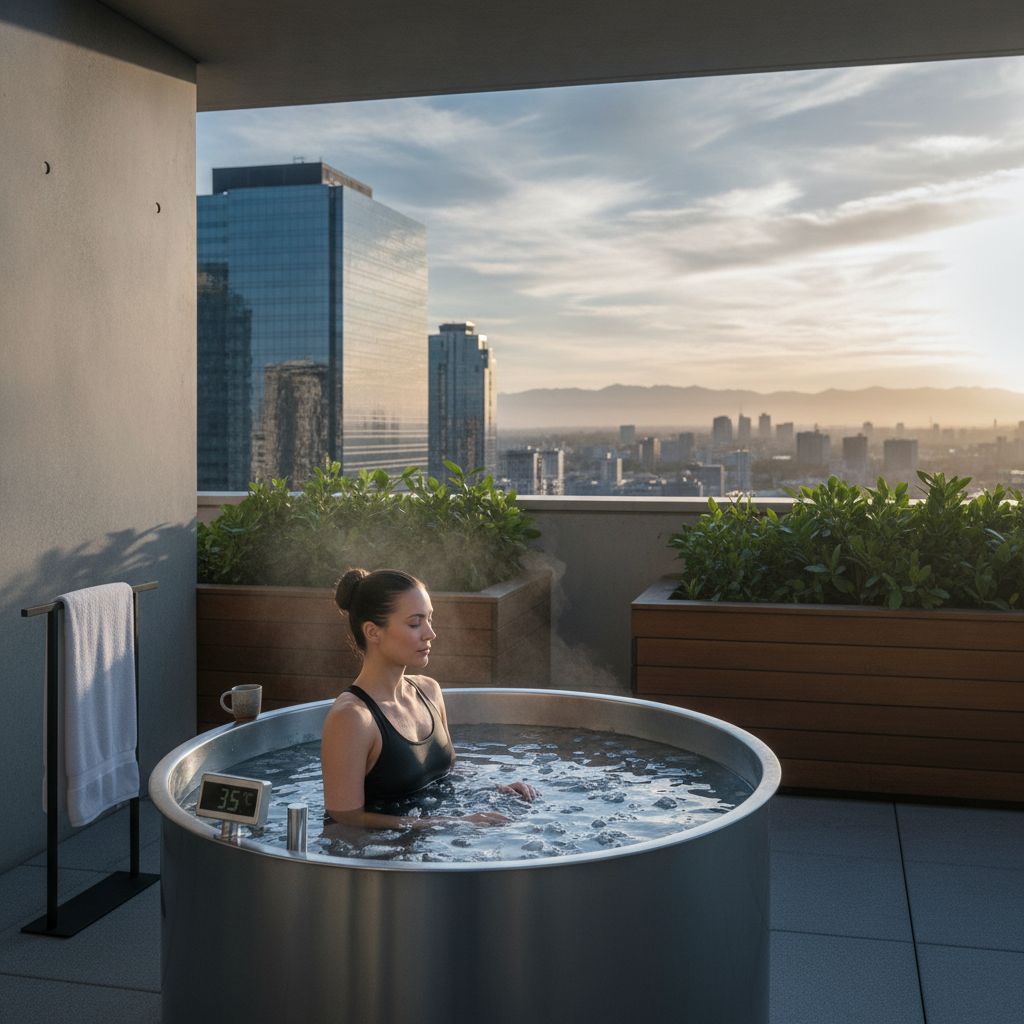
If you've just installed a cold plunge at home—or you're about to—one question dominates every session: exactly how long to cold plunge for safe, effective results? Stay in too briefly and you may miss the metabolic and recovery benefits. Stay in too long, especially in very cold water, and you risk hypothermia, dizziness, or worse. The good news is that the science here is surprisingly clear, and it points to short, repeatable sessions that fit easily into a homeowner's routine.
TL;DR — The Bottom Line
Most healthy adults should cold plunge for 2–10 minutes per session, with a practical sweet spot of 3–5 minutes at 50–59°F (10–15°C). Beginners should start with 30–60 seconds and build up. For lasting benefits, aim for about 11 minutes of total cold exposure per week, split across 2–4 short sessions. Colder water means shorter time—never exceed 5 minutes below 50°F unless you're highly experienced.
Quick Facts
- Beginner session: 30–60 seconds
- Intermediate sweet spot: 3–5 minutes
- Maximum recommended: 10 minutes (most users)
- Weekly target: ~11 minutes total
- Optimal temperature range: 50–59°F (10–15°C)
- Sessions per week: 2–4
How Long to Cold Plunge: The Core Guidelines
The question of how long to cold plunge doesn't have a single answer—it depends on water temperature, your experience level, and your health status. But across reputable medical and research sources, a clear consensus emerges.
According to the Cleveland Clinic, cold plunge sessions should never exceed 5 minutes, and beginners should start with just 1–2 minutes. WebMD recommends beginners start at 30–60 seconds and work up to 5–10 minutes as tolerated. Industry guidance from leading cold-therapy brands generally settles on 3–5 minutes as the working range for most adapted users.
Here's how that breaks down by experience level:
- Absolute beginners: 30–60 seconds for the first 1–2 weeks of practice.
- Early intermediate: 1–3 minutes after a few sessions, focusing on controlled breathing.
- Regular practitioners: 3–5 minutes at 50–59°F is the most-cited "sweet spot."
- Advanced users: Up to 10 minutes at moderate cold temps, only with adaptation.
The clearest signal that you've hit your limit: shivering becomes uncontrollable, your hands or feet go numb beyond mild tingling, or your breathing won't settle. At that point, get out—regardless of the clock.
The Weekly Dose: How Much Cold Plunging Per Week?
While per-session time matters, research increasingly emphasizes weekly cumulative exposure as the real driver of benefits. The most-cited number comes from work by Dr. Susanna Søberg, discussed extensively on the Huberman Lab podcast: roughly 11 minutes of cold exposure per week is enough to stimulate brown fat activation and metabolic adaptations.
That's a remarkably small commitment. For homeowners with an at-home setup, that might look like:
- Option A: Four 3-minute sessions per week (12 minutes total)
- Option B: Three 4-minute sessions per week (12 minutes total)
- Option C: Two 5-minute sessions plus one 2-minute session (12 minutes total)
The key is consistency. Two longer sessions every other week won't produce the same adaptations as short, frequent dips. This is one of the biggest advantages of an in-home plunge: you can accumulate weekly minutes in flexible, brief sessions that fit between meetings, after workouts, or first thing in the morning. Convenience drives consistency, and consistency drives results. Learn more about building a routine on the HomePlunge blog.
Several short ones. Research suggests that 2–4 brief sessions per week (totaling ~11 minutes) deliver stronger metabolic and mood benefits than a single long session, and they carry significantly less risk of hypothermia or after-drop.
Temperature vs. Time: How Cold Changes How Long
Here's the single most important rule when figuring out how long to cold plunge: colder water means shorter safe time. The same 5-minute session that's restorative at 55°F can be dangerous at 38°F. Your body's heat loss rate roughly doubles with every 10°F drop, so duration must scale inversely.
Here's a practical reference table for at-home users:
| Water Temperature | Beginner Time | Intermediate Time | Advanced Time |
|---|---|---|---|
| 55–59°F (13–15°C) | 2–3 min | 5–7 min | 8–10 min |
| 50–54°F (10–12°C) | 1–2 min | 3–5 min | 5–8 min |
| 45–49°F (7–9°C) | 30–60 sec | 2–4 min | 4–6 min |
| 40–44°F (4–6°C) | Skip | 1–2 min | 2–4 min |
| Below 40°F (<4°C) | Skip | Skip | 1–3 min (caution) |
The Cleveland Clinic specifically warns against water below 40°F (4°C) for most users, and emphasizes keeping sessions under 5 minutes regardless of temperature. If you're new and wondering how long to cold plunge at a moderate temperature, 50–59°F for 2–3 minutes is the safest entry point.
What You Gain in 3–5 Minutes: Benefits Tied to Time
It's worth understanding what your body is actually doing during those minutes so you can choose your duration wisely.
0–30 seconds: The cold shock response
Your nervous system spikes. You gasp, your heart rate jumps, and norepinephrine releases into your bloodstream. This single chemical surge is responsible for much of the mood and focus benefit people describe after a plunge.
30 seconds–2 minutes: Vasoconstriction and adaptation
Blood vessels constrict, shunting blood to your core. Breathing—if you stay calm—begins to slow. This is where most of the mental training benefit happens: learning to override panic and breathe through discomfort.
2–5 minutes: Metabolic and recovery effects
Brown fat activates, inflammation markers begin to drop, and the recovery benefits widely studied in athletes accumulate. For most homeowners, this is the most productive window—and the reason 3–5 minutes is the cited sweet spot.
5–10 minutes: Diminishing returns, rising risk
Benefits plateau, but heat loss continues. Without adaptation, this window introduces hypothermia risk and a stronger "after-drop" (continued cooling after exit). Reserve this for experienced users at moderate temperatures only.
How Long to Cold Plunge as a Beginner: A 4-Week Ramp
If you're brand new and unsure how long to cold plunge safely, here's a progressive plan you can follow with any home setup. Set your water temperature around 55°F to start.
- Week 1 — Acclimation: 30–45 seconds, 3 sessions. Focus entirely on slow nasal breathing.
- Week 2 — Building tolerance: 60–90 seconds, 3 sessions. Begin tracking how you feel for 30 minutes after.
- Week 3 — Hitting the dose: 2–3 minutes, 3–4 sessions. You should now hit ~10 minutes weekly.
- Week 4 — Settling into routine: 3–5 minutes, 3 sessions. Consider gradually lowering temperature to 50–52°F.
Once you're past week four, you'll have a good intuitive feel for your personal sweet spot. From here, optimize for consistency rather than duration. You can explore equipment options designed for this kind of repeatable home use on the HomePlunge product page.
For post-workout recovery, 2–3 minutes at 50–59°F is sufficient. Note that for hypertrophy-focused training, you may want to wait 4–6 hours after lifting to avoid blunting muscle adaptation, while immediate cold immersion is fine for endurance recovery.
Safety Signals: When to Get Out Regardless of the Timer
No matter what your planned duration is, your body's signals override the clock. Exit immediately if you experience any of the following:
- Uncontrollable shivering that you can't override with breath control
- Numbness in hands or feet that goes beyond mild tingling
- Skin discoloration (white, blue, or mottled patches)
- Dizziness, confusion, or disorientation
- Chest tightness or irregular heartbeat
- Inability to slow your breathing after the first 30 seconds
People with cardiovascular conditions, uncontrolled hypertension, Raynaud's syndrome, or who are pregnant should consult a physician before starting any cold-plunge protocol. The deliberate stress of cold water is powerful precisely because it stimulates the cardiovascular system—which means it's not appropriate for everyone.
One often-overlooked phenomenon is the after-drop: your core temperature continues to fall for several minutes after you exit, as cold peripheral blood returns to circulation. This is why dressing warmly afterward and avoiding immediate hot showers (which can cause blood pressure swings) matters. Allow 10–20 minutes of natural rewarming.
"The most underrated variable in cold plunging isn't temperature or duration—it's consistency. Three minutes, three times a week, will outperform one heroic ten-minute session every time."
Why Home Convenience Changes the Optimal Duration Question
One of the under-discussed advantages of an at-home plunge is that it fundamentally changes how you should think about session length. If you have to drive to a gym or spa, you naturally want to maximize each visit—which can push people toward unnecessarily long sessions. With a home setup, the optimal strategy flips: you can do shorter, more frequent dips that better match the research.
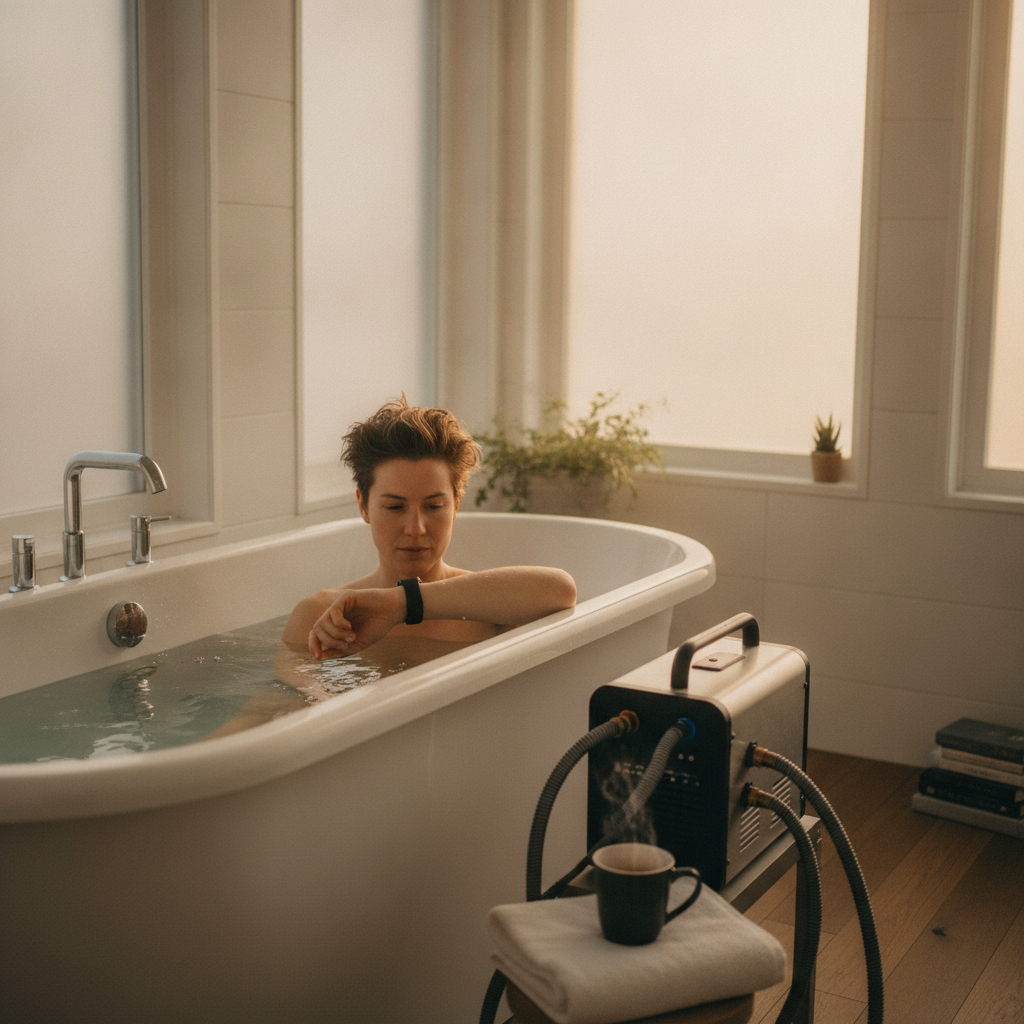
This is especially true with bathtub-based systems that don't require a dedicated tub or backyard space. A 3-minute dip before your morning shower, or after a workout, becomes feasible in a way it never could with a gym membership. For homeowners considering this convenience-first approach, the HomePlunge bathtub conversion system is designed specifically around fitting short, repeatable sessions into a normal household routine.
The shift in mindset matters: stop asking "how long can I tolerate?" and start asking "how often can I show up?" The answer to the second question is what determines results.
How Long to Cold Plunge for Specific Goals
Your ideal duration shifts slightly based on what you're trying to achieve. Here's how to tailor the question of how long to cold plunge to your specific goal:
For mood, focus, and dopamine
1–3 minutes is enough. Research on norepinephrine release shows the spike happens early. A short, sharp dip in the morning is ideal.
For post-workout recovery
2–3 minutes at 50–59°F. Don't overdo it—longer doesn't mean better recovery, and excessive cold post-lifting may blunt hypertrophy.
For metabolic adaptation and brown fat
Target the 11-minutes-per-week protocol. Individual sessions of 2–5 minutes, repeated 3–4 times weekly, are ideal.
For stress resilience and mental training
3–5 minutes is the working range, because controlled breathing under sustained cold is where the mental practice happens.
For sleep quality
Plunge in the morning or afternoon, not within 3 hours of bed. Sessions of 2–4 minutes appear to support deeper sleep without disrupting onset.
Frequently Asked Questions
How long should a beginner cold plunge for?
Beginners should start with 30–60 seconds at a moderate temperature of 55–59°F (13–15°C). Over 2–4 weeks, gradually build up to 2–3 minutes, focusing on slow nasal breathing throughout. There's no rush—consistency matters far more than duration.
How long to cold plunge at 50 degrees?
At 50°F (10°C), most users do well with 3–5 minutes per session once acclimated. Beginners should limit themselves to 1–2 minutes initially. Never exceed 5 minutes at this temperature unless you're highly experienced and feel completely in control of your breathing.
Is 10 minutes too long for a cold plunge?
Ten minutes is at the upper end of what's safe and only appropriate for experienced users in moderate cold (55–59°F). Medical sources including the Cleveland Clinic recommend keeping sessions under 5 minutes, especially below 50°F, because risk increases sharply without meaningful additional benefit.
How many cold plunges per week is ideal?
Research suggests 2–4 sessions per week, totaling approximately 11 minutes of cold exposure, is the sweet spot for metabolic, mood, and recovery benefits. This could be four 3-minute sessions, three 4-minute sessions, or any similar combination that fits your schedule.
Can I cold plunge every day?
Yes, daily cold plunging is generally safe for healthy adults provided sessions are short (2–5 minutes) and you listen to your body. However, many practitioners find 3–4 days per week delivers the same benefits with better recovery and reduced burnout. Rest days also help the nervous system adapt.
The Bottom Line: Short, Smart, Consistent
If you take just one thing from this guide on how long to cold plunge, let it be this: shorter and more frequent beats longer and occasional, every time. The research, the medical guidance, and the experience of long-term practitioners all point to the same protocol—2–5 minute sessions, 2–4 times per week, in water between 50°F and 59°F.
That's an entirely realistic commitment for any homeowner, and it's exactly the format that an at-home system is built to support. The hardest part of cold therapy has never been the cold itself—it's the friction of getting to the water in the first place. Eliminate that friction, and the protocol takes care of itself.
Ready to bring this routine into your home without the cost, space, or plumbing of a dedicated cold tub? Explore how the HomePlunge system turns your existing bathtub into a high-performance cold plunge at thehomeplunge.com—and start dialing in your perfect duration this week.