HomePlunge Alternatives: Top Cold Plunge Picks 2026
June 18, 2026 · 13 min read
TL;DR — The Bottom Line
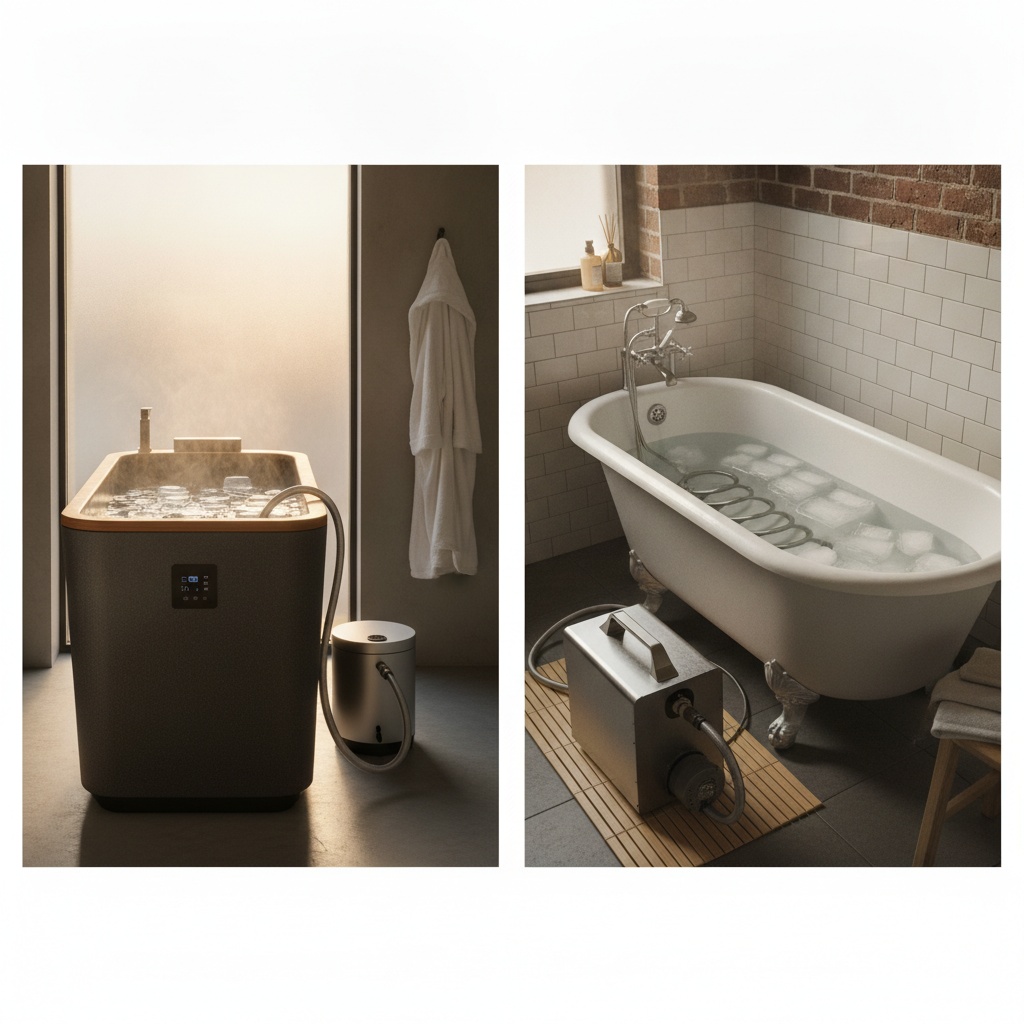
The best HomePlunge alternatives fall into three categories: premium standalone tubs like Plunge ($6,990+) and Sun Home Cold Plunge Pro for luxury buyers, vertical or inflatable options like Nordic Wave Viking and Hydragun Supertub ($4,000) for mid-budget shoppers, and DIY stock tank plus chiller builds for tinkerers. HomePlunge itself ($1,849–$2,999) remains the strongest choice when floor space is limited because it converts your existing bathtub rather than requiring a dedicated unit.
The cold plunge market has exploded, with Lumi reporting 830% growth in cold-water therapy in 2023, and shoppers now face an overwhelming menu of products ranging from $100 inflatable tubs to $10,000 spa-grade units. If you're researching HomePlunge alternatives, you're likely weighing tradeoffs between upfront cost, floor space, setup complexity, and how cold the water actually gets. This guide breaks down every meaningful alternative on the market in 2026, who each option is best for, and why HomePlunge's bathtub-conversion approach still wins for certain homeowners.
Quick Facts
- HomePlunge price range: $1,849 (Bella) to $2,999 (H3)
- Plunge MSRP: $6,990 base, up to $9,990 for premium configurations
- Hydragun Supertub with chiller: ~$4,000
- Inergize plunge tub: ~$3,990
- Minimum chill temperature (top units): 37°F
- Recommended weekly exposure: ~11 minutes split across sessions
- Cold-water therapy market growth (2023): 830%
Why Shoppers Search for HomePlunge Alternatives
HomePlunge has carved out a distinctive niche in the cold plunge industry: rather than selling a standalone tub, it sells a chiller system that converts your existing bathtub into a cold plunge. That makes it especially attractive to renters, apartment dwellers, and anyone unwilling to surrender 20+ square feet of floor space. Still, shoppers explore HomePlunge alternatives for several legitimate reasons.
Some buyers want a dedicated unit they can leave "always ready," without coordinating with bathroom usage. Others want larger capacity for full-body submersion or shared household use. A subset of shoppers want premium aesthetics — insulated cedar surrounds, smart app controls, or spa-grade filtration. And budget-conscious buyers sometimes look at sub-$1,000 inflatable setups before deciding whether to step up to a permanent solution.
The good news is that the 2026 market offers a credible option for almost every priority. The challenge is matching the right alternative to your space, budget, and routine. If you're still weighing whether a bathtub-conversion approach is right for you, our how it works guide walks through the setup in detail.
Category 1: Premium Standalone Cold Plunge Tubs
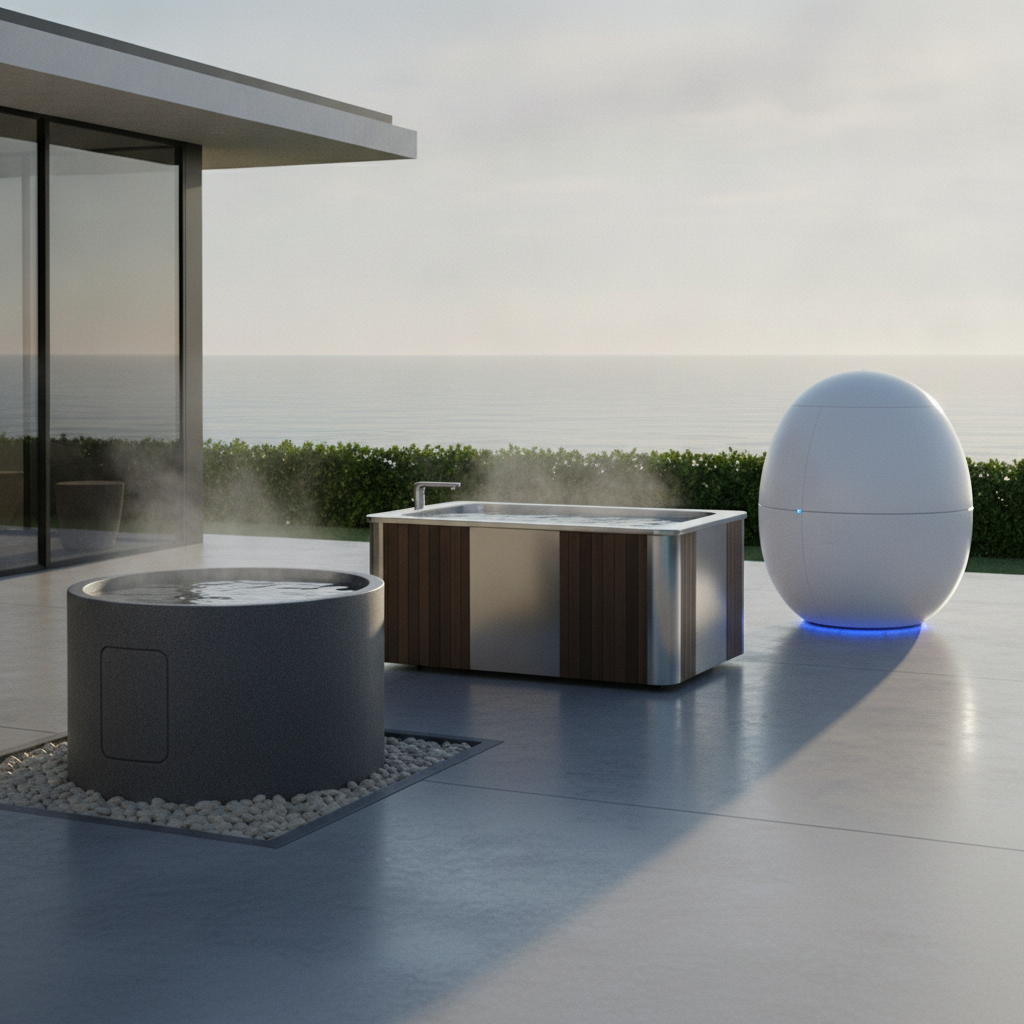
Premium standalone tubs are the most common HomePlunge alternatives for buyers with disposable income and dedicated floor space. These are purpose-built, all-in-one units with integrated chillers, filtration, insulation, and increasingly, smart features.
Plunge (The Original)
Plunge holds an estimated 16% share of the global cold plunge tub market, making it the closest thing to a category leader. The base Plunge tub retails at $6,990, with premium configurations reaching $9,990. Reviewers consistently rank Plunge as the "best overall" standalone unit thanks to its broad product line, reliable chiller, and now AI-enabled smart controls in newer models.
Best for: Buyers who want a dedicated tub, larger lounging capacity, and brand recognition. Tradeoff: Roughly 3.5x to 5x the cost of HomePlunge, plus 20+ square feet of permanent floor space.
Sun Home Cold Plunge Pro
Sun Home is frequently labeled "best luxury" by reviewers in 2026. The Cold Plunge Pro emphasizes spa-grade build quality, premium ozone and UV filtration, and a refined aesthetic that fits well in dedicated home gym or wellness room setups. Pricing typically lands above Plunge for comparable configurations.
Best for: Buyers prioritizing aesthetics and filtration sophistication. Tradeoff: Premium pricing and full installation footprint.
Renu Therapy Cold Stoic 3.0
Renu Therapy positions itself in the furniture-grade, design-conscious segment with cedar exteriors and a heavy-duty build. The Cold Stoic 3.0 reaches 37°F, matching the lowest temperatures HomePlunge can hit. It's often featured as a high-end hot-cold plunge option for buyers who want statement pieces.
Best for: Design-focused buyers seeking long-term durability. Tradeoff: Premium pricing and large footprint.
For some buyers, yes — particularly those who want "always-ready" convenience, larger capacity, or premium aesthetics. But the actual cold therapy benefit is essentially equivalent at 37°F, so the upcharge is primarily for form factor and brand experience rather than therapeutic outcome.
Category 2: Vertical and Compact Cold Plunges
Not everyone has space for a full lounging tub, and the vertical plunge category has matured significantly. These units have a smaller footprint but require you to plunge in a seated or upright position rather than lying back.
Nordic Wave Viking
The Nordic Wave Viking is a premium vertical plunge designed for upright immersion. It's priced comparably to Plunge's base unit but takes up significantly less floor area, making it appealing for buyers who want a dedicated tub without sacrificing a whole corner of a room.
Best for: Smaller spaces, premium budget. Tradeoff: Less ergonomic for full-body lounging, still requires permanent placement.
The Cold Pod
The Cold Pod and similar compact options serve buyers who want an entry-level vertical plunge without a major investment. These tend to lean toward budget-friendly construction and may not include chillers by default.
Category 3: Inflatable and Budget HomePlunge Alternatives
If your budget is under $4,000 and you don't mind a less-premium aesthetic, the inflatable-plus-chiller category offers strong HomePlunge alternatives. These are typically the entry point for serious cold plunge users who want consistent cold temperatures without a five-figure investment.
Hydragun Supertub
The Hydragun Supertub is an inflatable tub that pairs with a chiller for a total package around $4,000. Reviewers highlight it as a balanced value choice — affordable enough to be accessible, but with enough chiller capacity to deliver legitimately cold water.
Inergize Cold/Hot Plunge
Inergize offers a hybrid hot-and-cold plunge at roughly $3,990, appealing to buyers who want contrast therapy without buying two separate units. Build quality and longevity are typically more modest than premium standalone tubs.
Polar Dive PRO and Sun Home Inflatable
The lower-mid budget segment includes Polar Dive PRO and Sun Home's inflatable line. Most come bundled with chillers in the $2,500–$4,000 range. They're not as refined as standalone tubs but deliver the core cold therapy benefit.
Category 4: DIY Stock Tank and Chiller Builds
The cheapest HomePlunge alternatives are full DIY builds. The classic recipe is a livestock stock tank (often around $150–$300) paired with an aquarium-grade chiller like an Active Aqua or similar unit, which can run from $700–$1,500 depending on cooling capacity.
Done right, a DIY build can deliver legitimate cold therapy for under $1,500. Done wrong, it can produce inconsistent temperatures, leaks, electrical hazards, or a tub that never quite reaches therapeutic cold ranges. This route favors handy buyers who enjoy projects and have garage or backyard space.
Side-by-Side Comparison of HomePlunge Alternatives
The table below summarizes the practical tradeoffs across the four major categories.
| Option | Price Range | Min Temp | Floor Space | Best For |
|---|---|---|---|---|
| HomePlunge | $1,849–$2,999 | 37°F | None (uses tub) | Renters, small homes, daily convenience |
| Plunge | $6,990–$9,990 | ~39°F | 20+ sq ft | Dedicated home gym, premium buyers |
| Sun Home Cold Plunge Pro | $7,000+ | ~39°F | 20+ sq ft | Luxury aesthetic, spa-grade filtration |
| Renu Therapy Cold Stoic | $8,000+ | 37°F | 25+ sq ft | Design-focused, long-term durability |
| Nordic Wave Viking | ~$6,000 | ~39°F | ~8 sq ft | Vertical plunge, smaller dedicated space |
| Hydragun Supertub | ~$4,000 | ~39°F | ~15 sq ft | Mid-budget, flexible setup |
| Inergize | ~$3,990 | ~40°F | ~15 sq ft | Hot/cold contrast on a budget |
| DIY Stock Tank + Chiller | $1,000–$2,000 | ~38°F | 15+ sq ft | Tinkerers, lowest cost per performance |
How to Choose the Right HomePlunge Alternative for Your Situation
Choosing among HomePlunge alternatives isn't about picking the "best" product in an abstract sense — it's about matching your space, budget, and routine. Here's a framework.
- Audit your floor space. Do you have 20+ square feet you're willing to dedicate permanently? If not, bathtub-conversion or vertical options dominate.
- Set a hard budget ceiling. Under $3,000 narrows you to HomePlunge or DIY builds. $3,000–$5,000 opens up inflatable systems. $6,000+ unlocks premium standalone tubs.
- Define your usage pattern. Daily users benefit most from "always ready" convenience — either a standalone tub or a bathtub-conversion chiller you leave plumbed in.
- Consider household logistics. Do you share a bathroom? Will you need to drain/refill or share with showers? HomePlunge integrates cleanly because the tub serves dual purposes.
- Factor in installation requirements. Standalone tubs may need 220V circuits, reinforced flooring, or outdoor placement. Bathtub conversion typically uses standard 110V.
For a deeper dive into how the bathtub-conversion approach compares on day-to-day usability, our product comparison page walks through the specifics versus standalone tubs.
The cheapest legitimate route is a DIY stock tank paired with an aquarium chiller, which can total $1,000–$1,500. However, the cheapest hassle-free route is HomePlunge at $1,849, because it eliminates assembly, plumbing, dedicated space, and most maintenance compared to a DIY build.
Where HomePlunge Still Wins Against Its Alternatives
After comparing categories, HomePlunge's positioning becomes clearer. It's not trying to outcompete Plunge on capacity or Renu Therapy on aesthetics. Instead, it occupies a specific value position that none of the major HomePlunge alternatives directly attack.
- Zero dedicated floor space. The single biggest differentiator. Apartments, condos, and rentals where you cannot install a 20-square-foot tub make HomePlunge the only realistic permanent solution at any price.
- 57–81% cheaper than premium tubs. Same 37°F minimum temperature as Cold Stoic, but at a fraction of the cost.
- Renter-friendly and reversible. The chiller hooks into your existing tub without plumbing modifications, so you can take it with you when you move.
- Bathroom-native workflow. Cold plunge, then shower off immediately — no walking through your house wet, no separate drainage logistics.
- Daily adherence advantage. Convenience is the single biggest predictor of whether people actually stick with cold therapy. A unit in your existing bathroom is harder to skip than one in a garage or backyard.
To explore which HomePlunge model fits your bathtub and routine, browse our current product lineup.
"The right cold plunge isn't the most expensive one — it's the one you'll actually use four to five times per week."
Common Mistakes When Shopping HomePlunge Alternatives
Buyers in this category routinely make a few avoidable mistakes:
- Overbuying on capacity. Many buyers spec a tub large enough for two people "just in case," then realize months later that they always plunge solo.
- Underestimating ongoing costs. Filtration cartridges, water treatment, and electricity for chillers add up. Larger tubs cost more to chill.
- Ignoring installation requirements. Some premium tubs need 220V service, GFCI circuits, or reinforced flooring. Confirm before buying.
- Choosing inflatable when a permanent solution would fit. Inflatables lose temperature faster and degrade. If you have space and budget, integrated systems win on longevity.
- Buying a tub you'll have to walk outside to use. Garage and patio placements dramatically reduce winter adherence.
Frequently Asked Questions
What are the best HomePlunge alternatives in 2026?
The top HomePlunge alternatives in 2026 are Plunge ($6,990+) for premium standalone tubs, Sun Home Cold Plunge Pro for luxury aesthetics, Nordic Wave Viking for vertical compact setups, Hydragun Supertub (~$4,000) for mid-budget buyers, and DIY stock tank builds for lowest cost. The right choice depends on whether you prioritize floor space, budget, or premium features.
Is HomePlunge actually cheaper than buying a standalone cold plunge tub?
Yes, significantly. HomePlunge ranges from $1,849 to $2,999, while leading standalone tubs like Plunge start at $6,990 MSRP and reach $9,990 for premium configurations. That's a 57–81% price gap for the same minimum chill temperature of 37°F.
How cold do HomePlunge alternatives actually get?
Top-tier HomePlunge alternatives reach 37–40°F. Renu Therapy's Cold Stoic 3.0 and HomePlunge itself both hit 37°F. Most inflatable and budget setups hover in the 39–42°F range depending on ambient temperature and chiller size.
Can I build a DIY cold plunge for less than buying HomePlunge?
Yes — a stock tank plus aquarium-grade chiller can total $1,000–$1,500, undercutting HomePlunge by several hundred dollars. However, DIY builds require assembly, ongoing maintenance, dedicated outdoor or garage space, and lack the integrated filtration and convenience of commercial systems.
How much weekly cold exposure do I actually need?
Current research-backed guidance suggests roughly 11 minutes per week of full cold immersion, split across multiple sessions of 1–3 minutes each. This makes daily adherence more important than session length, which is why convenience-focused options like HomePlunge often outperform premium tubs in real-world use.
Final Verdict on HomePlunge Alternatives
The cold plunge market in 2026 offers genuinely strong options across every price tier. If you want a luxury statement piece in a dedicated wellness room, Plunge, Sun Home, or Renu Therapy will serve you well. If you want a mid-budget option with flexibility, Hydragun Supertub or Inergize deserve a look. If you're a tinkerer chasing the lowest cost per performance, a DIY stock tank build can deliver real results.
But for the largest single group of buyers — homeowners and renters who want consistent, low-friction cold therapy without surrendering floor space or spending $7,000+ — HomePlunge remains the strongest choice among HomePlunge alternatives precisely because it solves a problem none of the standalone tubs can: it gives you a cold plunge without requiring a dedicated room. Same 37°F minimum temperature, a fraction of the price, and a workflow that fits the bathroom you already have.
Ready to see if HomePlunge fits your setup? Check measurements against your tub and explore current pricing on our product page, or learn more about how the conversion system installs on our how it works guide.