Cold Plunge Filter Replacement Guide for Home Use
June 23, 2026 · 13 min read
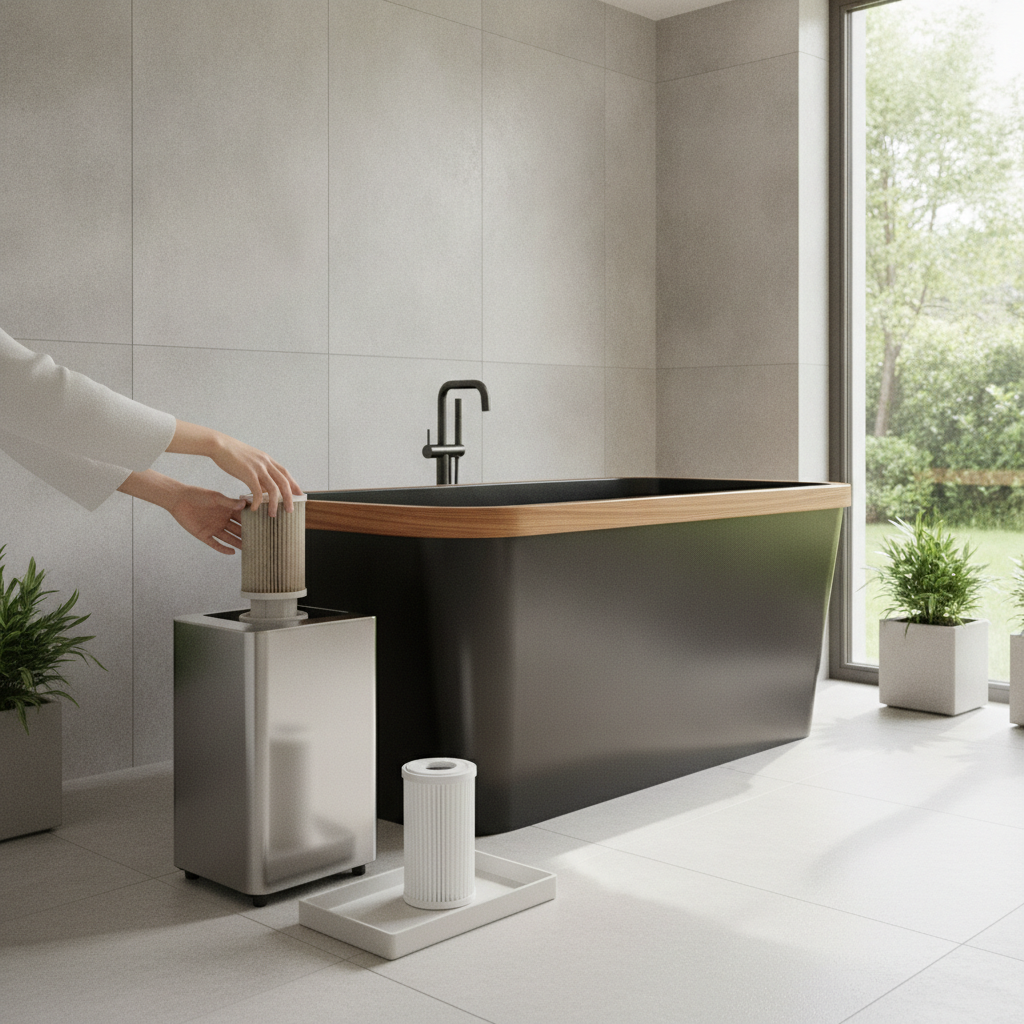
TL;DR — The Bottom Line
This cold plunge filter replacement guide helps HomePlunge owners keep water clear, equipment healthy, and maintenance minimal. Rinse your filter every 1–2 weeks and replace it every 4–8 weeks depending on use. Watch for cloudy water, weak flow, musty smells, or a discolored cartridge — those are your real signals, not the calendar alone.
If you own (or are about to own) a HomePlunge-style chiller setup, the single most important habit you can build is filter care. This cold plunge filter replacement guide walks you through exactly when, why, and how to swap out your filter at home — so your water stays crystal clear, your chiller runs efficiently, and your daily cold therapy ritual stays the low-maintenance routine it was meant to be.
Unlike a traditional bathtub that drains after every use, a cold plunge unit recirculates the same water through a chiller and filtration loop. That makes the filter your frontline defense against debris, biofilm, and bacteria. Skip it for too long, and you risk cloudy water, a strained pump, and a chiller that struggles to hold temperature. Stay on top of it, and a $15–$25 cartridge swap protects a multi-thousand-dollar investment.
Quick Facts
- Rinse frequency: Every 1–2 weeks
- Replacement window: Every 4–8 weeks (typical home use)
- Heavy use replacement: Every 2–4 weeks
- Light use replacement: Every 6–8 weeks
- Top warning sign: Reduced pump flow or cloudy water
- Average filter cost: $15–$30 per cartridge
Why Filter Replacement Matters More Than You Think
Cold plunge tubs are essentially closed-loop water systems. The same water cycles through your chiller, pump, and filter dozens of times a day. That design is what makes daily cold therapy practical at home — but it also means every contaminant you introduce stays in the system until the filter catches it or you drain the tub.
A clean filter does three critical jobs:
- Traps physical debris: hair, dead skin cells, body oils, lotion residue, lint, and outdoor dirt tracked in on feet.
- Slows microbial growth: by removing the organic matter that biofilm, algae, and bacteria feed on.
- Protects your equipment: a clogged filter forces the pump and chiller to work harder, shortening lifespan and sometimes voiding warranties.
That last point is the one most homeowners underestimate. A restricted filter increases back-pressure on the pump and reduces flow across the chiller's heat exchanger. The result? Slower cooling, higher electricity use, and premature wear on the most expensive components in your setup. Following a proper cold plunge filter replacement guide isn't just about water clarity — it's about protecting your hardware.
"A $20 filter cartridge is the cheapest insurance policy you'll ever buy for a $3,000 chiller. Replace it before it fails, not after."
How Often Should You Replace a Cold Plunge Filter?
There's no universal schedule because filter life depends on how often you plunge, how many people use the tub, and how clean your environment is. That said, residential cold plunge maintenance experts have converged on a clear usage-based pattern.
Replacement schedule by usage level
| Usage Level | Plunges per Week | Rinse Frequency | Replace Filter |
|---|---|---|---|
| Light | 1–3 plunges, single user | Every 1–2 weeks | Every 6–8 weeks |
| Moderate | 4–7 plunges, 1–2 users | Weekly | Every 4–6 weeks |
| Heavy | 8+ plunges, family/guests | At least weekly | Every 2–4 weeks |
For most HomePlunge owners — typically a single user or couple plunging 3–5 times a week in a clean indoor bathroom — the sweet spot is a rinse every 1–2 weeks and a full replacement every 4–8 weeks. If you're unsure where you fall, follow the principle that filtration pros repeat constantly: when in doubt, change it out.
No. Rinsing removes surface debris but cannot extract the oils, biofilm, and fine particles embedded deep in the pleats. After 4–8 weeks, even a rinsed filter loses meaningful flow capacity and becomes a breeding ground for bacteria. Rinsing extends life — it doesn't replace replacement.
7 Warning Signs You Need a New Filter Now
Calendar reminders are useful, but your tub will tell you when it's time. Replace your filter immediately if you notice any of these signs — they're widely recognized across cold plunge maintenance literature:
- Cloudy or hazy water that doesn't clear after several hours of circulation.
- Musty, swampy, or chemical-like odor rising from the tub.
- Slimy or slippery surfaces on the tub walls, floor, or inside the filter housing.
- Visible debris — hair, flecks, or particles — floating despite active filtration.
- Discolored cartridge that stays brown, gray, or yellow even after a thorough rinse.
- Reduced water flow: weaker circulation at the return jet or a noticeably quieter loop.
- Pump strain: a higher-pitched whine, louder operation, or the chiller cycling more often than usual.
Pump flow is the single most reliable indicator. If your water surface is barely moving compared to when the system was new, the filter is choked — even if it looks okay visually. For more troubleshooting tips specific to HomePlunge units, see the HomePlunge maintenance hub.
Step-by-Step Cold Plunge Filter Replacement Guide
The good news: swapping a filter on a HomePlunge-style chiller is a 5-minute job that requires no tools beyond your hands and a towel. Here's the step-by-step process most modern cold plunge systems follow.
What you'll need
- A new compatible filter cartridge (check your model spec)
- A towel or shallow bucket to catch drips
- Disposable gloves (optional but recommended)
- Garden hose or showerhead for rinsing the housing
The replacement process
- Power down the system. Pause circulation via the control panel or app, then unplug the chiller for safety. Never service a filter with the pump running.
- Locate the filter housing. On HomePlunge units, this is typically the cylindrical canister on the chiller's intake side. On bathtub-conversion setups, it's mounted near the hose-arm assembly.
- Relieve pressure. Slowly unscrew the housing lid a quarter turn to let any trapped pressure escape, then fully unscrew.
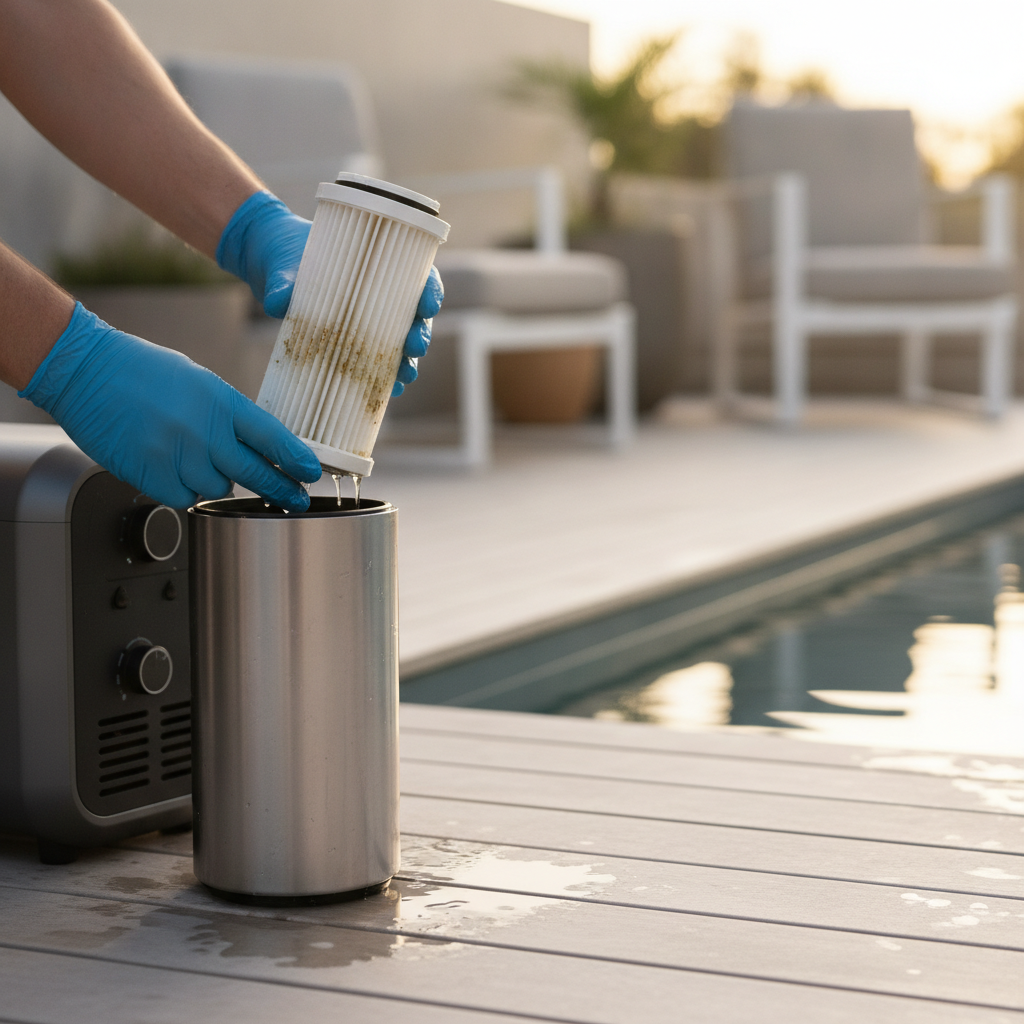
- Remove the old cartridge. Pull it straight up. Expect dark water and debris — that's exactly why you're replacing it.
- Rinse the housing. Use clean water (no soap, no chemicals) to flush out any sediment or slime from the canister walls and O-ring groove.
- Inspect the O-ring. Look for cracks, flat spots, or dryness. Replace if compromised; a bad O-ring will leak. A light coat of food-safe silicone lube extends its life.
- Insert the new filter. Seat it firmly on the center post or base ring. Confirm it sits flush — a tilted cartridge will allow unfiltered bypass.
- Reseal the housing. Hand-tighten only. Over-tightening cracks the threads.
- Restore power and prime. Plug the chiller back in, restart circulation, and check for leaks around the housing for the first 60 seconds.
- Log the date. Note the replacement date on a sticker, your phone calendar, or a maintenance app so you can spot trends in your filter life over time.
No. On most HomePlunge-style chillers, the filter housing is part of the chiller unit, not submerged in the tub. You can swap the cartridge with water still in the tub — just power down the system first and have a towel ready for the small amount of water trapped in the housing.
How to Extend Filter Life Between Replacements
A few small habits can stretch your filter's working life by 30–50%, saving you money and reducing waste. These are the highest-leverage moves:
Pre-plunge habits
- Rinse off before plunging. A 30-second body rinse removes the majority of skin oils, sweat, sunscreen, and lotions that clog filters fastest.
- Skip the lotions and oils in the hour before a plunge. They emulsify in cold water and embed into filter pleats.
- Tie back long hair. Hair is the #1 mechanical clogger of pleated filters.
- Wear clean swimwear rather than freshly laundered cotton, which sheds heavy lint.
System habits
- Run a skimmer or net across the surface every few days to remove floating debris before it reaches the filter.
- Use an approved sanitizer — ozone, UV, or low-dose hydrogen peroxide depending on your system — to reduce biofilm load on the cartridge.
- Keep the tub covered when not in use to prevent dust, pet hair, and outdoor debris from entering.
- Rinse the filter weekly with a strong stream of cold water — never hot, which warps pleats.
For a deeper dive into water chemistry and sanitation, browse the HomePlunge water care guide, which complements this cold plunge filter replacement guide with full chemistry recommendations.
Choosing the Right Replacement Filter
Not all cartridges are created equal. Using the wrong filter — even one that physically fits — can reduce flow, miss critical particle sizes, or leave gaps where unfiltered water bypasses the media.
What to match
- Diameter and height: exact match to your housing. Even a 1/4" difference allows bypass.
- End-cap style: open/open, closed/open, or threaded — these must match your housing's seat.
- Micron rating: most home cold plunge filters are 20–50 microns. Lower microns filter finer particles but clog faster.
- Material: pleated polyester offers more surface area and longer life; spun polypropylene is cheaper but loads faster.
OEM vs. generic
Genuine OEM filters from your manufacturer are tested for fit and flow. Generic equivalents can save 30–50% but vary in quality. If you choose generic, verify the micron rating, end-cap style, and pleat count match the OEM spec exactly. For verified-compatible replacements, the HomePlunge filter shop stocks cartridges sized specifically for HomePlunge chillers.
For most home users, no. Washable filters require thorough chemical soaking to truly clean, and they degrade faster under cold-water conditions. Standard disposable pleated cartridges remain the most reliable, cost-effective choice for residential cold plunges.
Common Mistakes to Avoid
Even experienced owners make these errors. Following this cold plunge filter replacement guide means avoiding the patterns that shorten filter life and damage equipment:
- Cleaning filters with soap or detergent. Residue stays in the pleats and re-enters your plunge water. Use only fresh water and approved filter cleaners.
- Hot-water rinsing. Warps the pleats and ruins the micron rating.
- Over-tightening the housing. Cracks threads and damages O-rings.
- Skipping the O-ring inspection. A $2 part causes 90% of housing leaks.
- Reusing visibly damaged filters. A torn pleat means unfiltered bypass — replace immediately.
- Ignoring flow rate. Slowing flow is the earliest, clearest signal of a failing filter.
- Forgetting to log replacement dates. Without tracking, you can't optimize your interval.
Filter Replacement and Total Cost of Ownership
Let's put real numbers on this. Following an average home schedule of one replacement every 6 weeks, a typical HomePlunge owner uses about 8–9 filters per year. At $15–$25 per cartridge, that's roughly $120–$225 annually in filter costs — less than a single month of a boutique cold plunge studio membership.
Compare that to the cost of not replacing on schedule:
- A failed pump replacement: $300–$800
- A chiller repair from overwork: $500–$1,500
- A full water drain and deep clean after biofilm contamination: 2–4 hours of labor plus 40–80 gallons of water
- Possible warranty voiding from documented neglect
Viewed that way, the math is obvious. Consistent filter replacement is the lowest-cost, highest-impact maintenance task you can do.
Frequently Asked Questions
How often should I replace my cold plunge filter?
For typical home use, replace your cold plunge filter every 4–8 weeks. Light users (1–3 plunges per week) can extend to 6–8 weeks, while heavy users (8+ plunges per week or multiple household members) should replace every 2–4 weeks. Rinse the cartridge weekly between replacements for best results.
What are the signs my cold plunge filter needs replacement?
The most reliable signs are reduced water flow, cloudy or hazy water that won't clear, a musty odor, slimy tub surfaces, visible debris in the water, a cartridge that stays discolored after rinsing, or a pump that sounds like it's straining. If you notice any of these, replace the filter immediately.
Can I clean and reuse a cold plunge filter instead of replacing it?
You can rinse and reuse a filter for several cycles, but not indefinitely. Rinsing removes surface debris but cannot extract embedded oils, biofilm, or fine particles. After 4–8 weeks of use, even a clean-looking filter loses meaningful flow capacity and should be replaced.
Do I need to drain my cold plunge to replace the filter?
No. On HomePlunge-style chillers, the filter housing is part of the chiller unit, not inside the tub. You can replace the cartridge with water still in the tub — just power down the system first, place a towel under the housing, and follow the standard replacement steps in this guide.
What size filter does a HomePlunge chiller use?
HomePlunge chillers use a standard residential cold plunge cartridge sized for the model's specific housing. Always match the diameter, height, end-cap style, and micron rating to your unit's specifications. Verified-compatible filters are listed in the HomePlunge filter shop, and generic equivalents should match OEM specs exactly to avoid bypass.
Final Thoughts: Make Filter Replacement a Ritual
The homeowners who get the most out of their cold plunge investment are the ones who treat maintenance as part of the practice itself — not a chore tacked onto it. A 5-minute filter swap every 4–8 weeks is the single highest-ROI habit in your entire cold therapy routine. It protects your water quality, your equipment, and the daily ritual you've built around feeling better.
Use this cold plunge filter replacement guide as your reference: rinse weekly, watch flow rate as your earliest warning signal, replace on a usage-based schedule, and never skip the O-ring check. Do that, and your HomePlunge will deliver clean, cold, ready-to-use water on demand for years.
Ready to restock? Browse compatible cartridges, water care kits, and accessories at the HomePlunge shop and set up a recurring delivery so you never run out mid-cycle. Your future self — and your chiller — will thank you.