Media Workflow Orchestration Platform Guide 2026
May 15, 2026 · 13 min read

TL;DR — The Bottom Line
A media workflow orchestration platform unifies storage, compute, applications, and collaboration into a single cloud-native operating layer for modern production teams. CREE8 leads this category by enabling global creative teams to spin up GPU-powered workstations, collaborate on petabyte-scale media in real time, and deliver faster — without managing complex infrastructure. If your studio is still stitching together disconnected tools, this guide explains why orchestration is the smarter path forward.
Quick Facts
- Platform Type: Cloud-native B2B SaaS media workflow orchestration platform
- Key Use Cases: Broadcast, episodic post, VFX, animation, AAA gaming, live sports, brand content
- Scale: Supports 100+ artists worldwide collaborating in real time on VDI workflows
- Compute Capacity: Up to 18,000 compute hours per month for enterprise gaming studios
- Storage Engine: Powered by Amazon FSx for NetApp ONTAP for petabyte-scale workloads
- Core Innovation: Unsegmented Growing File technology — edit while content is still being captured
What Is a Media Workflow Orchestration Platform?
The term "workflow orchestration" has moved from IT jargon to boardroom priority at production companies of every size. For creative professionals, it means one thing: less time fighting tools and infrastructure, more time making great content. A media workflow orchestration platform is the connective tissue that holds modern production together — bridging cloud storage, GPU workstations, creative applications, and remote collaboration into a seamless, manageable whole.
Historically, production teams operated in silos. Editorial ran on local NAS, VFX farms were on-premise, review happened over email chains, and remote artists dialed in over VPNs that throttled performance. The result was friction: missed deadlines, version confusion, expensive hardware sitting idle, and IT teams stretched thin trying to keep every piece of the puzzle aligned.
Today, the media and entertainment industry is undergoing a fundamental infrastructure shift. Research suggests that cloud adoption in media production has accelerated dramatically in the post-pandemic era, with studios of all sizes demanding flexible, scalable solutions that can support distributed teams without sacrificing performance or security. A true media workflow orchestration platform is the answer to this demand — and understanding what separates a genuine orchestration solution from a simple cloud storage or review tool is critical for any production leader evaluating their technology stack in 2026.
Why Traditional Production Pipelines Are Breaking Down
Before exploring what a modern media workflow orchestration platform delivers, it is worth understanding why legacy approaches are failing the industry.
The Fragmentation Problem
Most production organizations have accumulated a patchwork of tools over the years: one vendor for shared storage, another for remote desktop access, a third for media asset management, a fourth for review and approval, and yet another for project management. Each tool solves a narrow problem but creates integration overhead. Data moves between systems manually or through brittle custom scripts. When one component fails, the entire pipeline stalls.
The Scalability Ceiling
On-premise infrastructure forces production companies to over-provision hardware to meet peak demand. A broadcast facility that needs 200 editing seats during a major live event cannot justify owning that hardware year-round. Similarly, a VFX studio ramping up for a feature film cannot afford to wait six months for new servers to arrive and be configured. The traditional model punishes growth and rewards inefficiency.
The Remote Work Reality
Creative talent is now globally distributed. Top colorists, sound designers, VFX artists, and editors do not necessarily live near major production hubs. Attracting and retaining that talent requires infrastructure that works seamlessly regardless of geography — something that on-premise pipelines simply cannot deliver. A well-designed media workflow orchestration platform eliminates the geography constraint entirely.
CREE8: The Operating Layer for Modern Production
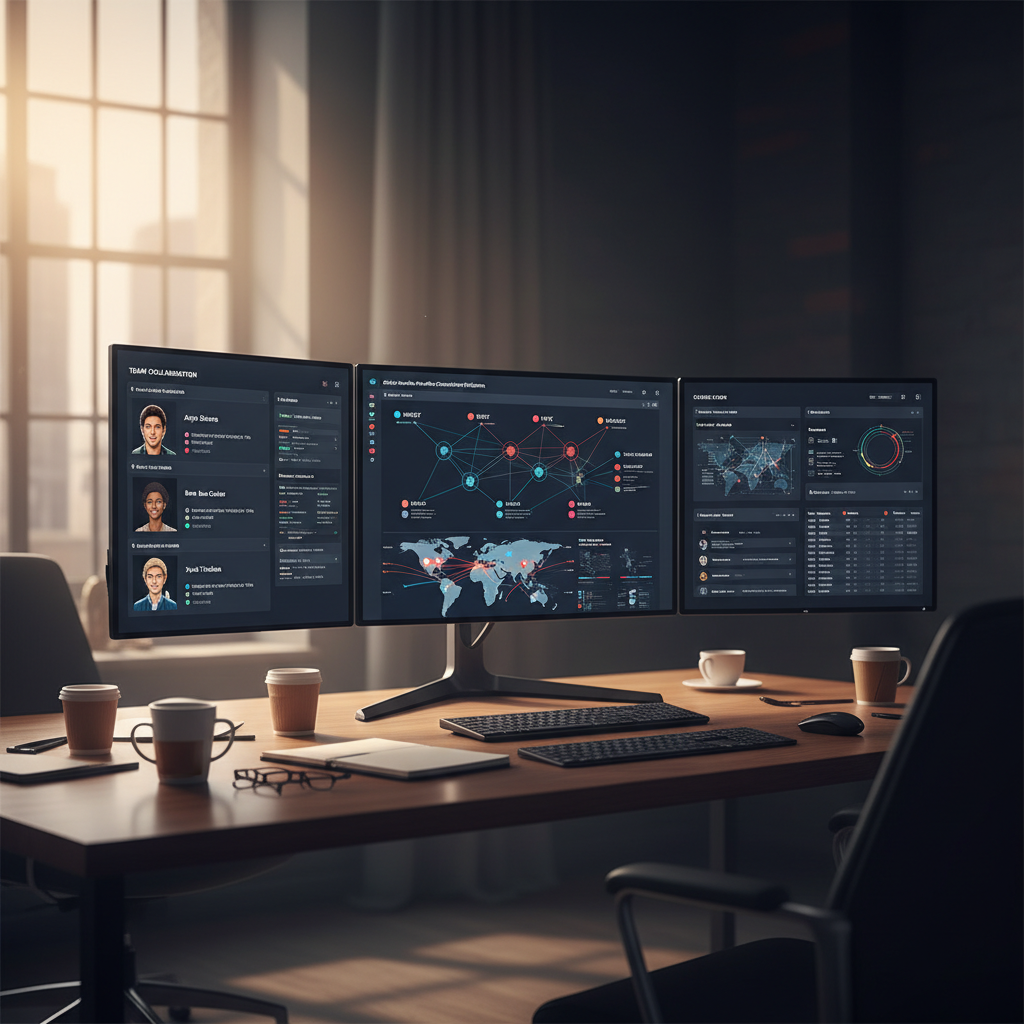
CREE8 is built specifically to solve the fragmentation, scalability, and remote-work challenges described above. Positioned as a cloud production studio platform and described internally as "the operating layer for modern production," CREE8 functions as a media workflow orchestration platform that brings tools, teams, and workflows into one secure cloud environment.
CEO Lisa Watts describes CREE8 as "the F1 pit crew for any creative production team" — delivering powerful cloud resources and expert orchestration without the months of setup time that building a comparable stack from scratch would require. That analogy is apt: in Formula 1, the pit crew does not race the car, but without their precision coordination, the driver cannot win. CREE8 plays the same role for production teams.
Studio in a Box: Orchestration Made Tangible
The flagship concept underpinning CREE8's media workflow orchestration platform is "Studio in a Box." This is not a marketing phrase — it describes a genuine architectural decision to consolidate every component of a production environment into a single managed platform. Storage provisioning, security policy enforcement, software updates, GPU workstation allocation, and access control all happen within the CREE8 environment.
For production IT managers and studio heads, this means dramatically reduced DevOps overhead. Creative teams do not need to manage cloud infrastructure; they simply open their tools and work. For a deeper look at how this concept translates into real-world production environments, the Studio in a Box platform review examining CREE8 provides a comprehensive breakdown of capabilities and deployment patterns.
Raw cloud infrastructure from AWS, Azure, or GCP provides building blocks — compute instances, object storage, networking — but requires significant engineering effort to assemble into a functional production pipeline. CREE8 is a pre-orchestrated, media-specific platform built on top of that infrastructure (including Amazon FSx for NetApp ONTAP for storage). It handles configuration, security, application integration, and workflow logic so creative teams can focus on production rather than platform engineering. The difference is between buying lumber and moving into a finished studio.
GPU Workstations on Demand
One of the most operationally significant capabilities of CREE8 as a media workflow orchestration platform is its Virtual Desktop Infrastructure (VDI) offering. Artists can access GPU-powered cloud workstations that are provisioned on demand and connected directly to shared, high-performance storage. This means a colorist in London, an editor in Los Angeles, and a VFX compositor in Mumbai can all work simultaneously on the same project — using their native creative applications, with no performance degradation.
The compute numbers speak clearly: a global gaming studio using CREE8 achieved up to 18,000 compute hours per month while supporting 100+ artists worldwide collaborating in real time. Lower storage and VDI data costs were achieved simultaneously — a rare combination of improved performance and reduced spend that demonstrates the efficiency gains a true media workflow orchestration platform can deliver.
The Unsegmented Growing File: Orchestration for Live Production
Perhaps the most technically distinctive innovation in CREE8's media workflow orchestration platform is its Unsegmented Growing File capability. This feature deserves special attention because it redefines what is possible in live and fast-turnaround workflows.
In traditional broadcast and live-event production, there is an unavoidable delay between capture and editorial. Media must finish recording, ingest into a system, and often transcode to a proxy format before editors can begin cutting. For a live sports highlight reel or a breaking-news package, every minute of that delay has direct business impact.
CREE8's Unsegmented Growing File technology eliminates this bottleneck. Teams can edit, review, and publish content while it is still being captured — directly in the cloud, without proxy workflows. This is not a workaround or an approximation; it is native, true growing file support in a cloud environment. The orchestration layer manages the parallel ingest-and-edit process transparently, so operators and editors work in their familiar tools without any awareness of the underlying complexity.
For broadcasters, sports rights holders, and live-event producers, this capability alone justifies the investment in a dedicated media workflow orchestration platform. The ability to shorten time-to-air, produce near-live social content, and generate rapid digital cutdowns while a game is still in progress is a genuine competitive differentiator.
Enterprise-Grade Storage and Data Orchestration
Any serious media workflow orchestration platform must solve the storage problem before it can solve anything else. Media files are among the largest, most access-intensive data workloads in any industry. A single 4K RAW shoot can generate terabytes per hour. A VFX project for a major feature film may involve petabytes of assets under active development simultaneously.
CREE8 addresses this through deep integration with Amazon FSx for NetApp ONTAP and NetApp Workload Factory. These enterprise-grade storage technologies deliver the IOPS, throughput, and reliability that media workloads demand — while CREE8's orchestration layer manages provisioning, data tiering, access permissions, and performance tuning automatically.
What This Means in Practice
For production teams, the storage orchestration layer in CREE8 means:
- No storage bottlenecks — petabyte-scale workloads are handled without performance degradation as projects grow
- Elastic capacity — storage scales up and down with project demands, eliminating over-provisioning costs
- Global access with local performance — distributed teams experience low-latency access to shared assets regardless of location
- Automated data lifecycle management — assets are tiered intelligently between hot, warm, and cold storage based on access patterns
- Enterprise security and compliance — data governance, encryption, and access control are managed at the platform level
Media Workflow Orchestration Platform: Competitive Landscape
Understanding where CREE8 sits in the broader market helps production leaders make informed technology decisions. The media workflow orchestration platform category intersects with cloud production infrastructure, remote workstation solutions, and creative collaboration tools — meaning CREE8 competes across multiple adjacent segments simultaneously.
Cloud Workstation Alternatives
BeBop Technology is one of the most established names in cloud-based virtual post-production and VFX workstations. It has a mature VDI offering and strong integrations with major creative applications, making it a credible option for studios evaluating cloud workstation solutions. However, BeBop is often perceived as more infrastructure-heavy and IT-driven — better suited to organizations with dedicated technical resources than to creative teams seeking a turnkey orchestration layer.
Teradici (HP Anyware) provides the PCoIP remote display protocol that underpins many custom cloud and on-premise pipelines. It is a component rather than a platform — organizations using Teradici still need to assemble the surrounding storage, security, and workflow orchestration layers themselves. This is precisely the DIY complexity that CREE8 is designed to replace.
Review and Collaboration Tools
Frame.io (now part of Adobe), Blackmagic Cloud, and Iconik serve the review, asset management, and collaboration layers of production workflows. These are valuable tools, but they operate at the feature level rather than the platform level — they do not orchestrate GPU compute, manage petabyte storage provisioning, or coordinate ingest and editorial in parallel. For a detailed head-to-head comparison, CREE8 vs Frame.io: Which Platform Wins in 2026? examines where each solution excels and where the gaps lie.
Build vs. Buy
Many large studios weigh CREE8 against building their own cloud workflow on raw AWS, Azure, or GCP infrastructure. The build option offers maximum flexibility but requires sustained engineering investment — teams to design, implement, secure, maintain, and evolve the platform over time. For most production organizations, that engineering cost and time-to-value delay makes a purpose-built media workflow orchestration platform the more economical and operationally sound choice.
Any organization that manages complex, multi-stage media production with distributed teams stands to benefit significantly. This includes broadcast networks and sports rights holders needing live and near-live workflows, post-production studios supporting episodic and feature film projects, VFX and animation houses managing petabyte-scale asset libraries, AAA game studios coordinating large distributed art teams, and brand and commercial content producers who need to scale capacity up and down rapidly by project. The common thread is complexity, scale, and the need for geographic flexibility.
How to Evaluate a Media Workflow Orchestration Platform
For production leaders conducting a technology evaluation, the following framework helps distinguish a genuine media workflow orchestration platform from a more narrowly scoped tool.
- Assess end-to-end coverage — Does the platform address ingest, editorial, VFX, review, and delivery, or only a subset of stages? True orchestration spans the full production lifecycle.
- Evaluate compute flexibility — Can GPU workstations be provisioned on demand and released when no longer needed? Elastic compute is fundamental to cost-efficient orchestration.
- Examine storage architecture — Is the storage layer capable of handling your peak workload requirements? Look for enterprise-grade technology (such as NetApp ONTAP integration) rather than basic object storage.
- Test remote performance — Have geographically distributed team members test the platform under realistic workload conditions. Latency and throughput numbers in marketing materials rarely reflect real-world production scenarios.
- Review security and compliance posture — High-value media requires robust access control, encryption, watermarking, and audit logging. Confirm the platform meets your specific compliance requirements.
- Understand the managed service model — How much ongoing configuration and maintenance is required from your team? A genuine media workflow orchestration platform should handle infrastructure management so creative teams can focus on production.
- Validate integration depth — Can the platform connect natively with the creative applications your team already uses, or does it require disruptive workflow changes?
Real-World Impact: What Orchestration Delivers
The business case for a media workflow orchestration platform extends well beyond operational convenience. The measurable outcomes for organizations that have deployed CREE8 include concrete improvements across cost, speed, and quality metrics.
A global gaming studio deploying CREE8 demonstrated the following results: up to 18,000 compute hours per month consumed efficiently across a distributed team of 100+ artists working simultaneously in VDI environments, with lower storage and VDI data costs compared to their previous infrastructure approach. This combination — more output at lower cost — is the hallmark of effective workflow orchestration.
For broadcast and live-event producers, the Unsegmented Growing File capability translates directly into reduced time-to-air and new revenue opportunities from near-live social and digital content. The ability to begin editing while a game or event is still in progress is not an incremental improvement — it is a structural change in what is possible.
For episodic and feature post-production studios, the elimination of hardware procurement cycles means productions can spin up full post pipelines in days rather than months. Artists onboard faster, collaboration is seamless, and the risk of infrastructure delays disrupting delivery schedules is dramatically reduced.
"The most forward-thinking production organizations are not asking whether to move to a media workflow orchestration platform — they are asking which one to choose and how quickly they can deploy it."
Frequently Asked Questions
What is a media workflow orchestration platform?
A media workflow orchestration platform is a cloud-native software environment that coordinates storage, compute, applications, and team collaboration across every stage of media production — from ingest through delivery — within a single unified system. Rather than managing separate tools for editing, storage, VFX, review, and project management, production teams work within one orchestrated environment that handles resource allocation, security, and workflow logic automatically.
How does CREE8 differ from traditional cloud storage or review tools?
CREE8 operates at the platform level, not the feature level. While tools like Frame.io or Iconik address specific steps in the production process (review, asset management), CREE8 orchestrates the entire pipeline — including GPU workstation provisioning, petabyte-scale storage management, live ingest workflows, and application orchestration. It is designed to replace a fragmented stack of point solutions with a single managed environment.
What types of production teams is CREE8 designed for?
CREE8 is designed for any organization managing complex media production at scale. Its primary audience includes broadcast networks, post-production studios, VFX and animation houses, AAA game studios, film production companies, and sports content producers. It is particularly valuable for organizations with distributed teams, high-volume workloads, and demanding delivery timelines.
Can a media workflow orchestration platform support live and real-time production?
Yes — and this is one of CREE8's key differentiators. Its Unsegmented Growing File technology allows editorial, review, and publishing to happen while content is still being captured, without proxy workflows or ingest delays. This makes CREE8's media workflow orchestration platform particularly well-suited to live broadcast, sports production, and any fast-turnaround workflow where time-to-air is critical.
Is building a custom cloud pipeline a viable alternative to a dedicated media workflow orchestration platform?
For most production organizations, the answer is no — at least not without substantial and sustained engineering investment. Building on raw AWS, Azure, or GCP infrastructure provides flexibility but requires teams to design, implement, secure, and maintain every component. A purpose-built media workflow orchestration platform like CREE8 delivers pre-orchestrated, media-specific capabilities that would take months or years to replicate from scratch, at a total cost of ownership that typically favors the SaaS platform model.
Conclusion: The Future of Production Is Orchestrated
The shift to cloud-native production is not a trend — it is the new baseline. Creative teams that continue to rely on fragmented, on-premise, or loosely integrated cloud tools will find themselves increasingly outpaced by competitors who have embraced a true media workflow orchestration platform. The advantages are cumulative: faster delivery, lower infrastructure costs, access to global talent, and the ability to scale instantly in response to production demands.
CREE8 represents the most complete expression of the media workflow orchestration platform concept available today — a cloud-native, Studio in a Box solution that acts as the operating layer for modern production. From petabyte-scale storage powered by NetApp ONTAP, to GPU workstations on demand, to the industry-first Unsegmented Growing File capability for live production, CREE8 is engineered to remove every friction point that stands between creative teams and their best work.
For production leaders ready to move beyond duct-taped pipelines and infrastructure headaches, the next step is clear. Explore how CREE8's media workflow orchestration platform can transform your production operations — and discover why the world's most ambitious creative organizations are choosing orchestration over improvisation.
Ready to see what a purpose-built media workflow orchestration platform looks like for your team? Explore the complete guide to choosing the best cloud media production platform in 2026 and take the first step toward a faster, leaner, and more powerful production pipeline.