What is a Cloud Media Production Platform? Studio Guide
June 23, 2026 · 13 min read
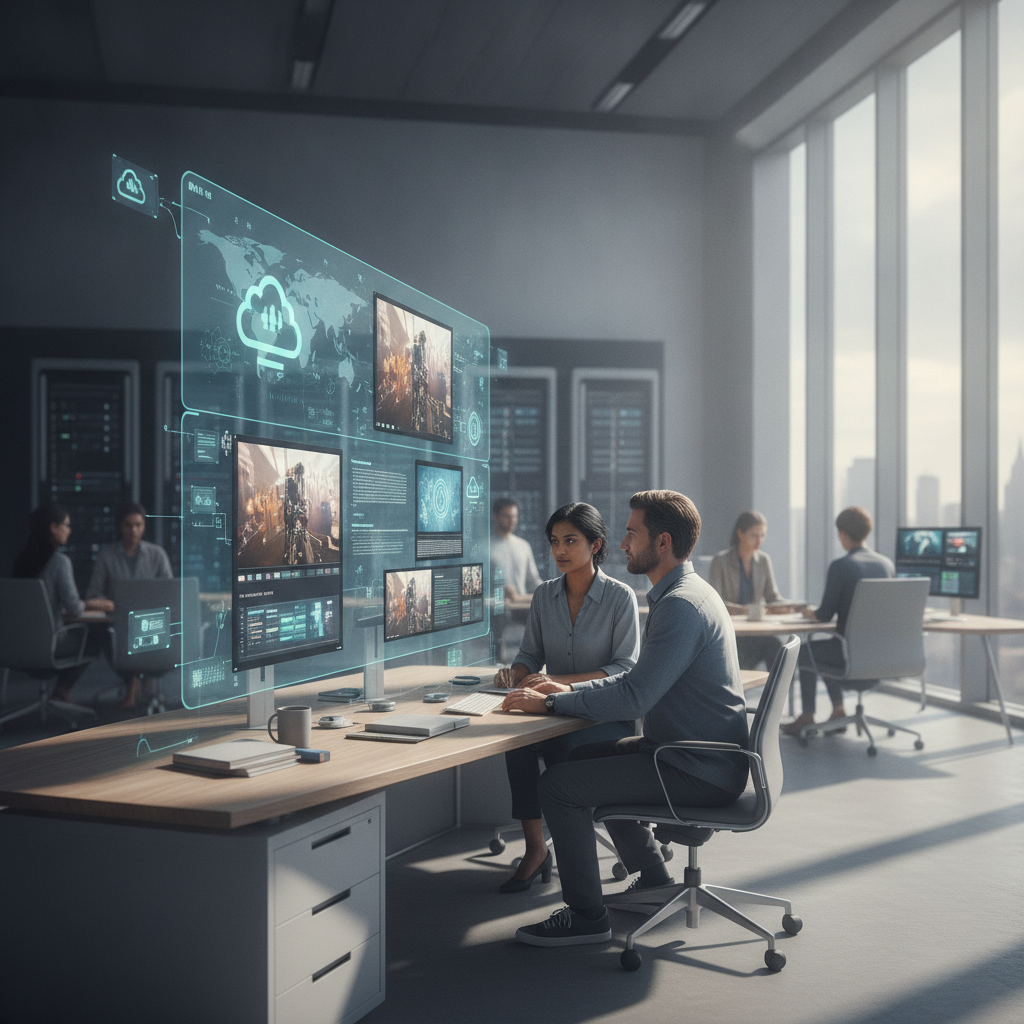
If you've ever waited hours for a 4K file to upload, shipped a hard drive across time zones, or tried to coordinate colorists, editors, and producers across three continents, you've felt the friction that modern production has outgrown. What is a Cloud Media Production Platform? Your Studio In-a-Box Explained is the question more creative leaders are asking as they retire patchwork toolchains and move toward unified, cloud-native workflows.
TL;DR — The Bottom Line
A Cloud Media Production Platform is a unified, cloud-native environment that combines virtual workstations, centralized media, collaboration, review, and delivery in one place. CREE8's Studio In-a-Box exemplifies this category — replacing fragmented tools and on-prem hardware with a secure, scalable studio that creative teams can spin up in minutes from anywhere in the world.
Quick Facts
- Category: Cloud-native media production & post-production platform
- CREE8 Recognition: Back-to-back NAB Show Product of the Year winner (2025, 2026)
- Ecosystem Scale: 20,000+ users added via PRODUCER acquisition (2026)
- Workstation Provisioning Time: ~5 minutes from spec selection to live machine
- Industry Forecast: 70%+ of media workflows expected to be cloud-based by 2027 (vendor-cited)
- Signature Capability: Unsegmented Growing File — edit, review, publish while content is still being captured
What is a Cloud Media Production Platform? Your Studio In-a-Box Explained
At its simplest, a Cloud Media Production Platform is the operating layer for modern production. Instead of buying edit bays, racks of storage, render nodes, and licensing a dozen disconnected tools, teams subscribe to a single cloud environment that delivers every capability a studio needs — on demand. What is a Cloud Media Production Platform? Your Studio In-a-Box Explained is best understood as the shift from "buying a studio" to "summoning one."
The "Studio In-a-Box" metaphor — popularized by CREE8 — captures the idea that everything traditionally housed in a physical facility (workstations, shared storage, MAM, review rooms, render farms, security) is delivered as a unified cloud product. A producer in London, an editor in Los Angeles, and a colorist in Mumbai can all log into the same studio, work on the same media at full resolution, and ship the same deliverable without anyone touching a hard drive.
This is a meaningful departure from "cloud editing" of the past, which often meant lifting a single Avid or Premiere workstation into a virtual machine and calling it a day. A true Cloud Media Production Platform is designed cloud-native — the workflow, not just the hardware, lives in the cloud.
The Problem Studio In-a-Box Was Built to Solve
Modern productions are more distributed, more data-intensive, and more security-sensitive than ever. Yet the underlying infrastructure many teams use was designed for a world of single-location facilities and overnight FTP transfers. The result is a familiar set of pain points:
- Tool sprawl: Separate vendors for storage, MAM, NLE, review, transcode, and delivery — each with its own logins, billing, and integration headaches.
- Geographic friction: Talent in one city, media in another, clients in a third — connected only by upload bars and Slack messages.
- Capital lock-in: Six-figure investments in edit suites that sit idle 60% of the year.
- Security exposure: Proxies, watermarks, and shipped drives create more attack surface, not less.
- Slow time-to-first-frame: Days of onboarding before a freelancer can touch a project.
A Cloud Media Production Platform addresses these directly by centralizing infrastructure and standardizing access. What is a Cloud Media Production Platform? Your Studio In-a-Box Explained ultimately answers a business question as much as a technical one: how do you make creative work faster, safer, and cheaper without sacrificing quality?
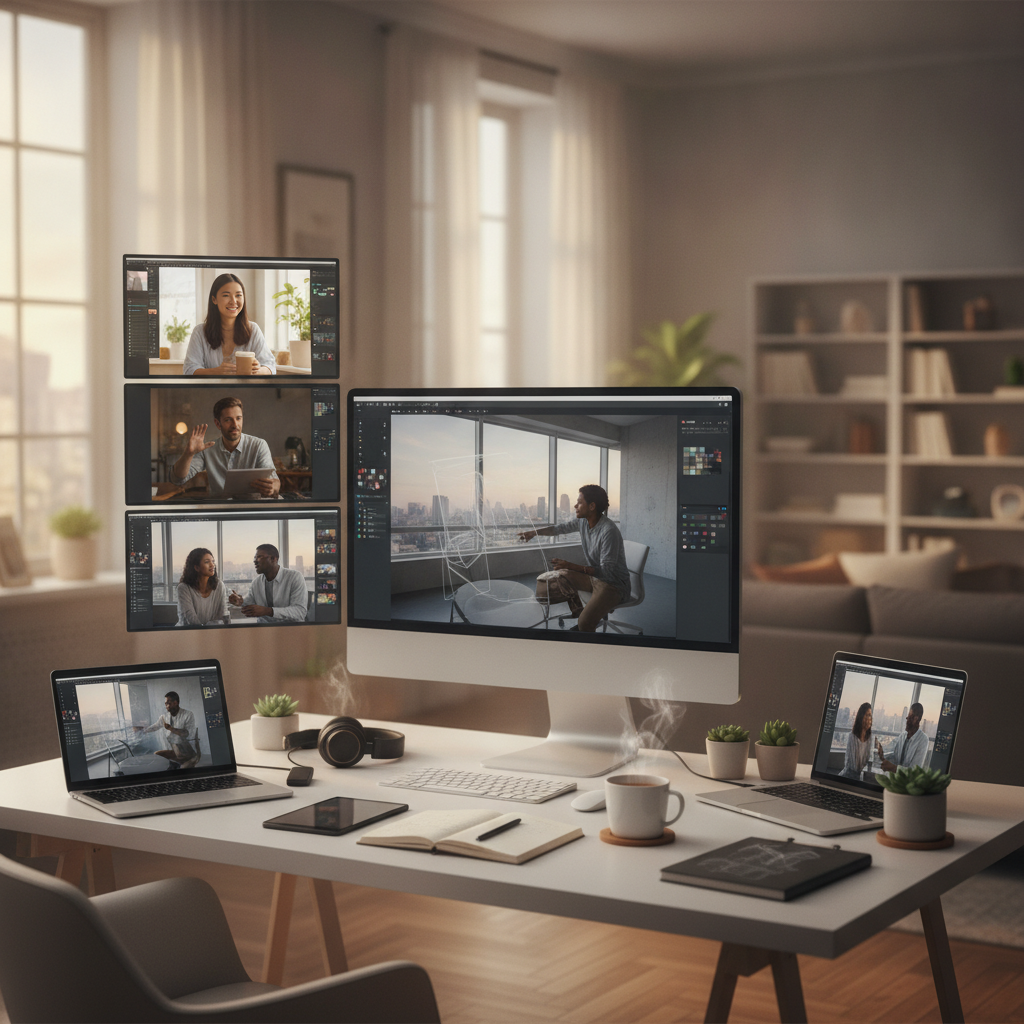
Core Components of a Cloud Media Production Platform
To understand What is a Cloud Media Production Platform? Your Studio In-a-Box Explained, it helps to break down the stack. A complete platform — like CREE8's — typically includes the following layers, all integrated rather than bolted together.
1. Cloud Workstations
Virtual computers in the cloud, configurable with the exact CPU, GPU, RAM, and storage profile a given task requires. An editor cutting a documentary might launch a mid-tier workstation; a Houdini artist simulating fluids might spin up a multi-GPU rig. CREE8 reports that machines can be provisioned in roughly five minutes once specs are selected.
2. Centralized Media
Full-resolution media lives in the cloud once and is accessed by every workstation. No proxies, no duplicates, no shipping drives. This is foundational — it's what makes everything else possible.
3. Creative Applications
Premiere, Resolve, Avid, Nuke, Maya, Pro Tools, After Effects — the tools editors and artists already know, running on workstations sized for the job.
4. Collaboration & Review
Real-time review-and-approval, frame-accurate comments, version tracking — integrated rather than handed off to a separate vendor like Frame.io.
5. Project & Production Management
Following CREE8's acquisition of PRODUCER in 2026, project management lives in the same ecosystem as compute and storage — connecting budgets, schedules, and creative work in one view.
6. Delivery & Distribution
Encoding, packaging, and delivery to broadcasters, OTT platforms, or social channels — without exporting to a separate transcoding service.
7. Security & Governance
Studio-grade security (TPN-aligned controls, granular access, watermarking, audit logs) built into the platform rather than layered on.
No. Cloud editing typically means running a single NLE on a remote desktop. A Cloud Media Production Platform encompasses the entire workflow — ingest, storage, editing, VFX, review, project management, and delivery — in one integrated environment.
Studio In-a-Box: How CREE8 Defines the Category
CREE8's framing of What is a Cloud Media Production Platform? Your Studio In-a-Box Explained centers on the idea of a single connected workflow — what the company calls the "Co-Creation Cloud." Rather than positioning itself as a virtual workstation vendor or a review tool, CREE8 markets Studio in a Box as the operating layer for modern production: the place where tools, teams, and media meet.
Two signature capabilities distinguish CREE8's approach:
Unsegmented Growing File Technology
CREE8's Unsegmented Growing File capability — itself a 2026 NAB Product of the Year winner — lets teams edit, review, and publish while content is still being captured. There are no proxies to generate and no waiting for files to finish writing. For live events, news, sports, and reality production, this collapses the gap between capture and publish from hours to minutes.
End-to-End Workflow Through Acquisition
CREE8's 2025 acquisition of UK-based Edit Cloud added enterprise onboarding and workflow design expertise. Its 2026 acquisition of Swiss platform PRODUCER added project management capabilities and 20,000+ existing users. The result is a platform that spans from production planning to delivery — not just post-production. Learn more about the CREE8 platform and how these layers connect.
Who a Cloud Media Production Platform Is For
The audience for What is a Cloud Media Production Platform? Your Studio In-a-Box Explained isn't just one persona — it spans the production ecosystem.
Post-Production Studios
Eliminating idle edit bays and turning fixed costs into variable ones. A boutique color house can scale from 4 to 40 colorists for a tentpole project without buying a single new workstation.
Broadcasters
Faster turnarounds on news and sports, with the ability to publish-while-capturing via Unsegmented Growing File technology. Distributed teams can cover global events without flying crews.
Film and Episodic Production
Dailies, editorial, VFX, and finishing all working from the same centralized media. No more shipping LTO tapes between vendors.
Game Production and Virtual Production
High-end GPU workstations for real-time engines, virtual sets, and rendering — available on demand, billed by the hour.
Brand and Agency Creative Teams
In-house creative teams that need broadcast-grade tools without broadcast-grade capex.
Reputable platforms operate within studio-grade frameworks (TPN, MPA Best Practices) and use granular role-based access, session watermarking, audit logs, and the elimination of local downloads. Because media stays in the cloud, the platform — not a freelancer's laptop — becomes the trust boundary.
How a Cloud Media Production Platform Works in Practice
Walking through a typical day on a platform like CREE8 makes What is a Cloud Media Production Platform? Your Studio In-a-Box Explained concrete.
- Project setup: A producer creates a project in the platform, defining roles, budgets, and milestones in the integrated project management layer.
- Media ingest: Camera footage uploads directly to centralized cloud storage — or, with Unsegmented Growing File, begins streaming in while the shoot is still rolling.
- Workstation provisioning: Editors and artists log in and launch a workstation matched to their task. Five minutes later, a 64GB RAM / dual-GPU Premiere rig is ready.
- Collaborative work: Multiple editors, assistants, and VFX artists access the same project simultaneously, with version tracking baked in.
- Review and approval: Clients and producers review cuts inside the platform with frame-accurate comments — no exporting to a third-party review tool.
- Delivery: Final masters are encoded and delivered directly to broadcasters, OTT platforms, or social channels from the same environment.
Throughout this entire flow, no high-resolution file ever leaves the cloud. There are no proxies to manage, no drives to ship, and no version mismatches between sites. Explore real-world workflows on the CREE8 solutions page.
Cloud Media Production Platforms vs. Traditional Approaches
The differences between a true Cloud Media Production Platform and legacy or hybrid approaches show up across cost, speed, and flexibility.
| Capability | Traditional / On-Prem | Lift-and-Shift Cloud | Cloud Media Production Platform |
|---|---|---|---|
| Workstation provisioning | Weeks (procurement) | Hours (VM setup) | ~5 minutes |
| Media centralization | Per-site SAN | Cloud storage, but per-tool | Single source of truth |
| Collaboration model | Same-room or shipped drives | Remote desktop only | Real-time, multi-user, multi-site |
| Project management | Separate SaaS (e.g., Airtable) | Separate SaaS | Integrated (e.g., PRODUCER) |
| Review & approval | Email + screening room | Separate tool (Frame.io) | Built-in |
| Cost model | Capex, high fixed cost | Opex, but inefficient | Opex, elastic |
| Security boundary | Physical facility | Multiple cloud tenants | Unified platform |
"A Cloud Media Production Platform isn't a tool you buy — it's a studio you summon, sized to the project in front of you."
The Business Case: Why Leaders Are Moving Now
The market shift behind What is a Cloud Media Production Platform? Your Studio In-a-Box Explained is being driven by economics as much as technology. Industry commentary cited by CREE8 and its partners suggests more than 70% of media workflows will be cloud-based by 2027 — a vendor-cited forecast, but one that tracks with broader cloud-adoption patterns.
Key drivers leaders cite:
- Variable cost alignment: Pay for compute and storage only when projects are active.
- Talent access: Hire the best editor, colorist, or VFX artist regardless of geography.
- Faster turnarounds: Capabilities like Unsegmented Growing File compress timelines that used to take days.
- Lower security risk: Centralized governance replaces dozens of laptops and drives.
- Sustainability: Shared cloud infrastructure has a lower carbon footprint per project than dedicated on-prem studios.
For an executive perspective on adoption strategy, see CREE8's insights blog for deeper analysis of cloud transformation in media.
Choosing a Cloud Media Production Platform: What to Evaluate
If your team is evaluating platforms, What is a Cloud Media Production Platform? Your Studio In-a-Box Explained should be the start of a structured assessment. Look beyond marketing language for these capabilities:
- End-to-end coverage: Does the platform span planning, production, post, and delivery — or just one slice?
- Workstation flexibility: How quickly can you provision the right machine, and what specs are available?
- Media model: Is media truly centralized at full resolution, or does the platform rely on proxies?
- Integration depth: Are collaboration, review, project management, and security native — or third-party?
- Security posture: TPN alignment, watermarking, audit, access controls.
- Real-time capabilities: Can teams work while content is still being captured?
- Ecosystem and partners: Industry recognition (NAB awards, studio adoption) and integration with the tools your team uses.
- Onboarding and support: Does the vendor help with workflow transformation, not just login provisioning?
Frequently Asked Questions
What is a Cloud Media Production Platform?
A Cloud Media Production Platform is a cloud-native environment that consolidates virtual workstations, centralized media storage, creative applications, collaboration, review, project management, and delivery into a single integrated service — replacing fragmented tools and on-prem hardware.
What does "Studio In-a-Box" mean?
Studio In-a-Box is CREE8's term for a fully-equipped virtual production studio delivered as a single cloud product. It packages every capability of a traditional facility — edit bays, storage, MAM, review rooms, render farms, and security — into one subscription-based platform accessible from anywhere.
How is a Cloud Media Production Platform different from Frame.io or LucidLink?
Frame.io is primarily a review-and-approval tool; LucidLink is a cloud storage layer. A Cloud Media Production Platform like CREE8 includes those capabilities but also delivers virtual workstations, project management, delivery, and end-to-end workflow orchestration in one environment.
Can cloud workstations really handle 4K and 8K editing?
Yes. Modern cloud workstations run on data center GPUs that often exceed local hardware in raw performance, and pixel-streaming protocols are engineered for color-accurate, low-latency creative work. Editors routinely cut high-resolution footage with no perceived lag.
Is a Cloud Media Production Platform secure enough for major studios?
Reputable platforms operate within studio-grade security frameworks like TPN and MPA Best Practices, with granular access controls, session watermarking, audit logging, and no local downloads. Because media stays in the cloud, the platform itself becomes the trust boundary — typically more secure than distributed laptops and shipped drives.
Conclusion: The Studio of the Next Decade
What is a Cloud Media Production Platform? Your Studio In-a-Box Explained isn't really a question about technology — it's a question about how the next decade of media gets made. The teams winning awards, hitting deadlines, and attracting top creative talent are the ones that have stopped asking "where is our edit bay?" and started asking "what does this project need, and how fast can we spin it up?"
CREE8's back-to-back NAB Product of the Year wins, its expansion into project management through PRODUCER, and innovations like Unsegmented Growing File technology all point to a category that has matured past experimentation and into operational reality. The Studio In-a-Box is no longer a vision — it's the production environment leading creative teams already work in every day.
If you're ready to retire the patchwork and consolidate your production stack, talk to the CREE8 team for a personalized walkthrough of how Studio In-a-Box can fit your workflow, your security posture, and your budget. The studio of the next decade is one login away.